How to Use Affirmations: A Daily Practice That Feels True

Learning how to use affirmations comes down to one idea: an affirmation works when it is honest enough to believe and repeated often enough to become familiar. An affirmation is a short, present-tense sentence about who you are becoming. Used daily, it trains your attention toward evidence that supports it. When affirmations feel fake, the problem is almost always the method, not the idea.
This is the starting point for every affirmation practice on iAmEvolving. Here you will find the three ways affirmations work best, how to choose the right one for the season you are in, and a simple ten-day cycle for using them in your journal, where they tend to stick. It builds on the ideas in the power of I AM affirmations and turns them into something you can actually do every day.
What Affirmations Are (and What They Are Not)
An affirmation is not a promise that life will change because you said a sentence. It is a deliberate choice about the words you repeat to yourself. Your inner voice is already talking all day, mostly on autopilot. Affirmations give that voice a new script, one you chose on purpose.
They work through attention and repetition. Your brain’s reticular activating system filters what you notice, and repeated statements tell that filter what matters. Over time, a sentence you practice becomes easier to reach for than the old one it replaces.
Affirmations are also not the same as positive thinking. Positive thinking tries to change how you see the situation. Affirmations change how you see yourself inside it. You can say “I am steady, even in uncertainty” while fully admitting the uncertainty is real. That honesty is what keeps the practice from feeling forced.
The words you repeat to yourself quietly
become the life you live out loud.Victor Tihai, iAmEvolving Journal
Three Ways to Use Affirmations
Affirmations show up in three forms. Each one answers a different need, and most people who stay with the practice end up using all three together.
| Approach | What it does | Best for |
|---|---|---|
| Identity (I AM statements) | Reshapes how you describe yourself | Confidence, self-worth, healing |
| Ritual (daily repetition) | Anchors affirmations to moments you already have | Consistency, mornings, sleep |
| Writing (journaling) | Turns one sentence into a tracked practice | Lasting change, noticing progress |
Identity: I AM Affirmations
I AM statements sit at the core of the practice, because the words after “I am” describe identity rather than a wish. “I am someone who keeps promises to myself” lands differently than “I will be more disciplined.” The I AM affirmations guide collects statements by theme, from confidence and self-love to money and work. If anxiety is what you are carrying right now, I AM affirmations for anxiety is a good place to begin, built around safety and slowing down.
Ritual: Daily Affirmation Practice
An affirmation you say once is a nice thought. One you say every morning while the kettle boils becomes part of who you are. Rituals tie your affirmation to something you already do, so it survives the busy and tired days. The daily affirmation rituals guide walks through morning, evening, and in-between practices. For the end of the day, bedtime affirmations for sleep show how slower, releasing statements help you set the day down.
Writing: Affirmations in Your Journal
Writing is where affirmations stop being background noise. When you write a sentence by hand, you slow down enough to notice whether you believe it. You also leave a record, so a few weeks later you can see how your wording, and your feeling about it, has changed. The ten-day cycle further down shows how to do this in about five minutes a day.
How to Choose the Right Affirmation for Your Season
The right affirmation is the one you can honestly say today, even if it sounds less inspiring. A useful test: read the sentence aloud and notice your body. If your shoulders tighten or a voice inside says “that’s not true,” the statement is reaching too far. Soften it until it feels like relief rather than effort.
- When you feel shaky, choose safety: “I am safe in this moment.” “I can take this one step at a time.”
- When you are rebuilding confidence, choose evidence: “I am someone who keeps small promises to myself.”
- When you are grieving or worn out, choose permission: “I am allowed to rest without earning it.”
- When you are working toward a goal, choose direction: “I am becoming someone who follows through.”
Notice that none of these claim perfection. Words like “learning,” “becoming,” and “allowed” build a bridge from where you are to where you are heading. That bridge is what makes an affirmation usable on a hard day, not only on a good one.
Two mistakes undo most practices. The first is using too many at once: a long list blurs together, while one or two sentences repeated with attention keep their weight. The second is waiting to believe before you begin. Belief tends to follow repetition and small actions, not come before them.
Get more like this, every week
How Long Before Affirmations Start to Work?
For most people, the first change shows up within a few weeks of daily practice, and it is quieter than expected. Usually it shows up as a pause: the moment you catch an old, harsh sentence and notice it, instead of obeying it automatically.
A simple example shows why wording matters so much. “I am confident” often sparks an inner argument the moment you say it. “I am learning to trust my own voice” usually does not. That small difference is often what keeps someone practicing long enough to notice the change at all.
Research on self-affirmation supports this modest, honest version of the practice. Affirming values you genuinely hold tends to make people less defensive under stress, while statements far from what someone believes can leave them feeling worse. Honesty is not a nice extra. It is what makes the practice work.
Affirmations Inside Your Goals and Habits
Affirmations are a tool, not a separate project. They are most useful when they support something you are already working on.
If you are working toward a goal, write an affirmation that describes the person who reaches it. “I am someone who writes every morning” supports a book goal better than “I will finish my book.” The goal setting guide shows how to shape the goal itself, and your affirmation keeps the identity behind it steady.
Habits work the same way. Each time you act in line with your affirmation, you add one more piece of evidence that it is true. The guide to building lasting habits covers the behavior side, while your affirmation covers who you are becoming as you repeat it.
How to Use Affirmations in Your Journal: A 10-Day Cycle
Choose one sentence for ten days
Write it beside your daily goal
Track it as one of your habits
Rate how you feel from 1 to 9
Review on day ten, then begin again
Start With One Honest Sentence
You do not need a perfect list or a long ritual to learn how to use affirmations. You need one sentence that feels true enough to say, a moment each day to say or write it, and the patience to let repetition do its work. Pick your sentence today. Write it down. Then come back tomorrow and write it again.
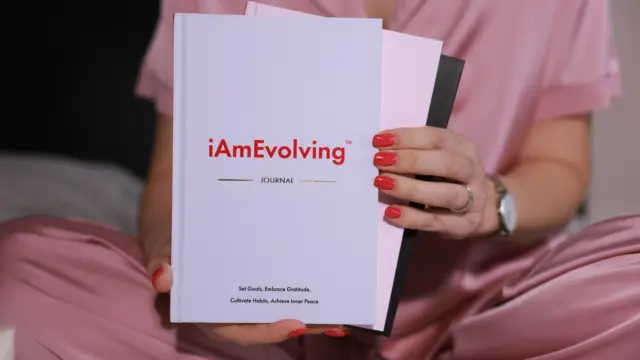
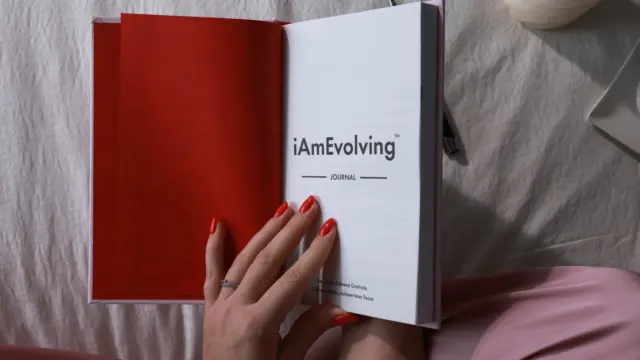
If you want a place to hold that practice, the iAmEvolving Journal gives you a daily page for your goal, gratitude, habits, and an inner harmony check-in, with a reflection page every ten days to see how far your words, and you, have come.
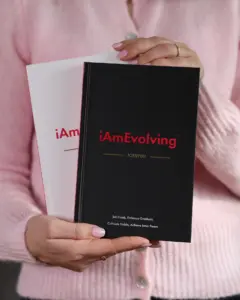
Start your daily practice of gratitude, goals, and growth.
Get the Journal →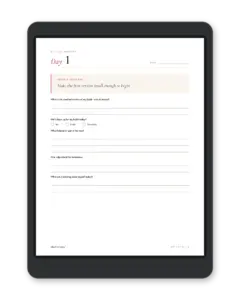
A free 21-day habit tracker PDF with daily check-ins, guided reflection prompts, and mindset reminders. Clean, minimal, and printable.
ExploreFrequently Asked Questions
How do you use affirmations correctly?
How often should you repeat affirmations?
Do affirmations work if you don’t believe them?
Is it better to say affirmations out loud or write them down?