Evening Gratitude Ritual for Inner Peace

An evening gratitude ritual is a practice of ending your day with stillness, reflection, and gentle appreciation. As the day winds down, your mind seeks closure — not more input, but integration of what you experienced.
Gratitude at night does something subtle yet powerful: it completes the emotional circuit of the day. Where the morning ritual awakens presence, the evening ritual restores peace. It reminds you that even in imperfect days, there were moments worth keeping. This practice helps you sleep not just as a body, but as a soul that feels whole.
Evening gratitude is part of a larger rhythm — one that helps you begin and end each day with awareness. Continue exploring this rhythm through the Gratitude Habits & Rituals series, where morning and evening reflections come together to create a life grounded in appreciation and calm.
Why an Evening Gratitude Ritual Matters
We often carry the energy of the day into the night — the unfinished conversations, the lingering worries, the quiet self-criticism. When you practice gratitude before bed, you’re choosing not to bring those weights into tomorrow. You teach your nervous system that the day is complete and that it’s safe to rest.
Psychologically, gratitude activates the same parts of the brain that help regulate emotion and reduce stress. Physiologically, it lowers heart rate and improves sleep quality. Spiritually, it softens resistance and opens your awareness to quiet contentment.
Each night becomes a small act of closure — an intentional return to peace.
Step 1: Create an Atmosphere of Calm
Begin by softening your environment. Dim the lights, light a candle, or play quiet music. Make your space a signal to your body: it’s time to slow down. If possible, leave your phone outside the room or switch it to silent. This ritual is for you — a moment untouched by urgency or comparison.
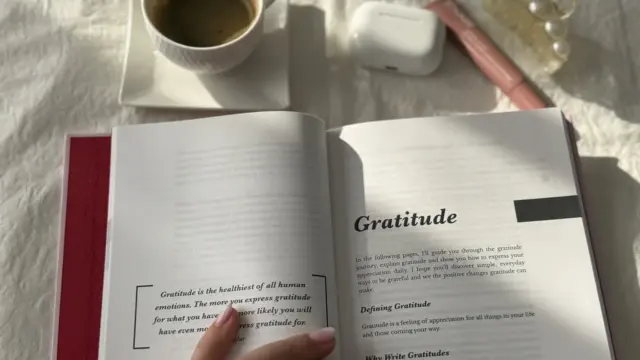
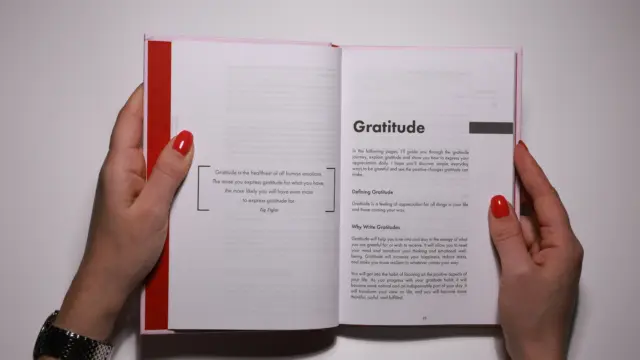
Place your iAmEvolving Journal by your bedside, along with a pen and perhaps a small token that grounds you — a crystal, a photo, or a piece of nature you collected earlier in the day. This becomes your anchor to presence.
Step 2: Reflect Gently on the Day
Close your eyes and take a slow, deep breath. Allow your mind to scan through the day — not to analyze, but to notice. What felt good? What challenged you? What moment, however small, deserves appreciation?
This is not about judging your performance or replaying events. It’s about witnessing your experience with compassion. Some days may feel full of gratitude; others, quiet or heavy. Both are valid. Gratitude is not denial — it’s awareness with acceptance.
Get more like this, every week
Step 3: Write Three Things You’re Grateful For
When you’re ready, open your journal and write down three things from the day you’re grateful for. Keep them specific, sensory, and honest. For example:
I’m grateful for the sound of rain while I worked.
I’m grateful for the conversation that made me laugh.
I’m grateful that I took time to breathe before reacting.
Some nights, your list will flow easily. Other nights, it may feel difficult — that’s when the practice is most healing. Gratitude gently shifts your focus from what’s missing to what remains.
Step 4: Release What You No Longer Need
After you list what you’re thankful for, take a moment to release what you don’t want to carry into tomorrow. You can write it down or say it softly:
I release the tension from today.
I release the need to be perfect.
I release worry about what I cannot control.
This part of the ritual is about letting go — not ignoring, but acknowledging and freeing. What you release makes space for rest and renewal.
Step 5: Feel Gratitude in Your Body
Close your eyes again and breathe into the feeling of gratitude. Notice how your body responds — maybe your shoulders drop, your chest expands, or your breath deepens. Let that warmth move through you. Gratitude is not only an emotion; it’s a physiological signal of safety. Your body learns that peace is possible.
When gratitude becomes embodied, you begin to fall asleep not from exhaustion but from acceptance.
Step 6: End with a Simple Affirmation
Finish your ritual with a phrase that centers your awareness. Choose something that feels like closure:
- I am thankful for this day and all it taught me.
- I rest knowing I did my best.
- I am safe to let go and begin again tomorrow.
Repeat it quietly. Let it echo. Then close your journal and place it beside your bed. This is the moment where thought turns to peace, and peace turns to sleep.
The Power of Reflection Before Sleep
Nightly gratitude journaling has ripple effects that extend far beyond the evening. Over time, it strengthens emotional regulation, improves sleep patterns, and reduces overthinking. More importantly, it changes your relationship with yourself. You stop measuring the day by what went wrong, and start recognizing how much went right.
As you develop consistency, your journal becomes a mirror — showing your evolution through small acts of awareness. On days when gratitude feels distant, flipping through past entries reminds you that peace is always within reach.
Turning Your Evening Ritual into a Lifelong Practice
Like any habit, the key is simplicity and repetition. Set a cue — perhaps your evening tea or brushing your teeth — that signals it’s time to reflect. Over time, the act of opening your journal will automatically trigger a sense of calm. This is how rituals become rhythms.
For deeper guidance, revisit How to Build a Gratitude Habit to strengthen your consistency, and Morning Gratitude Ritual to create a full-circle practice.
When Gratitude Feels Hard
Some evenings will feel heavy — when the day didn’t go as planned, or emotions feel tangled. On those nights, shift from “gratitude” to “gentle noticing.” Write one thing that kept you grounded, or one small kindness you witnessed. Gratitude isn’t about denying pain; it’s about remembering you’re bigger than it.
Even one sincere thank you — whispered, written, or felt — can soften the sharp edges of the day.
Start your daily practice of gratitude, goals, and growth.
Get the Journal →A gentle 7-day reset to help you slow down, feel steadier, and reconnect — in just 5–10 minutes a day.
Start the ResetA simple introduction to daily journaling — gratitude, goals, and habits made easy.
Learn the MethodFinal Reflection
The evening gratitude ritual is not the end of your day — it’s the beginning of peace. It reminds you that life is lived in cycles: waking, creating, resting, and releasing. Gratitude closes the circle so you can rest with a full heart and wake renewed.
So tonight, before sleep, take one quiet moment. Breathe. Reflect. Thank yourself for showing up — and thank the day for everything it gave you, seen and unseen. That’s how gratitude becomes grace.
FAQ
How long should my evening gratitude ritual take?
Do I have to write every night?
What if my day was difficult or I don’t feel grateful?