Gratitude Habits and Rituals: Find the Practice That Fits Your Day

Gratitude habits and rituals are the repeated moments that turn thankfulness from a feeling you sometimes have into something you practice on purpose. A habit is the small daily repetition. A ritual is the setting you give it, like a quiet cup of tea in the morning or three lines in your journal before bed. Whether a practice lasts rarely comes down to motivation. It comes down to fit.
This page helps you find that fit. It maps every gratitude practice on iAmEvolving by when and how it happens, so you can choose one that matches your actual day rather than an ideal one. It also shows a simple way to read back through your gratitude entries every ten days, which is where a practice starts to teach you something. For the bigger picture of why writing down gratitude works at all, begin with the gratitude journaling guide.
Gratitude Habits and Rituals: What Is the Difference?
The two words are often used as if they mean the same thing, but they do different jobs. Knowing which one you need saves you from abandoning a practice that was just the wrong shape for your life.
| Form | What it is | Strength | Watch out for |
|---|---|---|---|
| Habit | A small, frequent act, often tied to something you already do | Easy to keep on busy days | Can turn mechanical |
| Ritual | A set time, place, and pace for gratitude | Brings depth and calm | Easy to skip when life gets full |
| Challenge | A fixed number of days with a theme for each one | Builds momentum quickly | Ends unless you decide what comes next |
Most practices that last use all three at different times. A challenge gets you started, a ritual gives the practice depth, and a habit carries it through the ordinary weeks when neither feels possible.
Find Your Fit: A Quick Guide
Start with the sentence below that sounds most like you. You can always add a second practice later, but beginning with one that suits your days is what keeps you going past the first week.
| If this sounds like you | Start with | Why it fits |
|---|---|---|
| Your mornings are the only quiet part of the day | A morning ritual | Sets your tone before the day pulls at you |
| You fall asleep replaying what went wrong | An evening ritual | Gives your mind a calmer last word |
| You mean to practice but keep forgetting | An anchored daily habit | Rides on a routine you already have |
| You have started before and stopped within a week | A 30-day challenge | A daily theme removes the guesswork |
| You want gratitude to reach the people around you | A shared practice | Turns a private habit into a group one |
Morning and Evening Gratitude Rituals
Time of day changes what gratitude does for you. In the morning it points your attention forward. In the evening it helps you set the day down. Neither is better. The right one is the one that matches when you actually have a few unhurried minutes.
Morning: Setting the Tone
A morning practice suits people who wake before the rush, or who want their first thoughts to be steadier than their inbox. The morning gratitude ritual walks through a six-step sequence, from creating a small space and starting in stillness to naming three gratitudes and closing with an intention for the day.
Evening: Letting the Day Go
An evening practice suits people whose minds get loud at night. Instead of replaying problems, you give your attention somewhere softer to land. The evening gratitude ritual for inner peace covers reflecting on the day, writing what you are grateful for, releasing what you no longer need to carry, and ending with a short affirmation before sleep.
If both appeal to you, keep them uneven on purpose. A full ritual at one end of the day and a single sentence at the other is far easier to sustain than two complete rituals, and it still gives your day two calm bookends.
Get more like this, every week
Making Gratitude Stick
A ritual gives gratitude its depth, but it is the habit underneath that keeps it alive when you are tired, travelling, or just not in the mood. There are two reliable ways to build that habit: attach it to something you already do, or give it a clear finish line.
Anchor It to Your Existing Routine
The most dependable gratitude practice is one you do not have to remember. Pair it with a routine you never skip, such as your first coffee or brushing your teeth, and it starts to happen on its own. The guide on how to build a lasting gratitude habit breaks this into five steps, including how to add the reason behind each gratitude so it does not become a list you recite without feeling.
Give It a Finish Line
Open-ended practices are easy to postpone. A fixed number of days with a prompt for each one removes the daily decision of what to write. The 30-day gratitude journal challenge moves through four weekly themes: awareness, your goals, your daily habits, and inner harmony. If you prefer writing on paper, the free 30-day gratitude journal gives you the same structure as printable pages.
When a challenge ends, decide what comes next before the last day, not after. Choose the one ritual from those thirty days that felt most natural and keep only that. A practice that continues at a smaller size is worth far more than a perfect month followed by silence.
Gratitude Beyond Your Own Journal
Gratitude grows when it is shared. At work, a few minutes of structured appreciation can change how a team talks to each other, especially during busy or uncertain stretches. Gratitude journals for teams explains how to introduce the practice to colleagues, how it supports well-being programs, and what leaders can do to keep it genuine rather than forced.
At home the same idea can be much simpler. One shared question at dinner, such as “What went better than expected today?”, turns gratitude into a conversation instead of a private task. It also gives children and partners an easy way into the practice without asking them to keep a journal of their own.
Why Reading Back Your Gratitude Matters
Most people write gratitude and never read it again. That is a missed opportunity. Ten days of entries show patterns that no single day can: which people keep appearing, which small moments return again and again, and what is missing from the list.
Those patterns are useful information. If the same friend shows up in six entries out of ten, that relationship deserves more of your time. If every entry is about things and none are about yourself, that is worth noticing too. And if you track how you feel each day alongside what you wrote, you can start to see which kinds of gratitude actually steady you.
How to Review Your Gratitude Entries Every 10 Days
Read the last ten entries in one sitting
Sort what you wrote into four groups
Compare your best and hardest days
Name one thing the pattern is telling you
Adjust one thing for the next ten days
Start Where Your Day Already Has Room
You do not need every practice on this page. You need one that fits the shape of your real days, repeated often enough to become yours, and a moment every ten days to look back and learn from it. Choose the ritual that sounds easiest right now, not the one that sounds most impressive. Easy is what lasts.
If you want one place to hold your gratitude habits and rituals, the iAmEvolving Journal gives you a daily page for your goal, gratitude, six habits, and an inner harmony check-in, with a reflection page every ten days to read back what your gratitude has been showing you.
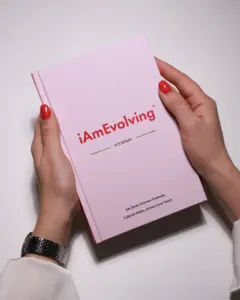
Start your daily practice of gratitude, goals, and growth.
Get the Journal →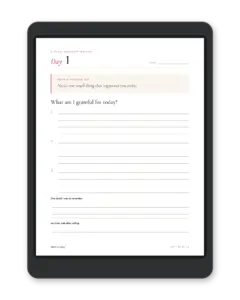
A free 30-day gratitude journal designed for a simple daily practice. Calm, minimal, and printable to help you slow down and reflect.
ExploreFrequently Asked Questions
What is the difference between a gratitude habit and a gratitude ritual?
What is the best time of day to practice gratitude?
How long does it take for gratitude to become a habit?
Should you reread old gratitude journal entries?