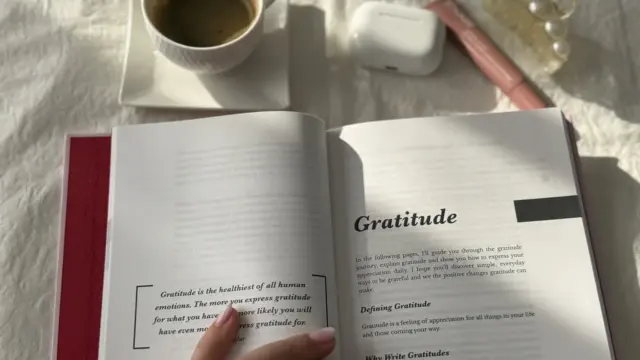
Gratitude Journaling: Build a Daily Habit

Gratitude Journaling Practice: Build a Daily Habit of Reflection and Presence
At some point, gratitude moves from something you think about to something you live through daily practice. That’s what journaling offers: a quiet moment to reconnect with what’s real, steady, and already working in your life. Gratitude journaling isn’t about perfect words or long reflections; it’s about creating space each day to notice and nurture presence.
Within the iAmEvolving Journal, gratitude journaling becomes a cornerstone habit: one that grounds your mindset and gently trains awareness toward appreciation. Each time you write, you strengthen a simple truth: peace grows through consistency, not intensity.
Why Daily Gratitude Matters
Every time you pause to acknowledge what’s working in your life, you strengthen your ability to see opportunity instead of lack. Gratitude journaling trains your brain to focus on the meaningful rather than the missing. Over time, this mental pattern reduces stress, increases optimism, and gently builds emotional resilience.
Research from UC Berkeley’s Greater Good Science Center shows that consistent gratitude writing increases long-term happiness and decreases symptoms of anxiety. What’s most remarkable is that the benefits accumulate even on days when you don’t feel grateful. Writing becomes the act of remembering: a conscious reorientation toward peace.
If you’re just beginning your journey, explore How to Start a Daily Gratitude Journaling Practice for a clear, step-by-step approach to beginning your own mindful habit.
From Awareness to Ritual
At first, journaling might feel awkward: a blank page asking you to be honest. That discomfort is natural. It’s simply awareness expanding. As you continue, the words begin to flow more easily, revealing subtle shifts in perception. Gratitude journaling transforms awareness into ritual: a few quiet minutes that help you reset and realign each day.
To make gratitude journaling part of your rhythm, create a small window of stillness. Morning or evening doesn’t matter; what matters is consistency. A warm cup of coffee, gentle music, or candlelight can signal to your brain that this is your space for reflection. Over time, your environment will begin to invite calm the moment you sit down to write.
Get more like this, every week
Choosing the Right Journal
The journal you use becomes a container for your growth. Some prefer structured journals with prompts; others love blank pages that invite intuition. What matters most is choosing one that feels inviting. A beautiful notebook can be a visual reminder of self-respect: a signal that your reflections deserve care. Explore more on How to Start a Grateful Journal for Daily Peace and Happiness.
If you’re searching for inspiration, take a look at The Best Gratitude Journals to Inspire Your Daily Practice and The Best Gratitude Journals for Women. Each recommendation is thoughtfully chosen to support different styles of reflection. How to Start a Grateful Journal for Daily Peace and Happiness.
Ready to choose your own gratitude journal? Explore our guide on where to buy eco-friendly gratitude journals: mindful, sustainable options for your daily reflection practice.
What to Write in a Gratitude Journal
One of the most common questions is, “What should I write?” The answer is simpler than it seems. Write what’s true for you in that moment. It might be a big milestone or something small: sunlight on your face, the sound of laughter, or the lesson hidden in a challenge. Gratitude journaling works because it captures reality through the lens of appreciation.
Here’s a simple format to guide your reflections:
- Three things I’m grateful for today: Keep it specific. “My morning walk” is more powerful than “exercise.”
- Why they matter: Add one short reason for each item. The reasoning is what creates emotional depth.
- How I can express this gratitude: Action transforms reflection into lived experience.
For more inspiration, visit 20 Gratitude Journal Prompts to Inspire Your Daily Practice: a collection of simple yet profound questions to spark reflection.
Building Consistency and Presence
Like any meaningful habit, gratitude journaling thrives on repetition. The more consistently you return to the page, the more automatic your awareness becomes. You’re not just recording thoughts; you’re retraining the brain to recognize goodness before judgment.
To stay consistent:
- Keep your journal visible: on your desk, nightstand, or bag.
- Pair journaling with an existing habit, like morning coffee or evening tea.
- Set small goals: even three sentences a day build momentum.
- Use gentle cues: a reminder on your phone or a sticky note with the word “pause.”
Consistency isn’t perfection. Some days you’ll write pages, other days a single word. What matters is returning: again and again: to awareness.
The Emotional Impact of Gratitude Writing
As your gratitude journaling practice deepens, you’ll begin to notice emotional shifts. You might respond more calmly to stress or see beauty where you once saw inconvenience. This happens because gratitude redirects attention from control to acceptance. It helps you experience the moment without demanding it to be different.
Journaling is not about forcing positivity. It’s about creating emotional honesty. When you write, you acknowledge what hurts and what heals in the same breath. Over time, this balance builds what psychologists call “emotional coherence”: the ability to hold contrasting emotions without losing inner stability.
Integrating Gratitude into Your Day
While journaling is the core practice, gratitude can also flow through your day in smaller, spontaneous moments:
- Morning reflection: Before reaching for your phone, take one breath and silently name something you’re thankful for.
- Work reset: When stress rises, write one sentence about something working well right now.
- Evening closure: End your day by reviewing one meaningful interaction or lesson learned.
These micro-moments turn gratitude from a written ritual into a living mindset. They remind you that awareness doesn’t stay on the page. It follows you through every interaction.
Tools That Support Gratitude Practice
For some, technology can reinforce mindfulness rather than distract from it. Gratitude apps, reminder systems, or digital journals can help maintain consistency. Still, nothing replaces the physical act of handwriting. When ink meets paper, thought becomes tangible. Your reflections slow down just enough to feel real.
The iAmEvolving Journal includes dedicated gratitude sections designed for both structure and freedom: daily prompts, space for reflection, and gentle reminders that every day holds something worth noting.
When Gratitude Feels Difficult
There will be seasons when gratitude feels far away: when the page stays blank because life feels heavy. In those moments, remember that gratitude isn’t about ignoring pain; it’s about acknowledging what remains steady within it. Even writing, “Today was hard, but I’m grateful I showed up,” can soften resistance and create healing perspective.
Gratitude is not the denial of difficulty; it is the doorway through it.
A Simple Five-Minute Gratitude Journaling Practice
If you want gratitude journaling to become a daily practice, structure removes the friction. You don’t need a long ritual or the perfect mood. A short, repeatable sequence is what turns an intention into a habit your mind starts to expect. Five focused minutes, done consistently, will outperform an hour once a week every time.
Here is a simple routine you can follow each morning or evening:
- Settle for thirty seconds. Take one slow breath and let your attention land on the page before you write anything.
- Write three specific things. Name what you appreciate in plain detail, like the first sip of coffee or a message from a friend, rather than broad categories.
- Add one reason for each. A single sentence explaining why it mattered is what gives the entry emotional weight.
- Close with one intention. Write one small way you will carry that appreciation into the hours ahead.
Research on habit formation suggests it takes around sixty days of repetition for a behavior to feel automatic. Anchoring this five-minute practice to something you already do, such as making tea or setting an alarm, shortens that runway. Within a few weeks, reaching for your journal stops feeling like a task and starts feeling like a pause you look forward to.
Common Gratitude Journaling Mistakes to Avoid
Most people who quit gratitude journaling don’t quit because the practice failed them. They quit because of a few small habits that quietly drain the meaning from it. Knowing these patterns in advance helps you keep the practice honest and sustainable.
- Repeating the same entries. Listing “family, health, home” every day turns reflection into autopilot. Push for one new, specific detail each time you write.
- Forcing positivity. Pretending hard days are fine creates resistance. Honest gratitude can sit beside difficulty without erasing it.
- Chasing length. A page of vague sentences helps less than three lines written with real attention. Depth matters more than volume.
- Skipping the why. Naming what you’re grateful for without explaining its meaning keeps the entry on the surface.
If your practice ever starts to feel flat, that’s not a sign to stop. It’s usually a sign to slow down and get more specific. Gratitude journaling stays alive when it stays curious, when you treat each entry as a fresh look at your life rather than a box to check. The goal is never a perfect record. It’s a steady, honest relationship with the present moment.
How a Daily Practice Eases Stress
One reason gratitude journaling holds up as a daily practice is that it gives the nervous system a reliable place to land. When you write down what’s steady and good, you interrupt the loop of worry that keeps the body in a low hum of tension. The act is small, but the signal it sends is clear: not everything is a threat, and not everything needs fixing right now.
You don’t have to wait for a calm moment to begin. In fact, the practice works hardest on the days you least feel like writing. Naming one thing that held steady, even in a difficult stretch, trains your attention to find footing under pressure. Over weeks, that repeated choice becomes a quiet form of resilience you carry into everything else.
There is also a physical side to this shift. Slowing down to write engages the parts of the brain tied to reflection rather than reaction, which is part of why a few written lines can settle a racing mind faster than simply telling yourself to relax. You are not forcing calm. You are giving your attention something steady to hold, and the body tends to follow where attention leads. That is why the days you most want to skip are often the days the practice matters most, and why returning to the page even briefly can change the shape of an entire evening.
Reflection: From Habit to Way of Being
When practiced with presence, gratitude journaling becomes more than a habit. It becomes a way of being. Each page you fill is a small act of alignment, bringing your awareness closer to peace. You begin to live from appreciation instead of expectation, finding contentment not in perfection but in presence.
As you grow within this practice, notice how gratitude extends beyond the journal: into your conversations, your relationships, and the quiet spaces of your day. That’s how transformation begins: not all at once, but one written line at a time.
Gratitude is one of the four core foundations of the iAmEvolving Journal: a daily practice that strengthens awareness, balance, and emotional growth. To explore more guided reflections and journaling practices, visit Gratitude Journaling Guide for Mindful Growth.
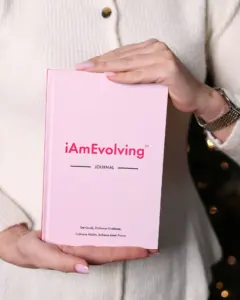
Start your daily practice of gratitude, goals, and growth.
Get the Journal →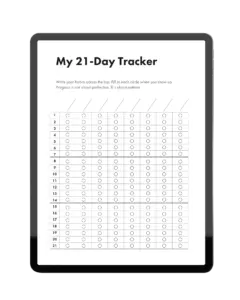
A free 21-day habit tracker PDF with daily check-ins, guided reflection prompts, and mindset reminders. Clean, minimal, and printable.
ExploreFrequently Asked Questions
How long should I journal for gratitude each day?
What if I don’t feel grateful when I write?
Is it better to journal in the morning or at night?