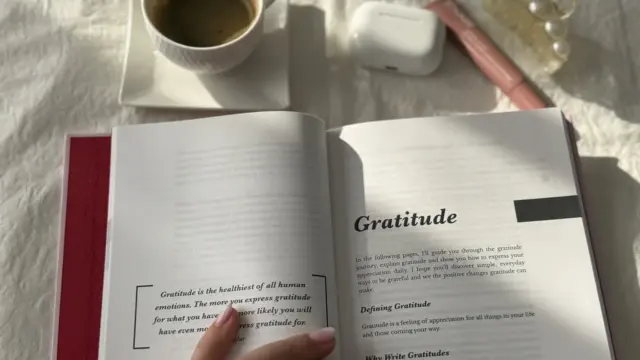
Gratitude Prompts for Deeper Journaling

Gratitude Prompts: Daily Questions to Deepen Your Journaling Practice
Sometimes, a single question can open more than a full page of writing. Gratitude journaling isn’t always about listing what went well. It’s about exploring what truly matters. Prompts help you pause, look closer, and rediscover meaning in the details of your life. Each question becomes an invitation to see differently, to listen inwardly, and to write from awareness instead of habit.
In the iAmEvolving Journal, prompts are not just creative cues. They’re tools for presence. They help you move beyond surface gratitude (“I’m thankful for my home”) toward emotional clarity (“I’m grateful for the sense of safety my home gives me”). That small shift: from naming to feeling: is what turns journaling into transformation.
Why Prompts Deepen Gratitude
When you write from a question, you engage curiosity, not performance. Prompts create a gentle structure that lets reflection flow freely. They turn awareness into dialogue: between your thoughts and your truth. Over time, this practice reveals emotional patterns, values, and desires that might otherwise remain unnoticed.
According to psychology researcher Robert Emmons, writing about gratitude with prompts increases both emotional depth and follow-through. People who use guided reflection tend to sustain gratitude longer and report greater life satisfaction. Prompts remind you that growth is not about control. It’s about conscious noticing.
How to Use Gratitude Prompts
You don’t need to answer every question in one sitting. Instead, choose one prompt each day or week that resonates. Allow yourself to sit with it before you write. Sometimes clarity comes through silence first. This slower approach makes your reflections more honest, more grounded, and more healing.
- Start small: Begin with one or two prompts a week and build consistency.
- Don’t force insight: If a prompt feels heavy, return to it later. Reflection unfolds naturally.
- Be specific: Focus on moments, sensations, or emotions, not general statements.
- End with gratitude: After answering, write one simple thing you’re thankful for that day.
For inspiration, explore 20 Gratitude Journal Prompts to Inspire Your Daily Practice and 25 Gratitude Journal Ideas to Inspire Your Daily Practice. Each offers guided reflections to help you connect more deeply with your inner world.
Get more like this, every week
Prompts for Presence
Some prompts are designed to bring you back to the moment: to anchor your attention in what is real and immediate:
- What moment today made you feel most at peace?
- What small detail brought you joy that you might have overlooked?
- When did you last feel truly connected to yourself or someone else?
These reflections help the mind slow down and recognize beauty in the ordinary. Over time, you’ll notice how presence becomes easier to access, even outside your journal.
Prompts for Growth
Gratitude doesn’t only live in comfort. It also grows in challenge. Writing about what you’ve learned through difficulty strengthens emotional resilience. Try reflecting on these:
- What recent challenge revealed your strength or patience?
- Who has taught you something valuable through disagreement or difficulty?
- What disappointment eventually brought new understanding?
These prompts encourage reframing: the ability to see lessons instead of losses. Gratitude transforms pain not by erasing it, but by giving it meaning.
Prompts for Connection
Gratitude thrives in relationship. When you express appreciation for others, you reinforce empathy and belonging. Try writing through these prompts:
- Who made your day easier or lighter this week?
- What quality do you admire most in someone you love?
- Who needs to hear your appreciation, and how can you express it?
Gratitude shared becomes gratitude multiplied. When you write about others, you begin to understand how deeply connected your joy is to theirs.
Prompts for Renewal
Seasons change: and with them, so do we. Prompts can help you reset intention and perspective as you move through transitions. Reflect with these questions:
- What season of life are you in right now, and what is it teaching you?
- What are you ready to release to create space for what’s next?
- How can you bring more lightness into your routines?
For seasonal reflection, visit Year-End Reflection Prompts to End the Year Mindfully: a guide to help you close one chapter and enter the next with awareness.
When to Use Gratitude Prompts
One of the most common questions about gratitude journaling is when to do it. There is no universal answer, only the rhythm that fits your life. Morning prompts set a tone of intention, helping you meet the day with openness instead of urgency. They work well for questions about hope, possibility, and the kind of person you want to be by nightfall.
Evening prompts move in the opposite direction. They invite you to look back, to gather the small graces the day already offered, and to release what no longer needs carrying. If you wake with a busy mind, a single morning question can ground you before the noise begins, and a gentle morning gratitude ritual pairs naturally with prompts about intention and renewal.
If your evenings feel scattered, an evening gratitude ritual gives your reflections a place to land before sleep. Some people use both, writing one honest line at dawn and a fuller reflection at night. There is no wrong choice here. Experiment until the timing feels less like a task on your list and more like a homecoming you look forward to.
The Science Behind Gratitude Prompts
Gratitude is not only a feeling. It is a measurable shift in how the brain pays attention to experience. Researchers studying the science of gratitude have found that regular reflective writing strengthens the regions tied to reward, empathy, and emotional regulation. When a prompt asks you to name what you value, your attention narrows toward meaning, and your body tends to follow with a quieter sense of calm.
Repetition is what makes the change endure. Each time you answer a prompt, you reinforce the neural pathways that notice what is present rather than what is missing. Over several weeks this rewiring becomes easier to reach, a pattern explored in depth in how gratitude changes your brain through consistent, repeated reflection.
Prompts speed this process because they remove the friction of the blank page. You are no longer searching for something to say. You are simply responding, and response is where most insight quietly lives. That is why a well-placed question often unlocks more honesty than an open page ever could on its own.
Going Deeper With Each Prompt
Most people answer a prompt once and move on. The real depth comes from staying with a single question longer than feels comfortable. After your first response, read it back and ask a quieter follow-up: why does this matter to me, or what does this reveal about what I value? The second answer is almost always more honest than the first.
You can also deepen a prompt by grounding it in the senses. Instead of writing that you are grateful for a friend, describe the exact moment you felt it, the sound of their laugh, the way the room seemed to soften. Specific memories carry more emotional weight than general statements, and they are far easier to return to later.
Another way to go deeper is to write to someone rather than about them. Addressing a prompt as a short, unsent letter changes the tone of your reflection entirely. Gratitude becomes relational instead of abstract, and the words tend to arrive with more warmth and less effort than you expected.
Common Mistakes to Avoid With Gratitude Prompts
The first mistake is rushing. Prompts are not a quiz to finish but a door to walk through slowly. When you answer too quickly, you tend to repeat what you already believe instead of discovering something new. Give each question a few breaths of silence before your pen begins to move.
The second mistake is reaching for prompts that sound impressive rather than ones that feel true. A simple question you actually want to answer will always serve you better than a profound one you quietly avoid. Honesty matters far more than eloquence when the page is only for you.
The third mistake is treating gratitude as forced positivity. You are not pretending hard days never happened. You are looking for what remained steady inside them. If a prompt ever feels like denial, soften it. Ask what helped you cope rather than what you think you should feel grateful for. Real gratitude makes room for the whole truth, not only the pleasant parts of it.
Building a Lasting Prompt Routine
A prompt only changes you if you return to it. The goal is not to journal perfectly but to journal often enough that reflection becomes second nature. Anchor your practice to something you already do, whether that is your first cup of coffee or the quiet minutes before sleep. Consistency, not intensity, is what turns a handful of questions into a lasting gratitude habit.
Keep your prompts somewhere visible so the practice stays easy to begin. Rotate through a small set rather than chasing endless new questions, because depth comes from revisiting, not collecting. When a prompt stops feeling fresh, sit with it longer instead of trading it for another one.
Most of all, be patient with yourself on the days the words come slowly. A routine is not a streak to protect. It is a relationship you keep returning to. Even a single sentence keeps the thread intact, and over months those small threads weave into a record of how steadily you have grown.
Turning Prompts into Practice
Once you’ve answered a few prompts, revisit them later. You’ll often see how your answers evolve. Growth reveals itself not through new questions but through deeper responses. This practice helps you recognize how far you’ve come: emotionally, mentally, and spiritually.
To keep your reflections organized, dedicate one section of your iAmEvolving Journal to prompts. Date each entry and leave space to return weeks later. The comparison becomes a record of growth: proof that gratitude, when practiced, expands with time.
When You Feel Stuck
There will be days when no question feels right: when you’re tired, uninspired, or emotionally full. That’s when journaling becomes medicine. Choose one simple prompt like, “What helped me get through today?” and let honesty lead. Gratitude doesn’t ask you to be perfect; it asks you to be present.
Even one sentence of awareness is enough to begin again.
Closing Reflection
Gratitude prompts are small keys to vast awareness. Each one opens a door within you: to memory, perspective, or peace. When you sit with them long enough, you’ll find that gratitude stops being a list of moments and becomes a way of seeing. That’s when the journal stops being paper and becomes a mirror.
Gratitude is one of the four core foundations of the iAmEvolving Journal: a daily practice that strengthens awareness, balance, and emotional growth. To explore more guided reflections and journaling practices, visit Gratitude Journaling Guide for Mindful Growth.
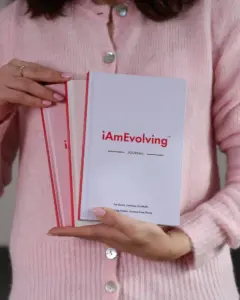
Start your daily practice of gratitude, goals, and growth.
Get the Journal →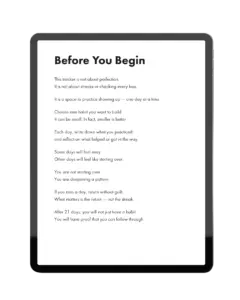
A free 21-day habit tracker PDF with daily check-ins, guided reflection prompts, and mindset reminders. Clean, minimal, and printable.
ExploreFrequently Asked Questions
How do I choose the right gratitude prompts?
How often should I use gratitude prompts?
What if I get stuck or don’t know what to write?