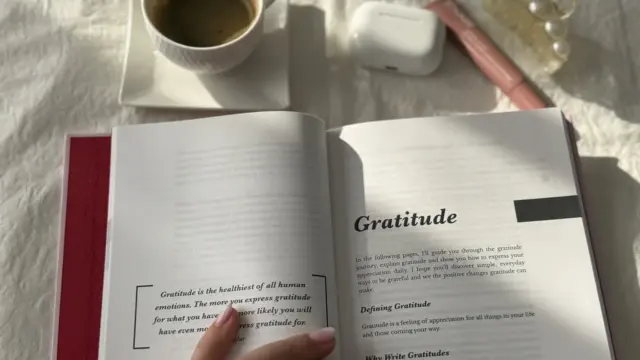
Year-End Reflection Prompts to End the Year Mindfully
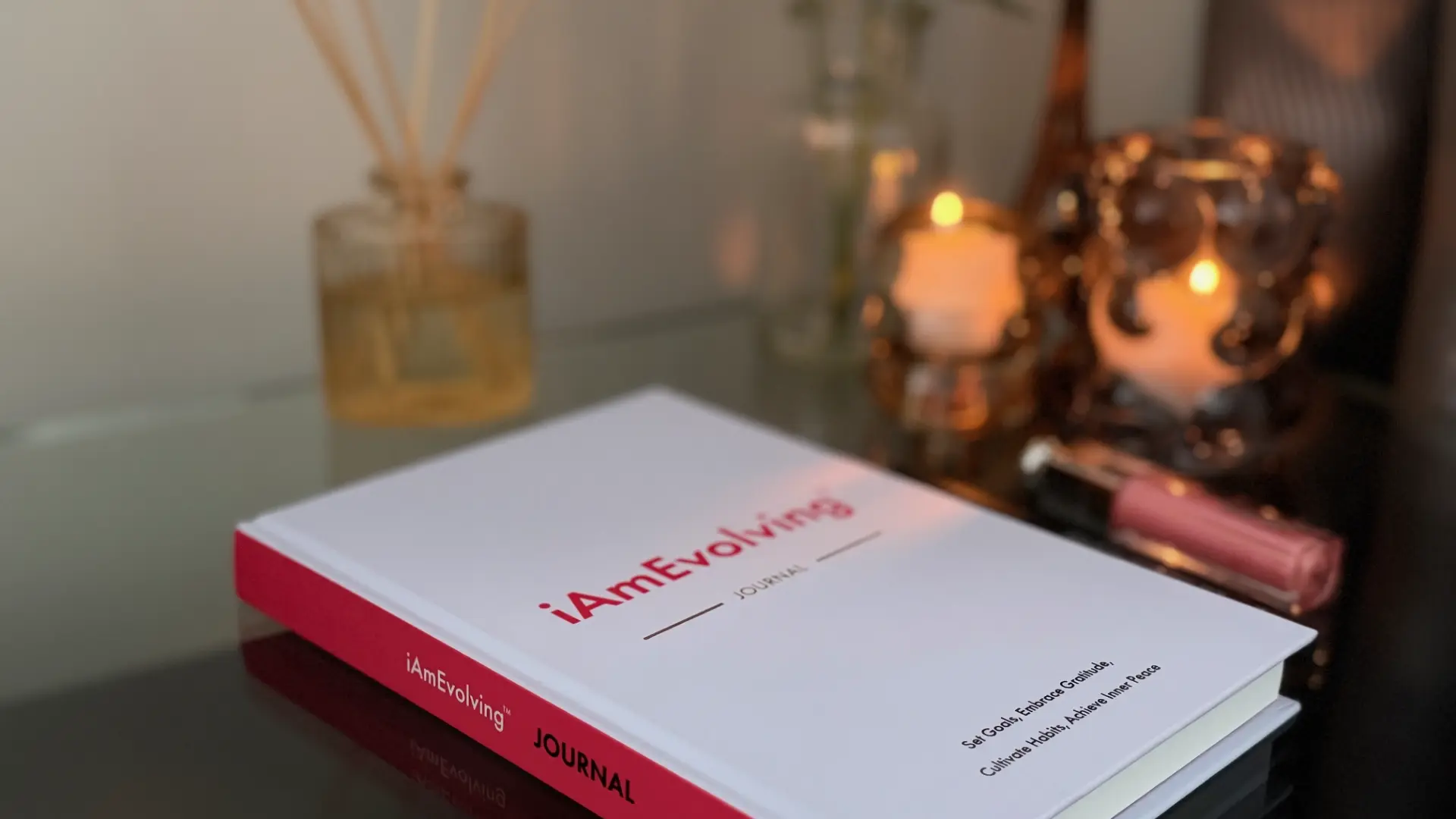
Before stepping into a new year, it’s powerful to pause and look back. Reflection turns experiences into wisdom, clarifies what truly matters, and helps you carry gratitude instead of regret into the months ahead.
By writing through guided journal prompts, you slow down the noise of everyday life and listen to your own evolution. Each insight strengthens the connection between gratitude, goals, and inner harmony: the three foundations of the iAmEvolving™ Journal.
When you take time to acknowledge where you’ve been, you begin the new year with direction and calm rather than pressure and comparison.
1. The Mindful Pause
Your year was made of thousands of moments: victories, mistakes, stillness, and change. The first step in reflection is to stop chasing and simply notice.
Sit quietly for a few minutes, breathe deeply, and let memories surface without judgment.
Prompt: “If I could describe this year in one word, it would be ______ because…”
This simple question invites awareness instead of evaluation. Mindful reflection grounds you in presence and reminds you that growth often happens quietly.
2. Gratitude for the Journey
Gratitude is the bridge between what was and what will be. It amplifies joy and softens the edges of disappointment. As you look back, include both triumphs and the challenges that forced you to grow.
Prompts
- What am I most grateful for this year: and why?
- Which challenge became a hidden blessing?
- Who supported or inspired me when I needed it most?
- Which daily habit, conversation, or book shifted my perspective?
Writing in the present tense (“I am grateful for…”) trains the subconscious mind to stay tuned to abundance rather than scarcity. Over time, this gratitude focus changes not only how you feel but also the opportunities you notice.
3. Lessons That Shaped You
Every obstacle teaches resilience; every success strengthens self-trust. Reflecting on both gives you balanced insight and reduces the perfectionism that blocks progress.
Prompts
- What did I learn about myself this year?
- Which habits or mindsets helped me evolve?
- Where did I resist change, and what did that reveal?
- What do I want to leave behind before the new year begins?
A helpful approach is to divide lessons into three columns: Mind, Body, and Spirit. Seeing how growth shows up in all areas helps you plan more holistic goals for the future.
Get more like this, every week
4. Reconnecting with Inner Harmony
Your emotions are the map of your year. When you observe your inner state: from fear to faith, from worry to calm. You see your real progress. The iAmEvolving Journal uses the “Fearful → Faithful” spectrum to help you track these shifts.
Prompts
- What emotions visited me most often this year?
- How did I nurture calm, confidence, or faith when I needed it?
- What practices helped me return to balance?
- When did I ignore my emotions instead of listening to them?
If you haven’t yet, read Mapping Your Inner Harmony for a step-by-step guide to charting emotions. Consistent emotional tracking reveals patterns that data alone can’t show: how your thoughts, habits, and gratitude influence one another.
5. How Reflection Improves Goal Setting
True goals aren’t written from pressure but from awareness. When you look back on twelve months of experiences, you see which intentions aligned with your values and which were distractions.
Reflection strengthens your next goal cycle by clarifying:
- what energized you instead of drained you,
- which routines supported consistency,
- where you acted from fear rather than faith.
Prompts
- Which goals did I accomplish, and what made them possible?
- Which ones lost momentum, and why?
- How can I refine my daily habits to stay aligned next year?
- What does “success” truly mean to me now?
Use this insight to write more meaningful goals in January. As the journal reminds you, “The goal is your direction: the North Star you are aiming for.” When reflection precedes planning, your actions become focused yet flexible.
6. The Power of Story: Turning Reflection into Renewal
Try summarizing your year as a short personal story. Begin with where you were in January, trace the turning points, and end with how you’ve changed. Writing it as narrative activates empathy and closure: two keys to emotional well-being.
You might start:
“This year began with uncertainty but taught me patience. Mid-summer brought clarity, and autumn grounded me in gratitude.”
This exercise transforms your list of events into a cohesive journey, reinforcing self-compassion and purpose.
7. Looking Ahead with Intention
Now that you’ve reflected, redirect your focus toward the coming year. Instead of making rigid resolutions, set intentions: guiding themes that integrate who you’re becoming.
Prompts
- How do I want to feel in 2026?
- What one word or phrase will guide my year?
- What daily practice will help me stay grounded and grateful?
- What am I willing to release to make space for growth?
Intentions remind you that life is fluid. Goals create structure; gratitude provides the heart; intention gives direction.
8. Building a Reflection Ritual
Consistency turns insight into transformation. Choose one evening each week in December to journal using a few of these prompts. End each session by writing three gratitudes and one forward-looking affirmation, such as:
“I trust that everything I learned this year will serve my next chapter.”
Pair the ritual with a calming routine: a cup of tea, soft light, quiet music: to teach your mind that reflection is a form of rest, not labor. Within a few weeks, this ritual becomes a signal of peace and clarity.
9. Practical Example
Imagine Sofia, a reader who began journaling last January. She wrote only sporadically at first but noticed that each reflection session brought relief from stress. By mid-year she began tracking emotions using the Inner Harmony page. When she reviewed her notes in December, she saw a steady shift from anxiety toward calm.
That visible progress became motivation to set gentler, more consistent goals for 2026. Sofia’s story illustrates how self-observation fuels confidence: proof that growth often hides inside ordinary days.
10. End-of-Year Journal Prompts for Every Area of Life
A broad year-end reflection becomes far more useful when you bring it down to specific corners of your life. Instead of asking one sweeping question about the whole year, move through the areas that actually shape your days. The end-of-year journal prompts below are grouped by theme so you can pick the sections that feel most alive for you and skip the rest. There is no need to answer every one in a single sitting.
Relationships and connection
- Which relationships gave me energy this year, and which quietly drained it?
- Where did I show up as the person I want to be, and where did I fall short?
- Who do I want to thank before the year ends?
Work and purpose
- What work felt meaningful, even when it was hard?
- Which commitments no longer fit the direction I am growing toward?
- What did I create or contribute that I feel proud of?
Health, rest, and self-care
- When did I feel most rested and well this year?
- What habit supported my body or mind, and what undermined it?
- What does taking better care of myself look like in practical terms?
Working through end-of-year journaling prompts this way turns a vague sense of “how was my year” into clear, honest answers you can actually act on. Notice the patterns that repeat across categories. Those repeated themes are often where your next chapter is asking to begin.
11. Turning Your End-of-Year Reflection into a Fresh Start
Reflection is only half of the work. The other half is letting what you learned shape how you move forward. Once you have looked back with honesty and gratitude, the natural next step is to carry a few clear insights into the new year rather than a long list of resolutions you will abandon by February.
Start small. Choose one lesson from your end of year reflection that mattered most, and ask how it could guide a single change in January. Maybe you learned that rushing left you depleted, so your fresh start is a slower morning. Maybe you noticed that gratitude steadied you on hard days, so you commit to a short daily practice. One grounded change you actually keep will reshape a year more than ten ambitious goals you forget.
When you are ready to translate reflection into direction, a few focused rituals help. Explore new year journaling rituals to set intentions to build a calm, repeatable way to begin, and use writing down your intentions to make those themes concrete on the page. The point is not to pressure yourself into a new identity overnight. It is to let this year’s wisdom quietly inform the next, so you step forward grounded, grateful, and clear about what matters.
Closing Thought
Reflection is not about reliving the past. It’s about integrating it. Each page you fill becomes a mirror showing how far you’ve come.
As the iAmEvolving™ Journal reminds us:
“To grow is to change;
to evolve is to choose that change consciously.”: Victor Tihai
As this year closes, take one last slow breath, express gratitude for the path behind you, and write your way into the year ahead: calm, confident, and evolving.
Reflection doesn’t end with the year. It evolves with every new beginning. To continue exploring meaningful questions that deepen awareness and gratitude, visit Gratitude Prompts — Daily Questions to Deepen Your Journaling Practice.
Start your daily practice of gratitude, goals, and growth.
Get the Journal →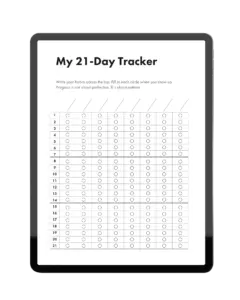
A free 21-day habit tracker PDF with daily check-ins, guided reflection prompts, and mindset reminders. Clean, minimal, and printable.
ExploreWhy is year-end reflection important?
What are effective year-end reflection prompts?
How can journaling improve self-awareness?
How often should I reflect?
What tool should I use for reflection?