The Power of Writing Down Your Intentions

We often have ideas, dreams, or goals floating in our minds, but without clarity, they remain vague wishes. The simple act of writing down your intentions can transform those thoughts into something tangible: something your mind can focus on and act upon.
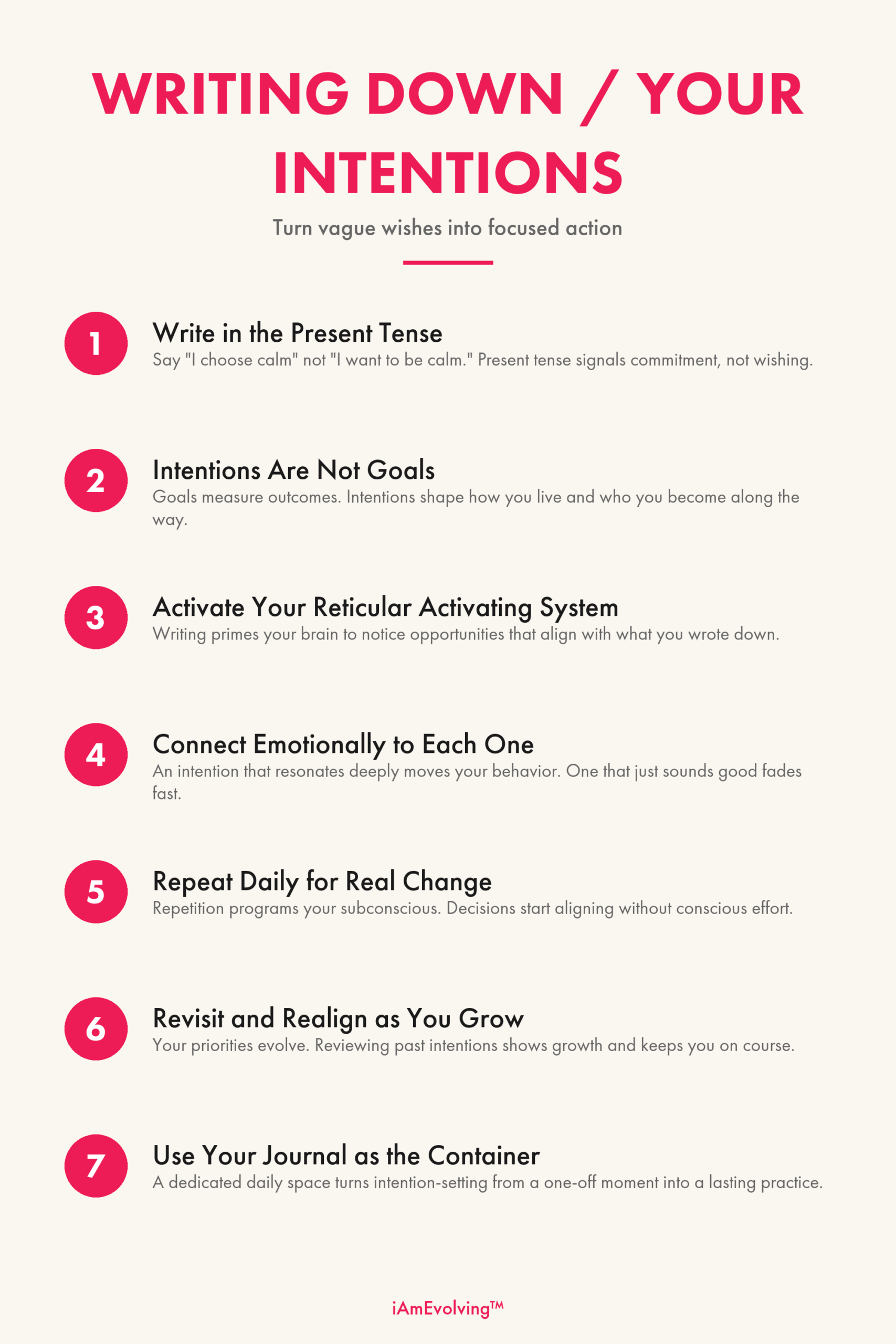
Unlike casual thoughts, intentions written on paper become commitments. An intention is a short, present-tense statement of how you want to live or who you want to become, and writing it down is what turns a passing thought into a practice you can return to each day. They anchor your energy, sharpen your focus, and remind you daily of the direction you’ve chosen for your life.
Intentions vs. Goals: Why the Difference Matters
Goals are about what you want to achieve. Intentions are about how you want to live and who you want to become along the way.
For example:
- Goal: “Run a half marathon this year.”
- Intention: “Take care of my body and challenge myself consistently.”
Goals give you measurable targets. Intentions give your goals meaning, depth, and emotional fuel. When you write them down, you’re not just planning tasks. You’re shaping your identity. To bring structure to this practice, explore Goal Setting Journal.
Why Writing Down Intentions Works
When you keep your intentions in your head, they compete with distractions, stress, and daily noise. Writing them down:
- Clarifies your priorities → vague ideas become concrete
- Activates your brain’s reticular activating system (RAS) → your mind starts noticing opportunities that align with your intentions
- Creates accountability → you can revisit them anytime and measure how aligned your actions are
- Strengthens belief → the act of writing signals to your subconscious that this matters
And when you repeat your intentions daily, you’re not just reminding yourself: you’re programming your subconscious mind. Over time, these repeated written intentions become part of your mental framework. You naturally start making decisions and noticing opportunities that align with them, often without conscious effort.
How to Start Writing Intentions
You don’t need a complicated process. Start with these simple steps:
- Set aside a few quiet minutes each morning or evening.
- Write in the present tense, as if you’re already living your intention. (e.g., “I choose to stay focused and calm throughout my day.”)
- Connect emotionally . Your intention should resonate deeply, not just sound good.
- Revisit regularly to adjust and realign as you grow.
Even one strong intention, written daily, can shift your mindset and behavior in powerful ways.
How to Write an Intention That Actually Sticks
A well-written intention is short, specific, and phrased in the present tense, as if it is already true. The wording matters more than most people expect. “I want to stop feeling so scattered” keeps the scattered feeling in focus, while “I move through my day with calm and steady attention” points your mind toward the state you actually want. Your brain tends to move toward whatever it rehearses, so write the destination, not the problem.
When you sit down to write one, try a simple structure: begin with “I am” or “I choose,” name the quality you want to embody, then add the part of life where it matters most. Keep it to a single sentence you can actually remember. A few examples to borrow or adapt:
- “I choose to listen fully before I respond.”
- “I am patient with myself as I learn something new.”
- “I bring steady energy to the work in front of me.”
- “I notice the good before I reach for the next thing.”
If you want to take this further and connect your written intentions to the future you are building, Manifestation Journaling shows how present-tense writing shapes what you notice and pursue. Pairing intentions with Daily Affirmation Rituals can also reinforce the same identity from a slightly different angle.
Morning or Evening: When to Write Your Intentions
The honest answer is that both work, and the best time is the one you will actually keep. Morning writing sets the tone before the day pulls you in different directions. Evening writing helps you reflect on how aligned the day felt and reset for tomorrow. Many people who stay consistent end up doing a quick version of both: one line to aim the day, one line to close it.
| Time of day | Best for | What it feels like |
|---|---|---|
| Morning | Direction and focus | Choosing how you want to show up before the noise begins |
| Evening | Reflection and reset | Reviewing the day and realigning for tomorrow |
If mornings feel like the natural fit, building intentions into a wider Morning Journaling Routine makes the habit far easier to keep. The structure carries you on the days motivation runs low.
Examples of Written Intentions for Everyday Life
Intentions are not only for big life seasons. They work best when they touch the ordinary moments where your attention usually drifts. Writing one for a specific area of life makes it concrete enough to act on. Here are a few starting points across common areas:
- Work: “I focus on one task at a time and finish what I start.”
- Relationships: “I give the people I love my full presence, not my leftover attention.”
- Health: “I treat my body with care through small, steady choices.”
- Growth: “I stay open to feedback and willing to begin again.”
Notice how each one describes a way of being rather than a finished result. That is what keeps an intention alive long after a goal is checked off. If you want a structured moment to set them for a fresh chapter, New Year Journaling Rituals to Set Intentions offers a gentle framework you can use at any turning point, not just January.
Why Written Intentions Fade, and How to Keep Yours Alive
Most intentions do not fail because they were wrong. They fade because they were written once and never seen again. The page gets buried, the week gets busy, and the words quietly stop shaping anything. The fix is not more willpower. It is keeping your intention somewhere your eyes naturally land, so it stays part of the conversation you have with yourself each day.
A few small habits make the difference between an intention that drifts and one that holds:
- Keep it visible. Write it at the top of today’s journal page, not on a loose note you will lose by lunch.
- Read it out loud. Saying the words engages more of your attention than scanning them silently.
- Review it weekly. Ask one honest question: did my choices this week match what I wrote?
- Let it change. An intention that no longer fits is not a failure. Rewrite it to match who you are becoming.
Consistency, not intensity, is what makes written intentions work. A single sentence returned to every day will quietly outperform a long, inspired list you never open again.
Get more like this, every week
Journaling: The Perfect Place for Your Intentions
Your journal is more than a notebook. It’s a personal space to plant the seeds of change. By writing intentions daily, you create a record of what truly matters to you. To deepen your gratitude and focus, visit Gratitude Journal Benefits.
The iAmEvolving Journal was designed with this in mind. It gives you a clear daily structure for goal setting, gratitude, habits, and inner reflection: the ideal environment to keep your intentions alive.

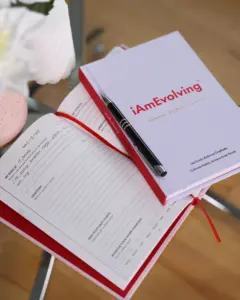
Start your daily practice of gratitude, goals, and growth.
Get the Journal →
A free 21-day habit tracker PDF with daily check-ins, guided reflection prompts, and mindset reminders. Clean, minimal, and printable.
ExploreIntentions Make the Invisible Visible
Your intentions are like invisible threads guiding your decisions. Writing them down brings them into the physical world, where they can influence your focus, energy, and actions.
The moment you write with clarity, your life begins to align with what’s on the page. For tools that support your long-term growth, see Best Personal Development Journals.
Every intention you write is a quiet act of alignment: a signal to your mind about what truly matters. The more you put your thoughts on paper, the more your actions begin to follow. To understand how journaling builds consistency and self-awareness, explore Journaling Foundations. For a full overview of the iAmEvolving method, begin your practice with the Journaling Guide.
FAQ
What’s the difference between intentions and affirmations?
How often should I write my intentions?
Should I review past intentions?
Can I combine intentions with goals?