Best Journals for Teachers (End of Year + Daily Reflection)

The best journals for teachers are the ones that respect your time, hold space for your emotions, and help you process what no lesson plan ever prepares you for. Teaching is one of the most emotionally demanding professions. Research shows that teachers who journal regularly report lower rates of burnout and greater emotional resilience, yet most journals on the market are designed for a lifestyle that looks nothing like yours.
Whether you are looking for something to use during your morning prep period, a place to process the school day after dismissal, or a reflective tool for end-of-year closure, the right journal turns scattered mental weight into clarity. Below are five types of journals that work especially well for educators, starting with the one I recommend most for daily use.
What Teachers Should Look for in a Journal
Teachers do not lack self-awareness. What they lack is time and space to do something productive with it. After six or seven hours of constant emotional output, the last thing you need is a journal that asks you to write three pages of free-form reflection. The best journal for a teacher is one that meets a few non-negotiable criteria:
- Quick daily entries. If it takes more than ten minutes, it will not survive November. Guided prompts and structured layouts are better than blank pages because they reduce decision fatigue.
- Emotional processing, not just task tracking. Teacher planners handle scheduling. What most teachers are missing is a space that asks, “How did today feel?” and “What do I need to let go of before tomorrow?”
- Connection to larger goals. The school year moves fast. Without a place to track your own growth alongside your students’ progress, months pass without any record of how far you have come.
- Built-in gratitude practice. It is easy to fixate on the hard days. A journal that includes gratitude prompts keeps the good moments visible, which is essential for staying in the profession long-term.
- Durability and portability. A teacher’s bag already weighs too much. A compact, hardcover journal that can handle the commute between school and home is a practical must.
If you are completely new to journaling, how to start journaling covers the fundamentals so you can build a practice that actually sticks.
The Best Journals for Teachers: 5 Types That Work
1. The iAmEvolving Journal: Best All-in-One Daily Journal for Teachers
The iAmEvolving Journal is the journal I recommend first for teachers because it was designed for exactly the kind of day you live. Each morning page starts with gratitude and an intention. Each evening page ends with reflection. In between, a built-in habit tracker keeps the personal goals you set for yourself visible, even when the school day makes everything else invisible.
What makes this journal particularly effective for teachers is its structure. You are not staring at a blank page trying to figure out what to write after a day that already drained your creative energy. The prompts guide you through a specific sequence: what you are grateful for, what you intend for the day, what habits you are building, and what the day actually taught you. That sequence takes roughly ten minutes per day, split between morning and evening.
For teachers dealing with the emotional weight of the classroom, the evening reflection section is especially powerful. Rather than carrying the frustrations or heartbreaks of the day to bed with you, the journal gives you a structured place to set them down. You name what happened, acknowledge what it meant, and release it. Over time, this daily practice of processing and releasing builds the emotional resilience that keeps teachers in classrooms longer.
The iAmEvolving Journal features a premium A5 hardcover with thick, bleed-resistant pages and a ribbon bookmark for daily use. Because it is undated, you can start in September, January, or the middle of spring break. There are no wasted pages if you miss a day during report card season.
- Best for: Teachers who want a complete daily practice covering gratitude, goals, habits, and reflection
- Time required: 5-10 minutes per day (morning and evening)
- Key strength: Structured prompts eliminate decision fatigue while building emotional resilience
2. Gratitude Journals: Best for Teacher Well-Being and Perspective
A dedicated gratitude journal is one of the simplest and most effective tools for teachers who want to shift their daily focus from what went wrong to what went right. These journals typically ask you to list three to five things you are thankful for each day, and that is it. Five minutes, done.
For teachers, the impact is significant. When you spend your days managing behavior, navigating difficult parent conversations, and meeting constantly shifting expectations, your brain starts to filter for problems. Gratitude journaling retrains that filter. Over weeks, you start noticing the student who stayed after class to say thank you, the colleague who covered your duty, the lesson that actually worked the way you planned it.
Look for a gratitude journal with guided prompts rather than blank lines. Prompts like “What made me smile today?” or “What small thing went well in my classroom?” are more useful for teachers than generic entries. If you want prompt ideas tailored to appreciation and thankfulness, gratitude journal prompts offers a strong starting list.
- Best for: Teachers who need a fast, daily positivity anchor
- Time required: 3-5 minutes per day
3. Teacher Planners with Reflection Space: Best for Organized Educators
Some teachers prefer to keep their planning and reflection in one place. Teacher-specific planners that include weekly reflection sections, monthly check-ins, or self-care pages bridge the gap between organizational tools and personal growth. These are not traditional journals, but they create space for the kind of reflective practice that supports longevity in the profession.
The key is finding one that goes beyond schedules and to-do lists. The reflection prompts should ask you questions about your experience, not just your productivity. “What challenged me this week?” and “What am I proud of?” are more valuable than another place to write down tomorrow’s meetings.
The limitation of this category is depth. Planners with built-in reflection typically offer only a few lines per week for personal processing. If you are going through a difficult season at work, a few lines may not be enough. But for teachers who want one book that handles both the practical and the personal, this is a solid middle ground.
- Best for: Teachers who want planning and reflection in a single book
- Time required: 5-10 minutes per week for reflection sections
Get more like this, every week
4. Blank Premium Journals: Best for Free-Form Processing
Sometimes a teacher does not need prompts. Sometimes the day was so heavy that the only thing that will help is ten minutes of unstructured writing. A blank premium journal with quality paper, a durable binding, and no structure at all can be the most powerful tool on the hardest days.
This type of journal works best for experienced journalers who already know what they need to write about. If you are the kind of teacher who processes by writing long-form paragraphs about what happened, what you felt, and what you would do differently, a blank journal gives you the freedom to do that without constraints.
The risk is inconsistency. Without prompts or daily structure, blank journals are easy to neglect. But when you need them, they are irreplaceable. Many teachers keep a structured daily journal for their morning practice and a blank journal in their desk drawer for the days when something needs to be written out in full.
- Best for: Experienced journalers who process through free-form writing
- Time required: Variable, as needed
5. Guided Self-Care Journals: Best for Teachers Approaching Burnout
If you are reading this during a season when teaching feels unsustainable, a guided self-care journal is the right starting point. These journals focus specifically on emotional recovery, boundary-setting, stress management, and reconnecting with the reasons you chose this work in the first place.
Good self-care journals for teachers include prompts around energy management, identifying emotional triggers, and building recovery routines. They are not productivity tools. They are survival tools, and there is no shame in needing one. If burnout is what brought you to this page, journaling prompts for burnout offers specific writing exercises designed for exactly where you are.
The best self-care journals also guide you through rebuilding, not just coping. They help you define what boundaries you need, what parts of teaching still bring you energy, and what a sustainable version of this career looks like for you specifically.
- Best for: Teachers in high-stress seasons who need emotional recovery tools
- Time required: 10-15 minutes, a few times per week
The Best Journaling Rhythms for Teachers
The biggest reason teachers stop journaling is not lack of interest. It is lack of a realistic rhythm. A journaling practice has to fit into the shape of your actual day, not an idealized version of it. Here are the four windows that work best for teachers:
Before school (5-10 minutes). Arrive ten minutes early with your coffee and your journal. Write your gratitude entries and set your intention for the day. This is the single most effective journaling window for teachers because it happens before the emotional demands begin. A morning journaling routine grounds you before the first bell rings.
During a prep period (5 minutes). Keep your journal in your desk and use the first five minutes of your prep to jot down how the morning went. This mid-day check-in prevents emotions from accumulating. Even a few sentences help.
After dismissal (10 minutes). Before you open your laptop for emails or grading, close the classroom door and write your evening reflection. What went well? What was hard? What are you carrying that you can set down? This ten-minute practice creates a boundary between the school day and your personal evening.
Weekend reflection (15-20 minutes). Sunday evenings or Saturday mornings work well for a longer weekly review. Look back at your daily entries, notice patterns, celebrate wins, and set your intentions for the week ahead. This is where the real insight happens, because patterns only become visible when you zoom out.
End-of-Year Journaling for Teachers
The end of the school year is one of the most emotionally complex times in a teacher’s life. Relief, grief, pride, exhaustion, and anticipation all arrive at once. Without a reflective practice, those feelings blend into a fog that follows you into summer and sometimes into the next September.
End-of-year journaling gives you a way to process the year as a whole. Not just the highlights for the yearbook or the data for your evaluation, but the full human experience of spending nine months with a group of people who changed you as much as you changed them.
Here is a simple end-of-year journaling practice you can follow during the final two weeks of school:
- Week 1: Reflect and release. Write about what this year taught you. Name the hardest moments. Acknowledge the students who challenged you. Then write a letter of release, giving yourself permission to let go of what you could not control.
- Week 2: Celebrate and envision. Write about your wins. Name the students who grew. Acknowledge what you did well, even if no one else noticed. Then write about what you want next year to feel like, not just what you want it to look like.
For a complete set of reflective prompts designed for year-end processing, year-end reflection journal prompts provides a guided approach to closing one chapter and opening the next with clarity.
8 Journaling Prompts for Teachers
If you have your journal but are not sure where to start, these prompts are written specifically for the realities of teaching. They are not generic positivity exercises. They address what teachers actually carry.
- What moment from today’s classroom do I want to remember? Not the data, not the behavior chart. The human moment.
- What am I carrying from this week that is not mine to carry? Teachers absorb their students’ pain. Name it so you can set it down.
- What boundary do I need to set or reinforce this week? With a parent, a colleague, an administrator, or with your own after-hours email habit.
- What did I do well today that I did not get credit for? Teaching is full of invisible labor. Your journal is the one place that sees it all.
- What would make tomorrow 10% easier? Not a full overhaul. Just one small adjustment.
- When did I feel most like myself this week? This question reveals which parts of teaching still bring you energy and which parts drain it.
- What is one thing I am grateful for about my students right now? Specific gratitude reconnects you to the reason you are in the room.
- If I could tell my beginning-of-year self one thing, what would it be? This is a powerful end-of-year prompt that reveals how much you have grown.
How Journaling Prevents Teacher Burnout
Teacher burnout is not caused by working hard. It is caused by working hard without processing what the work does to you. The emotional labor of teaching accumulates in ways that grading rubrics and PD sessions never address.
Journaling interrupts that accumulation. When you write about a difficult interaction with a student, a frustrating meeting, or the guilt of feeling like you are not doing enough, the act of naming those experiences reduces their emotional charge. Studies in expressive writing show that people who journal about stressful events for just 15 minutes have lower cortisol levels and report less emotional exhaustion over time.
For teachers specifically, journaling creates three protective layers against burnout:
- Emotional discharge. You give the hard feelings a place to go instead of storing them in your body. The heaviness you feel at the end of the day is often unprocessed emotion, not physical tiredness.
- Pattern recognition. After a few weeks of daily entries, you start noticing what drains you and what restores you. Maybe you see that Tuesdays are always the hardest because of a specific class. Maybe you realize that eating lunch alone once a week makes the rest of the week more sustainable. These patterns are invisible without a written record.
- Evidence of growth. Burnout whispers that nothing is changing and nothing will get better. Your journal is proof that things do change. Flipping back to September and reading about a student who would not speak in class, then looking at your March entry about that same student presenting to the whole group, that evidence counters the burnout narrative with facts.
If you are feeling the weight of emotional burnout at work, know that the first step toward recovery is creating a space where you can be honest about how you are actually doing. A journal is that space.
Conclusion
Teachers give more of themselves in a single day than most professionals give in a week. The emotional labor, the patience, the constant adaptation. All of it deserves a place to be seen, processed, and honored. The best journals for teachers are the ones that create that place without adding another item to an already overwhelming to-do list.
If you want a structured daily practice that covers gratitude, goal-setting, habits, and reflection in under ten minutes, the iAmEvolving Journal is the one I recommend starting with. It was designed for people who are doing important, emotionally demanding work and need a grounded, practical way to take care of themselves while they take care of others. Start with one morning entry before your first class. Let the habit build from there. The teacher who takes ten minutes for their own growth is the teacher who stays.
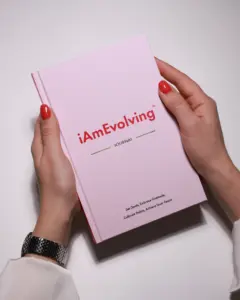
Start your daily practice of gratitude, goals, and growth.
Get the Journal →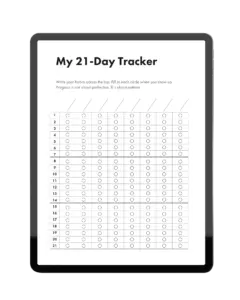
A free 21-day habit tracker PDF with daily check-ins, guided reflection prompts, and mindset reminders. Clean, minimal, and printable.
ExploreFrequently Asked Questions
What is the best journal for a teacher?
When is the best time for teachers to journal?
Can journaling help prevent teacher burnout?
What should a teacher write in a journal at the end of the school year?