Guided vs Blank Journals: Which Is Right for You?

A guided journal is a structured notebook that provides daily prompts, questions, and frameworks designed to direct your writing toward specific outcomes such as gratitude, goal setting, or self-reflection. A blank journal, by contrast, offers empty pages with no instructions, leaving the writer to decide what, when, and how to write. According to a study by Dr. Gail Matthews at Dominican University of California, people who write down their goals in a structured format are 42 percent more likely to achieve them than those who simply think about their goals. This distinction between structure and freedom is at the heart of every journaling decision you will make.
If you have ever stared at an empty page and felt more paralyzed than inspired, you are not alone. And if you have ever felt boxed in by someone else’s prompts when all you wanted was space to process your own thoughts, that experience is equally valid. The truth is that both guided and blank journals serve real purposes, and neither is inherently better. What matters is which one matches where you are right now, what you need from the practice, and how you want to grow. This is a decision that can shape whether journaling becomes a lasting habit or something you abandon within two weeks. If you are new to the practice, our complete journaling guide covers the foundations you need before choosing a format.
What Is a Guided Journal?
A guided journal comes with built-in structure. Each page or spread includes prompts, questions, exercises, or frameworks that tell you exactly what to write about and, in many cases, how much space to use. Some guided journals focus on a single theme like gratitude or goal setting. Others, like the iAmEvolving Journal, integrate multiple growth areas into one daily practice, covering gratitude, intentions, habits, reflection, and mindset in a single sitting.
The level of guidance varies. A simple guided journal might offer one question per page. A more comprehensive one provides a full daily framework with morning prompts, evening reflections, weekly check-ins, and monthly reviews. The key characteristic is that you never have to decide what to write. The journal does that thinking for you, which frees your energy for the actual work of self-reflection.
Common features of guided journals include:
- Daily prompts or questions that focus your attention on specific topics
- Dedicated sections for gratitude, goals, habits, or affirmations
- Structured layouts with defined writing spaces
- Progress tracking tools like habit trackers or monthly reviews
- Inspirational quotes or reflections to set the tone for each entry
What Is a Blank Journal?
A blank journal is exactly what it sounds like: a bound notebook with empty pages and no instructions. There are no prompts, no frameworks, and no predefined structure. You open it, pick up a pen, and decide entirely on your own what to put on the page. This could be stream-of-consciousness writing, a detailed account of your day, poetry, sketches, business plans, or anything else that comes to mind.
Blank journals appeal to writers who value creative freedom and resist external constraints. They are the purest form of self-expression because nothing stands between you and the page. There is no right or wrong way to use one, which is both its greatest strength and its most common stumbling block.
Common uses for blank journals include:
- Free writing or stream-of-consciousness journaling
- Creative writing, poetry, or sketching
- Processing emotions without any external framework
- Brain dumping thoughts, ideas, or worries onto the page
- Combining text with drawings, diagrams, or collage
Guided Journal vs Blank Journal: Side-by-Side Comparison
The differences between guided and blank journals go beyond just having prompts on the page. They affect how you approach writing, how consistently you show up, and what kind of growth the practice supports. Here is a direct comparison across the factors that matter most.
| Feature | Guided Journal | Blank Journal |
|---|---|---|
| Structure | Prompts, sections, and frameworks provided | Completely open, no structure |
| Time to Start | Immediate, just answer the prompt | Requires deciding what to write first |
| Best For | Beginners, goal-oriented writers, habit builders | Experienced writers, creatives, free thinkers |
| Consistency | Higher, structure reduces friction | Lower, blank page resistance is common |
| Depth of Reflection | Focused and intentional | Varies widely based on the writer |
| Creative Freedom | Limited to the journal’s framework | Unlimited |
| Skill Development | Builds specific habits (gratitude, goal setting) | Develops raw writing and introspection skills |
| Overwhelm Risk | Low, the prompts guide you | Higher, especially for beginners |
Best for most people: A guided journal, especially if you are starting out or want a consistent daily practice tied to specific personal growth goals. The structure removes the biggest barrier to journaling, which is not knowing what to write.
Get more like this, every week
Why Structure Matters: The Science Behind Guided Journals
The case for guided journals goes beyond preference. Research consistently shows that structure improves both the quality and consistency of reflective writing. James Pennebaker, the psychologist who pioneered expressive writing research at the University of Texas, found that people who wrote about specific emotional experiences using directed prompts showed greater improvements in physical health, immune function, and psychological well-being than those who wrote freely without guidance. The structure channels the writer’s attention toward what matters most, without boxing them in.
Dr. Gail Matthews’s study reinforces this from a goal-setting perspective. Participants who wrote their goals in a structured, specific format, and reviewed them regularly, dramatically outperformed those who kept goals as vague mental intentions. A guided journal essentially automates this process by building goal-setting, review, and accountability into the daily writing practice.
There is also the issue of cognitive load. When you open a blank page, your brain has to make a series of decisions before you even start writing: What should I write about? How should I structure this? How long should I write? Each of these micro-decisions uses mental energy and creates friction. Psychologists call this “decision fatigue,” and it is one of the main reasons people abandon new habits. A guided journal eliminates these decisions entirely. You open it, read the prompt, and write. That simplicity helps, especially on mornings when motivation is low.
This is why journaling techniques for clarity often emphasize having a framework rather than winging it. The structure is not a limitation. It is a launchpad.
Who Should Choose a Guided Journal
A guided journal is the right choice if any of the following describe you:
- You are new to journaling. If you have never built a journaling practice, starting with structure removes the guesswork. You do not have to figure out what works because the journal does it for you. If you are just getting started, our guide on how to start journaling for beginners pairs well with a guided format.
- You want specific outcomes. If your goal is to build gratitude, track habits, set better goals, or develop a daily mindset practice, a guided journal keeps you focused on those outcomes every single day. You will not drift into aimless writing that feels productive but does not move you forward.
- You struggle with consistency. The number one reason people stop journaling is not knowing what to write. A guided journal solves this problem permanently. When the prompt is already on the page, showing up takes five to ten minutes instead of thirty minutes of deliberation followed by giving up.
- You have a busy schedule. Guided journals are designed to be time-efficient. Many can be completed in under ten minutes. The iAmEvolving Journal, for example, structures a complete morning and evening practice that covers gratitude, intentions, habits, and reflection without requiring hours of free writing.
- You want accountability. Because guided journals track progress over days, weeks, and months, they create a natural feedback loop. You can see your growth, spot patterns, and hold yourself accountable in a way that blank pages do not offer.
When I first started journaling years ago, I went the blank notebook route. I wrote passionately for about two weeks, then slowly the entries became shorter, less frequent, and eventually stopped altogether. It was not until I switched to a guided format that journaling actually became a permanent part of my life. The structure gave me permission to write imperfectly and quickly, without the pressure of producing something brilliant every day.
Who Should Choose a Blank Journal
A blank journal is the right choice if you:
- Already have a strong writing habit. If you have been journaling consistently for months or years and know exactly what you want to explore each day, you do not need prompts. Your internal compass is strong enough to guide the practice.
- Value creative expression. If your journaling practice is more about art, poetry, creative writing, or visual expression than personal development, a blank journal gives you the open canvas you need.
- Feel restricted by prompts. Some people experience structured prompts as confining rather than helpful. If answering pre-set questions feels like homework rather than self-reflection, a blank journal lets you follow your own thread wherever it leads.
- Use journaling for processing. If your primary goal is to dump everything in your head onto paper, whether that is emotions, anxieties, plans, or random thoughts, the freedom of a blank page is exactly what you need. There is no framework that can anticipate what you need to process on any given day.
- Want a multi-purpose notebook. Some people use their journal for everything: meeting notes, sketches, shopping lists, personal reflections, and business ideas all in one place. A blank journal accommodates that kind of versatility.
The Hybrid Approach: Using Both Guided and Blank Journals
Here is what most articles about this topic will not tell you: you do not have to choose just one. Many of the most dedicated journalers use both formats, either simultaneously or at different stages of their practice.
A common approach is to use a guided journal for your daily morning or evening routine, where consistency and focus matter most, and keep a blank notebook nearby for free writing, processing heavy emotions, or creative exploration. The guided journal handles the discipline side of the practice. The blank journal handles the expressive side. Together, they cover everything.
Another pattern is to start with a guided journal and transition to a blank one over time. The guided journal teaches you the rhythms of daily reflection: how to write about gratitude, how to set intentions, how to review your day. Once those rhythms become second nature, you can move to a blank journal and carry the habits with you. Think of the guided journal as training wheels. They are not permanent, but they serve an essential purpose.
If you are curious about deepening the reflective side of your practice, exploring journaling prompts for self discovery can bridge the gap between guided structure and free exploration.
Here are three practical hybrid approaches:
- Morning guided, evening free. Use your guided journal for the structured morning journaling routine that sets your intentions and gratitude for the day. In the evening, open a blank notebook and write freely about whatever is on your mind.
- Weekday guided, weekend free. Follow your guided journal on busy weekdays when time and mental energy are limited. On weekends, switch to a blank journal for longer, more exploratory writing sessions.
- Guided daily, blank as needed. Keep your guided journal as the daily anchor and reach for a blank notebook whenever you need to process something that does not fit into the prompts: a difficult conversation, a big decision, an emotional experience that needs more space than a few lines allow.
How to Choose the Right Guided Journal for Your Goals
If you have decided that a guided journal is the right starting point, the next question is which one. Not all guided journals are created equal, and choosing the wrong one can be just as frustrating as staring at a blank page.
Here is what to look for:
- Alignment with your goals. A gratitude-only journal will not help you if you also want to set goals and track habits. Look for a journal that covers the areas of growth you actually care about. The iAmEvolving Journal was designed to integrate gratitude, goal setting, habits, mindset, and daily reflection into one cohesive practice, which is why it works well for people who want a complete personal growth system rather than a single-focus tool.
- Daily time commitment. Some guided journals ask for five minutes. Others require thirty. Be honest about how much time you will realistically dedicate each day, especially in the beginning. A journal that demands too much too soon is one you will abandon.
- Quality of the prompts. The prompts should challenge you without overwhelming you. They should push you to reflect, not just record. “What are you grateful for?” is a start, but deeper prompts like “What did you learn about yourself today?” or “What intention will guide your actions tomorrow?” help you grow more over time.
- Built-in accountability. Look for journals that include weekly or monthly review sections. These check-ins are what separate a journal from a diary. They help you see patterns, celebrate progress, and adjust course when something is not working.
- Physical quality. This matters more than people think. A journal with thick, smooth pages, a durable cover, and a binding that lays flat makes the daily practice feel like a ritual rather than a chore. You want something you look forward to picking up.
If you need help processing difficult emotions alongside your daily practice, journaling for emotional clarity can help you develop that skill regardless of which journal format you choose.
Conclusion
The choice between a guided journal and a blank journal comes down to one question: what do you need right now? If you need structure, consistency, and a clear path toward specific personal growth goals, a guided journal will serve you well. If you need open space for creative expression, emotional processing, or unrestricted exploration, a blank journal is the better fit. And if you need both, there is nothing stopping you from using both.
What I have seen over years of journaling and helping others build their own practice is this: most people who quit journaling quit because of the blank page, not because of the prompts. Structure is not a crutch. It is a tool that keeps you writing on the days when you least feel like it, and those are the days that matter the most. Start where you are, choose the format that lowers the barrier to showing up, and trust that the practice will evolve as you do.
If you are ready to begin with a guided approach that covers gratitude, goal setting, habits, and daily reflection in one place, the iAmEvolving Journal was built for exactly this purpose. It gives you enough structure to stay consistent and enough depth to keep growing, day after day.
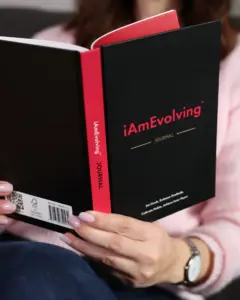
Start your daily practice of gratitude, goals, and growth.
Get the Journal →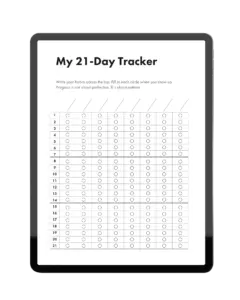
A free 21-day habit tracker PDF with daily check-ins, guided reflection prompts, and mindset reminders. Clean, minimal, and printable.
ExploreFrequently Asked Questions
What is the difference between a guided journal and a blank journal?
Are guided journals better for beginners?
Can you use a guided journal and a blank journal at the same time?
How long should I journal each day with a guided journal?
What should I look for when choosing a guided journal?