How Journaling Reduces Stress and Calms the Mind

Stress has become a constant part of modern life. Between deadlines, responsibilities, and endless notifications, it’s easy to feel mentally overloaded. But one simple, accessible practice can help you manage stress effectively: journaling.
Journaling isn’t just writing down your thoughts — it’s a proven method to process emotions, reduce anxiety, and regain clarity. Even a few minutes a day can make a measurable difference.
When stress is driven by persistent worry or anticipation, understanding what is anxiety can clarify why the mind struggles to settle and how journaling supports calm.
If you want a complete guide to building a journaling practice that supports calm, emotional balance, and long-term mental well-being, explore my full guide on The Ultimate Journaling Guide. It will help you create a grounding routine that reduces stress, clears your mind, and brings you back to yourself.
Why Journaling Works for Stress Relief
Journaling creates a safe space to unload your thoughts, reflect, and make sense of what’s happening in your life. When you write, you move worries from your mind to paper, which helps you detach and see things more clearly.
Studies have shown that regular journaling:
- Lowers cortisol levels (the stress hormone)
- Improves emotional regulation
- Helps you identify thought patterns causing stress
- Increases self-awareness and problem-solving ability
- Improves sleep and overall well-being
It’s like taking a mental deep breath.
The Science Behind Why Journaling Calms a Stressed Mind
Stress activates the body’s fight-or-flight response, flooding your system with cortisol and adrenaline. When that response stays switched on for too long, sleep, mood, focus, and digestion all start to suffer. Journaling works because it gives the mind an exit ramp from that loop.
When you write about a stressor, the act of putting it into words shifts mental activity from the amygdala, the brain’s emotional alarm center, to the prefrontal cortex, the area responsible for reasoning and perspective. Researchers at UCLA call this “affect labeling,” and they’ve shown that simply naming a feeling reduces its intensity. You don’t need to solve anything on the page. Describing what you feel takes the edge off it.
Expressive writing also strengthens what psychologists call cognitive flexibility. Each time you write through a worry, you practice looking at it from a slightly different angle. After a few weeks, that habit carries into daily life. You catch yourself spiraling sooner, you question stress-driven thoughts faster, and you recover more quickly when something difficult happens.
Studies from James Pennebaker, whose research on expressive writing spans four decades, show that just twenty minutes of structured journaling, three to four times a week, lowers reported stress, improves immune function, and supports better sleep. The effect builds over time. Your mind and body learn that release is possible, and that knowledge alone reduces baseline tension.
Different Ways to Journal for Stress Relief
There’s no one right way to use journaling to reduce stress. Here are a few effective methods:
1. Brain Dump
Set a timer for 5–10 minutes and write down everything on your mind without censoring. Let your thoughts flow freely. This technique helps clear mental clutter quickly.
2. Gratitude Journaling
Shifting your focus to what you’re grateful for calms the nervous system and promotes positive emotions. Even listing three things can change your emotional state.
3. Reflection Journaling
Write about your day — the good, the bad, the confusing. Processing events through writing gives you perspective and reduces rumination.
4. Prompts for Stress Awareness
Use prompts to explore the root causes of stress. For example:
- What’s currently draining my energy?
- What’s within my control right now?
- What would it look like if I approached this calmly?
When stress feels more persistent or shows up as tightness, overthinking, or a sense of being pulled out of the present moment, prompts designed specifically for anxiety can offer additional support. These journaling prompts for anxiety are gentle, grounded questions that help you slow racing thoughts, notice what’s happening inside you without judgment, and bring your attention back to the present without trying to “fix” anything.
Stress-Relief Journaling Prompts You Can Use Tonight
When stress is high, a blank page can feel like one more demand. Specific prompts give you a soft place to land. Pick one that matches what you’re feeling tonight, set a timer for ten minutes, and write without editing.
For tension that lives in your body:
- Where in my body am I holding stress right now? What might it be trying to tell me?
- If this tension could speak, what would it say it needs?
- What would it feel like to soften, even one percent, around this?
For mental overwhelm:
- What thoughts have been running on a loop today, and which ones still need my attention tonight?
- Which of these worries are mine to carry, and which belong to someone else or to tomorrow?
- If a calmer version of me looked at today, what would they say I did well?
If your stress shows up most as a racing, looping mind, you may also find relief in approaches built specifically for journaling for overthinking, which slow the mental noise enough to make stress feel manageable again.
For emotional weight:
- What am I feeling underneath the stress? Sadness, fear, anger, grief, longing?
- What would I tell a close friend who was carrying what I’m carrying right now?
- What’s one thing I can release on this page so I don’t have to carry it into sleep?
Treat the prompts as starting points, not assignments. If one opens something up, follow it. If another doesn’t land, move on. The goal isn’t to fill a page. It’s to leave the page with a quieter mind.
Get more like this, every week
When to Journal to Manage Stress
You can journal whenever stress arises, but these times work especially well:
- Morning: to start the day with clarity and intention
- Midday: to reset and regain focus
- Evening: to reflect and release the day’s tension before sleep
Consistency is more important than timing. Regular journaling trains your mind to process stress more effectively.
Common Journaling Mistakes That Make Stress Feel Worse
A few habits can quietly turn stress journaling into another source of pressure. Watching for them keeps the practice useful.
Trying to write perfectly. A journal isn’t an essay. Crossed-out words, half-thoughts, bad grammar, and tangents are part of the process. The mess is the point. The moment you start editing yourself on the page, you re-engage the part of the brain that creates stress in the first place.
Writing only about what’s wrong. Pure venting can spiral. After a few minutes of unloading, shift toward perspective with a question like “What would help me move forward, even slightly?” That small pivot turns rumination into reflection.
Skipping it on the days you need it most. Stress crowds out the practices that ease it. On the hardest days, write only one sentence. One sentence keeps the thread. Missing days entirely is what breaks the habit.
Expecting immediate calm. Some entries leave you feeling lighter right away. Others surface emotions before they release them. Both are progress. Trust the practice over the individual session.
Treating it as one more thing on the to-do list. Stress journaling works best when it feels like something you’re doing for yourself, not something you owe yourself. If the habit starts to feel heavy, shorten the session, change the time of day, or switch from prose to bullet points. Protect the practice by keeping it small enough that it never becomes a source of guilt.
Pairing your journaling with a brief breathing practice can deepen the calm you build on the page. A short session of mindful breathing before or after writing helps the nervous system shift out of stress mode and lets the words on the page settle into the body.
How Long Before Journaling Starts to Reduce Stress?
Most people feel a small shift in the same session. Putting a worry into words tends to take the edge off within ten minutes, even when nothing about the situation has changed. That immediate relief is real, but it is only the surface of what the practice offers.
The deeper, lasting drop in stress builds over two to four weeks of regular writing. In Pennebaker’s research, people who wrote for fifteen to twenty minutes, three or four times a week, reported meaningfully lower stress and better sleep within a month. The nervous system learns through repetition that release is available, and baseline tension slowly starts to fall.
Three things speed up the results. Consistency matters more than length, so five honest minutes most days beats an hour once a fortnight. Specificity helps too. Writing about one particular situation calms the mind faster than vague complaining. And pairing your writing with a steady wind-down, like an evening journaling routine, trains your body to associate the page with letting go.
If you have been writing for a few weeks and stress still feels stuck, it can be a sign that something heavier sits underneath. Methods built for journaling for emotional clarity help you sort tangled feelings into something you can actually work with. And when low mood travels alongside the stress, gentle structured writing has a place too, since journaling helps with anxiety and depression when it is used consistently and paired with support where needed.
Give the practice a full month before judging it. Stress that built over years rarely unwinds in a single night, but the page is one of the few places it reliably loosens its grip.
How the iAmEvolving Journal Helps You Stay Centered
The iAmEvolving Journal gives you a clear structure to reflect, express gratitude, and track your goals and habits — all of which support stress reduction. Instead of facing a blank page, each section guides you gently, helping you stay consistent even when life feels chaotic.
Over time, journaling with structure turns into a calming daily ritual that supports emotional balance and resilience.
Available here:
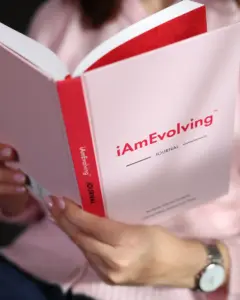
Start your daily practice of gratitude, goals, and growth.
Get the Journal →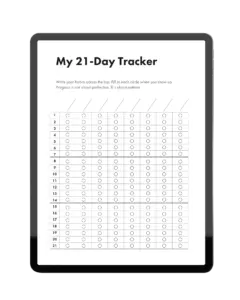
A free 21-day habit tracker PDF with daily check-ins, guided reflection prompts, and mindset reminders. Clean, minimal, and printable.
ExploreJournaling creates space between your thoughts and emotions, helping you release tension and regain clarity. Each word you write slows the mind and restores balance. To discover more ways to find calm through daily reflection, visit Journaling for Mental Health.
How much journaling do I need to do to feel less stressed?
Do I need to follow a specific format?
Can journaling replace therapy?
What if journaling makes me feel more emotional at first?