Best Journals for Nurses (Shift Work, Stress, and Self-Care)

The best journals for nurses are the ones designed for real life: short entries that fit between shifts, prompts that help you decompress after emotionally heavy days, and a format sturdy enough to survive being tossed into a work bag. Nursing is one of the most demanding professions, both physically and emotionally. Research on reflective writing in healthcare professionals shows that nurses who journal regularly report lower rates of compassion fatigue and higher emotional resilience over time.
Finding the right journal matters because most nurses do not have the luxury of 30-minute writing sessions. You need something that works in five minutes before a shift starts, during a quiet break, or in the car after a 12-hour day. The journals on this list are chosen specifically for that reality: quick, meaningful, and built to support both your mental health and your professional growth.
Why Nurses Need a Journal
Nurses carry more emotional weight than most people realize. You witness suffering, make rapid decisions under pressure, comfort families during their worst moments, and then go home and try to be present for your own life. Over time, that accumulation takes a toll. Compassion fatigue, burnout, and emotional numbness are not signs of weakness. They are signs that you are processing more than any person should handle without an outlet.
Journaling provides that outlet. It gives you a private space to process what happened during your shift without burdening the people you love with details they may not understand. Writing about a difficult patient interaction, a moment of doubt, or a small victory helps you metabolize the emotional residue of the day instead of carrying it into the next shift.
If you have been feeling the weight of emotional burnout at work, journaling is one of the most accessible tools to begin recovering. It does not require an appointment, a copay, or even leaving your car. Just a pen, a journal, and five honest minutes.
What to Look for in the Best Journals for Nurses
Not every journal works for a nurse’s lifestyle. Here are the features that matter most:
- Quick daily format. Entries should take five minutes or less. Nurses do not have time for lengthy free-writing sessions during the work week.
- Guided prompts. After a draining shift, staring at a blank page feels like another task. Prompts remove friction and get you writing immediately.
- Compact size. A journal that fits in a tote bag or locker is far more likely to be used than one sitting at home on a nightstand.
- Emotional processing space. The best journals for nurses include sections for reflection, not just task management. You need a place to write about how you feel, not just what you did.
- Durable construction. Thick pages that resist bleed-through and a sturdy cover that can handle daily use are essential.
Our Top Pick: The iAmEvolving Journal
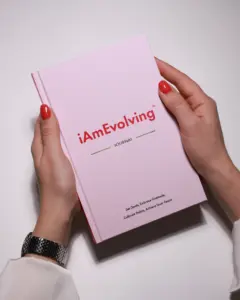
The iAmEvolving Journal is our top recommendation for nurses because it was built around a five-minute daily practice that covers the exact areas where nursing takes the biggest toll: emotional health, personal goals, gratitude, and daily habits.
Each daily entry includes sections for gratitude, intention-setting, habit tracking, and an inner harmony check-in. For a nurse, this translates to starting your day grounded in what matters, tracking self-care habits like sleep, hydration, and breaks, and ending with a moment of honest emotional reflection. The structure means you never have to decide what to write. You just open to today’s page and begin.
The journal also includes monthly reflection pages where you can step back and notice patterns: Are you sleeping enough? Are your shifts getting harder emotionally? Are you making time for the things outside of work that fill you up? These checkpoints are especially valuable for nurses who tend to push through discomfort without pausing to assess the damage.
Best for: Nurses who want a complete daily practice that addresses emotional well-being, goals, gratitude, and habit tracking in one structured format. Ideal for both new and experienced journalers.
4 Other Journal Types That Work Well for Nurses
1. Gratitude Journals
When your days are filled with pain and crisis, a gratitude journal retrains your brain to notice what is still good. The format is simple: write three to five things you appreciate each day. It takes two minutes, and the cumulative effect on mood and outlook is well documented. For nurses, gratitude entries might include a patient who smiled, a colleague who helped during a rush, or simply the fact that you made it through a tough shift and are home safe.
Best for: Nurses who want the simplest possible daily practice with immediate emotional benefits.
2. Compact Blank Journals
Some nurses prefer unstructured writing. A compact, high-quality blank journal that fits in a scrub pocket or locker gives you the freedom to write whatever needs to come out: a stream-of-consciousness brain dump after a code, a letter you will never send, or a quick sketch of something that stuck with you. The lack of prompts can be liberating when you already know what you need to say.
Best for: Nurses who already have a journaling habit and want total freedom in a portable format.
3. Guided Mental Health Journals
These journals include prompts specifically designed for emotional processing: mood tracking, stress assessment, cognitive reframing exercises, and self-compassion practices. For nurses who are dealing with compassion fatigue or the early signs of burnout, a mental health journal provides a structured framework for monitoring your emotional state and catching problems before they escalate.
If you are already noticing burnout symptoms, our collection of journaling prompts for burnout offers targeted questions to start processing what you are carrying.
Best for: Nurses who want to actively monitor their mental health and practice emotional self-care through writing.
4. Shift Debrief Journals
A shift debrief journal is designed for end-of-shift reflection. Entries typically follow a simple framework: What happened? How did I respond? What would I do differently? What am I proud of? This format helps nurses process clinical experiences, celebrate competence, and identify areas for professional growth. It also creates a separation between work and home, which is critical for nurses who struggle to leave the shift behind.
Best for: Nurses in high-acuity settings (ICU, ER, oncology) who need a structured way to debrief after intense shifts.
Get more like this, every week
How to Journal on a Nurse’s Schedule
The biggest obstacle for nurses is not motivation. It is time. Here are three realistic journaling windows that work around shift schedules:
- Before your shift (5 minutes). Set an intention for the day. Write one thing you are grateful for and one thing you want to focus on during your shift. This takes less than five minutes and sets your emotional tone for the hours ahead.
- After your shift (5-10 minutes). Debrief in your car or at home before transitioning to personal time. Write what happened, how you felt, and one thing you did well. This creates a mental boundary between work and rest. Having a solid evening journaling routine helps you release the day instead of replaying it during sleep.
- On your days off (10-15 minutes). Use longer entries for weekly reflection: How is your energy? Are you taking care of yourself? What patterns do you notice in your mood across the week? This deeper check-in is where you catch burnout early.
The key is consistency, not duration. Five minutes every day is more effective than 30 minutes once a week. If you are new to the practice, our guide on how to start journaling walks through building a sustainable routine from scratch.
8 Journaling Prompts for Nurses
Use these prompts after a shift or during a quiet moment on your day off:
- What moment from today’s shift do I need to process before I can rest?
- What is one thing I did well today that I want to acknowledge?
- How is my body feeling right now, honestly?
- What boundary do I need to set this week to protect my energy?
- What am I carrying from work that does not belong to me?
- Who or what reminded me today why I became a nurse?
- What would I tell a friend who felt the way I feel right now?
- What is one small thing I can do for myself before my next shift?
How Journaling Builds Emotional Resilience for Nurses
Emotional resilience is not about being tough enough to handle anything. It is about having systems in place that help you recover from hard things. Journaling is one of those systems. It works because it moves emotions from your body into words on a page, where they can be examined, understood, and released.
Over time, regular journaling helps you notice your own warning signs: the irritability that creeps in before a burnout spiral, the emotional numbness that signals compassion fatigue, or the physical tension that tells you rest is overdue. When you catch these signals early through your writing, you can act before they escalate. Understanding that journaling reduces stress is the first step, but experiencing it through your own consistent practice is what creates lasting change.
Pair your journaling practice with intentional habits for rest and recovery to build a complete self-care system that supports you through the demands of nursing.
Conclusion
The best journals for nurses are the ones that fit into your life as it actually is: demanding, unpredictable, and deeply meaningful. Whether you choose a structured journal like the iAmEvolving Journal, a simple gratitude journal, or a shift debrief format, the act of writing is what matters. Five minutes of honest reflection after a shift can be the difference between carrying the weight of the day into your sleep and setting it down on paper where it belongs.
You give so much to your patients and your team. A journal is a small, daily way to give something back to yourself. Start with one entry after your next shift. That is all it takes to begin.
Start your daily practice of gratitude, goals, and growth.
Get the Journal →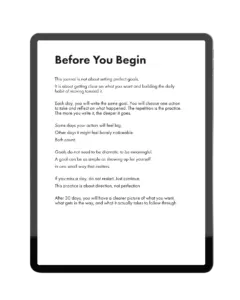
A free 30-day goal setting journal PDF with daily prompts, action steps, and reflection space. Printable, minimal, and designed to keep you focused on…
ExploreFrequently Asked Questions
How can journaling help nurses with burnout?
When is the best time for nurses to journal?
What should a nurse write in a journal after a hard shift?
Do I need a special journal for nursing, or will any journal work?