Journaling Through Pregnancy: Preparing Your Mind and Heart

Journaling during pregnancy is one of the most grounding practices an expecting mother can build. A 2018 study published in the British Journal of Health Psychology found that women who engaged in reflective writing during pregnancy reported lower levels of prenatal anxiety and a stronger sense of emotional preparedness for childbirth. Pregnancy is not just a physical transformation. It is an identity shift, and writing through that shift helps you arrive at motherhood with greater clarity and calm.
The months before your baby arrives are filled with anticipation, excitement, and, honestly, a fair amount of fear. Journaling gives you a private space to hold all of it. You do not need to perform confidence you do not feel or pretend the anxiety is not real. On paper, you can be fully honest about what this season brings up for you, and that honesty is what builds the emotional resilience you will carry into parenthood.
Why Pregnancy Is a Powerful Time for Journaling
Pregnancy changes everything at once: your body, your relationships, your priorities, your fears, and your sense of self. Most of these changes happen internally, in places that are hard to talk about. You might feel guilty for being scared alongside being happy. You might grieve the freedom you are about to lose while also feeling deeply grateful for the life you are growing.
Journaling holds space for these contradictions. It does not ask you to choose between feelings or resolve them. It simply gives you a place to notice what is true for you right now. Over the course of nine months, your entries become a record of how you grew into a mother, one honest page at a time.
If you are new to reflective writing, our journaling guide walks through the basics of starting a practice that feels natural and sustainable.
Journaling During Pregnancy: A Trimester-by-Trimester Approach
Each trimester brings different emotions, physical sensations, and mental shifts. Tailoring your journaling practice to where you are in the pregnancy keeps it relevant and grounding.
First Trimester: Processing the News and the Unknowns
The first trimester is often a time of secrecy and overwhelm. You may be nauseous, exhausted, and carrying a secret that feels enormous. Journaling during these early weeks gives you an outlet when you cannot yet share the news with the world.
Prompts for the first trimester:
- How did I feel when I first found out? What thoughts came immediately after?
- What am I most excited about? What am I most nervous about?
- What do I need right now that I am not asking for?
- What kind of mother do I hope to become?
Second Trimester: Building Connection and Setting Intentions
The second trimester often brings more energy and a growing sense of connection with the baby. This is a natural time to shift your journaling toward intention-setting: what values do you want to bring into your home, what habits do you want in place before the birth, and what does your support system look like?
Prompts for the second trimester:
- What values do I want to be the foundation of our family life?
- What is one habit I want to build before the baby arrives?
- How has my relationship with my body changed during this pregnancy?
- What support do I need that I have not yet asked for?
This is also a good time to begin writing down your intentions for the birth experience and the postpartum period. These do not need to be rigid plans. They are anchors that keep you connected to what matters most when things get busy.
Third Trimester: Preparing Emotionally for Arrival
The final trimester brings urgency, anticipation, and sometimes fear about labor, recovery, and the massive life change ahead. Journaling in these weeks is less about planning and more about emotional preparation. Let your journal hold the weight of what you are feeling so you do not have to carry it alone.
Prompts for the third trimester:
- What fears about labor or motherhood do I need to name and release?
- What has this pregnancy taught me about my own strength?
- What do I want to remember about this time, even the hard parts?
- What words of encouragement would I write to my future self during the first week home with a newborn?
Gratitude Practice During Pregnancy
Pregnancy gratitude is not about ignoring discomfort or pretending morning sickness is a blessing. It is about noticing what is good alongside what is hard. A daily gratitude entry during pregnancy might be as simple as “I am grateful my partner made dinner tonight” or “I am thankful my body is doing something extraordinary even when it does not feel extraordinary.”
Gratitude journaling during pregnancy has a specific benefit: it trains your brain to notice positive moments, which becomes essential after the baby arrives when sleep deprivation and overwhelm can narrow your perspective. Building this habit now means you carry it into motherhood as a practiced skill, not something you have to learn while exhausted.
If you want to deepen this practice, starting a gratitude journal alongside your pregnancy journal creates a powerful combination of emotional processing and positive reflection.
Gratitude prompts for pregnancy:
- What is one thing my body did today that I can appreciate?
- Who showed up for me this week, and how?
- What small moment today made me feel connected to this baby?
- What is something I am learning about myself through this experience?
Get more like this, every week
Processing Fears and Body Changes Through Writing
One of the hardest parts of pregnancy is the loss of control. Your body changes in ways you did not expect. Your emotions shift without warning. Plans you made may need to be revised. Journaling does not give you control over these things, but it gives you a way to process them so they do not build into overwhelming anxiety.
Write about what scares you. Name it specifically. “I am afraid of labor” is a start, but “I am afraid of being in pain and feeling alone in the delivery room” is where the real processing happens. Once a fear is specific, it becomes manageable. You can make a plan for it, talk to your partner or doctor about it, or simply acknowledge it and let it exist without controlling your decisions.
Body image shifts during pregnancy are also worth writing about. Your relationship with your body is changing rapidly, and those feelings deserve space. Write about what surprises you, what frustrates you, and what fills you with awe. Exploring these themes through journaling for emotional clarity helps you process complex feelings without judgment.
Building Habits That Carry Into Motherhood
Pregnancy is a natural reset point for your daily habits. The routines you build now can carry directly into your life as a new mother. A five-minute morning journaling routine practiced consistently during pregnancy becomes second nature by the time the baby arrives.
Consider tracking a few key habits during pregnancy:
- A daily gratitude entry (even one sentence counts)
- A weekly intention for how you want to feel that week
- A nightly reflection on one thing that went well today
- Movement or rest practices you want to maintain postpartum
The iAmEvolving Journal is particularly well suited for this because its daily format includes gratitude, goal-setting, and habit-tracking sections in a single five-minute entry. Building that routine during pregnancy means you already have the practice in place when motherhood demands your attention in every other direction.
After the baby arrives, your journaling practice naturally evolves. For guidance on adapting your routine to life with a newborn, our post on journaling for new moms picks up exactly where pregnancy journaling leaves off.
Pregnancy Journaling and Mental Health: How the Practice Helps
Prenatal anxiety affects roughly one in four expecting mothers, and many do not feel comfortable discussing it openly. That is part of why expressive writing has been studied so closely as a low-cost mental health support during pregnancy. The research consistently shows that women who journal through the prenatal period report lower anxiety scores, fewer intrusive worries, and a stronger sense of emotional preparedness for birth than those who do not.
Three mechanisms appear to drive the effect. First, naming specific worries on paper makes them feel more manageable, a process psychologists call “affect labeling.” Second, the act of writing engages slower, more deliberate thought, which calms the body’s stress response and softens the looping quality of pregnancy-related anxiety. Third, journaling builds a reliable emotional habit, and consistency is one of the strongest predictors of mental wellness across the perinatal period.
If you are using journaling specifically to support your mental health during pregnancy, our broader guide on journaling for mental health covers the techniques most often recommended by therapists and pairs naturally with the trimester prompts above. For pregnancy-specific worry, the practice of journaling for anxiety and depression offers structured exercises you can use alongside prenatal care.
One important note: journaling is a complement to professional support, not a replacement for it. If you experience persistent symptoms of prenatal depression or severe anxiety, please reach out to your obstetrician or a mental health professional. Writing through difficult feelings is most powerful when paired with the care of someone trained to walk alongside you.
Writing Letters to Your Baby Before They Arrive
Some of the most meaningful pages you will ever write are letters addressed directly to your baby. When you do not know what to journal about, a letter gives you an easy place to begin. You are simply talking to the little person you are getting to know, and the words tend to come more freely than they do on a blank prompt.
You might write about the day you found out you were expecting, the songs you play while they kick, or the kind of world you hope to raise them in. You can describe your family, your hopes, and the quiet promises you are already making. None of it has to be polished. Years from now, these letters become a gift that shows your child exactly how much they were wanted before they ever took a breath.
Letter writing also doubles as gentle emotional work. Naming your hopes on paper softens the worry that often sits underneath them, much the way journaling prompts for anxiety help you move a racing mind onto the page. If a letter brings up heavier feelings, that is normal, and a steady practice like the one in our self-care journal for women guide helps you stay grounded through them.
A few letter ideas to try across your pregnancy:
- A first letter introducing yourself and how you found out about them
- A letter about the people who are already excited to meet them
- A letter naming one fear and one promise you are making as their parent
- A letter to read on a hard day during your first weeks at home
Writing even one of these a month gives your pregnancy journal a throughline, and it pairs naturally with the trimester prompts above. For more open-ended reflection between letters, a short session of journaling for women keeps the practice feeling personal rather than scripted.
Conclusion
Journaling during pregnancy is more than a keepsake project. It is a daily practice that helps you process the emotional complexity of growing a life while your own identity transforms. Through trimester-specific prompts, gratitude entries, fear processing, and habit building, your journal becomes a companion through one of the most significant transitions you will ever experience.
You do not need to write pages. You do not need perfect words. You just need a few honest minutes each day and a journal that meets you where you are. The iAmEvolving Journal gives you that structure, with sections for gratitude, intentions, habits, and emotional reflection designed to support exactly this kind of growth. Start writing now, and when your baby arrives, you will have both a record of who you were becoming and a habit that sustains you through what comes next.
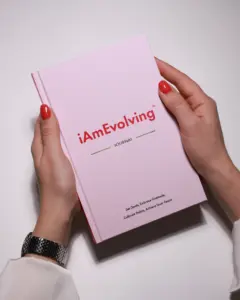
Start your daily practice of gratitude, goals, and growth.
Get the Journal →
A free 30-day goal setting journal PDF with daily prompts, action steps, and reflection space. Printable, minimal, and designed to keep you focused on…
ExploreFrequently Asked Questions
When should I start journaling during pregnancy?
How often should I journal during pregnancy?
What is the best journal for pregnancy?
Can journaling help with prenatal anxiety?