Journaling After a Breakup: A 30-Day Plan to Heal and Rebuild
Journaling after a breakup gives your pain somewhere to go when it has nowhere else to land. A few minutes of honest writing each day helps you process the hurt, the confusion, and the sudden loss of routine and identity that come when a relationship ends. Decades of expressive writing research, beginning with psychologist James Pennebaker’s work at the University of Texas at Austin, suggest that putting painful experiences into words can help people make sense of them and feel less overwhelmed. You do not need to be a writer. You need a page and the willingness to be honest.
A breakup does not only end a relationship. It disrupts your mornings, your weekends, your plans, and often your sense of who you are. This guide gives you what to write in the first raw week, how to handle the moments that pull you back toward them, prompts for the weeks that follow, and a simple 30-day plan you can follow one page at a time. It is part of our wider guide to journaling for mental health through hard seasons.
Why Journaling After a Breakup Helps
Heartbreak is not only emotional. In a 2011 brain-imaging study led by psychologist Ethan Kross, people who had recently gone through an unwanted breakup showed activity in some of the same brain regions involved in physical pain when they looked at a photo of their former partner. That is part of why a breakup can feel so physical: the tight chest, the exhaustion, the trouble focusing on anything else.
Journaling helps because it gives structure to chaos. When painful thoughts loop in your mind, writing them down moves them outside of you. On paper, they start to read like a story you are living through rather than an emergency happening right now. Over days and weeks, that shift changes your relationship with the pain. It stops running you, and you start observing and working through it.
You do not need to journal for hours. Ten minutes a day is enough. Consistency matters far more than volume.
What to Write in the First Week
The first week after a breakup is raw. Do not try to be insightful or productive. Just let the words come.
Write what you feel without editing. If you are angry, write the anger. If you miss them, write the missing. If you feel relieved, write the relief without guilt. There are no wrong emotions in the first week, and the page is not judging you.
Write what happened. Not the polished version you tell friends, but your own version, including the parts you are confused about or ashamed of. This is for you, not anyone else.
Write what hurts the most. Name the specific loss. Sometimes it is not the person you miss most. It is the future you imagined together, the small routines you shared, or the version of yourself that existed inside that relationship. Naming the loss is the first step to grieving it.
Breakup Moments to Write Through Instead of Acting On
Some of the hardest parts of a breakup are not the big feelings. They are the small, sharp moments that pull you back toward the other person. Your journal can be the place where those moments go instead.
When you want to text them
Before you send anything, open your journal and write the message there first. Then write underneath it: what am I hoping this message will give me? Most of the time the answer is relief, reassurance, or closure, and the page can hold that need without reopening the wound. If you still want to send it after a day, you will at least be choosing it rather than reacting.
When you check their social media
Checking their profile is common, and it usually leaves you feeling worse. When you catch yourself doing it, write two lines: what you were looking for, and how you feel now. Seeing the pattern in your own handwriting makes it easier to mute, unfollow, or simply put the phone down next time.
The unsent letter
Write a letter to them that you will never send. Say everything: the thank-yous, the anger, the questions you never got answered. An unsent letter lets you finish the conversation on your side, without needing a response that may never come. You can keep it, reread it in a month, or tear it up when you are ready.
When mutual friends bring them up
Shared friends can make a breakup feel like it follows you everywhere. After a hard moment, write down what was said, how it landed, and what you need from your friends right now. It might be a simple boundary, such as asking them not to pass on news for a while. Writing it first helps you ask clearly and kindly.
Get more like this, every week
Journaling Prompts After a Breakup
After the first week, prompts help you move from venting to processing. Use one a day, at whatever pace feels right.
- What did this relationship teach me about what I need? Not what you wish had happened, but what you learned about your own needs, boundaries, and values.
- What parts of myself did I lose or silence? Breakups often reveal how much you compromised. Write about what you want to reclaim.
- What am I afraid of now that this is over? Being alone, starting over, trusting again. Name the fears so they stop running in the background.
- What would I say to myself six months from now? Write a short letter from your future self about this moment.
- What am I grateful for today, even in the middle of this? Not forced positivity. Just one honest reminder that your life is larger than this pain.
- What boundary do I want to keep going forward? Boundaries are how you protect the lessons you are learning right now.
- Who showed up for me? Write about the people who held space for you. Present connection is a quiet antidote to the loss of one.
For more structured prompts across different kinds of loss and change, the journaling prompts for healing collection is a gentle next step.
If the Relationship Was Toxic
Some breakups end something that was hurting you. If you often felt afraid, controlled, belittled, or confused about what was real, your journal can play a different role. Here, writing is less about missing them and more about rebuilding trust in your own perception.
- Write facts plainly. What happened, when, and what was said. Clear, simple notes help you trust your own memory when doubt creeps in.
- Notice the pull to go back. Missing someone who hurt you is common and does not mean you were wrong to leave. Write down both the missing and the reasons you left, side by side.
- Reclaim small preferences. List the music, food, friends, and habits you set aside. Bring one back each week and write about how it feels.
If you are not safe, or still in contact with someone who threatens you, please reach out to local emergency services or a domestic violence support line in your country. A journal can support your healing, but your safety comes first.
How Journaling Helps You Rebuild
Processing pain is only half the work. The other half is rebuilding, and journaling supports that too.
It clarifies what you actually want. Relationships blend your wants with someone else’s. Writing for yourself again helps your own voice get louder, and you start to remember what you wanted before the relationship shaped your plans.
It tracks your recovery. Breakup grief is not linear, and a hard day can make you forget how far you have come. A journal gives you evidence your emotions might deny.
It helps you avoid repeating patterns. Reflection shows you what you tolerated, what you ignored, and what drew you in. That awareness is the start of different choices next time, and it connects closely to self-discovery through journaling: learning who you are outside of a relationship.
When Journaling Is Not Enough
Journaling is a powerful tool, but it is not therapy. If your breakup has led to deep depression, thoughts of self-harm, or trouble functioning in daily life, please reach out to a mental health professional. A journal can support that work, but it cannot replace it.
If the relationship was a marriage, journaling through divorce covers the extra layers of legal steps, shared homes, and co-parenting. And if this loss has opened up older grief, journaling through grief offers gentle practices for holding loss of every kind.
A 30-Day Plan for Journaling After a Breakup
Set up a simple daily page
Days 1 to 10: Release
Day 10: First checkpoint
Days 11 to 20: Understand
Day 20: Second checkpoint
Days 21 to 30: Rebuild
Day 30: Final review
Conclusion
A breakup is not only an ending. It is a beginning you did not choose, and how you begin matters. Journaling gives you a place to be honest when everyone expects you to be fine, a record of your own resilience, and the clarity to eventually move forward, not just away from the pain but toward a life that feels like yours.
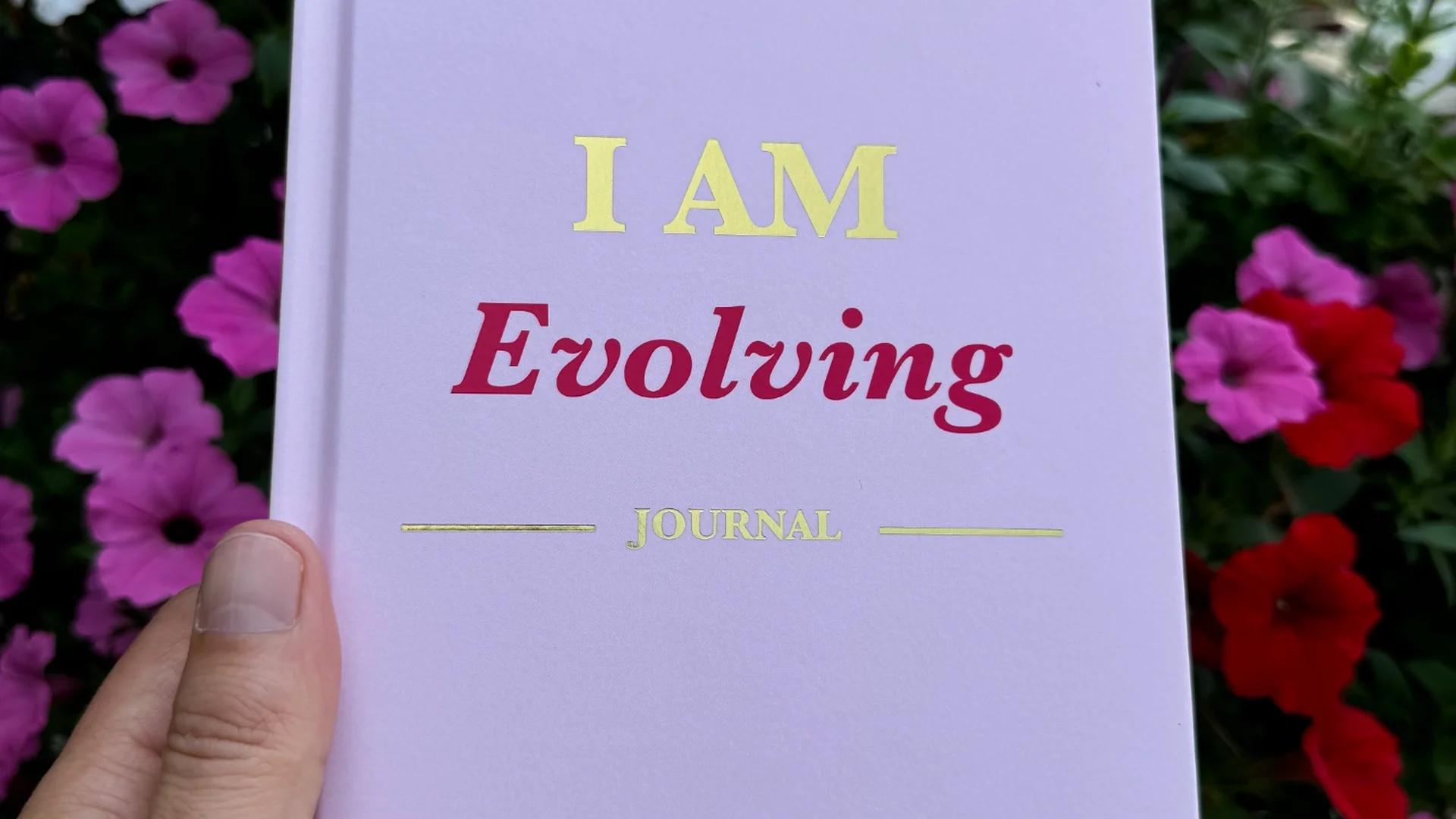
If you want a place to hold that daily practice, the iAmEvolving Journal gives you a page each day for your goal, gratitude, habits, and an inner harmony check-in, with a reflection page every ten days. It is not a breakup journal. It is a growth journal, and growth is exactly what this moment is asking of you.

Start your daily practice of gratitude, goals, and growth.
Get the Journal →
A free 21-day habit tracker PDF with daily check-ins, guided reflection prompts, and mindset reminders. Clean, minimal, and printable.
ExploreFrequently Asked Questions
What should I write in my journal after a breakup?
How long should I journal after a breakup?
Does journaling help you get over a breakup?
Should I write about my ex in my journal?