21-Day Morning Journaling Challenge for Beginners

The 21 day journaling challenge is a three-week morning writing practice designed to turn journaling from a one-off attempt into a daily habit. You commit to ten minutes a day, follow a single prompt, and let the routine teach your nervous system what consistency feels like. It is not about writing well. It is about showing up before the noise of the day starts pulling you in twenty directions.
This guide is for complete beginners. If you have ever bought a beautiful journal, written for three days, and then watched it sit on your nightstand collecting dust, you are exactly who this challenge was built for. You will get the science behind why three weeks works, the structure of each week, daily prompts, and a recovery plan for the days you miss. Pair it with a simple morning journaling routine and you will end the 21 days with something most people never build: a real practice you can keep.
Why a 21 Day Journaling Challenge Actually Works
Three weeks is the sweet spot between novelty and identity. Most behavior research puts true habit formation closer to two months, but 21 days is long enough for a new behavior to feel familiar and short enough that your motivation does not collapse halfway through. By day seven you stop dreading it. By day fourteen you start noticing patterns in your own thinking. By day twenty-one, the act of opening the journal feels like brushing your teeth: automatic, unremarkable, and oddly satisfying.
There is also a neurological reason this works. Daily reflective writing activates the prefrontal cortex, the region tied to planning and emotional regulation, while reducing activity in the amygdala, where stress responses live. If you want the deeper science, this breakdown of how journaling rewires your brain walks through the studies. The short version: when you write down what you are feeling, your brain processes it differently than when you only think it. The thought becomes object, and you can finally see around it.
How the 21 Day Journaling Challenge Is Structured
The challenge breaks into three themed weeks, each building on the last. You move from inward observation to gratitude, and finally to vision and action. The progression matters. Most people who start journaling jump straight to goal-setting and burn out because they have not first learned to listen to themselves. By starting with awareness, you build a foundation that makes everything in week three actually stick.
- Week 1: Awareness and Self-Discovery (Days 1-7). You learn to notice what is actually happening in your inner world without trying to fix it.
- Week 2: Gratitude and Mindset Shifts (Days 8-14). You train your attention toward what is working, which rewires the default scanning of the brain.
- Week 3: Vision and Action (Days 15-21). You move from reflection into intention, turning insight into one or two concrete next steps.
The rules are simple. Write for ten minutes a day, ideally within the first hour of waking. Use one prompt per day, even if you feel like you have nothing to say. If you finish the prompt in three minutes, keep writing whatever comes next. There is no minimum word count, no neat handwriting requirement, and no judgment of what shows up on the page. If you are completely new to this, the no-pressure walkthrough on how to start journaling for beginners covers the basic mechanics: what to write with, where to sit, and how to handle the blank page.
Week 1 — Awareness and Self-Discovery (Days 1-7)
The first week is the hardest, and not because the prompts are difficult. It is hard because you have probably spent years outsourcing your inner narration to your phone, your inbox, and the people around you. Sitting down to listen to yourself for ten minutes feels strange at first. That strangeness is the point. You are clearing space.
- Day 1. What is on my mind right now, before I think about what I “should” write?
- Day 2. What am I avoiding this week, and what is it costing me?
- Day 3. Describe the version of me that woke up today. How is she or he different from yesterday?
- Day 4. When did I last feel completely at ease? What was happening?
- Day 5. What story am I telling myself about my life that might not be true?
- Day 6. Which relationship in my life energizes me, and which one drains me?
- Day 7. What did I notice this week that I would have missed if I had not been writing?
Day seven is the first checkpoint. Read back what you wrote on day one and day seven. The shift is usually subtle, but it is there. People often describe it as feeling slightly more grounded, slightly less reactive. That is awareness doing its quiet work.
Week 2 — Gratitude and Mindset Shifts (Days 8-14)
The second week shifts your attention from what you noticed to what you appreciated. This is not toxic positivity. You are not pretending the hard parts of week one did not happen. You are training a complementary muscle: the ability to scan your day for signals of care, beauty, and progress that the brain naturally filters out when it is in protection mode.
- Day 8. Three small things I am grateful for from yesterday, and why each one mattered.
- Day 9. A person who showed up for me recently. What did they do, and have I told them?
- Day 10. Something my body did for me this week that I usually take for granted.
- Day 11. A moment from the past month I would gladly relive.
- Day 12. A challenge I am facing right now, and one thing I am grateful for inside the challenge itself.
- Day 13. Something I used to want that I now actually have.
- Day 14. Three sentences that begin with “I am grateful that I am becoming the kind of person who…”
By day fourteen, most people report that the world has not changed but their attention has. Coffee tastes a little better. A short walk feels like a real moment. These are not hallucinations. Your brain is recalibrating what it considers worth noticing.
Get more like this, every week
Week 3 — Vision and Action (Days 15-21)
The final week takes everything you have surfaced and points it forward. You are not setting massive year-long goals here. You are practicing the smallest possible bridge between insight and movement: identifying one or two next steps that align with the version of yourself that has been showing up on the page for two weeks. The goal of week three is to leave the challenge with one concrete commitment, not a five-year plan.
- Day 15. If nothing changed in the next year except my morning, what would the perfect first hour look like?
- Day 16. What is one thing I have been pretending not to know about my life?
- Day 17. Who am I becoming, based on the patterns I noticed in weeks one and two?
- Day 18. What would I do this month if I trusted myself completely?
- Day 19. What is the smallest action I could take today that future me would thank me for?
- Day 20. What do I want to keep doing after this challenge ends, and what will I let go of?
- Day 21. Write a letter to the version of yourself who started this challenge 21 days ago. What do you want them to know?
Day twenty-one is not a graduation. It is a hinge. The point of finishing the 21 day journaling challenge is not the streak; it is the proof that you can keep a quiet promise to yourself. Use that proof to design what comes next. For most people, the natural progression is to keep writing daily but to swap the prompts for something more open. If you want help locking in what you have built, this guide on building a sustainable journaling habit walks through how to choose your next structure without losing the rhythm.
What to Do When You Miss a Day (or Three)
You will miss a day. Maybe two. Maybe a whole long weekend. This is the moment most challenges quietly die, not because the practice was wrong but because the inner critic shows up and says “you blew it, start over in January.” That voice is the real obstacle, and it gets quieter the moment you ignore it and just open the journal.
- Missed one day. Just resume on the next day’s prompt. Do not double up. Do not write a guilty preamble. Pick up where you are.
- Missed two or three days. Skip the prompts you missed and start with today’s. The prompts are sequential but not load-bearing. The streak is not the point.
- Missed a full week. Restart the current week from day one of that week. So if you fell off mid-week-two, begin week two again rather than going back to day one of the whole challenge.
- Missed everything for ten plus days. Treat it as data, not failure. Ask yourself one question on the page: what was I avoiding by not writing? Then continue from wherever you left off.
The version of you who finishes a challenge with a gap in the middle is more useful than the version who quits because it was not perfect. Consistency over time matters more than consistency in any given week.
Conclusion
You do not need to be a writer to journal, and you do not need to be disciplined to finish a 21 day journaling challenge. You just need a pen, ten quiet minutes, and the willingness to keep showing up after the novelty wears off. The prompts in this guide are a scaffold, not a script. Adapt them, ignore the ones that do not land, and trust that the version of you on day twenty-one will be quieter, clearer, and a little more honest with herself than the one who starts tomorrow.
If this is your first real attempt at a daily writing practice, give yourself permission to be bad at it for a week. Ugly handwriting, half-formed sentences, prompts you do not finish. None of that matters. What matters is the chair, the page, and the time. When you are ready to go deeper after the 21 days, the complete journaling guide maps out where to go next based on what you discovered about yourself this month.
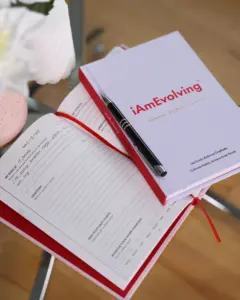
Start your daily practice of gratitude, goals, and growth.
Get the Journal →
A free 30-day gratitude journal designed for a simple daily practice. Calm, minimal, and printable to help you slow down and reflect.
ExploreFrequently Asked Questions
How long should each daily session in a 21 day journaling challenge take?
What if I miss a day during the challenge?
Do I have to journal in the morning to do this challenge?
Is 21 days really long enough to build a journaling habit?
Do I need a special journal for the 21 day journaling challenge?