Journaling for Mental Health: Relieve Anxiety & Feel Calm
Journaling for mental health is the practice of using structured daily writing to process difficult emotions, reduce anxiety, manage stress, and build emotional resilience over time. It is one of the most evidence-supported self-help practices available. Research by James Pennebaker at the University of Texas found that expressive writing for just 15 to 20 minutes over four consecutive days produced measurable improvements in anxiety levels, immune function, and emotional well-being that lasted up to six months. Journaling works because it shifts your brain from reactive emotional processing to deliberate cognitive processing, giving you clarity and control over experiences that otherwise feel overwhelming.
This page is your guide to every aspect of journaling for mental health. Whether you are dealing with anxiety, grief, burnout, trauma, or just the daily weight of modern life, there is a journaling practice that meets you where you are. Each section below introduces a specific area and links to the full resource where you can go deeper. For the broader journaling framework that this mental health practice sits within, visit the complete journaling guide.
How Journaling Supports Mental Health
When you write about a difficult experience, your prefrontal cortex activates to organize the experience into language, while your amygdala, the brain’s threat-detection center, begins to calm down. This neural shift is the mechanism behind why journaling feels relieving. Even when it feels like venting, you are moving the experience from the part of your brain that processes emergencies to the part that processes narratives.
Research by Matthew Lieberman at UCLA confirmed that putting emotions into specific words, a process called “affect labeling,” reduces amygdala reactivity in real time. Writing “I feel resentful because I agreed to something I did not want” produces a measurably different brain response than feeling a vague sense of anger. The specificity matters. The more precisely you name what you feel on paper, the more effectively your brain can process and release it.
Journaling for mental health is also effective because it creates a container for emotions that feel too large to hold internally. When grief, anxiety, or anger circulate without expression, they intensify. Writing gives them a place to land. The page holds what you cannot say out loud, what you do not want to burden others with, and what you have not yet fully understood yourself. Over time, the act of daily writing teaches your nervous system that difficult emotions can be processed safely rather than suppressed or acted out impulsively.
The research is consistent across populations: students, trauma survivors, chronic pain patients, and working professionals all show improved outcomes when they maintain a regular writing practice. It works for every personality type because it engages fundamental brain mechanisms that all humans share.
For the neuroscience behind how writing changes brain structure and function over time, how journaling helps with anxiety and depression covers the research in detail.
Journaling for Anxiety and Overthinking
Anxiety lives in loops. The same worried thoughts cycle endlessly because your brain treats them as unresolved threats. Writing breaks these loops by externalizing the thought. Once it is on paper, your brain registers it as addressed rather than urgent. The thought loses its grip, not because you solved the problem, but because you gave it a place to exist outside your head.
Journaling for overthinking provides specific techniques for interrupting rumination cycles through structured writing. If you want prompts designed specifically for anxious minds, the best journals for anxiety review covers products built for this purpose.
A simple anxiety journaling practice: when you notice anxious thoughts building, write them all down without filtering. Then read the list back and ask yourself two questions for each thought: “Is this definitely true?” and “What would I tell a friend who had this thought?” This exercise moves your brain from emotional reactivity to rational evaluation in under ten minutes.
Journaling for Stress and Burnout
Chronic stress accumulates silently. Most people do not realize how depleted they are until the burnout has already set in. Journaling serves as an early warning system by making your stress patterns visible on paper. When you write about what drained you today and what restored you, clear patterns emerge within a week: which people, tasks, and environments cost you energy, and which ones replenish it.
How journaling reduces stress explains the physiological mechanisms behind why writing lowers cortisol and activates your parasympathetic nervous system. For building a daily self-care writing practice that prevents burnout before it starts, read how to start a self-care journal.
One of the most revealing burnout journaling exercises is the energy audit. For one week, end each day by listing three things that drained your energy and three things that restored it. By day seven, the pattern is unmistakable: the meetings that should be emails, the relationships that take more than they give, the habits that numb rather than heal. This data gives you the clarity to make specific changes rather than vaguely wishing you felt less tired.
Get more like this, every week
Journaling for Emotional Healing
Some experiences are too heavy to process silently. Grief, trauma, addiction recovery, and major life transitions require a space where you can be completely honest without performing for anyone else. A journal provides that space. It does not judge, interrupt, or offer advice. It holds whatever you need to say.
The healing journal approach uses structured prompts to guide you through emotional processing at a pace that feels safe. For grief specifically, journaling through grief offers a framework for holding space for loss through daily writing. Journaling after trauma covers how to begin processing difficult experiences safely on paper, including when to seek professional support alongside your writing practice.
For those in addiction recovery, journaling to stop drinking shows how daily writing supports sobriety by replacing destructive coping mechanisms with reflective ones.
The common thread across all healing journaling is this: you are not writing to solve the problem. You are writing to process your relationship with it. The grief does not disappear when you journal about it. But it becomes something you carry with awareness rather than something that carries you. Over weeks and months, that shift from being overwhelmed by an experience to being able to observe it is where genuine healing lives.
The timeline for healing through journaling varies, but most people notice a meaningful shift within two to three weeks of daily writing. The pain may still be there, but you develop a different relationship with it. You stop being inside the emotion and start being alongside it, observing it with enough distance to learn from it rather than being consumed by it. That perspective comes from writing honestly rather than thinking harder, day after day, until the weight begins to redistribute itself across the pages.
Journaling Through Life Transitions
Major life changes disrupt your sense of identity and routine. Whether you are becoming a parent, going through a breakup, or supporting a teenager through adolescence, journaling provides a stable daily practice that anchors you while everything else shifts.
Journaling for new moms offers a five-minute practice designed for overwhelmed days when longer self-care feels impossible. Journaling for teens explains why every teenager benefits from a writing practice and how to introduce it without resistance. And journaling through a breakup guides you through what to write when your heart is broken and your thoughts feel like a storm.
Life transitions are disorienting because they disrupt your sense of identity and routine simultaneously. Journaling stabilizes both. Your daily writing practice becomes the one constant in a sea of change, and the content of your entries helps you process who you are becoming as the old version of your life falls away. The people who handle transitions most gracefully tend to be the ones who take time to understand what the transition is asking of them, even if they adapt more slowly.
Journaling and Therapy: How They Work Together
Journaling works best as a complement to professional mental health support, never a replacement for it. Many therapists recommend journaling between sessions because it continues the work of self-examination in a private space, captures realizations that might otherwise be forgotten, and creates a written record of emotional patterns that can inform therapeutic conversations.
Journaling vs therapy lays out the distinct strengths of each practice and how they support each other. The key distinction: therapy provides professional guidance and clinical intervention. Journaling provides daily self-directed processing. Together, they cover both the structured support and the independent reflection that lasting emotional health requires.
For understanding how daily writing connects to emotional clarity at a deeper level, that guide covers the specific practices that make journaling a reliable tool for emotional self-regulation.
If you are currently in therapy, try this: before each session, review your journal entries from the past week and note one pattern or realization you want to discuss. After each session, write for five minutes about what stuck with you and what you want to work on before the next session. This simple practice dramatically increases the effectiveness of therapy because it creates continuity between sessions rather than starting from scratch each time.
Journaling also gives you language for experiences that are difficult to articulate in conversation. Many people find that writing about a struggle first makes it easier to discuss with a therapist or trusted friend. The writing does the initial processing, organizing chaotic feelings into coherent sentences, so that the conversation can focus on interpretation and practical next steps rather than spending the first twenty minutes trying to explain what happened.
Does Journaling Actually Help Anxiety?
Yes. The evidence is consistent enough that journaling is now recommended by clinical psychologists, oncology nurses, and trauma therapists as a frontline tool for anxiety regulation. A 2018 study published in JMIR Mental Health found that participants who journaled for 15 minutes a day, three days a week, reported significantly lower anxiety scores after one month compared to a control group. The benefits showed up in both general worry and specific recurring fears.
The reason it works is mechanical, not motivational. Anxious thoughts are kept alive by a brain that treats them as unresolved threats. When you write a worry down, your prefrontal cortex registers it as addressed. The thought stops cycling. You do not have to solve the problem to feel relief. You only have to externalize it long enough for your brain to release its grip. This is why people consistently report feeling lighter after even short writing sessions, even when the underlying situation has not changed.
What helps most is specificity. Generic statements like “I feel anxious” do less than detailed ones like “I feel anxious because the email I sent on Tuesday has not been answered, and I keep imagining the worst version of why.” The detail forces your brain to evaluate rather than ruminate. If you want a structured way to start, journaling prompts for anxiety gives you proven entry points for days when your mind feels too noisy to begin on your own.
The deeper change happens over weeks. Daily writing reshapes how your brain handles stress, strengthening the pathways that regulate emotion and weakening the ones that escalate it. How journaling rewires your brain covers the neuroscience in more detail. The short version: with journaling, you do more than manage anxiety. You become less reactive to it, because the practice itself is changing the underlying wiring.
Journaling for Depression and Low Mood
Anxiety and depression often travel together, but they ask for different things from a journaling practice. Where anxiety races, depression tends to flatten. The thoughts are not loud and looping so much as heavy and still. When motivation is low, the blank page can feel like one more demand you cannot meet, which is exactly why the entry point has to stay small.
On low days, lower the bar until it is almost impossible to fail. One honest sentence counts. Writing “I feel numb and I do not know why” is a complete entry. The goal is not insight on these days. It is contact, a small act that reminds you that you are still here and still paying attention to your inner life, even when everything feels muted. Over time, those one-line days become the foundation that keeps the practice alive through the harder stretches.
Two patterns help when mood is low. The first is evidence-gathering: at the end of the day, write down one thing that went even slightly better than expected, however small. Depression narrows attention toward what is wrong, and this practice slowly widens it again. The second is naming the gap between how you are treating yourself and how you would treat someone you love. Putting that contrast on paper often loosens the self-criticism that deepens low mood.
Consistency matters more than intensity here, so it helps to anchor writing to something you already do. How to build a journaling habit covers how to make the practice stick on the days you least feel like it. If your low moods tend to surface at night, night journaling before sleep offers a way to unload the day before it follows you into bed. And for prompts that meet you gently rather than demanding breakthroughs, journaling prompts for healing gives you somewhere soft to start. If low mood is persistent or worsening, treat journaling as support alongside professional care, never a replacement for it.
Getting Started
You do not need to be in crisis to benefit from journaling for mental health. The practice works best when it becomes a daily habit rather than a last resort. Start with five minutes each morning or evening. Write about what you feel, what triggered that feeling, and one thing you noticed about yourself today. That is enough to begin building the self-awareness that prevents small stresses from becoming big ones.
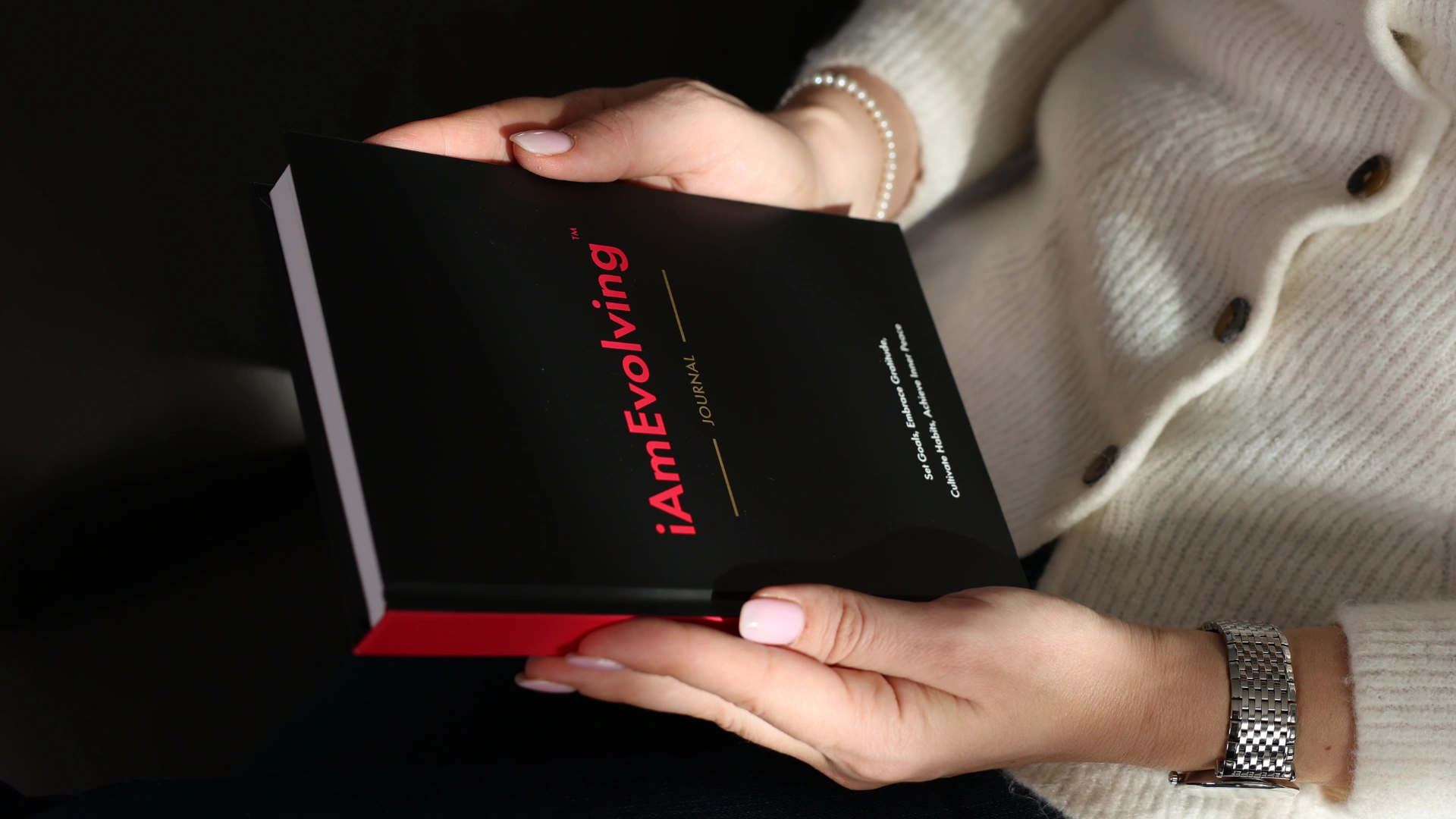
The iAmEvolving Journal includes a daily inner harmony check-in designed for exactly this kind of emotional monitoring. It helps you track your emotional state across a spectrum from anxious to calm, fearful to confident, giving you tangible data about your mental health patterns over time.
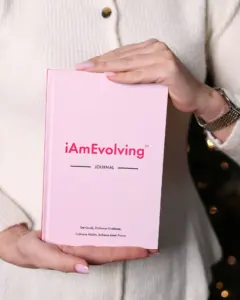
Start your daily practice of gratitude, goals, and growth.
Get the Journal →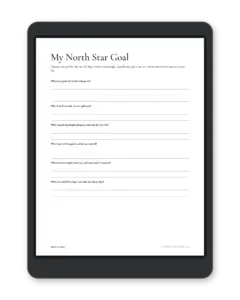
A free 30-day goal setting journal PDF with daily prompts, action steps, and reflection space. Printable, minimal, and designed to keep you focused on…
ExploreFrequently Asked Questions
Can journaling help with anxiety?
What should I write about for mental health?
Is journaling a substitute for therapy?
How often should I journal for mental health benefits?