The Complete Journaling Guide: Build a Practice That Changes Your Life
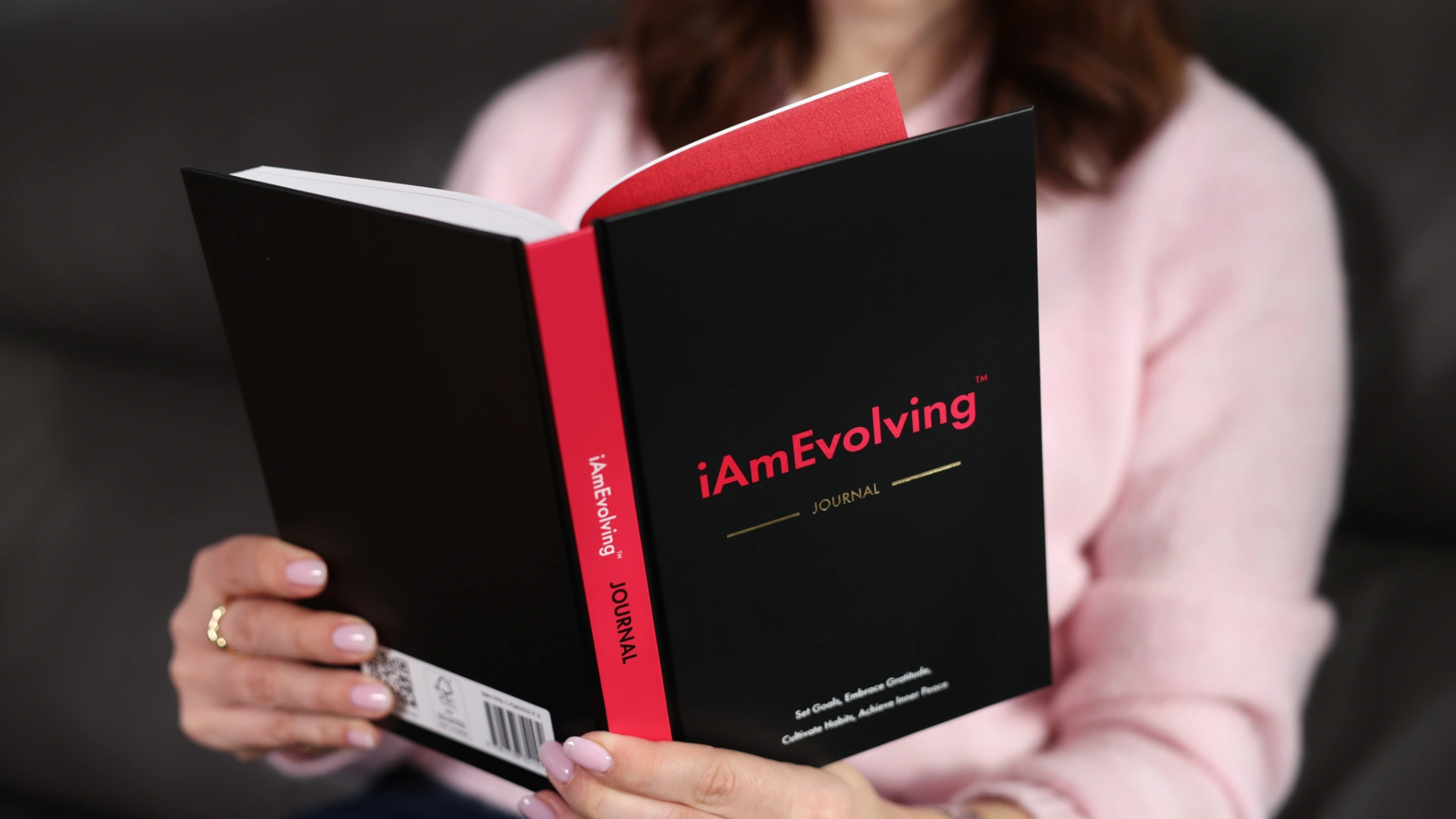
Journaling is the practice of writing regularly to process your thoughts, clarify your emotions, and make more deliberate choices about how you live. It is one of the most accessible and well-researched tools for personal growth, requiring nothing more than a pen, a page, and a few minutes of honest attention. Research consistently shows that structured writing improves emotional regulation, reduces stress, strengthens memory, and accelerates goal achievement. A 2005 meta-analysis in the journal Advances in Psychiatric Treatment found that expressive writing produces measurable health benefits across 13 separate studies involving more than 900 participants.
This guide covers everything you need to build a journaling practice that lasts: the foundations of why it works, how it supports mental health, how to build daily routines around it, what to write when you sit down, different methods and styles to try, and how to choose the right journal for your goals. Each section links to a deeper resource if you want to go further. Whether you are starting from zero or refining a practice you have had for years, this is your complete map.
Most lasting journaling practices share one feature: a clear structure. Structured journaling refers to writing within a defined framework, such as morning intention and gratitude sections, evening reflection, and weekly pattern reviews. Studies on writing interventions consistently find that structured formats outperform unstructured free writing on adherence during the first 90 days. The journaling structure you choose, whether morning-only, dual-anchor, weekly-review, or fully integrated, shapes how the practice fits into your life and how quickly you see results.
Journaling Foundations: Why Writing Changes How You Think
Journaling works because it engages your brain differently than thinking alone. When you write, your prefrontal cortex activates to organize thoughts into language, while your amygdala quiets down, reducing the emotional charge of stressful experiences. This is not a metaphor. Brain imaging studies have confirmed that expressive writing produces measurable changes in neural activity within days of starting.
The neuroscience is clear: handwriting in particular activates regions associated with memory, comprehension, and creative thinking more deeply than typing. Research by Mueller and Oppenheimer published in Psychological Science found that students who wrote by hand demonstrated significantly better conceptual understanding than those who typed. When you physically form letters on a page, you engage motor systems that strengthen the cognitive processing of whatever you are writing about. This is why journaling feels different from typing notes on your phone. The slower, more deliberate act of writing by hand forces your brain to process at a depth that faster methods skip over.
Your brain also has a filtering system called the Reticular Activating System that determines what information receives your conscious attention. When you write about specific goals, gratitudes, or intentions, you are training this filter to notice related opportunities throughout your day. This is why people who journal about their goals report noticing more relevant information and making faster progress. The act of writing literally changes what your brain considers important.
The foundations of journaling also include understanding that you do not need to be a good writer. You do not need deep realizations on day one. The practice is about consistency and honesty, not literary quality. The most useful journal entries are often the simplest: three sentences about how you feel, one thing you are grateful for, one pattern you noticed. That is enough to start rewiring how your brain processes your daily experience.
If you are brand new to the practice, how to start journaling for beginners removes the guesswork from your first weeks. For the full picture of how writing changes your brain and why daily practice produces lasting results, read Journaling Foundations.
Journaling for Mental Health: Processing What You Carry
One of the most useful applications of journaling is emotional processing. When painful thoughts loop endlessly in your mind, writing them down externalizes them. Your brain registers the thought as addressed rather than unresolved, and the stress response begins to settle. Research by James Pennebaker at the University of Texas found that just 15 to 20 minutes of expressive writing over four days produced significant improvements in mental health outcomes, including reduced anxiety, lower stress markers, and improved immune function that lasted up to six months after the writing stopped.
Journaling supports mental health across a wide spectrum of challenges. For anxiety, it interrupts rumination by giving racing thoughts a place to land on paper instead of circling endlessly in your mind. For grief, it creates a private space to process loss without the pressure of performing for others or worrying about burdening friends. For burnout, it reveals the specific patterns of overcommitment and boundary erosion that lead to exhaustion. For depression, it provides evidence of small positive moments that the depressed mind tends to filter out entirely.
A key mechanism behind these benefits is what psychologists call “affect labeling.” Research by Matthew Lieberman at UCLA showed that the simple act of putting feelings into specific words reduces amygdala activation in real time. When you write “I feel resentful because I agreed to something I did not want” instead of just feeling a vague sense of anger, your brain shifts from emotional reactivity to cognitive processing. The emotion does not disappear, but it loses its power to control your behavior.
The practice does not replace therapy, but it complements it powerfully. Many therapists recommend journaling between sessions because it continues the work of self-examination in a private, judgment-free space. Writing about a difficult experience for even ten minutes can shift how your brain stores and processes that memory, moving it from an unresolved emotional charge to a narrative you can learn from.
Try this: Write for five minutes about something that has been weighing on you. Do not edit or filter. When you are done, notice how the emotional charge has shifted. That shift is your nervous system responding to the act of processing on paper rather than carrying it silently.
If you want to understand how writing supports emotional clarity and resilience at a deeper level, the full Journaling for Mental Health guide covers specific practices for anxiety, depression, stress, and burnout.
Building a Daily Journaling Routine
The difference between people who journal occasionally and people who change their lives through journaling is one thing: routine. A journal that sits on your nightstand untouched is just a book. A journal you open every morning for ten minutes becomes a mirror, a compass, and a record of your own growth. The compound effect of daily writing is where the real change happens.
The most effective journaling routines are anchored to existing habits. Writing after your morning coffee, before bed, or during your lunch break creates a trigger that makes the practice automatic over time. Behavioral scientists call this “habit stacking,” and it is one of the most reliable methods for building new routines. Morning journaling tends to focus on intention setting and gratitude, priming your mind for the day ahead. Evening journaling leans toward reflection and emotional processing, helping you release the day before sleep. Both work. The best time is whichever you can sustain without fighting your schedule.
A common mistake is starting too ambitiously. Committing to write three pages every morning sounds disciplined, but it creates friction that kills consistency within two weeks. Start with five minutes. Write three sentences about how you feel, what you intend, and what you noticed. Build the habit of showing up first. Volume comes naturally once the routine is established. The people who journal for years did not start with long entries. They started with short ones they never missed.
Weekly reviews amplify the value of daily journaling significantly. Every Sunday, spend five minutes scanning your entries from the past seven days. Look for patterns: What emotions recurred? What drained your energy? What gave you energy? This weekly review turns disconnected daily entries into actionable self-knowledge. It is where most of the deeper understanding comes from.
How to Start Journaling in Five Steps
If you have never kept a journal, the process is simpler than it looks. These five steps take you from a blank page to an established habit:
- Choose your anchor. Pick one fixed moment in your day, such as right after your morning coffee or just before bed, and decide that is when you write.
- Keep the journal visible. Leave it and a pen where you will see them at that anchor point. Friction is the main reason new practices fade.
- Start with five minutes. Write three honest sentences about how you feel, what you intend, and what you noticed. Resist the urge to do more in the first two weeks.
- Use a prompt when stuck. A question like “What am I avoiding right now?” removes blank-page anxiety and moves you straight into reflection.
- Review weekly. Every seventh day, reread your entries and name one recurring pattern. This is where daily writing turns into genuine self-knowledge.
Try this: Choose one anchor point in your day, either morning or evening. Set your journal and pen in that location tonight. Tomorrow, write for exactly five minutes. Do not aim for more. Repeat for seven days before adding anything else.
To build a routine that lasts, start with how to build a journaling habit for the behavioral science behind making writing stick. For complete morning and evening frameworks, read Journaling Routines and Daily Practice.
Get more like this, every week
Journaling Prompts and Guided Writing
For most people, the biggest barrier to journaling is not knowing what to write, even more than finding the time. Prompts solve this by giving you a specific question or direction that bypasses the blank-page anxiety and moves you straight into reflection. They are especially valuable in the first weeks of a journaling practice, when the habit is fragile and any friction can break it.
Good prompts do more than fill space. They challenge you to examine beliefs you take for granted, name emotions you have been avoiding, and connect daily experiences to your larger goals and values. A prompt like “What am I tolerating that I should not be?” can reveal more in five minutes than weeks of unfocused free writing. The best prompts create a small moment of discomfort, because that discomfort is where growth lives.
Prompts work best when they match your current need. Self-discovery prompts help you understand your values, fears, and desires. Gratitude prompts train your brain to notice what is working instead of fixating on what is not. Anxiety-focused prompts externalize worry and interrupt rumination loops. Goal-setting prompts connect daily actions to long-term vision. Healing prompts create space to process grief, loss, or transition. The key is choosing prompts that meet you where you are rather than where you think you should be.
As your practice matures, you will naturally move beyond prompts into a mix of prompted and free writing. Many experienced journalers use prompts for morning intention-setting but write freely in the evening for emotional processing. Both modes serve different purposes, and combining them creates a more complete practice than either one alone.
Try this: Answer one of these prompts right now in your head, then write the answer tonight: “What is one thing I have been avoiding, and what would happen if I faced it?” or “What would I do differently if I fully trusted myself?”
If you want to start with prompts designed for self-understanding, journaling prompts for self-discovery is a strong starting point. For the full collection organized by theme and purpose, visit Journaling Prompts and Guided Writing.
Journaling for Focus, Productivity, and Growth
Journaling is also one of the most effective productivity practices available, used by executives, athletes, and creators to sharpen focus and make better decisions. Writing your priorities at the start of the day forces you to decide what actually matters rather than reacting to whatever arrives first. Reflecting at the end of the day shows you where your time went and whether it aligned with your intentions.
Research by Dr. Gail Matthews at Dominican University found that people who write down their goals are 42% more likely to achieve them than those who simply think about them. The act of writing engages cognitive processes that strengthen commitment and improve follow-through. Your brain treats a written goal differently than a thought goal. Writing it creates a form of psychological contract with yourself.
The productivity benefits extend beyond goal tracking. Writing about decisions before making them improves their quality by forcing you to articulate your reasoning, reveal your assumptions, and consider alternatives. Writing about problems often reveals solutions that were invisible while the problem lived only in your head. And writing about your wins, even small ones, builds the momentum and self-trust that sustain long-term effort through inevitable periods of low motivation.
One of the most underused productivity journaling techniques is the “pre-mortem.” Before starting a project, write about all the ways it could fail. This sounds counterintuitive, but research shows it dramatically improves planning quality because it forces you to address risks before they become problems rather than after.
Try this: Before starting work tomorrow, write down your three most important tasks and one thing you will say no to. At the end of the day, write one sentence about what worked and one about what you would change. This takes three minutes and will measurably improve your focus within a week.
If focus and productivity are your primary goals, how journaling improves focus and productivity covers the specific practices that produce the biggest results in the least time.
Journaling Methods and Styles
There is no single right way to journal. The method that works best depends on your personality, your goals, and what you need from the practice at any given time. Understanding the main approaches helps you choose wisely and adapt as your needs change over months and years.
Free writing is unstructured stream-of-consciousness writing. You set a timer and write whatever comes to mind without editing or judgment. It is excellent for emotional release, creative breakthroughs, and surfacing thoughts you did not know you had. The limitation is that without direction, some sessions feel aimless. Free writing works best when you need to process something specific, when you feel creatively blocked, or when emotions are too tangled to respond to a structured prompt.
Guided journaling uses prompts, templates, or structured frameworks to direct your writing. It reduces decision fatigue and builds consistency, making it the best choice for beginners and anyone who wants their journaling tied to specific growth goals. The iAmEvolving Journal uses this approach, combining daily sections for goals, gratitude, habit tracking, and inner harmony into one integrated practice. The trade-off is less creative freedom, though the best guided journals balance structure with open-ended reflection space.
Reflective journaling focuses on learning from experience. You write about what happened, how you responded, what you learned, and what you would do differently. This method builds self-awareness faster than any other style because it turns every experience, positive or negative, into a learning opportunity. It is particularly valuable for people going through career transitions, relationship changes, or periods of personal reinvention. For a complete guide to this approach, read reflective journaling.
Gratitude journaling is the practice of writing down three to five things you appreciate each day. Research from Indiana University found that gratitude writing changed neural activity in the medial prefrontal cortex, with effects detectable three months after the writing exercise ended. It is the simplest form of journaling and one of the most evidence-supported for improving mood, sleep quality, and overall life satisfaction.
Many experienced journalers combine methods: guided prompts in the morning for structure, free writing when emotions run high for release, reflective entries at the end of the week for learning, and gratitude lists on days when motivation is low. The right approach is the one you will actually use consistently. Experiment with each style for a week and notice which one produces the most clarity and engagement for you.
What Is Structured Journaling and How Does Its Structure Work?
Structured journaling is the practice of writing within a defined framework rather than facing a blank page each session. A structured journaling method includes specific sections, prompts, or daily formats that guide what you write about and in what order. Common structures include morning intention and gratitude blocks, evening reflection blocks, weekly pattern reviews, monthly goal check-ins, and quarterly direction-setting pages. The structure itself does the cognitive work of deciding what to focus on, which lowers the activation cost of sitting down to write.
The journaling structure that works best for most people follows a layered design: short daily entries anchored to specific times of day, weekly reflections that surface patterns, and monthly reviews that connect daily writing to longer-term direction. This three-layer rhythm produces compounding self-knowledge that free writing alone rarely delivers. Daily writing gives you raw data. Weekly reviews turn that data into patterns. Monthly reviews turn patterns into direction. Each layer reinforces the one below it.
Researchers studying habit formation have found that structured templates produce significantly higher adherence than open-ended writing in the critical first three months of a new practice. The reason is decision fatigue: when you face a blank page, your brain has to choose what to write about, how long to write, and what counts as enough. Each decision drains motivation. A structured journal answers those questions in advance, so the only decision left is whether to show up. That single change is often the difference between a practice that lasts ten days and one that lasts ten years.
The most effective structured journaling methods balance fixed sections with flexible space. Pure templates without room for personal expression feel mechanical and stop being useful after a few weeks. Pure free writing without anchors loses consistency. The right balance, roughly 70 percent structured prompts and 30 percent open reflection, captures the benefits of both. The iAmEvolving Journal uses this exact ratio, pairing daily goal, gratitude, habit, and inner harmony sections with open journaling space for whatever else needs to be processed.
For a side-by-side look at how structured journals compare to blank notebooks, read guided vs blank journals. To go deeper on the daily and weekly structures that make journaling stick, read Journaling Routines and Daily Practice.
Choosing the Right Journal
The journal you use shapes the practice you build. A blank notebook gives maximum freedom but no structure. A guided journal provides prompts and frameworks that reduce friction and build consistency. The best choice depends on where you are with journaling and what you want the practice to do for you.
If you are starting out, a guided journal is almost always the better choice because it removes the biggest barrier to consistency: not knowing what to write. The structure provides daily direction so you can focus on reflection rather than figuring out format. If you have been journaling for months and want more creative freedom, a blank journal gives you space to experiment without constraints. Many people eventually use both: a guided journal for their structured daily practice and a blank notebook for free writing, creative ideas, or emotional processing that does not fit a template.
When evaluating guided journals, look for these qualities: prompts that challenge you to think rather than fill blanks mechanically, a daily time commitment that matches your realistic schedule (five to fifteen minutes is the sweet spot), built-in review sections that help you track patterns over time, and physical quality that makes the journal feel worth using every day. A journal with cheap paper and a flimsy binding sends a subtle signal that the practice does not matter. A well-made journal communicates that this time is worth protecting.
The iAmEvolving Journal was designed to address all of these criteria. It provides structured daily sections for goals, gratitude, habit tracking, and inner harmony reflection, while leaving enough open space for personal expression. It covers the full spectrum of personal growth in one integrated daily practice, so you do not need multiple journals for different purposes. It is designed to grow with you rather than limit you.
For product comparisons, honest reviews, and gift ideas, browse the full Journal Buying Guides and Gifting section, including the iAmEvolving vs Five Minute Journal comparison.
Conclusion
Journaling is not about writing perfectly. It is about showing up honestly, one page at a time. Whether you use it for mental health, productivity, self-discovery, or all three, the practice compounds. What feels like a small daily habit becomes, over months, one of the best things you have ever done for yourself.
The path is simple: understand why it works, choose a routine, pick up a journal, and start writing. The sections above give you the framework. The linked guides give you the depth. And the iAmEvolving Journal gives you the daily structure to turn knowledge into practice.
Start where you are. Write your first entry today. The only wrong approach is the one you never begin.
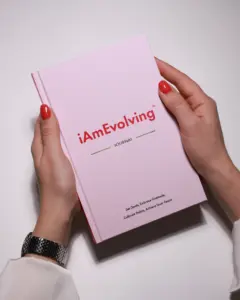
Start your daily practice of gratitude, goals, and growth.
Get the Journal →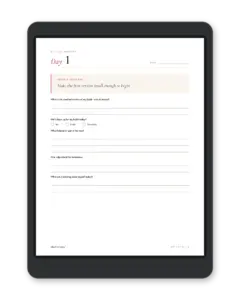
A free 21-day habit tracker PDF with daily check-ins, guided reflection prompts, and mindset reminders. Clean, minimal, and printable.
ExploreFrequently Asked Questions
How do I start journaling if I have never done it before?
How long should I journal each day?
Is it better to journal in the morning or at night?
What should I write about in my journal?
Does journaling really help with anxiety and stress?