How a Goal Setting Journal Can Help You Achieve More

A goal setting journal is a structured writing tool that helps you define, track, and achieve your goals through daily reflection and intentional planning. Unlike a generic notebook or a digital app, a goal setting journal combines the cognitive benefits of handwriting with a framework designed to keep you focused, accountable, and aligned with what matters most to you. Research by Dr. Gail Matthews at Dominican University found that people who write down their goals are 42% more likely to achieve them than those who simply think about them.
The power of a goal setting journal lies in the daily practice, not just the initial act of writing goals down. When you revisit your goals each morning, reflect on your progress each evening, and adjust your approach weekly, you create a feedback loop that turns vague aspirations into concrete results. The goal setting guide covers the broader principles of effective goal setting, but this post focuses specifically on how a dedicated journal makes the process tangible, sustainable, and measurably more effective.
Why Writing Goals by Hand Changes Everything
There is a meaningful difference between typing a goal into your phone and writing it by hand in a journal. Handwriting engages your brain more deeply than typing. Research published in Psychological Science found that the motor activity of forming letters activates regions associated with memory, comprehension, and creative thinking that keyboard input does not reach.
When you write a goal by hand, you are not just recording it. You are encoding it into your brain at a deeper level. Your Reticular Activating System, the brain’s attention filter, begins prioritizing information related to that goal. You start noticing opportunities, resources, and connections that were always there but invisible to your unfocused attention. This is why people who journal about their goals report feeling clearer and more motivated, not because the journal is magical, but because the act of writing changes what their brain pays attention to.
Digital tools have their place, but they lack this neurological depth. Writing in a journal forces you to slow down and think deliberately about each word, each intention, each commitment. That deliberation is where clarity comes from.
What a Good Goal Setting Journal Includes
Not all journals are equally effective for goal setting. The best ones include these elements:
Daily intention space. Each morning, you write down what you intend to focus on today. This is not a to-do list. It is a statement of priority that guides your decisions throughout the day. “Today I will make progress on my business plan” is more powerful than a list of twelve tasks because it gives you a filter for what matters.
Goal tracking sections. A structured place to define your goals with specificity: what you want, why it matters, what the first step is, and what deadline you are working toward. The goal setting fundamentals explain why specificity and emotional connection to your goals are more important than the framework you use.
Reflection prompts. Evening questions that help you process what happened, what you learned, and what you want to adjust. Reflection is where most of the growth happens because it turns raw experience into actionable self-knowledge.
Weekly and monthly review pages. Regular reviews prevent you from losing sight of your goals in the daily noise. A five-minute weekly review is often the difference between staying on track and quietly abandoning your goals without noticing.
Gratitude integration. The best goal journals include a gratitude component because research shows that gratitude improves persistence, resilience, and motivation. When you appreciate your progress, even small progress, your brain produces dopamine that reinforces the goal-pursuing behavior. Starting a gratitude journal alongside your goal practice amplifies both.
How to Use a Goal Setting Journal Daily
A goal journal only works if you use it consistently. Here is a simple daily framework that takes 10 to 15 minutes:
Morning (5 minutes): Write your primary goal for the day. Not five goals. One. Then write one action you will take today to move that goal forward. Finally, write one thing you are grateful for related to your progress. This three-line morning practice sets your brain’s focus for the entire day.
Evening (5 minutes): Write what you accomplished toward your goal today. Write one thing you learned. Write one thing you want to do differently tomorrow. This evening reflection closes the loop and prevents the kind of mindless repetition where you do the same ineffective things week after week.
Weekly (10 minutes, Sunday): Review your daily entries from the past seven days. Note what patterns you see. Are you consistently avoiding certain tasks? Are certain days more productive than others? What is working, and what needs to change? This weekly review is where strategy emerges from daily data.
Get more like this, every week
Common Goal Setting Mistakes a Journal Helps You Avoid
Most goals fail not because they are too ambitious but because of predictable errors that a journal makes visible:
Setting goals you do not actually want. Many people pursue goals they inherited from parents, partners, or society without examining whether those goals align with their own values. A journal forces this examination. When you write about why a goal matters to you and the answer feels hollow, that is important information. Meaningful goals come from values, not obligations.
Focusing on outcomes instead of systems. “Lose 20 pounds” is an outcome. “Walk for 30 minutes every morning and track it in my journal” is a system. Journals naturally shift your attention from distant outcomes to daily systems because you are writing about what you did today, not what you hope to achieve someday.
Abandoning goals after the initial excitement fades. Motivation peaks at the beginning and drops sharply around week three. A journal sustains you through this gap because the daily practice continues even when the feeling does not. Your journal does not care if you are motivated. It just asks you to write, and that simple act is the foundation of staying consistent with your goals when willpower fades.
Never reviewing or adjusting. A goal set in January and never revisited is not a goal. It is a wish. Weekly reviews catch drift early and allow you to adjust your approach while the goal is still alive.
How a Goal Setting Journal Differs from a Planner or To-Do List
People often ask whether a goal setting journal is just a fancy planner or a structured to-do list. The honest answer is no, and the difference matters more than it looks. A planner organizes your time. A to-do list organizes your tasks. A goal setting journal organizes your thinking, which is where most goal failures actually happen.
A planner answers the question of when you will do something. A to-do list answers what you need to do. Both are useful, and neither is a substitute for the deeper work a journal asks of you. A goal setting journal answers different questions. Why does this goal matter, what does progress actually look like, what is getting in the way, and what did you learn yesterday that should change what you do today? Those questions cannot fit in a calendar slot or a checkbox.
The other meaningful difference is reflection. Planners and to-do lists are forward-looking only. Once a day passes, those pages serve no further purpose. A goal setting journal is built for two-way movement. You set intentions in the morning, review your actions in the evening, and weekly reviews ask you to look back across the past seven days. That backward look is where pattern recognition happens, and pattern recognition is what separates people who reach their goals from people who keep restarting them. Turning big goals into daily actions depends on this reflection cycle, not on better planning tools.
This does not mean you should abandon your planner or to-do list. The three tools work together. Use your planner for scheduling, your to-do list for tactical execution, and your goal setting journal for the strategic thinking that gives both of them direction. If you are shopping for a structured option, the best goal setting journals for 2026 compares the top picks side by side so you can find a format that matches how you actually think.
Goal Setting Journal Prompts to Get Started
The hardest part of any journal is the blank page. If you sit down and do not know what to write, the practice quietly fades within a week. A small set of prompts removes that friction and gives your mind a clear place to begin. You do not need all of them at once. Pick two or three that fit where you are right now, and let the rest wait until you need them.
To define what you actually want: What goal, if you reached it this year, would change the most for you? Why does it matter in your own words, not anyone else’s? Writing the honest answer is often where people discover they have been chasing someone else’s goal. If you are new to this, the goal setting steps for beginners walk through how to turn a vague wish into a real target.
To plan your next move: What is the smallest action you could take today to move this goal forward? What usually stops you, and what would you do differently this time? Keeping the action small is the point. A goal setting journal works best when each entry ends with one concrete step rather than a wall of ambition.
To reflect and adjust: What went well today that you want to repeat? What drained your energy or pulled you off course? What did today teach you that should change tomorrow? Regular goal reflection is what keeps a journal honest, and it is the habit that separates steady progress from a stack of forgotten resolutions. Over time these entries become a personal goals journal you can look back on to see how far you have come.
Conclusion
A goal setting journal is not a luxury. It is a tool that turns intention into action and action into results. The practice is simple: write your goal, take one step today, reflect on what happened, adjust, and repeat. That daily cycle, sustained over weeks and months, produces more real progress than any amount of planning, reading, or thinking without writing.
The iAmEvolving Journal was designed with this exact process in mind. Its daily structure integrates goal setting with gratitude, habit tracking, and emotional reflection, creating a complete growth system in one journal. You do not need to figure out the format. You just need to show up, write, and follow through.
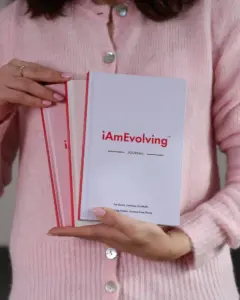
Start your daily practice of gratitude, goals, and growth.
Get the Journal →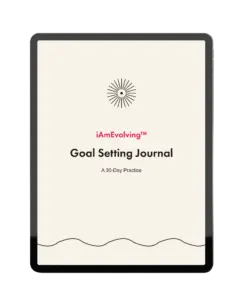
A free 30-day goal setting journal PDF with daily prompts, action steps, and reflection space. Printable, minimal, and designed to keep you focused on…
ExploreFrequently Asked Questions
What is a goal setting journal?
Does writing goals in a journal really help?
How often should I write in a goal setting journal?
What is the best journal for goal setting?