Goal Reflection: How to Review Your Goals and Realign Without Pressure

Goal reflection is the regular practice of pausing to look at the goals you set, noticing what’s actually happening with them, and adjusting your direction before pressure turns into resistance. It’s not a performance review. It’s a conversation with yourself about what’s working, what’s drifting, and what no longer fits. Done well, it turns goals from a stick you beat yourself with into a thread you can keep weaving, week after week.
This guide is for anyone who has ever set a goal in January and felt a small, sinking feeling about it by April. If your goals feel heavy, stalled, or slowly abandoned, you don’t need a harder push. You need a softer, more honest review. We’ll walk through what real reflection looks like, why most of us avoid it, a five-step framework you can run in twenty minutes, the prompts that actually move the needle, and how to realign without scrapping everything you’ve built. If you want the wider context, the goal setting guide covers the full picture this practice fits into.
Goal reflection is the regular review that keeps a goal alive after the early motivation fades. Most goal advice focuses on how to start, yet a goal you never revisit is really just a wish with a deadline. Treating reflection as a recurring checkpoint, rather than a one-time event, is what keeps your goals matched to the life you are actually living instead of the life you imagined when you set them.
What Goal Reflection Actually Means
Goal reflection is a structured pause. You stop chasing for a moment, sit with what you set out to do, and ask three honest questions: Is this goal still mine? Am I actually moving toward it? What is it teaching me right now? That’s it. There is no scoreboard, no productivity ritual, no color-coded tracker required.
People often confuse reflection with judgment. Judgment looks at progress and assigns a verdict: pass or fail, on track or behind. Reflection looks at the same data and asks what it means. A missed week of writing may say less about your discipline and more about timing: the goal might have been set during a season that no longer matches your life. Reflection treats your goals as living things, not contracts you signed in your own blood.
In the iAmEvolving framework, reflection is one of the four anchors of intentional living, alongside intention, alignment, and action. Without it, the other three drift. You set goals, you act, and you keep moving, but you never check whether the direction still makes sense. Reflection is what closes that loop.
Why So Many of Us Avoid Reflecting on Our Goals
If reflection is so simple, why do most people skip it? Because looking honestly at a goal that hasn’t moved feels worse than ignoring it. The brain treats unmet goals as small open loops of guilt. Opening that loop on purpose, with no plan to close it, sounds like emotional self-harm.
Here’s what’s usually underneath the avoidance:
- Fear of admitting drift. If you check in, you might have to face that you’ve barely touched the goal in two months.
- Identity protection. Some goals are tied to who you want to be. Reviewing them honestly risks the story you tell yourself.
- All-or-nothing thinking. If a goal isn’t on track, it feels like the only options are sprint harder or quit. Reflection feels pointless because neither option appeals.
- No quiet space. Reflection needs a slower mind. A 10-tab afternoon will not produce a useful review.
- Confusing reflection with rumination. Looping through what’s gone wrong is anxiety wearing a productive costume.
The reframe is simple. In a reflection session, you don’t have to earn the right to keep your goal. You remember why you set it, look at the data without flinching, and choose your next small move. Sometimes that means doubling down. Sometimes it means letting go and learning to trust the process of a slower season. Both are valid.
You don’t have to grade your goals. You only have to be honest about which ones still belong to you.
A Simple Framework for Goal Reflection Without Pressure
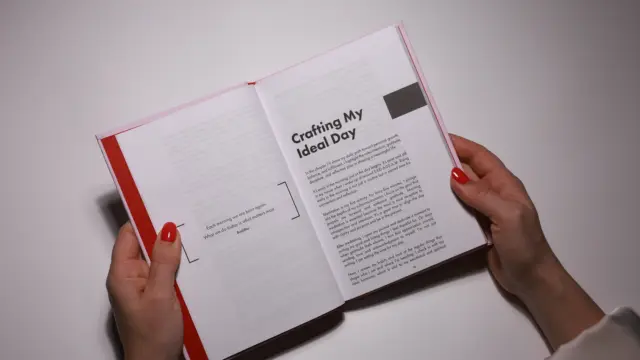
This is the five-step reflection I use myself and teach inside the iAmEvolving Journal. It takes about twenty minutes when you give it real attention. You can run it weekly, monthly, or whenever a goal starts feeling heavy. There is no pass-fail. There is only useful information and a next step.
- Re-read the goal exactly as you wrote it. Not your memory of it. The actual words. Many goals look different on paper than they do in your head. Notice the language. Is it specific? Is it inspiring or exhausting? Whose voice does it sound like?
- Name what’s actually happened. Without judgment, list the concrete actions you’ve taken in the last two to four weeks. Not what you intended. What you did. This is the data.
- Ask the meaning question. What is the gap between what you wanted and what you did telling you? Is the goal too big for this season? Was it never quite yours? Or are you closer than you think and just losing patience?
- Choose a category, not a verdict. Decide which of three buckets the goal belongs in: keep as-is, refine, or release. That’s the entire decision. No need to plan the next quarter today.
- Pick one small move for the next seven days. Not a new plan. One action. The smallest version of the next right step that you can imagine doing on a normal Tuesday. Write it down where you’ll see it.
The power of this framework is that it removes pressure from every decision. You’re not deciding whether to “still believe” in the goal. You’re sorting it into a bucket and choosing one move. That’s a job a tired Sunday-evening version of you can actually do. If you want a complementary practice, mindful planning pairs beautifully with this: reflection looks back, planning looks forward, and the two together keep your goals breathing.
Get more like this, every week
Reflection Prompts to Use Right Now
Sometimes what a stalled goal needs most is a better question. Here are prompts I keep returning to in my own reflection sessions. Pick one that lands and write for ten minutes without editing. The point is honesty, not eloquence.
- If I imagine this goal already complete, what does my ordinary Wednesday look like? Does that life still appeal to me?
- What did I think this goal would give me, and have I started giving it to myself in smaller ways already?
- Which version of me set this goal? Am I still that person, or have I quietly grown past it?
- If no one would know, would I still want this? Or is part of this goal performing for someone in my head?
- What’s the smallest action toward this goal that would feel good to do tomorrow morning?
- What is this goal teaching me about myself, even in its current half-finished state?
- If I had to keep only one of my current goals, which one would I protect with everything I have?
Pay attention to the prompts you want to skip. Resistance often points to the most useful answer. By the end of the page, aim to feel a little more honest about where you actually are.
How to Evaluate Your Goals Objectively
Reflection becomes far more useful when you evaluate your goals against evidence instead of mood. Objective reflection means judging a goal by what you can actually observe, not by how you happen to feel on the day you sit down to review it. A rough week can make a healthy goal look like a failure, and a sudden burst of motivation can make a goal you have outgrown feel essential again. Looking at the evidence steadies both reactions and gives you something honest to work with.
To evaluate a goal objectively, separate the outcome from the inputs. Outcomes are slow and often sit outside your control. Inputs are the small, repeatable actions you take week to week. If you judge a goal only by its outcome, you will misread almost any goal that takes longer than a month to show results. This is why process goals tend to beat outcome goals during a review: process gives you a clear signal to measure long before the final result arrives.
When you evaluate goals, look at four concrete signals rather than a single yes-or-no verdict:
- Frequency. How many times in the last four weeks did you actually take the core action? Count it. Do not estimate.
- Direction. Is the trend moving toward the goal, holding flat, or slowly drifting away? Direction matters more than any single week.
- Friction. Which specific step keeps stalling you, and is it the same one every time? Repeated friction is information, not a character flaw.
- Relevance. Does the goal still connect to something you genuinely care about today, or are you finishing it out of habit?
Once the evidence is in front of you, goal revision stops feeling like giving up and starts feeling like ordinary maintenance. You are updating the plan to match what is real, and your standards stay where they are. The middle of the year is a natural moment for this kind of honest audit, and a structured mid-year goal reset gives the process a clear container so the review stays focused instead of spiraling into a full rewrite of your life.
Realigning Without Starting Over
One of the most common reflection traps is the urge to nuke everything. You sit down, see that you’ve drifted, and the part of your brain that loves a fresh start whispers, “Let’s just rewrite all the goals.” Don’t. A blank page feels productive, but it usually erases the small momentum you’ve actually built.
Realignment is gentler than reset. It assumes the original direction was mostly right and the route just needs tweaking. Here’s how that looks in practice:
- Shrink before you scrap. If a goal feels too heavy, cut it in half. A book becomes an essay. Three workouts a week becomes one. Most of the time the real issue is the size of the bite.
- Move the deadline, not the dream. A timeline is a guess, not a promise. Adjusting when does not mean abandoning what.
- Change the conditions, not the commitment. If you keep failing to journal in the morning, try evening. The behavior matters more than the time stamp.
- Replace one input. Sometimes a single ingredient is broken: the time of day, the tool, the person you’re doing it with. Swap one piece before redesigning the whole.
- Let yourself release without shame. Some goals genuinely don’t fit anymore. Releasing them is data, not failure.
If you find yourself reviewing a goal that just refuses to move no matter what you try, that’s worth its own conversation. The post on what to do if my goal is not manifesting walks through that specific kind of stuck and what to do about it without forcing things.
Build a Quiet Reflection Rhythm
Reflection only works if it actually happens. The best practice is one you’ll come back to without willpower. That means small, scheduled, and forgiving.
Here’s a rhythm that holds up across busy seasons:
- Weekly check-in (10 minutes, Sunday evening). Look at one goal. Run steps 4 and 5 of the framework: pick a category and a small move for the week.
- Monthly review (30 minutes, last day of the month). Run the full five-step reflection on each active goal. Two to four goals max, because anything more and you’ll skip it.
- Quarterly realignment (an unhurried hour). Look at the bigger arc. Are these still the right goals? Is anything ready to be released? Is something new emerging that wants attention?
- Annual reflection (one calm afternoon). What did this year teach you about how you actually want to live? Goals come from this layer, not the other way around.
The cadence matters less than the consistency. A weekly ten-minute check-in beats a heroic two-hour quarterly review you keep canceling. If you struggle to keep promises to yourself in this area, the practice of how to stay consistent with goals is worth a closer look. Most reflection problems are really consistency problems wearing a thoughtful disguise.
Conclusion
You don’t need to overhaul your goals every Sunday. You need a steady, repeatable way of looking at them honestly and choosing one small move forward. That is the whole practice. Goal reflection isn’t where you grade yourself. It’s where you stay in conversation with the version of you who set the goal in the first place, and where you give the current version of you permission to grow.
Start small. Pick one goal that’s been weighing on you. Run the five steps. Choose a category. Choose one move. Then close the notebook and live the rest of your day. Reflection is meant to make your goals lighter, not heavier. If you want to keep building this muscle, the work on reflection and continuous evolution is a natural next read. It widens the lens from goals to the whole life you’re building, one honest pause at a time.

Start your daily practice of gratitude, goals, and growth.
Get the Journal →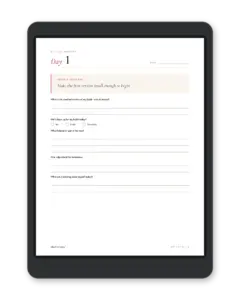
A free 21-day habit tracker PDF with daily check-ins, guided reflection prompts, and mindset reminders. Clean, minimal, and printable.
ExploreFrequently Asked Questions
What is goal reflection in simple terms?
How often should I reflect on my goals?
What is the difference between reflection and rumination?
Should I drop a goal I’ve barely touched?
What journaling prompts work best for goal reflection?