Stay Consistent with Goals When Life Gets Busy
To stay consistent with your goals means showing up even when life gets demanding, when work, family, and unexpected problems compete for your attention. Consistency comes from small actions repeated through busy seasons. Decades of habit research point to the same conclusion: consistency is built by lowering the effort an action requires, not by summoning more willpower.
Consistency means showing up in small ways, regularly, even when life is messy. A strategy that fits real life will help you more than extra free time. Learn how journaling can fit into busy routines with Evening Journaling Routine.
Why Staying Consistent With Your Goals Feels So Hard
Most people lose consistency because they lean on motivation, and motivation fades the moment a week gets stressful. Consistency depends on awareness and structure, not intensity. When life gets demanding, the goals tied to a clear system survive while the ones held together by good intentions disappear.
There is also the weight of expectation. We picture a perfect version of ourselves following through flawlessly, so the first missed day feels like proof that we have failed. That story ends most goals, not the missed day itself. Staying consistent gets easier the moment you stop measuring yourself against perfection and start measuring yourself against showing up. If the discipline piece feels shaky, building habits for self-discipline gives you a steadier foundation to return to.
Knowing this changes how you respond when life interrupts you. A demanding week tests whether the goal can bend. The people who stay consistent are rarely the ones with the most free time or the strongest willpower. They are the ones who shaped goals small enough and forgiving enough to survive an ordinary, imperfect day.
Here is how to stay consistent, even on the busiest days:
1. Create Goals You Can Actually Follow
Some goals fail because they’re too vague:
- “I want to get healthier.”
- “I need to save money.”
- “I want to write more.”
These ideas have no structure. The brain doesn’t know where to start.
A consistent goal sounds like:
- “Walk 15 minutes after breakfast, 4 times a week.”
- “Move $20 to savings every Friday.”
- “Write 200 words each evening.”
Smaller goals are easier to keep, and they build confidence.
Example:
If the gym feels overwhelming, commit to 10 minutes of stretching at home. Once you prove you can show up for 10 minutes, you can expand.
2. Don’t Rely on Motivation: Rely on a System
Motivation comes and goes. Systems keep you moving.
Examples of systems:
- Put your journal next to your bed so you see it every night.
- Pack gym clothes in your car the night before.
- Block 10 minutes in your calendar every day for reflection.
- Put your vitamins next to your coffee mug.
Systems remove “decision-making.” You don’t think. You just do. Find simple ways to build sustainable habits in Journaling Habits.
3. Track Your Small Wins
One of the biggest reasons people stop is because they feel like nothing is happening. Progress is often invisible in the beginning.
Tracking proves you’re moving forward, even slowly.
Easy methods:
- Checkmarks on a calendar
- A habit tracker app
- Writing daily progress in a journal
- Counting streaks (5 days, 10 days, 30 days)
When you track wins, your brain starts craving consistency.
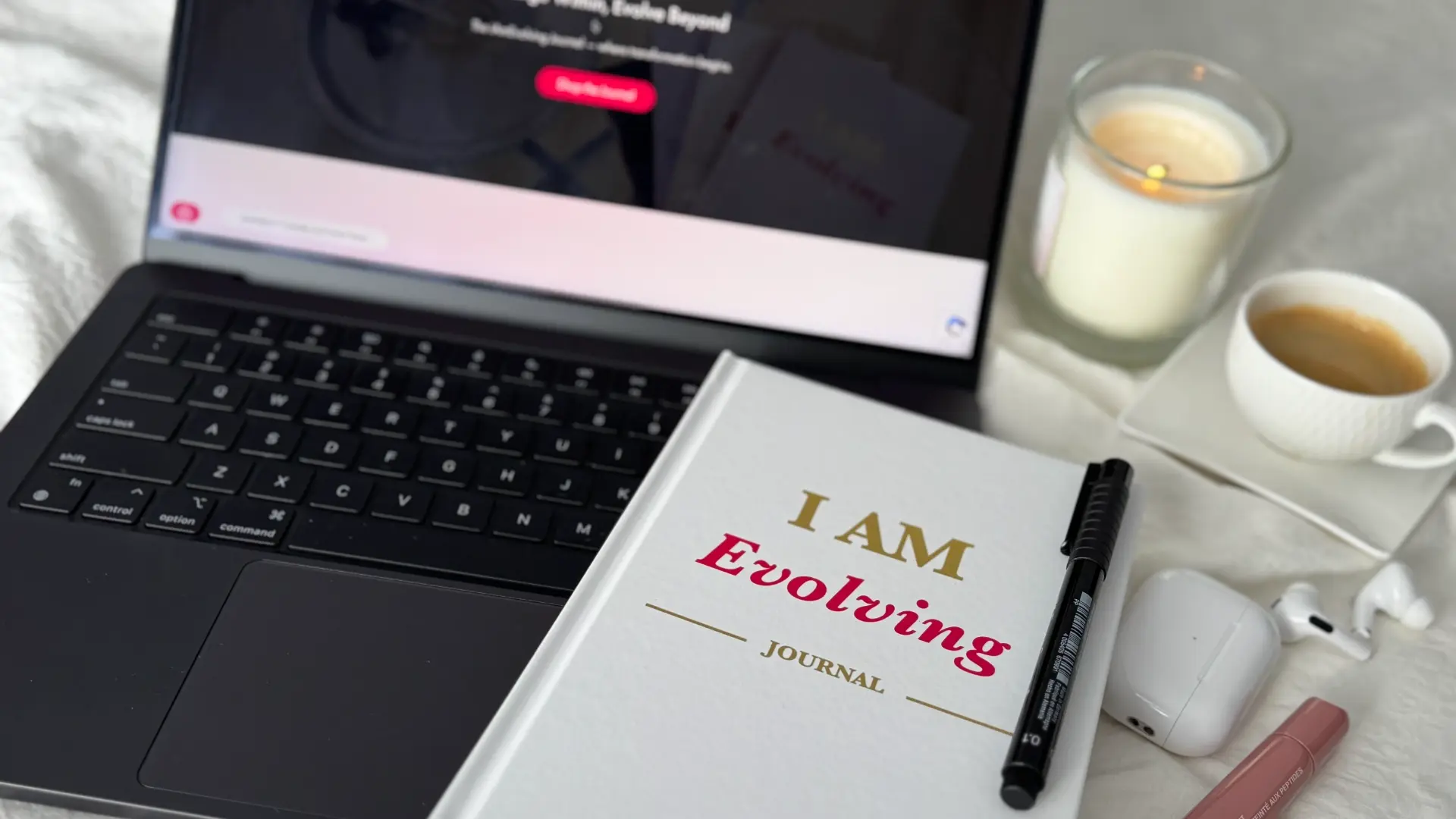
This is why the iAmEvolving Journal includes daily prompts and space to write goals repeatedly. It makes your progress visible.
4. Remove the “All or Nothing” Mentality
Missing a day does not mean you failed. The brain loves perfection, but perfection destroys consistency.
Examples:
- If you can’t read for 20 minutes, read for 3.
- If you can’t meditate for 10 minutes, breathe for 60 seconds.
- If you can’t write a full page, write one sentence.
Small action is always better than no action. Learn how to approach growth with compassion and balance in Journaling for Emotional Clarity.
5. Plan for Busy Days
Life gets chaotic, but busy days don’t have to erase your goals.
Choose a “minimum version” of your habit:
- 30-minute workout → 5 minutes of stretching
- Full journal entry → 3 lines of gratitude
- 10-page reading → 1 paragraph
- Clean the house → 5 minutes of one small task
When you have a backup plan, you stay consistent even during overload.
6. Reduce Friction
Friction is anything that makes a habit feel harder than it needs to.
Examples:
If you want to read more:
- Keep a book on your nightstand or in your bagNot buried on a shelf.
If you want to drink more water:
- Keep a bottle on your deskNot in another room.
If you want to write goals daily:
- Keep your journal open on your deskNot in a drawer.
The easier the action is, the more likely you do it.
7. Focus on Identity, Not Just Results
A goal says:
“I want to meditate.”
Identity says:
“I am someone who prioritizes peace.”
A goal says:
“I want to be healthier.”
Identity says:
“I am someone who takes care of my body.”
When your identity changes, your habits become automatic.
8. Forgive Yourself and Continue
Most people quit because they feel guilt or disappointment.
The truth:
You can restart at any moment.
You can begin again any day.
You are not behind.
You’re still evolving.
9. Use Reflection to Stay Aligned
Once a week, ask:
- What worked this week?
- What didn’t work?
- What can I adjust next week?
This keeps your goals alive and evolving. For deeper self-inquiry, explore Journaling Prompts for Self-Discovery, perfect for your weekly reflections.
The iAmEvolving Journal is designed for this: daily goals, small habits, gratitude, and reflection. All in one place.
10. Make It Meaningful
Consistency becomes easier when your goal is emotional, not just logical.
Ask yourself:
- Why does this matter to me?
- How will my life look when this becomes natural?
- Who will I become through this process?
The stronger the meaning, the stronger the consistency.
How to Stay on Track With Goals Over the Long Term
Short bursts of effort are easy. Staying on track with your goals for months is where most people struggle, and it is also where the real change happens. It helps to expect the dips. Energy, schedules, and whole seasons of life shift, so your approach has to flex without breaking. Persistence is not about never slowing down; it is about always coming back.
Build a rhythm you can keep on your hardest week, not your best one. If a goal only works when everything goes smoothly, it will not last. Anchor each goal to one small daily action and let that action carry you through the low-energy stretches. Turning a big ambition into a single repeatable step is the difference between a goal you talk about and one you actually live. This is exactly how to turn big goals into daily actions that hold up over time.
Finally, review your progress on a regular cadence so small drifts do not turn into full stops. A weekly check-in keeps you honest and lets you adjust before frustration sets in. Pairing steady action with honest goal reflection is what keeps long-term goals alive instead of letting them fade into another forgotten resolution.
Tie New Goals to Habits You Already Have
One of the most reliable ways to be consistent with both habits and goals is to stop building from scratch. You already do dozens of things automatically every day: you make coffee, brush your teeth, sit down at your desk. Each of those is an anchor you can attach a new goal to, so the habit you are trying to keep rides on the back of one you never forget.
This is why “after I pour my morning coffee, I write one line in my journal” works far better than “I will journal more.” The existing habit becomes the cue, and the new action borrows its momentum. Stack your goal onto a routine that already runs on autopilot and you remove the hardest part of consistency, which is remembering to start. For more on engineering routines that hold under pressure, the habits guide walks through how lasting habits are actually built.
If you want a clear structure that helps you stay consistent even when life gets busy, explore my full guide on goal setting. It will help you align your goals with your daily actions so consistency becomes a natural part of who you are, not something you struggle to maintain.
Get more like this, every week
FAQ
Do I need a strict routine to stay consistent?
What if I keep starting and stopping?
How long until habits feel natural?
Can journaling really help with consistency?
When you write things down, you see your patterns clearly: what helps you stay aligned and what pulls you off track. That clarity makes showing up easier. With even a few minutes a day, journaling strengthens discipline, reinforces your intentions, and helps you return to your path whenever life gets messy. Its real purpose is reconnecting with yourself so you can keep moving forward.