Process Goals vs Outcome Goals: Which One Actually Works for You?
The honest difference between process goals vs outcome goals is this: an outcome goal names the result you want, like publishing a book by December, while a process goal names the repeatable action that gets you there, like writing 500 words a day. Most people set the first kind because it sounds impressive at a dinner party, and then spend the rest of the year wondering why the work feels invisible. The outcome is the headline. The process is where you actually live.
This guide is for the version of you that has set ambitious goals before and watched them stall around the third month, even though you still cared, because no one ever taught you which goal type does which job. You will find a clear framework for when each one wins, why outcome goals fail in long stretches even when they look perfect on paper, and how to combine them so the outcome becomes a north star while the process does the daily work. If you want the bigger picture first, the iAmEvolving goal setting guide is the pillar this post lives under.
What Process Goals vs Outcome Goals Actually Mean
An outcome goal is a specific result with a defined endpoint. It usually has a number, a deadline, and a yes-or-no answer at the end. You either hit it or you did not. A process goal is a repeatable action you commit to performing on a defined cadence, regardless of the result on any given day. The outcome belongs to the future. The process belongs to today.
Here are five outcome goals that should feel familiar:
- Publish a book by December 31.
- Lose 20 pounds before my sister’s wedding.
- Hit $10,000 in monthly revenue by Q4.
- Run a half marathon under two hours this fall.
- Save $15,000 for a down payment by next spring.
And here are the process goals that correspond to each one:
- Write 500 words every weekday morning.
- Walk 8,000 steps and eat one home-cooked meal daily.
- Have three sales conversations per week.
- Run four times a week, one of them a long run.
- Move $300 to savings every Friday, automatically.
Notice the difference in texture. Outcome goals are loud and tied to identity. Process goals are quiet and tied to a calendar. The outcome answers what success looks like. The process answers what Tuesday looks like. You need both, but they do very different jobs, and confusing them is where most goal-setting breaks down.
Why Outcome Goals Quietly Fail in Long Stretches
Outcome goals work beautifully for the first two or three weeks. The vision is fresh, motivation is high, and the deadline still feels far enough away to be exciting instead of threatening. Then the middle arrives. The book is one-tenth written, the scale has not moved much, and you have a full month of work in front of you with no visible reward at the finish line. This is where outcome goals fail, and they fail in a specific pattern that has nothing to do with willpower.
The first failure mode is invisible progress. An outcome goal only registers as a win at the end. Every day that is not the finish line feels like falling short, even when you did good work. That daily mismatch between effort spent and progress felt is exhausting. It slowly drains the emotional fuel you need for the back half of the year.
The second failure mode is goal-shaped procrastination. Because the outcome is so big, the brain looks for any path that feels like progress without requiring the actual work. You research book covers instead of writing. You buy new running shoes instead of running. You build a budget spreadsheet instead of moving money. None of these feel like avoidance because they are technically related, but the process never happens. Working through your most common goal setting mistakes usually reveals this pattern hiding under a layer of busyness.
The third failure mode is what happens when one week goes wrong. With a process goal, a missed Tuesday is just a missed Tuesday. With an outcome goal, a missed week feels like the whole plan is now off track, because the deadline has not moved but the buffer has shrunk. That panic usually triggers either an unsustainable sprint or a private decision that the goal is no longer realistic. Both endings are abandonment dressed up as logic.
Get more like this, every week
When Process Goals Win, and When Outcome Goals Win
Neither goal type is universally better. They are tools for different jobs, and the trick is knowing which one is doing the heavy lifting at any given stage. Here is a simple way to decide.
Use a process goal when:
- The work is creative, skill-based, or compounding, like writing, training, learning a language, or building an audience.
- The result is largely outside your direct control, like revenue, weight loss, or someone else’s decision.
- You are early in something and consistency matters more than precision.
- You have failed at the outcome version of this goal before and want a different approach.
Use an outcome goal when:
- There is a real external deadline, like a wedding, a launch date, or a registration cutoff.
- The thing being measured is fully within your control, like saving a specific amount from a steady paycheck.
- You need the goal to force prioritization, because saying yes to it means saying no to other things.
- The work is short enough that you can hold the vision in your head the whole way through.
If you are unsure which one applies, ask one question: can I do the work today, or does the result depend on a chain of future events? If you can do the work today, a process goal will probably serve you better. If the result is the only thing that matters and the date is fixed, an outcome goal sharpens your focus in a way nothing else can. Sometimes the deeper work is figuring out the emotional energy behind the goal before deciding which structure to wrap it in.
How to Combine Them So the Outcome Becomes a North Star
The version that actually works in long stretches uses both: you let the outcome goal sit in the background as a direction, while the process goal does all the visible daily work. The outcome becomes a north star. You glance at it once a week to make sure you are still pointed in the right direction. You do not stare at it every morning hoping it has gotten closer overnight.
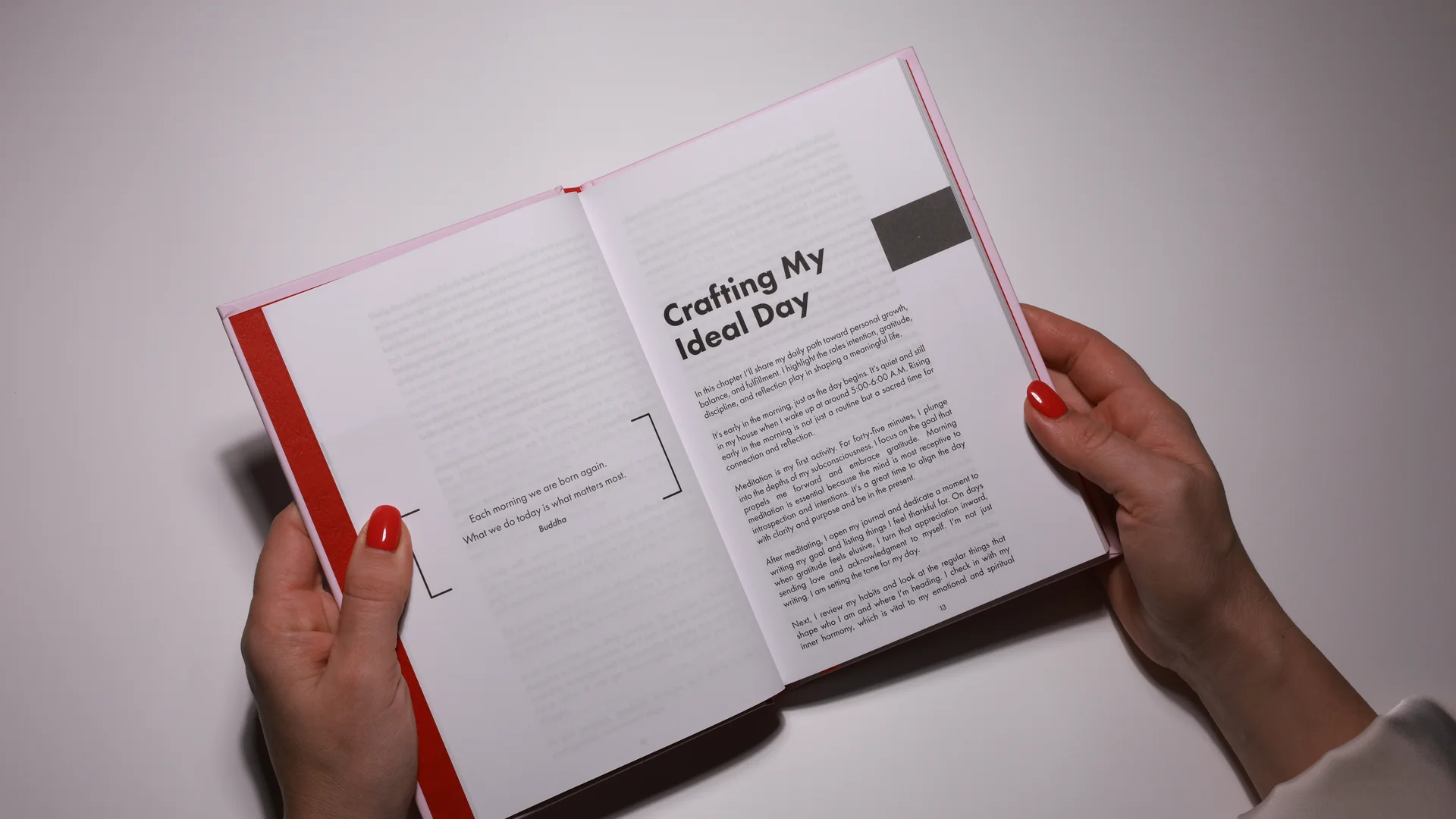
Here is the structure I use, and the one I recommend in the iAmEvolving Journal:
- One outcome goal per quarter. Write it down clearly with a date. Re-read it on Sundays. Do not check it daily.
- One or two process goals that serve it. These are your daily contract. They are small, repeatable, and binary: either you did it today or you did not.
- A weekly review of effort, not results. Count the days you kept the process, not the inches you moved toward the outcome. Effort is the only honest signal in the short term.
- A monthly review of direction. Once a month, ask whether the outcome still pulls you. If it does, keep going. If it does not, revise it.
This structure removes the emotional whiplash of constantly measuring yourself against the finish line. It also makes the work survivable. A bad week stops being a referendum on whether the whole goal is still possible. It becomes one data point in a process you can run for another fifty weeks if needed. If you want a structured way to test this, the 7-day goal setting sprint is a low-stakes way to practice the rhythm before applying it to something larger.
It Is Okay to Abandon the Outcome and Keep the Process
Here is the part of this conversation that almost no one says out loud. Sometimes the right move is to drop the outcome goal entirely and keep the process. That counts as success too: the practice is doing exactly what a practice is supposed to do, which is teach you what you actually want.
Consider the writer who set out to publish a book by December. Six months in, the book is not done, but they have written almost every weekday and found out they love the morning writing ritual more than they care about the book itself. Dropping the book deadline and keeping the writing habit is not quitting. It is recognizing that the process turned out to be the real prize. The outcome was the door they walked through to find it.
The same applies to the runner who fell in love with morning runs but no longer cares about the half marathon, or the entrepreneur who hit a steady rhythm of three sales calls a week and realized they want a calmer business than the $10,000 month implied. In each case, the outcome goal did its job. It started the process. Then the process became the life.
What makes this hard is the cultural pressure to finish what you started, even when finishing no longer matches who you are becoming. The honest reset is asking whether the outcome you wrote down six months ago still belongs to the person reading it today. Spending time on identifying which goals are truly yours usually clarifies this faster than another planning session. The goal you keep should pull you forward, not drag behind you out of obligation.
Conclusion
The choice between process goals vs outcome goals is not really a choice. It is a layering. The outcome gives you direction. The process gives you a life you can actually live while pointed in that direction. Set the outcome with care, then let it recede into the background. Build the smallest possible daily process that serves it. Review effort weekly. Review direction monthly. And give yourself permission to keep the process even if the outcome no longer fits, because what you do every day is who you are becoming, far more than any line on a vision board.
If you want a structured place to do this work, the iAmEvolving Journal is built around exactly this rhythm. The weekly pages track effort. The monthly pages check direction. The quarterly pages give the outcome a clear home without letting it run the show.
Start your daily practice of gratitude, goals, and growth.
Get the Journal →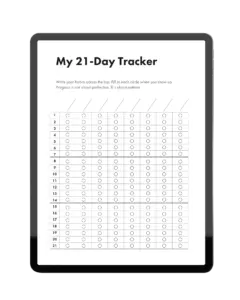
A free 21-day habit tracker PDF with daily check-ins, guided reflection prompts, and mindset reminders. Clean, minimal, and printable.
ExploreFrequently Asked Questions
What is the difference between process goals and outcome goals?
A process goal is a repeatable action you commit to performing on a defined cadence, such as writing 500 words every weekday or running four times a week. An outcome goal is a specific result with a deadline, such as publishing a book by December or losing 20 pounds before a fixed date. Process goals measure effort you control daily. Outcome goals measure results that depend on time, consistency, and sometimes factors outside your control.
Why do outcome goals fail more often than process goals?
Outcome goals fail because the result only registers at the end, which means every day before the finish line can feel like falling short even when real work is happening. They also encourage goal-shaped procrastination, where related activities like research or planning replace the actual work. A single missed week can feel like the entire plan is off track, which often triggers abandonment dressed up as a logical decision.
Should I set process goals or outcome goals first?
Start with the outcome goal because it gives you direction and a way to know whether you are pointed somewhere worth going. Then build the smallest possible process goal that serves it, so the daily work is clear and binary. The outcome becomes a north star reviewed weekly or monthly. The process becomes the daily contract that does the actual work of moving you forward.
Is it okay to abandon an outcome goal?
Yes, abandoning an outcome goal is often the right move when the process you built has revealed what you actually want. A writer who falls in love with the morning writing ritual but no longer cares about publishing a specific book has not failed. The outcome served its purpose by starting the process, and the process became the real prize. The goal worth keeping is the one that still pulls you forward today.
How often should I review process goals versus outcome goals?
Review process goals weekly by counting the days you kept the practice, not the inches you moved toward the result. Review outcome goals monthly by asking whether the direction still feels true and whether the deadline still fits the life you are building. Daily checking of outcome goals creates emotional whiplash and rarely changes the work itself. The weekly process review and monthly direction review is enough rhythm to stay honest without burning out.