The Habits Guide: How Consistency Shapes Your Evolution

Every day, you make small choices: moments that shape your future in steady, lasting ways. These choices form your habits, and your habits shape your evolution. When guided with awareness, consistency turns from discipline into an act of self-respect, a slow, steady move toward who you’re becoming.
This guide is here to help you understand and strengthen the foundation of your habits, through presence rather than pressure. The goal is to do what matters, with intention, instead of doing more. A habit is a behavior repeated often enough that your brain encodes it as automatic, which is why daily consistency, not occasional intensity, is the most reliable driver of lasting change.
Why Habits Matter in Your Evolution
Habits are the bridge between vision and reality. They turn abstract goals into tangible growth. But in the iAmEvolving™ philosophy, habits are about alignment more than productivity or perfection. Each consistent action is an opportunity to live in harmony with your values and your purpose.
When you approach your habits with awareness, they stop being mechanical routines and start becoming rituals of presence. Every mindful repetition teaches your mind to trust your direction, your body to follow your rhythm, and your spirit to stay rooted in calm progress.
Small daily actions create invisible momentum: the kind that shapes your inner architecture long before the outer results appear.
To understand the psychology of habits and how they form, start with the Habits Foundations guide. Your first step toward mindful, sustainable change.
From Intention to Identity: The Heart of Aligned Habits
Real change happens when your habits reflect who you already are, rather than who you’re trying to become. Identity-based habits turn your daily actions into expressions of your values. When your behavior aligns with your beliefs, consistency stops feeling forced and starts feeling natural.
The work is remembering the self that already lives inside you, rather than creating a new one. Each time you follow through on a habit that matters to you, you strengthen the identity that matches your vision.
To learn how to align your habits with your goals and sense of purpose, visit the Building Aligned Habits guide, where small daily choices become clear expressions of self-trust and authenticity.
The Patterns We Inherit, and the Power to Reprogram
From the moment you’re born, your brain begins absorbing patterns from the world around you. Long before you form conscious memories, you’re learning through observation: watching how your parents, caregivers, and environment respond to stress, joy, work, and rest. These early experiences shape your internal blueprint for what feels “normal.”
Neuroscientists describe this as implicit learning: the subconscious programming your brain develops by mirroring the behaviors and emotional rhythms of others. You learn how to think, react, and cope before you ever choose consciously. In many ways, you arrive in adulthood already carrying a set of invisible habits: actions, and also beliefs about what’s possible, safe, or familiar.
The hopeful truth is that these patterns are not permanent. Through awareness and repetition, your brain can reprogram itself. When you practice new responses (patience instead of reaction, gratitude instead of complaint, calm instead of control), you begin to rewrite those early codes. Every conscious choice is a small act of liberation from inherited conditioning.
This is the heart of evolution: realizing that while you may have been shaped by your past, you are not defined by it. Awareness gives you the power to design your own patterns: to choose how you live, think, and grow.
Get more like this, every week
How Habits Are Formed, and Why Awareness Changes Everything
Every habit follows a natural loop: cue, action, and reward. But awareness changes how you experience that loop. Instead of running on autopilot, you begin to see the patterns behind your choices. You notice what triggers you, what motivates you, and what actually nourishes your growth.
Awareness gives you freedom. It allows you to choose with intention instead of reacting from habit. This is where personal evolution begins: by understanding yourself instead of controlling yourself.
If you’ve ever struggled to stay consistent, read How to Break Old Patterns and Start Fresh to learn how self-awareness turns resistance into renewal.
The Neuroscience of Habit Formation
Every habit you repeat changes the wiring of your brain. Neuroscience calls this process neuroplasticity: the brain’s ability to reorganize itself by forming new neural pathways. Each time you practice a behavior, your neurons fire together, strengthening their connection and making the action feel easier and more automatic over time.
According to research from MIT’s McGovern Institute for Brain Research, the basal ganglia, a region deep within the brain, plays a key role in storing and automating habits. Once a behavior becomes familiar, your brain transfers control from the prefrontal cortex (where conscious decision-making happens) to this automatic system. That’s why repeating a small action consistently can eventually make it feel effortless.
But the same mechanism that forms helpful habits also maintains unhelpful ones. Awareness interrupts this automatic loop. When you bring attention to a pattern (pausing, reflecting, and choosing differently), you literally begin to rewire your brain. Over time, mindfulness and intention reshape your neural architecture to support growth and calm, rather than reactivity.
As neuroscientist Donald Hebb famously said: “Neurons that fire together, wire together.” Awareness determines what they wire for.
Consistency Over Intensity
In a world that celebrates speed, remember: growth has its own rhythm. Sustainable progress comes from steady consistency, not sudden bursts of motivation. Every small step compounds into something greater over time: the principle of mindful repetition.
When you choose consistency over intensity, you build trust with yourself. You show your mind that you can rely on your own word. You show your nervous system that change can be safe and sustainable. And you show your heart that small actions, done with love, can change your entire direction.
Read The Power of Daily Habits to understand how small, repeated choices become the foundation of long-term success.
Breaking Patterns with Awareness
Before you can create new habits, you must release what no longer serves you. Breaking patterns means making space for renewal, without punishing yourself. Each time you notice an old behavior with compassion instead of judgment, you weaken its hold and make room for growth.
Awareness is the key. When you observe a habit forming or fading, you begin to understand what it was trying to protect or express. This understanding helps you build new habits that are effective and also supportive of your wellbeing.
Learn more in How to Break Old Patterns and Start Fresh, a step-by-step guide to resetting your relationship with change.
Creating Balance Through Mindful Action
Habits don’t exist in isolation. They are reflections of your inner state. When you’re grounded, your actions flow easily. When you’re scattered, even simple routines feel heavy. The solution is to return to awareness instead of pushing harder. Balance is built through mindful pacing, not force.
Take a moment each day to check in with your energy before acting. Ask yourself: “Is this habit supporting my peace or pulling me away from it?” This gentle question turns consistency into connection.
To deepen this balance, read The Power of a Digital Detox Day: a reminder that rest and focus are essential to sustainable growth.
Journaling: The Bridge Between Awareness and Action
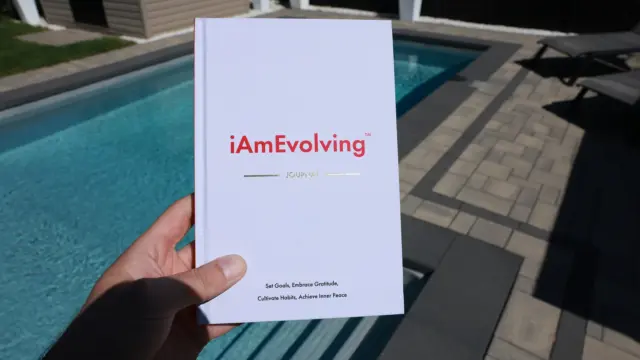
Your journal is your most useful habit companion. It turns invisible progress into reflection and reflection into growth. When you record your thoughts, patterns, and breakthroughs, you create a mirror that helps you see your evolution clearly.
Use your journal as a conversation with yourself, rather than a checklist. Each entry deepens awareness and strengthens your connection to your values. Over time, journaling helps you turn conscious effort into effortless alignment.
If you’re beginning your journaling practice, read How to Build a Journaling Habit That Lasts for simple ways to make reflection a natural part of your routine.
Habits as a Path to Inner Harmony
Habits bring peace as well as productivity. Every consistent act done with awareness moves you closer to harmony between your mind, body, and spirit. When your habits support your wellbeing, they become acts of self-love rather than self-control.
See how awareness and calm support sustainable growth in Mapping Your Inner Harmony. When your outer habits mirror your inner calm, you experience life from a place of centered clarity.
Building Your Own Rhythm of Growth
Your habits are unique to you. There’s no one-size-fits-all formula: only presence, patience, and practice. Let your routines evolve as you do. What serves you today may shift tomorrow, and that’s okay. Growth comes from conscious adaptation more than rigid control.
When you approach your habits with curiosity instead of criticism, they become a tool for self-discovery. You start living from intention rather than expectation. You realize that change moves in a rhythm you learn to dance with, rather than a straight line.
Integrating Gratitude and Goals
Consistency becomes sustainable when it’s fueled by gratitude. When you appreciate the small wins, you reinforce the habit loop with positive emotion. Gratitude also connects your habits to purpose, reminding you why you began in the first place.
Combine gratitude with clear intention by reading The Goal Setting Guide and The Gratitude Journaling Guide. Together, they form the emotional and practical structure that keeps your habits alive.
How Long It Really Takes to Build a Habit
One of the most common questions about habits is how long they take to stick. Research from University College London, published by Phillippa Lally and colleagues, found that a new behavior takes an average of 66 days to become automatic, with individuals ranging from 18 to 254 days depending on the habit and the person. The popular idea that habits form in exactly 21 days is a myth, and believing it often sets you up to quit right when the work is starting to pay off.
What this means in practice is reassuring: the slow middle is the process working, not a sign of failure. Missing a single day does not reset your progress, and Lally’s research confirmed that one lapse has little measurable effect on long-term habit strength. Consistency is about your overall trajectory, not an unbroken streak. The most sustainable approach is to expect the first two months to feel effortful, plan for the inevitable off days, and return to the habit the moment you notice you’ve drifted.
This is also why willpower alone rarely works. Motivation naturally rises and falls, so habits that depend on feeling inspired tend to collapse within weeks. For a deeper look at why systems outlast enthusiasm, read Habits vs Motivation, and see How to Build Habits That Stick for the practices that carry you through the slow middle.
Designing Systems That Make Consistency Automatic
Lasting habits usually come from a well-designed environment that makes the right action the easy one, more than from trying harder. When you reduce the friction around a behavior, you no longer need to negotiate with yourself each day. The decision is already made, and your energy goes into doing rather than deciding.
One of the most effective techniques is habit stacking: anchoring a new habit to a routine you already perform without thinking. The pattern is simple to follow:
- Identify an existing daily habit that is already stable, such as making your morning coffee.
- Choose one small new habit you want to build, kept short enough to finish in two minutes.
- Attach the new habit immediately after the old one, using the cue “After I [current habit], I will [new habit].”
- Repeat the pairing daily until the existing routine becomes the reliable trigger.
Pair habit stacking with a way to make progress visible, and consistency becomes far easier to sustain. Tracking gives your brain a small, immediate reward each time you follow through, which strengthens the loop. To set up a simple, sustainable practice, see the Habit Tracking Journal Method, and for the daily rhythm that keeps it all together, read Habits for Consistency. If you want a ready-made page to start with, download the free 21-day habit tracker.
Why Habits Fall Apart, and How to Begin Again
Most habits fail because they were built too big, too fast, or in isolation from the rest of your life, rather than from weak character. When a new routine demands more time or willpower than you can spare on a hard day, it disappears the first time life gets busy. The fix is usually a smaller, more forgiving starting point that survives your worst days, not just your best ones.
A second common cause is the all-or-nothing mindset. One missed day turns into a missed week, and the habit feels broken beyond repair. In reality, the people who sustain habits for years are not the ones who never slip. They are the ones who return quickly and without self-punishment. Treat a lapse as information rather than failure: notice what pulled you off course, adjust the conditions, and begin again the next day at the smallest possible scale.
If you’re rebuilding after a long pause, give yourself a clear and gentle restart. A structured runway often helps more than relying on resolve alone, which is why a guided container like the 30-Day Habit Building Challenge can make beginning again feel manageable rather than daunting.
Your Evolution Is Built in the Everyday
Change doesn’t happen in the big moments. It happens in the quiet repetition of small acts done with love and awareness. Each time you show up for yourself, you evolve a little more into the person you’re meant to be. Consistency is the structure that gives your freedom and potential room to flourish.
Your habits are the daily language of your becoming.
Let this guide be your compass as you continue to refine, release, and rebuild. Remember, you don’t need to rush your growth. Trust your rhythm, honor your pace, and stay present through each small step.

Start your daily practice of gratitude, goals, and growth.
Get the Journal →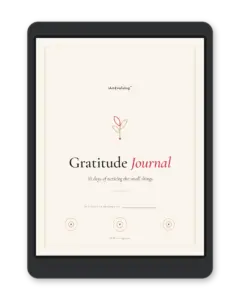
A free 30-day gratitude journal designed for a simple daily practice. Calm, minimal, and printable to help you slow down and reflect.
ExploreHow do I stay consistent with new habits?
What should I do when I lose motivation?
How do I rebuild a habit after breaking it?