How to Break Old Patterns and Start Fresh

Breaking old patterns is one of the most difficult and most rewarding aspects of personal growth. A pattern is any behavior, thought process, or emotional response that you repeat automatically, often without realizing you are doing it. Some patterns serve you well. Others keep you stuck in cycles of self-sabotage, procrastination, people-pleasing, or avoidance that you recognize but feel powerless to change. Psychologists call these automatic loops conditioned responses, and decades of behavioral research confirm they can be rewired at any age, not just in childhood.
Old patterns persist because of how your brain works, not because of weakness or lack of willpower. Your brain is designed to automate repeated behaviors, turning them into default pathways that require minimal conscious effort. This efficiency is helpful for routines like brushing your teeth, but it works against you when the automated behavior is harmful. Understanding how patterns form is the first step to breaking them. The habits guide covers the broader science of behavioral change, but this post focuses specifically on recognizing and interrupting the patterns that no longer serve your growth.
What Breaking Old Patterns Actually Means
Breaking an old pattern means deliberately interrupting an automatic behavior, thought, or emotional response and replacing it with a chosen alternative until the new response becomes your default. It does not mean suppressing the old reaction through sheer willpower, and it does not mean erasing the part of you that formed the pattern. It means rewiring the trigger-and-response loop so that a healthier outcome becomes the automatic one.
When people search for the meaning of old patterns, they are usually naming a familiar frustration: the sense of repeating the same mistake even though they know better. An old pattern is a response your brain learned so well that it now runs on its own, without permission. The word “old” matters here. The pattern may have made sense in an earlier chapter of your life, but it keeps firing in situations where it no longer fits. Recognizing the gap between what a pattern was originally for and what it actually does now is the real beginning of change. The work of embracing change starts with this single act of honest naming.
Why Old Patterns Are So Hard to Break
Every pattern you repeat strengthens the neural pathway that supports it. The more you react to stress by withdrawing, the more automatic withdrawal becomes. The more you avoid difficult conversations, the stronger your avoidance reflex grows. This is neuroplasticity working against you: your brain gets better at whatever you practice, including the things you wish you would stop doing.
Patterns also persist because they were once useful. The coping mechanism you developed as a teenager to survive a difficult home environment may have been adaptive at the time. But carrying that same pattern into adult relationships creates problems the pattern was never designed to handle. Recognizing that a pattern outlived its purpose is different from judging yourself for having it.
Emotional triggers keep patterns alive. Most automatic behaviors are activated by specific situations, people, or feelings. You do not overeat randomly. You overeat when you feel lonely, bored, or anxious. You do not procrastinate on everything. You procrastinate on tasks that trigger fear of failure or judgment. Identifying your specific triggers is more useful than trying to change the behavior through willpower alone.
How to Recognize Your Patterns
The hardest part of breaking a pattern is seeing it clearly. Patterns operate below conscious awareness by design. Here are four ways to surface them:
Journal about recurring frustrations. If the same problem keeps appearing in your life, there is almost certainly a pattern driving it. Write about the last three times you felt stuck, frustrated, or disappointed. Look for what is similar across all three situations. The common thread is usually your pattern, not bad luck.
Notice your body’s signals. Patterns often announce themselves physically before you become consciously aware of them. Tension in your chest before a difficult conversation, a knot in your stomach when you open your email, restless energy when you are avoiding something important. Your body is tracking your patterns even when your mind is not.
Ask people you trust. Others can often see your patterns more clearly than you can because they are not inside them. Ask a close friend or partner: “What do you notice I do when I am stressed?” or “What pattern do you see me repeating?” Their answers may be uncomfortable, but they are usually accurate.
Track your defaults for one week. Each evening, write down one moment where you reacted automatically instead of choosing your response. After seven days, the pattern will be obvious. Self-awareness is the prerequisite for every pattern change.
A Five-Step Process for Breaking Patterns
Once you can see a pattern clearly, use this process to interrupt and replace it:
Step 1: Name the pattern specifically. “I avoid conflict” is too vague. “When my partner raises a concern, I shut down and stop talking for the rest of the evening” is specific enough to work with. The more precise your description, the more power you have to change it.
Step 2: Identify the trigger. Every automatic behavior has a trigger. It might be a person, a situation, an emotion, or even a time of day. Write down what happens immediately before the pattern activates. This is where the change will happen.
Step 3: Create a pause. Between the trigger and your response, there is a gap. Most of the time, that gap is too short to notice. Your job is to widen it. When you feel the trigger, take one breath before responding. That single breath is the space where choice lives. The art of slowing down is fundamentally about creating this kind of intentional pause.
Step 4: Choose a replacement response. You cannot just stop a pattern. You have to replace it with something. If your pattern is shutting down during conflict, your replacement might be saying “I need a moment to think about this” instead of going silent. The replacement does not need to be perfect. It just needs to be different from the default.
Step 5: Repeat until the new response becomes automatic. You are building a new neural pathway. The first few times will feel awkward and forced. That is normal. With repetition, the new response strengthens and the old one weakens. Research suggests this takes between 18 and 254 days depending on the complexity of the behavior, with an average of about 66 days.
Get more like this, every week
Why Journaling Accelerates Pattern Breaking
Journaling is one of the most effective tools for breaking patterns because it makes the invisible visible. When you write about your triggers, reactions, and the gap between them, you externalize the pattern. It stops being an automatic process happening inside you and becomes something you can observe, analyze, and deliberately change.
Writing also slows down the processing enough for your prefrontal cortex to engage. In the moment of a triggered reaction, your amygdala dominates and rational thinking shuts down. But when you write about the same situation afterward, your reasoning brain takes over. You can see what happened clearly, understand why you reacted the way you did, and plan a different response for next time.
The neuroscience of journaling confirms that consistent writing about emotional experiences literally rewires the neural pathways involved. You are doing more than thinking about change. You are building the brain infrastructure that supports it.
Starting Fresh Does Not Mean Starting Over
Starting fresh means choosing to respond differently from this moment forward, without erasing your past or pretending your patterns never existed, using everything you have learned about yourself as fuel rather than baggage.
Every pattern you have ever repeated taught you something. The avoidance taught you what you are afraid of. The people-pleasing taught you where you do not trust your own worth. The procrastination taught you which risks feel too large to face directly. These lessons are valuable. Starting fresh means keeping the wisdom while releasing the behavior. This is where identity-based change takes hold: when you begin to see yourself as someone who responds differently, the new behavior stops feeling like effort and starts feeling like who you already are.
The iAmEvolving Journal supports this process through its daily structure. Each morning, you set an intention that gives you a conscious alternative to your default. Each evening, you reflect on where you followed through and where the old pattern showed up. Over weeks, this daily cycle of intention and reflection makes pattern-breaking a practice rather than a battle. The habits foundations framework explains how repetition turns conscious choices into automatic behaviors.
Conclusion
Old patterns will not break themselves. They require your attention, your honesty, and your willingness to feel uncomfortable as you build new responses. But every pattern you interrupt is proof that you are not defined by your past. You are defined by what you choose to do next.
Start with one pattern. Name it. Find its trigger. Create a pause. Choose a different response. Repeat. That is the entire process. It is simple, but it is not easy. And it is the most important work you will ever do for your own growth.
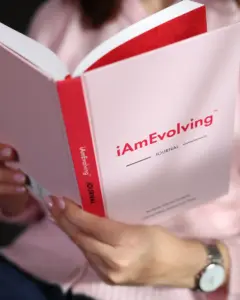
Start your daily practice of gratitude, goals, and growth.
Get the Journal →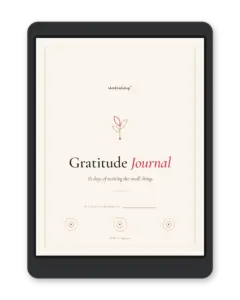
A free 30-day gratitude journal designed for a simple daily practice. Calm, minimal, and printable to help you slow down and reflect.
ExploreFrequently Asked Questions
How long does it take to break an old pattern?
Why do I keep repeating the same patterns?
Can journaling help break bad habits?
What is the difference between a habit and a pattern?