How to Build Better Habits With a Journal (Not an App)

A habit journal is a dedicated notebook where you track daily behaviors and reflect on why they matter to you, combining the accountability of a tracker with the depth of a personal journal. Unlike habit-tracking apps that reduce your progress to a binary checkmark, a habit journal asks you to slow down, write by hand, and think about the person you are becoming through your daily choices. Research from University College London on habit formation found that it takes an average of 66 days for a new behavior to become automatic, and a 2014 study published in Psychological Science showed that people who wrote their intentions by hand were 42 percent more likely to follow through than those who typed them. A habit journal combines both findings into one practice: the time to let habits take root, and the handwriting that helps them stick.
If you have ever downloaded a habit app, felt a rush of motivation for a week, and then quietly deleted it three weeks later, you already know something that the productivity industry does not want to admit: tracking alone is not enough. Real change requires reflection, and reflection requires more than tapping a screen. A habits guide can help you understand the full picture, but the tool that bridges knowledge and action is often the simplest one available: a pen and a blank page.
The science behind why this works is more settled than people realize. Decades of research on self-monitoring confirm that recording your behavior, especially by hand, changes the behavior itself, and pairing that tracking with brief written reflection amplifies the effect by helping you notice patterns before small slips become broken habits. Behavioral scientists call this the monitoring-plus-reflection loop, and it is the foundation behind every effective habit-building practice. It is also what separates a habit journal from the disposable streak counters in your app store. The rest of this guide shows you how to set one up, what to write in it, and how to keep it useful long after the novelty fades.
Why Habit-Tracking Apps Eventually Stop Working
Habit-tracking apps are brilliant at one thing: making you feel productive without actually changing your behavior. They gamify consistency with streaks, badges, and colorful dashboards. And for a while, it works. You check the box, see the streak counter climb, and feel a small dopamine hit. But here is the problem: the dopamine comes from the app, not the habit itself.
When the novelty fades, the notifications become noise. You start ignoring them, or worse, you check off habits you did not actually complete just to keep the streak alive. The app has no way to know the difference. It does not ask you how the meditation felt, or whether your morning walk actually cleared your head, or why you skipped your reading habit for the third day in a row. It just shows a broken chain and moves on.
Understanding how habits are formed makes this clearer. Habits stick when they connect to identity and emotion, not when they are reduced to data points. Apps treat habits like tasks to complete. But a habit is not a task. It is a pattern of behavior that becomes part of who you are. And you cannot build identity through a notification.
There is also the issue of shallow tracking. Most apps give you a binary choice: done or not done. But real life is not binary. You might have meditated for two minutes instead of ten. You might have gone for a walk but spent the whole time scrolling your phone. You might have journaled, but only because you felt guilty. The checkmark captures none of this nuance. And it is the nuance that matters.
What Makes a Habit Journal Different
A habit journal works because it combines two things that apps separate: tracking and reflection. When you write down that you completed a habit, you are not just recording data. You are creating a moment of contact between your actions and your awareness. That pause, the ten seconds it takes to pick up a pen and write, is where real change happens.
Handwriting engages your brain differently than typing or tapping. Studies on cognitive processing show that the physical act of writing slows your thinking just enough to move information from short-term memory into deeper processing. When you write “I went for a run this morning and it felt harder than yesterday,” your brain processes that experience more thoroughly than if you simply checked a box.
There is also the friction factor, and it is a feature, not a flaw. Opening a journal requires intention. You have to sit down, open the page, hold the pen. That small amount of effort creates a ritual around your habit tracking that reinforces the behavior itself. Apps are designed to minimize friction, but when it comes to building self-awareness, a little friction forces you to be present.
The privacy of a journal also matters. When your habit data lives in an app, some part of your brain knows it could be shared, synced, or analyzed. A paper journal is yours alone. You can be brutally honest about what happened and why without worrying about judgment, algorithms, or privacy policies. That honesty is what makes reflection transformative.
How to Set Up Your Habit Journal
Setting up a habit journal does not require a fancy system or a specific kind of notebook. The best setup is one you will actually use, and simplicity is what keeps you coming back. Here is how to get started without overcomplicating it.
Start with three to five habits, not fifteen. One of the biggest mistakes people make is tracking too many habits at once. This creates overwhelm and turns your journal into a chore. Pick the three to five behaviors that matter most to you right now. These should be specific and daily: “Read for 20 minutes,” not “Read more.” “Walk after lunch,” not “Exercise.” Specificity gives you something concrete to track and reflect on.
Create a simple weekly layout. Dedicate one page per week. Write your habits down the left side and the days of the week across the top. Use a simple mark to indicate completion, but leave space next to each day for a one-line note. This note is what separates a habit journal from a habit tracker. It could be as brief as “felt great” or “skipped, was exhausted” or “did it but was distracted.” These small notes become gold when you review them later.
Add a daily reflection prompt. At the bottom of each day or on a facing page, write a single reflection question. Some examples that work well:
- Which habit felt easiest today, and why?
- Which habit did I resist, and what was behind the resistance?
- What would make tomorrow one percent better?
- Am I doing these habits out of obligation or genuine desire?
You do not need to answer all four every day. Rotate through them, or write your own. The point is to move from tracking what you did to understanding why you did it, or why you did not.
Schedule a weekly review. Every Sunday or Monday, spend ten minutes reading through your notes from the past week. Look for patterns. Did you skip the same habit every Thursday? Did one habit consistently lift your mood? Were there days when everything clicked and others when nothing did? This review is where the habit journal becomes a growth tool. It shows you what the data alone never could.
Get more like this, every week
How to Choose the Right Habit Journal
Not every notebook will work as a habit journal, and the wrong format can quietly undermine the practice before it begins. The best habit journal is the one you can open every day without resistance, which usually means it falls into one of three categories.
A blank notebook. A standard lined or dot-grid notebook gives you total freedom. You design the layout, choose how many habits to track, and decide how much space to leave for reflection. The trade-off is setup time. If you enjoy the ritual of creating your own pages, this is a fulfilling option. If you tend to abandon practices that require ongoing design decisions, you will likely give up by week two.
A structured habit tracker. Pre-printed habit trackers remove the design burden. The pages arrive ready to use, with checkboxes, weekly grids, and sometimes monthly review pages. The trade-off is rigidity. Many habit trackers focus heavily on completion checkboxes and leave too little room for reflection, which means you end up with a glorified app on paper. Look for ones that include space for daily notes or weekly review prompts, not just rows of squares.
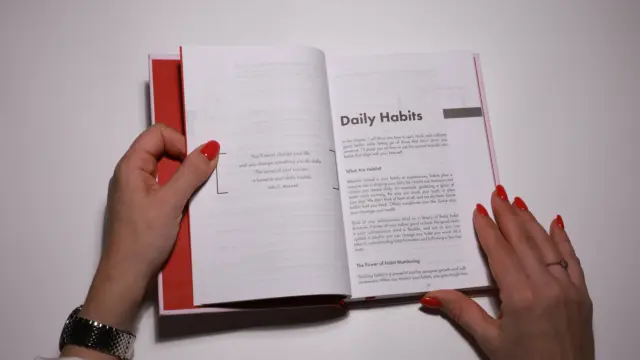
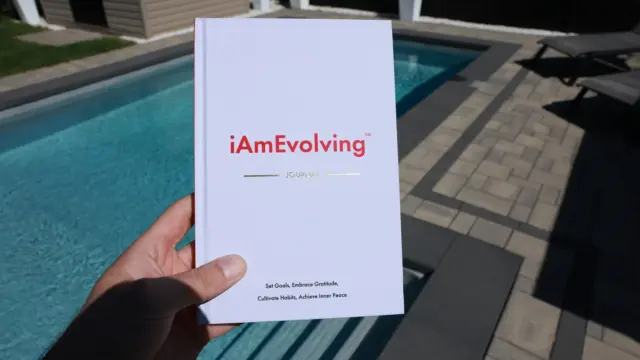
An integrated growth journal. The most effective option for most people is a journal that combines habit tracking with gratitude, intention setting, and reflection in one place. This is the approach behind the iAmEvolving Journal, which weaves habit tracking into a broader daily practice so your habits stay connected to your goals and emotional state rather than living in their own isolated grid. For a deeper comparison of dedicated notebooks on the market, the rundown of the best habit tracker journals walks through what to look for and which formats hold up over a full year of daily use.
Whichever format you pick, the choice matters less than the discipline of returning to the page. A modest notebook used daily for six months will teach you more about yourself than the most beautifully designed planner used twice a week. Pick something simple, then pick consistency over polish.
The Difference Between Tracking and Reflecting
Tracking tells you what happened. Reflection tells you why it happened. Both are valuable, but only one of them leads to meaningful change. This distinction is the core reason a habit journal outperforms any app on the market.
Here is how the two tools compare side by side. For quick reminders, an app wins. For lasting change and genuine self-knowledge, the journal wins, because it does the one thing an app cannot: it asks you to think.
| What matters | Habit Journal | Habit App |
|---|---|---|
| Records what you did | Yes | Yes |
| Captures why it happened and how it felt | Yes, in your own words | No, a checkmark only |
| Strengthens memory and commitment | Handwriting deepens recall | Tapping fades quickly |
| Sends reminders and notifications | No | Yes |
| Handles a missed day | Invites a one-line reflection | Shows a broken streak |
| Builds self-awareness over months | High | Low |
| Best for | Lasting change and insight | Quick reminders only |
Imagine you have been tracking a daily meditation habit for a month. Your app shows a graph: twenty-three days completed out of thirty. That looks pretty good. But the graph cannot tell you that you skipped meditation on the days you had early meetings because you were anxious about being late. It cannot show you that the days you did meditate before your meetings, you actually performed better. It cannot reveal that your resistance to meditation is connected to a deeper pattern of avoiding stillness when you feel stressed.
A habit journal captures all of this. Not because it is a more sophisticated tool, but because it asks you to think. The act of writing “skipped meditation, felt anxious about the 8am meeting” forces a connection that tapping a red X never will. Over time, these connections accumulate into genuine self-knowledge. You start to see your own patterns clearly, and once you see them, you can work with them instead of against them.
If you are interested in building habits for personal growth, this shift from tracking to reflecting is where the real progress begins. Growth does not come from completing more checkboxes. It comes from understanding what those checkboxes represent and what they reveal about the way you move through your days.
What to Do When You Break the Chain
Every habit system has to answer one critical question: what happens when you fail? Apps answer this question with a broken streak, a reset counter, and sometimes a passive-aggressive notification reminding you of what you missed. The message, whether they intend it or not, is clear: you failed. Start over.
A habit journal answers this question differently. Instead of punishing you with a broken streak, it asks you to sit with what happened. You open the page, see the blank space, and write something. Maybe it is one sentence: “Missed my morning pages today. Could not get out of bed. Feeling low.” That sentence is not a failure. It is data. And it is more useful than any streak counter because it gives you context.
Over time, these missed-day entries become some of the most valuable pages in your journal. They show you what triggers your resistance. They reveal whether your missed days follow a pattern, like every time you stay up too late, or every time you have a conflict with someone, or every time you take on too much at work. Understanding your patterns of resistance is more powerful than maintaining a perfect streak. A streak tells you nothing about why it broke. Your journal tells you everything.
This approach also removes the all-or-nothing mentality that apps reinforce. When your streak breaks on day forty-seven, the app treats day forty-eight the same as day one. Your journal does not. Your journal holds the full record: forty-seven days of showing up, one day of struggling, and whatever comes next. The continuity of that record matters. It reminds you that a single missed day does not erase the person you have been becoming.
How to Evolve Your Habit Journal Over Time
One of the most underappreciated advantages of a habit journal is that it grows with you. Apps are static. They track whatever habits you entered on day one, and changing them feels like admitting defeat. But your habits should change. What you need in January is different from what you need in June. A habit journal makes this evolution natural.
Monthly reviews are where this evolution happens. At the end of each month, read back through your weekly reviews and ask yourself three questions:
- Which habits have become automatic and no longer need tracking?
- Which habits am I consistently resisting, and do they still align with my goals?
- What new habit would serve me in the month ahead?
Some habits will graduate. Your morning water habit might become so automatic that tracking it feels pointless. Great. Remove it and make space for something new. Other habits might reveal themselves as aspirational rather than authentic. You might have been tracking “wake up at 5am” for three months and resisting it every single day. Your journal will show you this pattern. Maybe the habit needs adjusting. Maybe 6am is your actual sweet spot. The journal gives you permission to adapt without calling it failure.
Habit stacking is another evolution that journals support beautifully. Once a habit is solid, you can attach a new one to it. “After I pour my coffee, I write three gratitude items” becomes “After I pour my coffee, I write three gratitude items and review my top goal for the day.” Your journal tracks these stacks as they build, giving you a visual record of how your routines deepen over time. Learning how to build habits that stick becomes much easier when you can see your own progression in your own handwriting.
The long game here is important. After six months of habit journaling, you will have a detailed record of your growth that no app could replicate. You will be able to flip back to January and see what you were working on, what you struggled with, and how far you have come. That physical record is deeply motivating in a way that digital data simply is not.
Combining Your Habit Journal With Deeper Reflection
A habit journal works best when it is not isolated from the rest of your inner work. Habits do not exist in a vacuum. They connect to your goals, your emotional state, your sense of purpose, and your daily mindset. The most powerful version of a habit journal is one that sits alongside gratitude practice, goal setting, and personal reflection.
This is the approach behind the iAmEvolving Journal, which integrates habit tracking with gratitude, goal reflection, and daily awareness into a single practice. Instead of tracking habits in one app, writing gratitude in another, and setting goals in a third, everything lives in one place. The result is that your habits are always connected to the bigger picture of who you are becoming. When you track your morning walk next to your gratitude list and your daily intention, you start to see how these pieces fit together. The walk is not just exercise. It is part of your commitment to taking care of yourself. The gratitude list is not just positivity. It is the emotional foundation that makes showing up for your habits feel meaningful.
Developing strong journaling habits creates a container for all of this work. When journaling itself becomes a daily habit, every other habit you track benefits from the reflection that surrounds it. Your habit journal stops being a checklist and becomes a conversation with yourself about the life you are building, one day at a time.
If you have been working on building habits for consistency but keep falling off after a few weeks, the issue might not be discipline. It might be that your tracking method is too shallow to hold you accountable in a meaningful way. A journal that asks you to reflect, not just record, addresses this gap directly.
Sample Reflections to Write Beside Each Habit Row
The most common stumbling block for new habit journalers is the blank space next to each habit. People know they should write something reflective, but freeze when the pen hits the page. The trick is to keep the reflection short and specific. One useful sentence is worth more than a paragraph of vague positivity. Here are example responses you can use as starting points the first few weeks, one for each row in your weekly grid.
- Meditation: “Ten minutes before coffee. Mind quieter than yesterday, less reactive to morning emails.”
- Morning walk: “Twenty minutes, no phone. Felt the temperature drop. Cleared the foggy head I woke up with.”
- Reading: “Twenty pages of the new book. Easier when I read before checking my phone.”
- Strength workout: “Skipped. Slept poorly and felt depleted. Will try again tomorrow without guilt.”
- Gratitude list: “Wrote three. Noticed I keep listing people, rarely things. Worth thinking about.”
- No phone after 9pm: “Held until 10:30, then slipped. Underestimated how much I use it to decompress at night.”
The pattern in these examples matters more than the content. Each one names what happened in concrete detail and then adds a single observation: an emotional state, a small win, an honest miss, or a question worth sitting with. Notice that even the skipped workout entry contains useful information about sleep quality and self-talk. After two or three weeks of writing this way, the reflections begin to surface patterns you would never have noticed from checkmarks alone. That is when the journal stops being a tracking exercise and becomes a quiet form of self-coaching.
If a prompt helps you get started, rotate through three simple questions each day: What did this habit cost me today? What did it give me? What would tomorrow’s version look like? Answer one of them in a single sentence next to the relevant row. The goal is not to write well. The goal is to leave evidence of your own thinking on the page, week after week, so future you has something honest to learn from.
Conclusion
The best habit system is not the most advanced one. It is the one that helps you understand yourself. Apps can count your streaks, but a habit journal shows you the full story behind those streaks: the resistance, the breakthroughs, the quiet shifts that happen when you pay attention to your own patterns. Writing by hand forces you to slow down just enough to notice what you would otherwise miss. And those moments of noticing are where real, lasting change takes root.
You do not need a perfect system. You need a pen, a notebook, three to five habits that matter to you, and the willingness to be honest about how it goes. Start this week. Track your habits, write one line of reflection each day, and review it on Sunday. Within a month, you will have more insight into your own behavior than any app could ever provide. If you want a printable starting point, the free 21-Day Habit Tracker gives you twenty-one days of guided tracking with daily reflection prompts built in. For the bigger picture, the journaling guide shows you how to weave habit tracking into a complete daily practice.
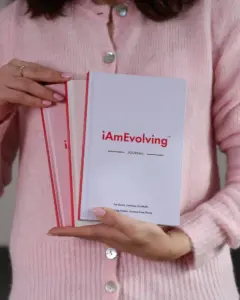
Start your daily practice of gratitude, goals, and growth.
Get the Journal →
A free 30-day gratitude journal designed for a simple daily practice. Calm, minimal, and printable to help you slow down and reflect.
ExploreFrequently Asked Questions
How many habits should I track in my habit journal?
Is a habit journal better than a habit-tracking app?
What should I write in my habit journal when I miss a day?
How often should I review my habit journal?
Can I use a habit journal alongside an app?