What Happens When You Track Your Habits for 90 Days
Most people start tracking their habits with genuine enthusiasm. They download an app, buy a journal, set up a spreadsheet. Two weeks later, the streak breaks, the page goes blank, and the whole effort quietly folds. If that cycle sounds familiar, you are not alone. But here is what most people never discover: the real habit tracking results do not show up until you push past the point where most people quit.
Tracking your habits for 90 consecutive days is one of the most revealing personal experiments you can run. It does not just measure what you do each day. It exposes your patterns, your resistance, your real priorities, and the gap between the life you think you are living and the one you actually live. When I started tracking my own habits in a structured habits guide format, the first month was humbling. By the third month, it was transformative.
Why 90 Days Is the Real Benchmark
You have probably heard the claim that it takes 21 days to form a habit. That number comes from a misquoted observation by a plastic surgeon in the 1960s about how long patients took to adjust to their new appearance. It was never about habits.
Research from University College London found that forming a new automatic behavior takes an average of 66 days, with a wide range from 18 to 254 days depending on the complexity of the habit. Ninety days sits comfortably beyond that average. It gives you enough runway to move past the novelty phase, survive the resistance phase, and reach the point where the behavior starts to feel natural.
But 90 days also matters for another reason: data. One or two weeks of tracking gives you a snapshot. Ninety days gives you a story. You can see how your habits shift across different seasons of your life, how stress affects your consistency, and which habits are truly sustainable versus which ones you adopted because someone else said they mattered.
Days 1 to 30: The Hardest Part Is Not the Habits
The first month of habit tracking is rarely about the habits themselves. It is about the tracking. Checking boxes, marking pages, recording your day. It feels tedious. It feels unnecessary. Your brain will argue that you already know what you did today, so why bother writing it down.
This resistance is normal. What makes the first 30 days valuable is not your consistency score. It is the honest record you are building.
Here is what you will likely discover in month one:
- You overestimate how consistent you are. Most people assume they follow through on their habits about 80% of the time. The data usually shows something closer to 50%.
- Weekends and transitions are your weak spots. Travel, schedule changes, and social events break more streaks than laziness ever does.
- Some habits are easier than you expected. Others are harder. The tracker shows you which is which, without guessing.
The temptation to quit usually peaks around day 10 to 14. The novelty has worn off, but the results have not arrived yet. If you push through this window, the second month becomes significantly easier.
When I first tracked my habits for 30 days, I was embarrassed by what I saw. I thought I was meditating daily. The tracker showed I managed four times that week. That gap between perception and reality is exactly why tracking matters.
Days 30 to 60: When Your Data Starts Telling a Story
By the second month, something shifts. You stop tracking to prove you are disciplined and start tracking because the information is genuinely useful.
This is where patterns emerge. You might notice that your exercise habit drops every Wednesday because of a late meeting. Or that your journaling habit is strongest on mornings when you wake before 7 AM. Or that the days you skip your evening routine tend to follow nights of poor sleep.
These connections are invisible without a written record. Your memory is selective and self-flattering. The tracker is neither.
The 30 to 60 day window is also where you start building aligned habits rather than aspirational ones. You might drop a habit that looked good on paper but never fit your real life. You might simplify your tracking to focus on fewer habits with more depth. Both of these adjustments are signs of growth, not failure.
This is also where the emotional dimension appears. You begin noticing how your habits connect to your mood, your energy, and your sense of purpose. Tracking becomes less about discipline and more about self-awareness.
Get more like this, every week
Habit Tracking Results at 90 Days: What Actually Changes
By day 90, the changes are both internal and external. Here is what consistent habit tracking results tend to look like at this milestone:
- Identity starts shifting. You stop saying “I am trying to exercise more” and start saying “I am someone who exercises.” The tracker provides evidence for this new identity, making it feel earned rather than aspirational.
- Automatic behaviors increase. Habits you struggled with in month one now happen without deliberation. Research on habit formation confirms that repetition in a stable context gradually reduces the need for conscious decision-making.
- Self-trust builds. Ninety days of following through, even imperfectly, creates a foundation of reliability with yourself. You know you can commit to something and sustain it.
- You learn your real capacity. Not the optimistic version you imagined on day one, but the honest version that accounts for hard weeks, low motivation, and real life. This knowledge is more valuable than any streak.
- The gap between intention and action narrows. In month one, that gap was wide. By month three, it has closed significantly. You do what you say you will do more often than not.
People who track habits for consistency over 90 days often report that the biggest surprise is not the external results. It is how much they learned about themselves in the process.
A Simple System for Tracking Your Habits for 90 Days
Overcomplicating your system is the fastest way to abandon it. Here is a structure that works:
Choose 3 to 5 habits. More than five spreads your attention too thin. Pick habits that touch different areas of your life: one physical, one mental, one relational, one creative. Keep each one specific and binary. “Meditate for 10 minutes” is trackable. “Be more mindful” is not.
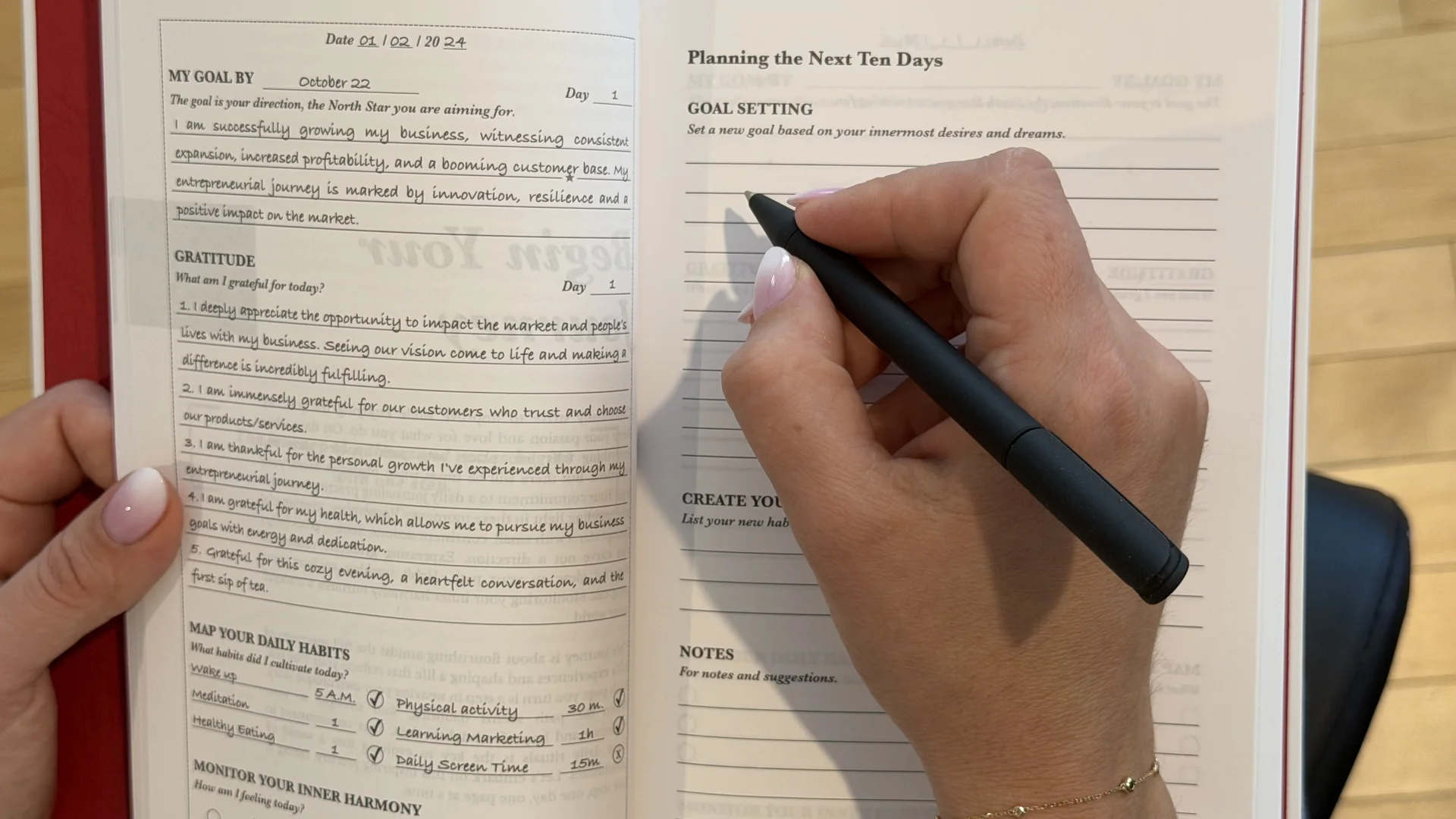
Use one tool. A single page in your journal, a basic spreadsheet, or a dedicated habit tracker journal designed for this purpose. Switching between tools kills momentum.
Track at the same time every day. Attach your tracking to an existing routine. After your evening tea. Before bed. Right after dinner. The trigger matters more than the tool.
Review weekly. Every Sunday, spend five minutes scanning the past seven days. Note what worked, what did not, and any patterns you see. This weekly review is where most of the insight comes from.
Allow imperfect data. A missed day does not ruin the experiment. Mark it, move on, keep going. The goal is not a perfect record. It is a real one.
If you want a structured approach to this practice, the habit tracking journal method offers a framework that balances simplicity with depth.
Conclusion
Tracking your habits for 90 days will not make you a perfect person. It will make you an honest one. And that honesty, the kind that comes from looking at your own data without judgment, is where real change begins.
You do not need a complicated system. You need a simple one that you actually use. Three habits, one page, 90 days. Start there.
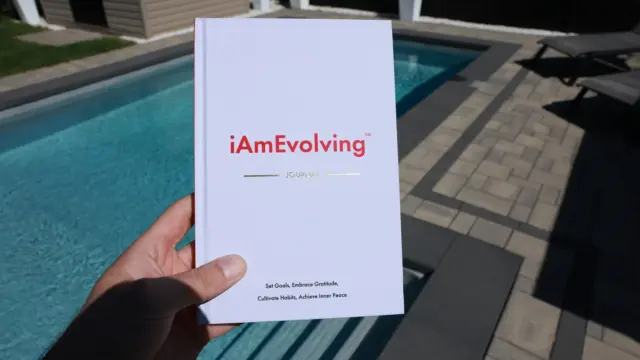
The iAmEvolving Journal includes a built-in habit tracking section designed for exactly this kind of long-term practice. It is structured enough to keep you focused but flexible enough to adapt as you learn what works for your life.
Start today. Not because you need another productivity tool, but because you deserve to see what you are actually capable of when you stop guessing and start measuring.

Start your daily practice of gratitude, goals, and growth.
Get the Journal →
A free 30-day gratitude journal designed for a simple daily practice. Calm, minimal, and printable to help you slow down and reflect.
ExploreFrequently Asked Questions
How long should I track my habits before seeing results?
What is the best way to track daily habits?
How many habits should I track at once?
Does habit tracking actually work?