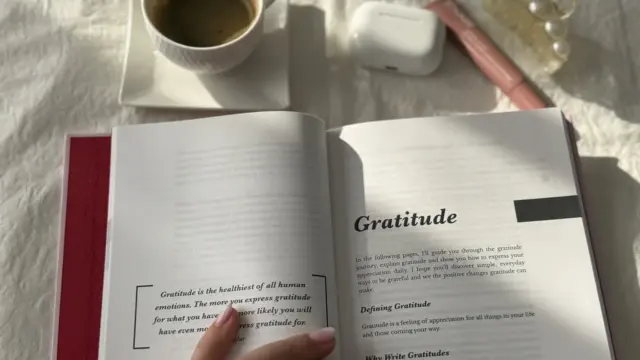
Gratitude Journal for Women: Daily Peace

A gratitude journal for women is a daily practice of noticing and writing down what you appreciate, creating calm and clarity in the middle of busy lives. For women juggling work, family, and personal goals, a few minutes of reflection each day can bring deep peace.
In this post, we’ll explore how daily reflection through gratitude journaling can nurture inner peace, strengthen your mindset, and help you create a more grounded, fulfilled life.
Why Gratitude Journaling Matters for Women
Gratitude journaling is a gentle yet transformative practice. Research shows it can:
- Reduce stress and anxiety
- Improve sleep quality
- Increase optimism and emotional balance
- Strengthen self-worth and resilience
For women especially, who often carry emotional and mental loads for others, gratitude journaling offers a moment to refill your own cup : a few quiet minutes to honor yourself.
How Daily Reflection Builds Inner Peace
When you focus on gratitude, you retrain your mind to notice the good, not the noise. This shift in focus helps you:
- Release Emotional Tension Writing out your thoughts brings awareness to what truly matters and helps you let go of what doesn’t.
- Find Calm Through Routine A daily journaling habit becomes a ritual of peace: a grounding practice that signals safety and stillness.
- Reframe Challenges Gratitude doesn’t ignore pain; it helps you see lessons and strength in difficult times.
- Reconnect With Yourself The more you reflect, the more you notice your growth, your needs, and your unique path.
How to Start a Gratitude Journal
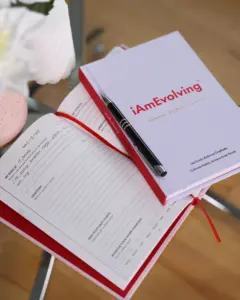
- Choose Your Journal Find one that feels special to you. The iAmEvolving Journal includes a daily gratitude section to help you reflect with purpose.
- Set a Time That Feels Natural Mornings build focus; evenings invite closure. Try both and choose what feels most peaceful.
- Start Small Write just three things you’re grateful for each day. They can be simple: a good meal, a kind word, a moment of quiet.
- Reflect, Don’t Perform There’s no “perfect” entry. Some days you’ll write deeply; other days just one line. What matters is the presence you bring.
- Use Prompts When You Need Inspiration
- What made me smile today?
- Who am I thankful for and why?
- What lesson did today teach me?
- What small moment brought me peace?
If you want the structure without buying anything first, print our 30-day gratitude journal and follow the daily prompts for a month.
The iAmEvolving Journal and Inner Reflection
Peace isn’t found outside;
it grows within you, one page at a time.
The iAmEvolving Journal was designed to simplify the practice of gratitude. It blends goals, habits, and gratitude in a structured way: helping you connect daily actions to emotional awareness.
It’s for women who want more than a planner. Those who want a tool to grow consciously and live intentionally. If you’re ready to start your own gratitude practice, you can explore our guide to the best gratitude journals.
Start your daily practice of gratitude, goals, and growth.
Get the Journal →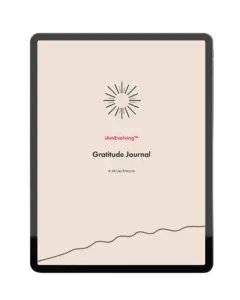
A free 30-day gratitude journal designed for a simple daily practice. Calm, minimal, and printable to help you slow down and reflect.
ExploreCreating a Consistent Gratitude Habit
- Keep your journal visible: on your nightstand or desk.
- Pair journaling with a daily ritual (tea, meditation, skincare, or morning light).
- If you miss a day, simply start again. Consistency is built through kindness, not perfection.
Over time, these few minutes a day shape your mindset: from reactive to grounded, from restless to peaceful.
- How to Start a Self-Care Journal and Actually Stick With It
- 25 Gratitude Journal Ideas to Inspire Your Daily Practice
- How to Start a Daily Gratitude Journaling Practice (Beginner’s Guide)
Gratitude Prompts for Every Season of a Woman’s Life
Life rarely stays still. The gratitude that grounds you during a demanding career season looks different from the gratitude that carries you through new motherhood, a caregiving stretch, or a quiet empty nest. Your journal can meet you wherever you are, and the prompts you choose can shift as your seasons do.
When you feel stretched thin, try writing about one person who made your day lighter, or one small thing your body did for you today. During a season of change, such as a new job or a move, reflect on what the transition is teaching you and what strengths it is quietly revealing. In slower, more reflective stretches, let yourself go deeper: name the relationships, choices, and small wins that shaped the woman you are becoming.
A few prompts to keep nearby: What part of today felt like mine alone? Who showed up for me, and how can I show up for them? What am I proud of that no one else noticed? If you want a wider collection to draw from, our list of gratitude journal prompts offers dozens more to match your mood and stage of life.
When Gratitude Feels Hard
Some days, gratitude does not come easily. You are exhausted, grieving, or simply running on empty, and being told to count your blessings can feel hollow. This is normal, and it does not mean the practice is failing you. Honest gratitude journaling makes room for what is true first.
On hard days, give yourself permission to write the difficulty before you reach for the good. Name the frustration, the worry, or the sadness on the page. Then, gently, look for one small thing that held steady: a warm shower, a text from a friend, the simple fact that you kept going. Gratitude practiced this way is not denial. It is a way of widening your view so the hardship is not the only thing you can see.
If anxiety or overwhelm is part of your daily landscape, journaling can be a steadying anchor. You might pair your gratitude pages with a calming routine, or explore tools made for stressful seasons, like our guide to the best journals for anxiety, so your reflection supports both your peace and your mental health.
The Quiet Science Behind Gratitude
Gratitude journaling is gentle, but its effects are measurable. When you regularly record what you appreciate, you strengthen the brain’s tendency to notice positive experiences, a pattern researchers connect to lower stress hormones and a steadier mood over time. The practice gradually trains your attention, so noticing the good becomes more automatic.
For women managing layered responsibilities, this matters. A nervous system that spends less time in fight-or-flight has more capacity for patience, creativity, and rest. Research on gratitude has linked the habit to better sleep, lower symptoms of low mood, and a stronger sense of connection with others. None of this requires long entries. Consistency, even in small doses, is what shapes the change.
You do not need to understand the neuroscience to feel the benefits, but it helps to know your few quiet minutes are doing real work. To go deeper, read how gratitude changes your brain and why a simple daily habit can reshape the way you experience your days.
Making Your Journal a Space That Feels Like Yours
A gratitude journal works best when it feels like a refuge rather than another task on your list. The physical experience matters more than most women expect. Choose a notebook whose cover you genuinely like, a pen that glides, and a corner of your home where you can sit without interruption, even for three minutes.
Small rituals deepen the sense of belonging. Light a candle, pour something warm, or play soft music before you begin. These cues tell your mind that this is your time, separate from the demands of work and family. Over the weeks, your brain begins to associate the space and the ritual with calm, and sitting down to write becomes something you look forward to rather than something you have to remember.
Let the journal evolve with you. Some women add a line of affirmation beneath each entry, others sketch or tuck in small mementos. There is no wrong way to do this. The page is yours, and the only goal is that it leaves you feeling a little more grounded than when you opened it.
Morning or Evening: Finding the Rhythm That Fits Your Day
There is no single right time to write, only the time that fits the shape of your life. Morning gratitude sets a tone before the day pulls you in a dozen directions. Writing first thing can steady your mind, clarify what matters, and help you move through the hours with more intention instead of reacting to everything at once.
Evening gratitude works differently. It invites closure, helping you set down the weight of the day and notice the moments you might have rushed past. Many women find that a few lines before bed quiet the mental noise that keeps them awake, turning the last minutes of the day into rest rather than worry. If you are not sure which suits you, try one for a week, then the other, and let your own sense of calm be the guide. You can also split the practice: a single line of intention in the morning, a fuller reflection at night.
Final Thoughts
Gratitude journaling doesn’t demand big changes; it invites small awarenesses.
When you practice noticing the good, you start seeing it everywhere: in your relationships, your work, your own reflection.
Peace isn’t found outside; it grows within you, one page at a time.
Journaling is a quiet act of strength: a moment to return to yourself and breathe between responsibilities. To stay consistent and deepen your reflection, explore Gratitude Journaling Practice — Build a Daily Habit of Reflection and Presence.
Get more like this, every week
FAQ
How often should I write in my gratitude journal?
What should I write in my gratitude journal?
Can I use the iAmEvolving Journal for gratitude?