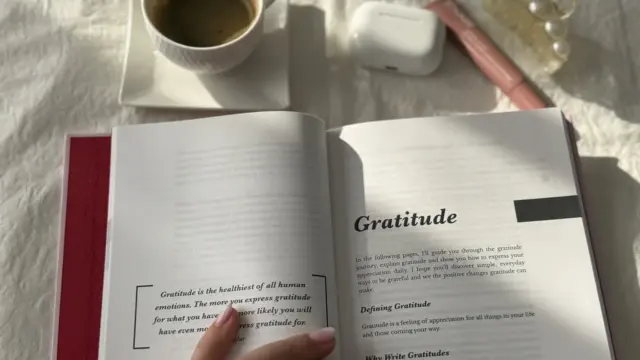
Gratitude Foundations — The Science and Soul of Thankfulness
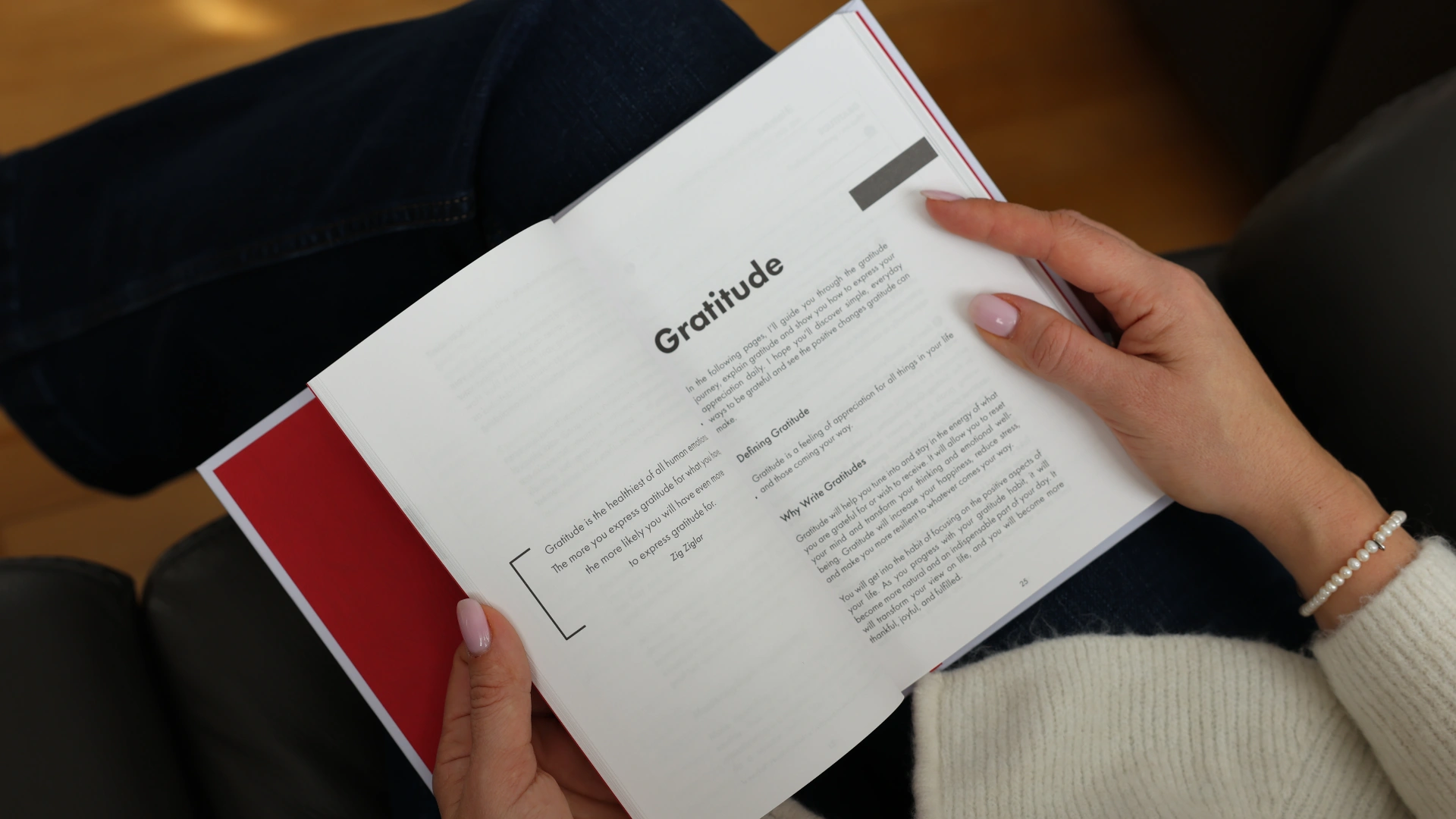
Gratitude foundations are the core principles that make thankfulness a transformative daily practice rather than a superficial exercise. Gratitude is not about ignoring difficulty or forcing positivity onto painful situations. It is the deliberate practice of noticing what is present and good in your life, even when circumstances are hard. Research from the University of California, Davis and Indiana University has shown that gratitude practice produces measurable changes in brain activity, mood, sleep quality, and emotional resilience that persist long after the initial writing stops.
This page covers the essential building blocks of a gratitude practice: why gratitude matters, the neuroscience behind how it changes your brain, how it differs from toxic positivity, and the specific practices that produce lasting results. Each section links to a deeper resource for those who want to go further. For the broader gratitude framework, visit the gratitude journaling guide.
Why Gratitude Matters for Personal Growth
Gratitude matters because it changes what your brain pays attention to. Your mind has a natural negativity bias, a survival mechanism that prioritizes threats over opportunities. This bias was useful when physical danger was common, but in modern life it means your brain overweights problems and underweights everything that is going well. Gratitude practice deliberately counteracts this bias by training your attention to notice positive experiences with the same intensity your brain naturally gives to negative ones.
The effects compound over time. In the first week, gratitude practice feels mechanical. By the second or third week, you start noticing things to be grateful for without trying. By the second month, your baseline mood has shifted measurably. This is not wishful thinking. It is the predictable result of training your brain’s attention filter through repetition. Why gratitude matters explores the psychological and philosophical foundations of this practice in greater depth.
Gratitude also strengthens relationships, improves sleep, and increases persistence toward goals. People who maintain a regular gratitude practice report higher life satisfaction, stronger social connections, and greater resilience during difficult periods. These benefits are not exclusive to naturally optimistic people. They are available to anyone who practices consistently, regardless of personality type or current circumstances.
In the iAmEvolving framework, gratitude is one of the four core journal themes because it serves as the emotional regulation layer of personal growth. Goals give you direction. Habits give you consistency. Inner harmony gives you balance. Gratitude gives you perspective. This is also why gratitude is often the hardest practice to maintain during the seasons when you need it most. When life is going well, gratitude comes easily. When life is hard, it requires deliberate effort to look beyond the pain and notice what remains. That effort is the practice. And it is precisely during those difficult seasons that gratitude produces its deepest benefits, because that is when your brain most needs the counterbalance to its natural negativity bias.
Without that perspective, the pursuit of goals becomes anxious, habits become mechanical, and balance feels impossible. Gratitude is the practice that keeps the other three grounded in appreciation rather than scarcity.
The Neuroscience of Gratitude
Gratitude is not just a feeling. It is a neurological event. When you deliberately notice something you appreciate and write it down, your brain releases dopamine and serotonin, the same neurotransmitters targeted by many antidepressants. This chemical response reinforces the behavior, making it easier and more natural to notice positive experiences over time.
A landmark study from Indiana University found that gratitude writing changed activity in the medial prefrontal cortex, a brain region associated with learning, decision-making, and moral cognition. Remarkably, these neural changes were still detectable three months after the writing exercise ended, even though participants had not continued the practice. This suggests that gratitude practice creates lasting structural changes in the brain, not just temporary mood improvements.
How gratitude changes your brain covers the specific neural mechanisms in detail. For the broader research on gratitude across psychology, neuroscience, and behavioral medicine, the science of gratitude synthesizes the evidence into a comprehensive overview.
One of the most practical implications of this research is that gratitude journaling does not require you to feel grateful in order to work. The neural benefits come from the act of searching for and writing about things to appreciate, not from the emotion itself. On your hardest days, when gratitude feels impossible, the practice of looking for one small thing that is still present and good activates the same brain mechanisms as on your best days. This means the practice is most valuable precisely when it feels most difficult.
Consider what happens when you write “I am grateful for hot water in the shower” during a week of grief. It does not minimize the grief. It acknowledges that even in the middle of loss, your life contains small mercies. That acknowledgment is not denial. It is the beginning of emotional balance. Over days and weeks, these small observations accumulate into evidence that your life is larger than any single difficulty, no matter how consuming that difficulty feels in the moment.
Gratitude vs Toxic Positivity
One of the most common misunderstandings about gratitude is that it requires you to be positive all the time. This is not gratitude. It is toxic positivity, and it actually undermines emotional health by invalidating real pain and discouraging honest self-expression.
Genuine gratitude does not deny difficulty. It holds two truths at once: life can be hard and still contain things worth noticing. You can grieve a loss and be grateful for the people who showed up for you. You can be frustrated with your progress and appreciate how far you have come. This capacity to hold complexity is emotional maturity, not denial.
Gratitude vs positivity explores this distinction in depth, including how to practice gratitude authentically during difficult seasons without bypassing the emotions that need processing. Understanding this difference is essential for building a gratitude practice that sustains you through real life, not just good days.
A practical test: if your gratitude practice makes you feel guilty for having negative emotions, it has crossed into toxic positivity. Genuine gratitude creates space for all emotions. It does not ask you to replace sadness with thankfulness. It asks you to notice that sadness and thankfulness can coexist, and that acknowledging both is more honest and more healing than pretending only one exists.
On days when gratitude genuinely feels impossible, try a softer entry point. Instead of “What am I grateful for?” ask “What did not go wrong today?” or “What is one thing that is still working in my life?” These questions lower the threshold enough to bypass resistance while still activating the same neural mechanisms. You are not forcing positivity. You are gently expanding your field of vision to include more than just the pain.
Get more like this, every week
How Gratitude Connects to Mindfulness and Awareness
Gratitude and mindfulness are deeply connected practices that reinforce each other. Mindfulness is the skill of paying attention to the present moment without judgment. Gratitude is the skill of noticing what is good within that present moment. Together, they create a powerful awareness practice that keeps you grounded, emotionally regulated, and connected to what matters.
When you combine gratitude journaling with mindfulness practice, each one amplifies the other. Mindfulness makes you more aware of small moments worth appreciating. Gratitude gives those moments weight and significance that your busy mind might otherwise dismiss. Gratitude and mindfulness explores how these two practices work together and provides combined exercises you can use daily.
Building a Gratitude Practice That Lasts
The most effective gratitude practices share three qualities: they are specific, they are consistent, and they connect to real experience rather than abstract ideals. Writing “I am grateful for my family” every day becomes mechanical quickly. Writing “I am grateful that my daughter called me today just to hear my voice” activates genuine emotion and produces the neurological benefits that vague entries do not.
Start with three specific observations each day. They do not need to be profound. A good cup of coffee, a moment of quiet, a task you completed. The specificity is what matters, not the magnitude. Over time, your brain learns to scan for these moments automatically, shifting your default attention from what is wrong to what is present and good.
Timing matters less than consistency. Some people write gratitude entries in the morning to set the tone for the day. Others write in the evening to close the day with awareness of what went well. Both approaches work. The key is choosing a time you can protect daily and anchoring the practice to an existing routine: after your morning coffee, before bed, or during your lunch break. When gratitude writing becomes as automatic as brushing your teeth, you have built a foundation that sustains itself.
The most common mistake in gratitude practice is repetition without reflection. Writing “my family, my health, my home” every day for a month produces diminishing returns because the entries become automatic rather than attentive. The solution is specificity and novelty. Challenge yourself to find something new each day, even if it is small. Yesterday it was the way sunlight came through the window. Today it is the conversation you had with a stranger. Tomorrow it might be the fact that your body carried you through a hard day without breaking down. Each new observation strengthens the neural pathway. Each repeated one reinforces existing patterns without building new ones.
The benefits of daily gratitude journaling covers the specific outcomes you can expect from consistent practice, including timelines for when different benefits typically appear. Gratitude journal benefits provides additional research on how the practice affects physical health, relationships, and professional performance.
For those who have experienced the transformative power of sustained gratitude practice, what happens after 90 days of gratitude journaling documents the specific shifts that occur when you maintain the practice beyond the initial weeks.
Four Types of Gratitude Practice
Most people think of gratitude as something you write in a journal. Journaling is the most common form, but it is not the only one. Different practices suit different temperaments, different days, and different stages of life. Knowing the options gives you room to keep the practice alive when one form goes stale.
The first is written gratitude. This is the journaling tradition: three to five specific observations recorded each day, usually in a notebook or app. Writing engages memory and reflection in a way that thinking alone does not. The act of forming sentences forces your mind to fully process each observation, which is part of why the neurological effects are strongest in this form.
The second is spoken gratitude. This includes expressing thanks directly to people who have helped you, either in person, by phone, or in writing. Researchers have found that gratitude letters, written and delivered to someone you have not properly thanked, produce some of the largest measurable mood improvements in the gratitude literature. The benefit is reciprocal. The person you thank receives a meaningful acknowledgment, and you receive the satisfaction of giving it.
The third is contemplative gratitude. This is the practice of pausing during the day to mentally note something you appreciate, without writing it down. A grateful pause before a meal, while walking, or before starting a difficult task. Contemplative gratitude is less rigorous than journaling, but it weaves the practice into ordinary moments rather than confining it to a single scheduled session. A morning gratitude ritual often takes this form, anchored to the first quiet minutes of the day.
The fourth is embodied gratitude. This includes practices like gratitude walks, where you walk with the intention of noticing what you appreciate in your surroundings, or somatic gratitude exercises that pair appreciation with breathing or movement. Embodied gratitude is particularly useful on days when the mind is too restless to sit and write, because the body itself becomes part of the practice.
Most people benefit from combining forms. A morning written entry, a spoken thank-you during the day, a contemplative pause before bed. The combination keeps any single form from becoming routine while reinforcing the same underlying habit of noticing.
How to Start a Gratitude Practice in Seven Days
Starting a gratitude practice does not require a complete life overhaul. A simple structured week is enough to establish the foundation, after which the practice becomes self-sustaining if you protect a few minutes each day. The full beginner walkthrough is in how to build a lasting gratitude habit, but the week below is enough to get the first momentum.
Day one. Pick the time and the format. Choose either morning or evening, and decide whether you will write in a paper notebook, an app, or a dedicated journal. The decision matters less than committing to it. Spending an hour debating the perfect format is a common way to delay starting.
Day two. Write three specific observations. Not “my family” or “my health” but the specific moments inside those broader categories. A phone call, a clear morning, a small thing that worked. Specificity is what produces the neurological response. Vague gratitude entries feel hollow because they are.
Day three. Add one observation about something that was hard but produced something good. A difficult conversation that strengthened a relationship. A failed attempt that taught you something. This practice trains your mind to find meaning inside difficulty rather than waiting for difficulty to pass.
Day four. Notice resistance without forcing through it. Some days the practice feels mechanical. That is normal. Write whatever comes, even if it feels small or repetitive. The point of the early days is consistency, not depth.
Day five. Re-read what you have written so far. Notice patterns. Notice what kinds of moments you keep returning to. This reflection deepens the practice by showing you what you actually value, often in ways that surprise you.
Day six. Try one entry as a gratitude letter rather than a list. Write to someone, even if you never send it, expressing one specific thing you appreciate about them. This shifts the practice from inward to outward and often produces unexpected emotional weight.
Day seven. Review the week. What worked? What felt forced? Adjust the format, timing, or focus for the second week based on what you actually experienced, not what you thought would work before you started. The most sustainable practice is the one you have shaped to your own rhythm rather than copied from someone else.
After seven consecutive days, the practice has enough momentum to continue with minimal effort. Most people who maintain a gratitude practice for thirty days find it harder to stop than to keep going.
Common Mistakes That Stall a Gratitude Practice
Most people who quit a gratitude practice quit for predictable reasons. Knowing the common failure patterns ahead of time makes them easier to recognize and correct before they end the practice.
The first mistake is treating gratitude as a performance. Writing entries you think you should be grateful for rather than what you actually appreciate produces hollow practice that fades quickly. If you do not actually feel grateful for your job, do not write that you are grateful for your job. Write instead about the specific moment in your day that did move you, no matter how small. Honesty is what makes the practice work.
The second mistake is waiting for inspiration. The neurological benefits come from the deliberate search for something to appreciate, not from spontaneous gratitude rising up unbidden. Most days, you will need to sit for a minute and actively look. That looking is the practice. It is not less valuable because it required effort. It is more valuable.
The third mistake is comparing entries day to day. Some days produce profound observations. Other days produce three small things. Both are equally valid. The compounding benefits come from consistency over weeks and months, not from the quality of any single day’s entries. If your entries feel stuck in the same loop, a fresh set of gratitude journal prompts can break the pattern and reopen attention.
The fourth mistake is using gratitude to suppress hard emotions. If you find yourself writing gratitude entries to avoid acknowledging anger, grief, or fear, the practice has become a form of bypass. Gratitude works best when it sits alongside difficult emotions, not on top of them. On hard days, name the difficulty first, then look for what is still present and good. Both can be true.
The fifth mistake is abandoning the practice after a missed day. The most common reason people stop is that they miss one day, feel they have broken the streak, and use that as evidence that they cannot maintain it. Missing days is part of any long-term practice. The next day you sit down to write is the only day that matters. Streaks are a measurement tool, not a moral judgment.
When you notice any of these patterns, the correction is the same: return to specificity, return to honesty, return to today. The practice does not require perfection. It requires only that you keep coming back.
Conclusion
Gratitude is not a personality trait. It is a skill that strengthens with practice. These foundations, understanding the science, distinguishing gratitude from toxic positivity, building specificity into your daily writing, and connecting gratitude to mindfulness, are what separate a meaningful practice from a checklist you abandon after two weeks.
The iAmEvolving Journal includes a dedicated daily gratitude section designed around these principles. Each day, you write specific observations rather than generic statements, building the neural pathways that make grateful awareness your default rather than an effort. Start with today. Notice one thing you appreciate right now. Write it down. That is the foundation.
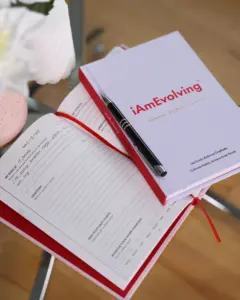
Start your daily practice of gratitude, goals, and growth.
Get the Journal →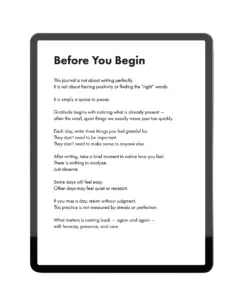
A free 30-day gratitude journal designed for a simple daily practice. Calm, minimal, and printable to help you slow down and reflect.
ExploreFrequently Asked Questions
What are gratitude foundations?
How does gratitude change the brain?
Is gratitude the same as positive thinking?
How long does it take for gratitude practice to work?