Identity-Based Change: Why Becoming Beats Doing (And How to Start)
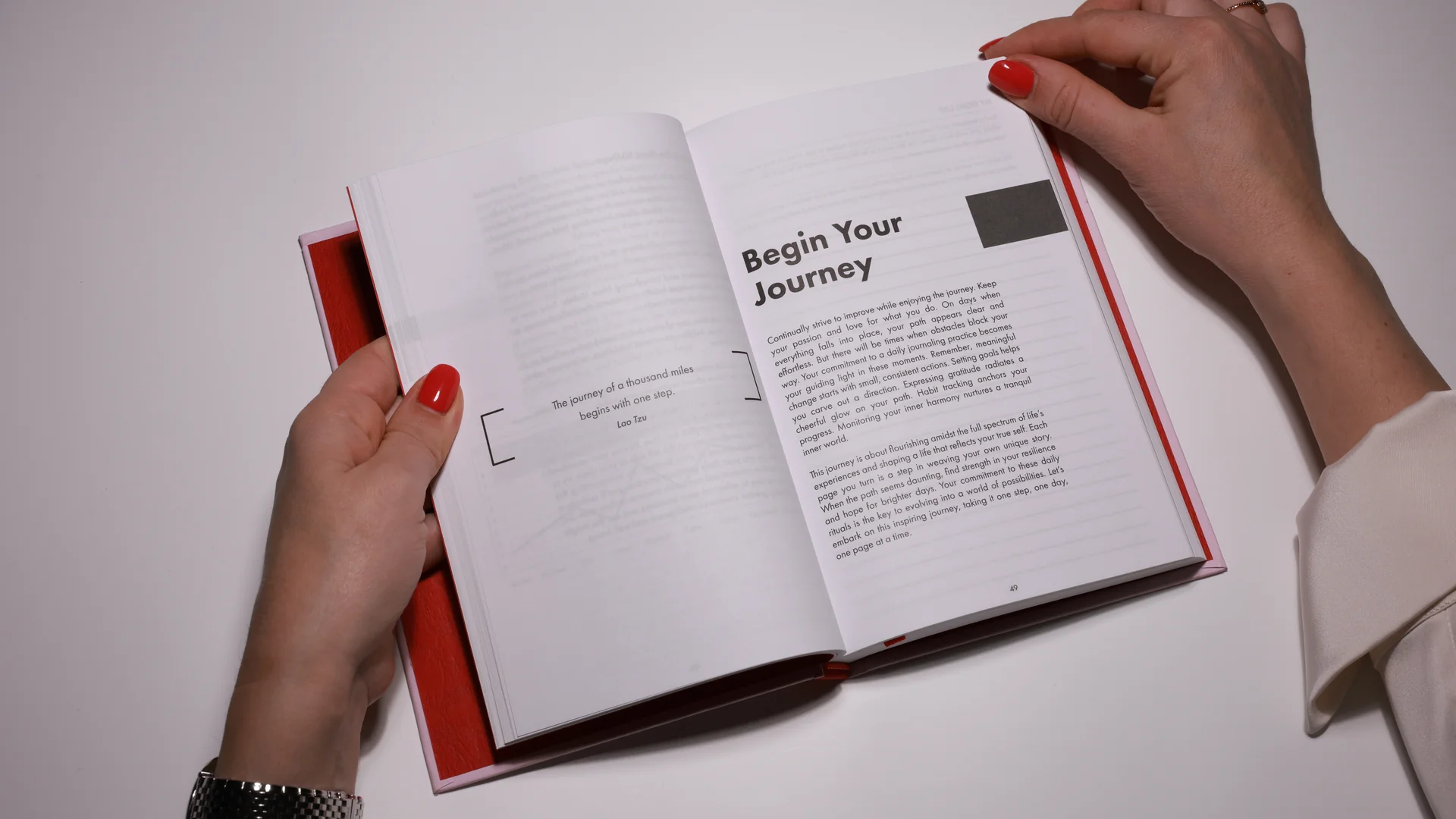
Identity-based change is the practice of shifting who you believe you are first, then letting your actions follow. Most people try the opposite. They set a goal, push themselves through behaviors they don’t feel like doing, and wonder why the changes never stick. The deeper layer is easy to miss: every action you repeat is a vote for the kind of person you are becoming, and that person eventually decides what is easy and what is impossible for you.
This shift is the difference between forcing a habit and embodying one. It is the reason some people seem to glide through changes that crush others. They are operating from a different identity, not more discipline. If you have ever started strong and faded by week three, the problem was probably that the new behavior never matched who you believed yourself to be. For a wider view of how this fits into your overall evolution, see the personal growth guide.
The Three Layers of Change (And Why Most People Stay Stuck)
James Clear, in his book Atomic Habits, describes three layers where change can happen. The outermost is outcomes, what you want: lose twenty pounds, write a book, save ten thousand dollars. The middle is process, what you do: a meal plan, a writing schedule, an automatic transfer. The innermost is identity, who you believe you are: someone who takes care of their body, a writer, someone who is good with money.
Most personal growth advice lives in the outer two layers. Set a goal. Build the routine. Track the metric. That advice works for a season, but it tends to collapse the moment life gets hard, because the behaviors are still being performed by the old identity. The internal conflict is exhausting, and the body usually wins.
Identity-based change reverses the order. Instead of asking what do I want or what should I do, you ask who am I becoming. The behaviors are no longer things you have to grind through; they become expressions of who you already see yourself as. A person who writes daily does not negotiate with themselves about writing. They just write, because that is what they do. The behavior is downstream of the identity.
Outcome, Process, and Identity-Based Change: A Quick Comparison
The three approaches sound similar on the surface, but they produce very different results over time. Here is how each one frames the same goal.
| Layer | Question It Asks | Example (Writing) | What Happens Under Pressure |
|---|---|---|---|
| Outcome-based | What do I want? | I want to publish a book this year. | You quit when the deadline feels far or the outcome feels unlikely. |
| Process-based | What should I do? | I write 500 words a day. | You quit when the routine collides with a busy week. |
| Identity-based | Who am I becoming? | I am someone who writes daily. | You miss a day, but you do not stop being that person. |
The third row is the hidden superpower. When a behavior is tied to identity, a missed day is just a missed day. It does not threaten the whole project. When it is tied only to process, missing a day breaks the streak and the streak was carrying the motivation. Identity holds steady when the rest of life does not. For more on building this kind of inner stability, you may also enjoy turning self-doubt into self-belief.
How to Name the Identity You Are Moving Toward
Identity-based change starts with a sentence. A simple one. It usually begins with “I am someone who” and ends with a behavior that matters to you. The sentence should feel slightly ambitious but not absurd. If the gap between who you are now and the sentence is too wide, your mind will reject it. If it is too small, nothing will change.
Here are a few examples of how the same intention can be reframed at each layer:
- Outcome: I want to lose 15 pounds. Identity: I am someone who takes care of their body.
- Outcome: I want to save more money. Identity: I am someone who spends with intention.
- Outcome: I want to be calmer. Identity: I am someone who chooses my response, not my reaction.
- Outcome: I want to read more. Identity: I am a reader.
Notice how short the identity statements are. They do not measure anything. They do not put a number on the year. They describe a kind of person. Once you have the sentence, the next question is the only one that matters: what would someone like that do today? Not this year. Not this month. Today. That is the question that turns identity into behavior, and behavior into proof.
Get more like this, every week
Spotting the Old Identities You Are Still Operating From
Before a new identity can take root, you have to notice the old ones that are still running the show. Most of us carry inherited identities we never consciously chose. They were handed to us by family, school, early relationships, or a single painful moment we never fully processed. Phrases like “I’m just not a morning person,” “I’m bad with money,” “I’m the responsible one,” or “I’m not creative” are old identity statements still casting votes, not facts.
The work here is gentle, not aggressive. You are trying to see the old self clearly enough that you can choose differently the next time it speaks, without bulldozing it. A useful practice is to write down the sentences you say about yourself out loud, then ask three honest questions of each one: When did I first believe this? Who would I be without it? What would someone who did not believe this do right now? Self-discovery through journaling is a strong companion practice for this kind of inquiry.
Old identities tend to whisper loudest at the exact moment a new identity is trying to form. The first week of a new practice is when “but I’m not really the kind of person who does this” tends to show up. That voice is not the truth. It is the old self defending its territory, and the fact that it shows up is actually a sign you are doing the work.
Why Journaling Makes the Identity Layer Visible
The hardest part of identity-based change is that the identity layer is normally invisible. You cannot see it the way you can see a calendar or a step count. It lives in the background of your thoughts, shaping what you notice, what you avoid, and what you assume is possible. Journaling is one of the few tools that pulls it into the light. Once it is on the page, you can examine it, question it, and slowly rewrite it.
In the iAmEvolving Journal, this is why the daily entries are not just task lists. They include space for identity-anchored prompts: who I am becoming, what I gave myself today, what I am letting go of. When you write “I am someone who keeps my word to myself” and then list one small thing you did to honor that, you are casting a vote in ink. Reflective journaling done with this intention turns ordinary days into evidence files for who you are becoming.
A few prompts that surface the identity layer:
- What kind of person do I want to be by the end of this season, in one sentence?
- What is one small thing that kind of person would do today?
- Where did I act in line with that identity this week? Where did I drift?
- What old identity tried to pull me back, and what did it sound like?
- What would I need to release to fully step into the new version of me?
Five minutes with these questions, even three times a week, is enough to start moving the inner needle. What matters is making the invisible visible, whatever the length of the entry.
The Quiet Compounding of Small Daily Proofs
Here is the part most people are not told. Identity-based change is slow, sometimes embarrassingly slow. You will not feel like a different person after a week, and probably not after a month. Most people quit because they expected a dramatic shift and instead got a quiet one. The drama is in the outcome layer. The identity layer changes the way a river changes a stone.
Every small action you take in line with your new identity is a vote. A walk after dinner is a vote for being someone who takes care of their body. Closing a tab and opening a book is a vote for being a reader. Writing one paragraph on a day you did not feel like writing is a vote for being a writer. The vote does not feel like much in the moment. But after a few hundred votes, the identity wins by majority, and the behavior stops requiring willpower. It just becomes what you do.
You do not rise to the level of your goals. You fall to the level of your identity.
If you are in a season where you have lost faith in the work because nothing visible is changing, that is often the most important week to keep going. The vote you cast on the day you did not feel like it is worth ten of the votes you cast when motivated. It is the proof to the deeper part of you that this is who you are now, even when conditions are not ideal.
Conclusion
The fastest way to change your life is to change who you believe you are, then let the doing follow, instead of pushing harder on what you do. Pick one identity statement that matters to you this season. Write it down where you will see it. Each day, ask the simple question: what would someone like that do right now? Then do that small thing, and let it count.
The version of you a year from now is built by a thousand small proofs cast in your favor on ordinary days. If you want a daily companion for that work, the iAmEvolving Journal was designed around exactly this idea. And if you want to keep going deeper, life alignment and purpose is a good next step. You are not stuck with who you have been. You are between identities, and the next one is built one small vote at a time.
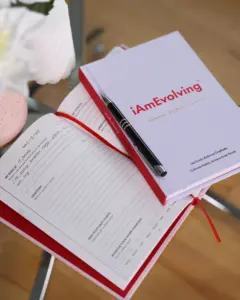
Start your daily practice of gratitude, goals, and growth.
Get the Journal →
A free 30-day gratitude journal designed for a simple daily practice. Calm, minimal, and printable to help you slow down and reflect.
ExploreFAQ: Identity-Based Change
What is identity-based change in simple terms?
What is the difference between outcome-based and identity-based change?
How long does identity-based change take to work?
How does journaling support identity-based change?
What if my new identity feels fake at first?