Self-Love Journal for Men: How to Build a Stronger Relationship With Yourself
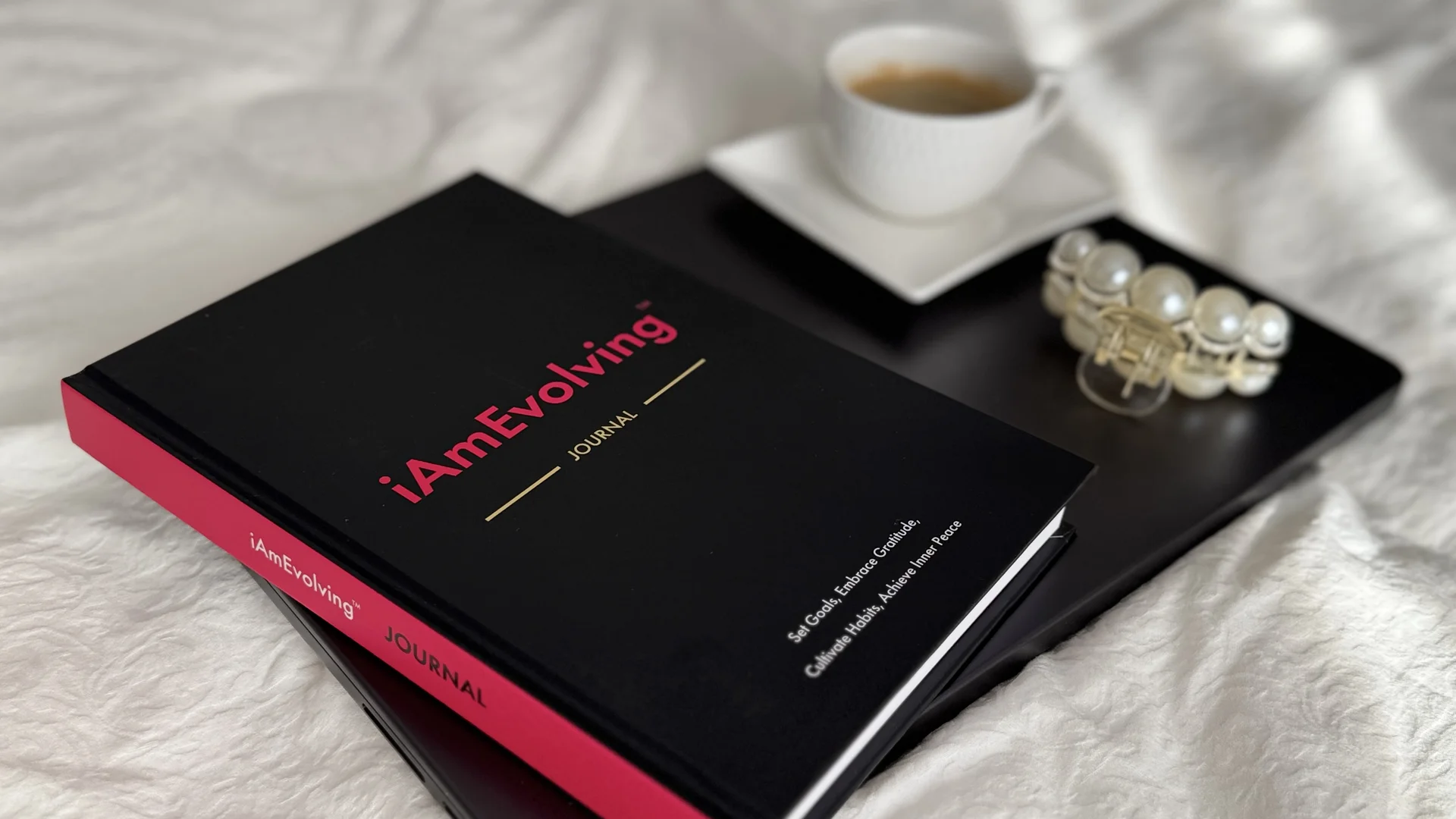
A self love journal for men is a structured writing practice where you look at your values, your inner critic, and the parts of yourself you have been taught to ignore, so you can build a steadier, more honest relationship with the man you actually are. Most men were raised to perform, fix, and push through. Writing for self-love sounds soft until you realize it is the only place where the performance can finally drop.
This guide is for men who feel the dull weight of always being “fine,” who notice the inner voice that calls them weak when they slow down, and who suspect there is more to growth than another productivity hack. You will learn what to write, how to quiet the harsh inner critic, and how to use a simple practice to rebuild trust with yourself, one page at a time. Based on the iAmEvolving framework, this is one of the most direct personal evolution practices you can build into a real week.
Why a Self Love Journal for Men Looks Different
Most self-love content online is written for women. The pictures are pastel. The prompts ask you to celebrate your softness. For most men, that language slides off without landing, because the wound is usually different. Many men were trained early, by fathers, coaches, locker rooms, and schoolyards, that being loved meant being useful. You earn approval through performance, results, and stoic silence. Self-love, in that frame, sounds suspicious. Soft. Maybe even unmanly.
A self love journal for men starts somewhere else. Instead of affirmations on a sticky note, it means looking at the rules you have lived by, asking who handed them to you, and deciding which ones still serve the man you are becoming. The work is honest, sometimes uncomfortable, and surprisingly direct. You are not journaling to feel better. You are journaling to know yourself better. The good feeling tends to follow.
For many men, this kind of writing is the first time they have ever asked themselves what they actually want, separate from what was expected. That is why it cuts deeper than the usual personal development advice. Journaling for men works less like a diary and more like a conversation with the most grounded version of yourself, the one underneath the noise.
Three things make a men’s self-love practice land differently from generic self-help journaling:
- It names the inner critic explicitly instead of pretending he is not there.
- It separates self-respect from external performance and results.
- It treats emotion as data, not weakness.
What to Write About: 7 Prompts That Actually Work
The blank page is the hardest part. Most men open a notebook, write half a sentence, and quit because nothing comes out. That usually means you need a better entry point, not that you have nothing inside. These seven prompts are designed to bypass the polished, public version of you and reach the part that does not get spoken about often.
Use one prompt per session. Five to ten minutes is plenty. Write fast and ugly. Grammar does not matter here.
- Where am I being too hard on myself this week? Name one specific moment, not a vague pattern.
- What is one thing I did this week that I am quietly proud of? Even if no one else noticed it.
- If I spoke to a younger version of myself today, what would I tell him? Stay specific. Keep it to one piece of advice.
- What am I carrying that is not actually mine to carry? Old expectations, other people’s fears, family scripts.
- Where am I performing instead of living? At work, at home, online. Locate it.
- What does respect from myself, to myself, look like this month? One concrete behavior, not an abstract idea.
- What would I do this week if I trusted myself fully? Then write down one small version of that you can actually do this week.
These prompts work because they ask for one moment, one truth, one decision. They do not require you to summarize your whole life. Pair them with I AM affirmations for self-love if you want a softer entry point on the days when honest writing feels heavy. Both practices reinforce each other, but the journal does the deeper work because it forces specificity.
How to Quiet the Inner Critic and Hear Yourself Clearly
The biggest obstacle to self-love is the constant background voice that says you are not doing enough, not earning enough, not strong enough. Most men have lived with that voice so long they think it is just being realistic, when really it is a rented voice, usually borrowed from a parent, coach, or culture that did not know how to express care without pressure.
Self love journaling is one of the few places where you can pull that voice into the light. The technique is simple. When you write something harsh about yourself, like “I’m lazy,” or “I’ll never figure this out,” or “I’m a fraud,” pause and write a second line:
Whose voice is this? Is it mine, or did I inherit it?
That single question is one of the most useful interventions in personal development. It separates you from the noise. Most of the time, that harsh voice belongs to someone else: a tape that has been playing since you were eight years old, and once you can hear it as a tape, you can choose whether to listen.
Once you have named the voice, you can answer it. Not with a forced positive affirmation, but with something honest you actually believe:
- “I’m lazy” becomes “I’m tired, and I have been carrying a lot lately. I am allowed to rest.”
- “I’ll never figure this out” becomes “I haven’t figured it out yet. That is different.”
- “I’m a fraud” becomes “I’m learning. Almost everyone competent once felt this way.”
This is the daily work of turning self-doubt into self-belief. It is conversational repair rather than magical thinking, written in your own handwriting, where the harsh voice and the steadier voice can finally have a conversation on the page instead of running in your head.
Get more like this, every week
Building a Routine That Sticks Without Making It Weird
The men who get the most out of journaling usually write for five minutes, four to five times a week, for months, rather than for an hour every morning. Consistency outperforms intensity. Aim to make journaling boring enough that you actually do it, instead of turning it into a precious ritual.
A few practical rules that hold up over the long run:
- Pick a consistent trigger, not a consistent time. Right after your morning coffee. Before you close your laptop at the end of the workday. After you get the kids into bed. Triggers stick better than clock times.
- Use a real notebook. Apps are fine in theory, but writing by hand slows your thinking enough to let real material surface. The friction is the feature.
- Cap the session. Five to ten minutes. A short session you complete is worth more than a long session you abandon.
- Skip days without guilt. Missing a day is not failure. Missing two days is a signal to make the next session shorter, not longer.
- Re-read once a month. This is where the real growth shows up. Patterns become visible only in retrospect, and the proof of progress is sitting in your own handwriting.
Most men give up on journaling because they expect a breakthrough on day three. Real breakthroughs in self-love arrive at week six or eight, when you flip back through old pages and realize the man writing today is steadier, more honest, and more grounded than the one who started. That kind of evidence is hard to argue with, and it is exactly how you rebuild confidence after setbacks in a way that actually lasts past the motivational rush.
Tracking Real Progress: Signs Your Inner Relationship Is Strengthening
Self-love shows up as a gradual shift in how you respond to your own life, rather than a feeling you wake up with one day. Most men miss the early signs because they are looking for something dramatic. The real markers are smaller, steadier, and more useful than the highlight-reel version of growth most of us were sold.
Watch for these subtle shifts in your day-to-day:
- You catch the inner critic faster. The harsh voice still shows up, but you notice it within minutes instead of days.
- You take rest without negotiating for it. No earned-it speech. You are tired, so you stop.
- You speak more honestly with the people closest to you. The journal page makes the dinner-table conversation easier.
- You stop apologizing for things that are not actually your fault.
- You make a decision and stop relitigating it in your head three days later.
- You notice your own emotions as information instead of inconvenience.
None of these would make an Instagram post, yet they are the real shape of growth. None of them feel like a victory in the moment. All of them add up to a man who trusts himself more than he did six months ago, and that trust is the foundation of everything else you are trying to build.
Journaling is the practice that holds the rest of personal growth together. Goal setting, gratitude, habits, mindset work, all of them work better when they sit on a foundation of self-honesty. The journal is where that foundation gets laid. One page, one prompt, one repeated act of paying attention to a man who has been ignored for too long, by everyone, including himself.
Conclusion
A self love journal for men is not a soft retreat from the work of being a man in the world. It is the work, done in the only place where the performance can finally drop. The page does not care about your job title, your bank account, or how many people are depending on you. It only asks that you show up honestly for ten minutes and tell the truth.
Starting takes no perfect notebook, long routine, or dramatic change. One prompt, five minutes, and the willingness to read your own handwriting later are enough. Over time, you will notice that the relationship you have with yourself is the foundation everything else rests on. If any of this sounds like you, the next step is simple: pick up a pen and start to reconnect with yourself, one page at a time.

Start your daily practice of gratitude, goals, and growth.
Get the Journal →
A free 30-day goal setting journal PDF with daily prompts, action steps, and reflection space. Printable, minimal, and designed to keep you focused on…
ExploreFrequently Asked Questions
Is journaling actually masculine?
How often should men journal for self-love?
What is the difference between journaling and overthinking?
Can a self love journal help with anxiety or depression?
How long does it take to see results from journaling?