Growth Mindset vs Fixed Mindset: A Practical Test (and How to Shift)
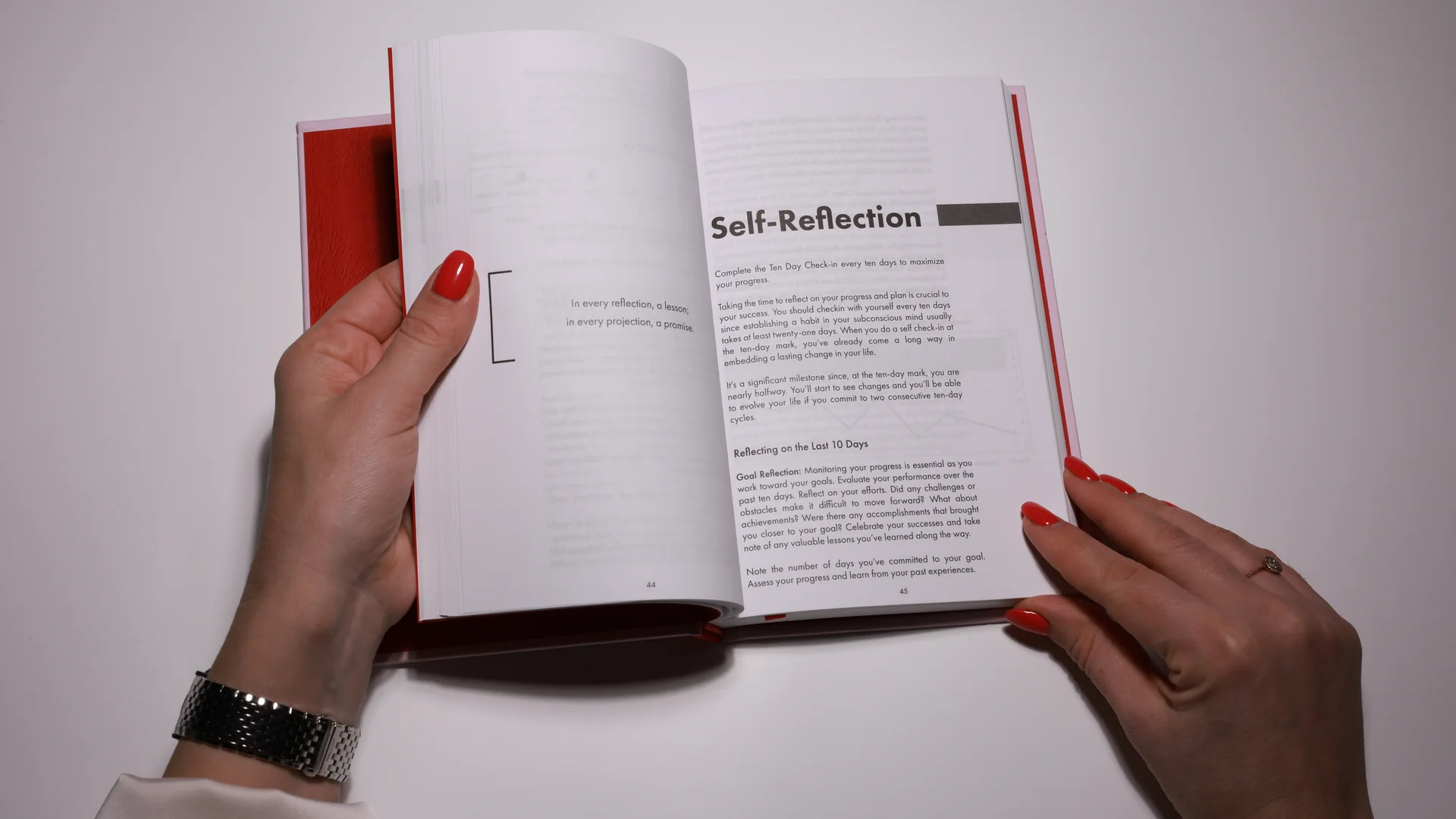
The honest difference between growth mindset vs fixed mindset is not what you say out loud, it is what you think in the silent two seconds after something goes wrong. A fixed mindset hears criticism as a verdict on who you are. A growth mindset hears the same words as information about what to adjust. Same input, two completely different inner responses, and over years that gap shapes who you become.
This guide is for the version of you that already knows the textbook definitions and still notices, in real moments, that you brace, defend, or shut down. You will find a clear contrast between the two mindsets as they actually show up day to day, a short and honest self-test you can do tonight, and a journaling-based way to shift that does not require turning into a different person. If you have worked through turning self-doubt into self-belief before, this is the companion piece that sits one layer underneath it.
What a Fixed Mindset Actually Feels Like in Real Life
A fixed mindset is rarely loud. It does not announce itself as “I believe my abilities are static.” It shows up as a tight chest when someone gives you feedback, a quick mental list of reasons the project was doomed anyway, and a slow withdrawal from the thing you used to enjoy. The belief underneath is simple: my talent, intelligence, and worth are fixed quantities, and every challenge is a test that risks exposing the ceiling.
Lived from the inside, it sounds like this. You avoid the harder version of a task because succeeding at the easier one protects the story you tell about yourself. You compare yourself to people slightly better than you and feel small, then to people slightly worse and feel safe, and neither comparison leaves you any clearer about what to work on. You read a piece of feedback once, then again, then a third time looking for the line that confirms you are not enough. None of this makes you a bad person. It makes you a person trying to protect an identity that feels fragile.
The cost is quiet but cumulative. Over a year, a fixed mindset narrows what you attempt. Over five years, it narrows who you become. The hard truth is that most people do not lose to a lack of talent. They lose to a lack of willingness to look incompetent for the months it takes to get good at something new. Naming that pattern in yourself is not self-criticism. It is the first step out.
What a Growth Mindset Actually Feels Like in Real Life
A growth mindset is not a permanent state of confidence. People sell it that way, but the lived version is quieter and stranger. It is the willingness to stay in the awkward early phase of a skill long enough for it to stop being awkward. It is the small pause before reacting to criticism, where you let yourself ask “is any of this true?” before deciding how to feel. The belief underneath is that ability is built, not allocated, and that the version of you doing the work next month is going to be more capable than the version reading this sentence.
From the inside, it sounds less heroic than the social media version suggests. You still feel the sting of being bad at something. You still want to quit on day three of a hard project. The difference is that you have learned to treat those feelings as weather, not instructions. You notice the urge to defend, then write the harder email anyway. You read feedback once, sit with it for a day, and come back to extract the one useful thing it contains. Most of the work is internal, and most of the visible results show up months later.
A practice like self-discovery through journaling tends to accelerate this shift because it gives you a regular place to separate your thinking from your identity. You can watch a fixed-mindset thought show up on the page, name it, and choose a different response, all without having to perform anything for anyone. The growth mindset is built in that gap between noticing and reacting.
Growth Mindset vs Fixed Mindset: A Side-By-Side Comparison
Definitions only get you so far. The clearest way to see growth mindset vs fixed mindset is to look at the same situation through both lenses and notice how different the internal response is. The trigger does not change. The interpretation does, and the interpretation is what shapes the next decision.
| Situation | Fixed Mindset Response | Growth Mindset Response |
|---|---|---|
| Receiving critical feedback | Reads it as a verdict on worth, replays it for days | Extracts one useful adjustment, lets the rest go |
| Trying a new skill | Quits if not naturally good within a few attempts | Expects an awkward phase, measures progress in months |
| Watching a peer succeed | Feels diminished, frames it as proof of own limits | Studies what they did, treats it as evidence of what is possible |
| Making a visible mistake | Avoids similar situations to protect reputation | Repeats the situation soon to overwrite the imprint |
| Hitting a plateau | Concludes the ceiling has been reached | Changes the input, asks what the plateau is teaching |
Read each row honestly. Most people are not fully on one side of this table. You will likely recognize three or four fixed-mindset responses that show up in specific domains of your life, often the domains where your identity feels most exposed. Those are the rooms where the work matters most.
Get more like this, every week
The Practical Test: Seven Questions to Find Your Default
Take a notebook and answer each question with the first honest response, not the polished one. There are no points to tally and no diagnosis at the end. The value is in seeing which questions you flinch at, because those are the precise places your default mindset is shaping your choices without your consent.
- When was the last time someone gave you direct feedback, and what was your first internal reaction in the first ten seconds?
- Name one skill you have quietly avoided learning because you suspect you would not be naturally good at it. What is the cost of that avoidance over the last two years?
- When a peer in your field gets a result you wanted, what does your inner monologue say in the next minute?
- Think of a recent mistake. Did you change your behavior afterward, or did you mostly change your strategy to avoid that situation again?
- What is something you used to believe you were “just not good at,” that you have since learned is trainable? What did the learning curve actually feel like?
- When you imagine yourself five years from now, do you picture a more capable version of who you are now, or roughly the same person with better circumstances?
- Where in your life do you currently treat effort as a sign that you lack natural ability, instead of as the path to ability?
Sit with the questions over a few days, not one sitting. A fixed mindset will want you to answer them all at once, score yourself, and move on. A growth mindset is built by letting the uncomfortable answers stay open long enough to actually look at them. The journaling practice that follows is where that looking turns into change.
How to Shift, Honestly: A Journaling Practice That Works Slowly
The shift from fixed to growth is not a mindset reset over a weekend. It is a thousand small interceptions of the old response, repeated until the new one becomes faster than the old one. Journaling is the most reliable tool for that work because it makes the old response visible on the page where you can study it, rather than letting it run unchallenged in your head.
Use this four-line entry on any day a fixed-mindset moment shows up. It takes about ten minutes and gives the brain something concrete to work with instead of a vague intention to “think differently.”
- The trigger. What specifically happened? Write it in one sentence, no interpretation.
- The first thought. What did your mind say in the first few seconds? Write the exact words, even if they sound harsh.
- The reframe. If the first thought treats your ability as fixed, what would the same situation look like if ability were trainable? Write the alternate sentence.
- The smallest next move. What is one specific action, no larger than thirty minutes, that would move you toward the trainable version of this story this week?
The entry is short on purpose. The work is not in writing more, it is in catching the fixed-mindset thought before it hardens into a decision. After a few weeks, you will notice the catch happening earlier. After a few months, some of those old thoughts simply stop arriving, because the brain has learned that they no longer get the last word. Pair this practice with how to reframe negative thoughts and the work compounds faster, because both habits are training the same underlying skill of pausing between input and response.
One honest caveat. Even people who have done this work for years still have fixed-mindset moments. The shift is not that the old response disappears. It is that you recognize it sooner, take it less personally, and recover from it faster. A bad week of self-protective thinking is no longer evidence that you have not grown. It is just a bad week. Rebuilding confidence after setbacks is part of the same skill set, and it is the part most growth-mindset content skips over.
If one specific belief keeps pulling you back, this 10-day practice for making a mindset shift stick walks through it step by step.
Conclusion
The point of the growth mindset is not to never feel limited again. It is to stop confusing a hard moment for a fixed truth about who you are. You will still flinch at criticism, still want to quit on day three, still feel small watching someone else win. The shift is that you no longer let those feelings end the conversation. You write them down, look at them, and take the next small action anyway. That is the whole practice.
If you want a structured place to do this work daily, the iAmEvolving Journal includes dedicated pages for thought reframes, weekly reflections, and the kind of slow tracking that turns single entries into a visible shift over months. Pair it with the broader practice of life alignment and purpose and the mindset work stops being a self-improvement project and becomes the way you live.

Start your daily practice of gratitude, goals, and growth.
Get the Journal →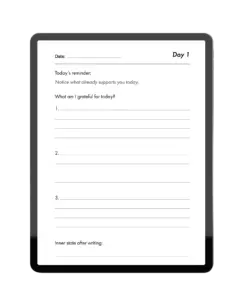
A free 30-day gratitude journal designed for a simple daily practice. Calm, minimal, and printable to help you slow down and reflect.
ExploreFrequently Asked Questions
What is the main difference between growth mindset vs fixed mindset?
Can you have a growth mindset in one area and a fixed mindset in another?
How long does it take to shift from a fixed to a growth mindset?
Does journaling actually help build a growth mindset?
Is it possible to have too much growth mindset?