Habits for Rest & Recovery You’re Missing

Habits for rest and recovery are the intentional practices that restore your energy, prevent burnout, and make your productive habits sustainable. Most people focus on discipline — but even the most committed person eventually exhausts themselves without rest.
The iAmEvolving philosophy sees habits not as control, but as rhythm — a balance between action and reflection. Every period of effort needs one of rest. When you learn to recover intentionally, your growth becomes more focused, grounded, and peaceful.
True consistency isn’t about constant motion. It’s about rhythm — knowing when to act and when to pause. When you understand this, growth becomes sustainable. You no longer push through fatigue; you move with your energy instead of against it.
Habits are cycles of alignment, not endless effort. You create, express, reflect, and restore. Every period of focus needs one of recovery. When you learn to rest with intention, your habits stop draining you — they start nourishing you.

Why Habits for Rest and Recovery Matter for Consistency
We live in a world that celebrates doing, yet undervalues being. Productivity gets praised; rest gets postponed. But ignoring rest eventually costs you more than skipping a workout or missing a meeting — it costs clarity, energy, and joy.
Rest isn’t a luxury. It’s a maintenance habit. It’s what keeps your nervous system balanced and your focus sharp. You can only sustain what you regularly restore. The moment you treat rest as a core part of your habit system, your consistency becomes natural — not forced.
You don’t lose momentum by resting.
You build the strength to continue.
The Science Behind Rest and Recovery Habits
Your body and brain operate in cycles of energy and restoration. These cycles, known as ultradian rhythms, last about 90–120 minutes. After each focus period, your body naturally seeks a short recovery phase — a break to process, recharge, and refocus.
Ignoring this rhythm creates what scientists call “cognitive residue” — leftover tension that piles up throughout the day. Over time, that residue becomes fatigue, distraction, and burnout. The solution isn’t working harder but aligning your schedule with your body’s design.
- Mental recovery: Taking short breaks during deep work improves clarity and reduces mistakes.
- Physical recovery: Sleep and mindful rest repair your energy reserves and hormonal balance.
- Emotional recovery: Reflection and gratitude release mental tension and reset your mood.
When you allow these natural rhythms to guide your habits, you feel less resistance and more ease. Consistency becomes a flow, not a struggle.
How to Build Habits That Support Rest
Restful habits don’t mean doing nothing. They mean doing something that restores your energy. Here are a few practices you can begin today to bring more recovery into your daily rhythm.
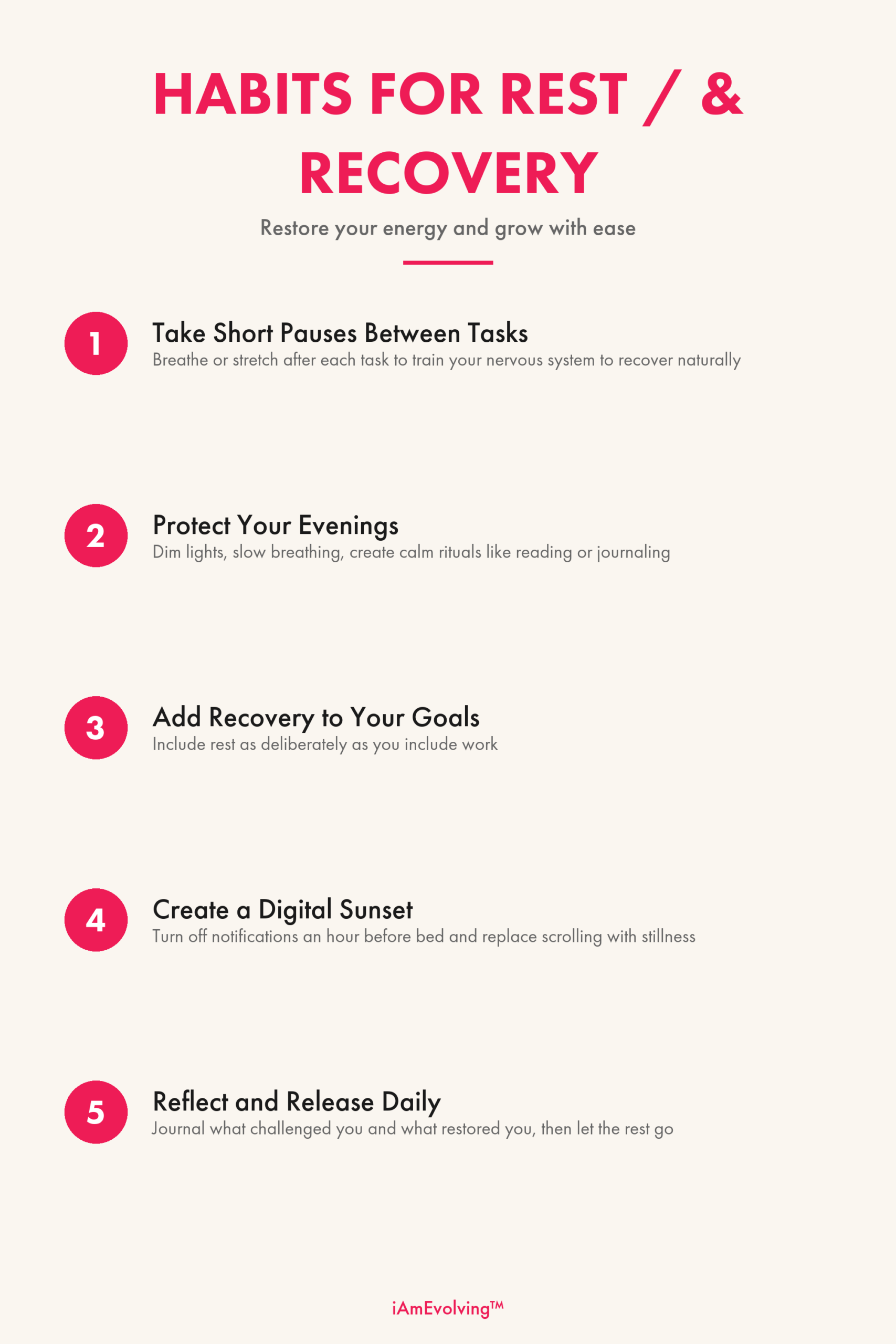
1. Take Short Pauses Between Tasks
Each time you finish a task, take one minute to breathe deeply or stretch. This helps your body release built-up tension and signals your mind that it’s safe to transition. Over time, these small pauses train your nervous system to recover naturally instead of collapsing from fatigue.
2. Protect Your Evenings
Your evening is your most powerful recovery window. Avoid filling it with screens, stimulation, or mental noise. Dim your lights, slow your breathing, and create calm rituals — reading, journaling, or gratitude. To structure this practice, explore Evening Routines for Emotional Reset. It will help you release the day and sleep with clarity.
3. Add Recovery to Your Goals
When planning your week, include rest as deliberately as you include work. Instead of seeing downtime as wasted time, treat it as scheduled nourishment. Rest days, quiet mornings, or mindful walks are what help you stay consistent without forcing progress.
4. Create a Digital Sunset
Technology keeps your mind alert, even when your body is exhausted. Turn off notifications an hour before bed. Replace scrolling with stillness. This signals your brain to move from stimulation to restoration. If digital boundaries feel difficult, read Finding Stillness in a Busy World for practical guidance.
5. Reflect and Release Daily
At the end of the day, write down what challenged you and what restored you. Then release the rest. Journaling helps you process emotions so you don’t carry them into sleep. The iAmEvolving Journal is built for this practice — guiding you to record what you achieved, what you learned, and what you’re ready to let go of. Reflection transforms rest into renewal.
Get more like this, every week
How Rest Strengthens Your Habits
Consistency isn’t about grinding endlessly. It’s about pacing your energy. When you rest consistently, you restore focus, reduce emotional noise, and give your body the fuel it needs to perform. Rest makes your habits stronger because it makes you stronger.
When your mind is calm, your willpower lasts longer. When your body feels safe, your discipline becomes effortless. Rest removes the internal resistance that keeps you stuck in cycles of burnout and guilt. In that space of ease, progress accelerates naturally.
How to Know When You Need Recovery
Most people wait until burnout forces them to stop. But the signs of fatigue start small. Pay attention to when you feel mentally foggy, emotionally reactive, or creatively blocked. Those are invitations to rest, not obstacles to overcome. Resting early keeps you steady; waiting too long drains your capacity to stay consistent.
Pause for a moment now. Notice your breathing. Notice how your shoulders feel. That awareness — right now — is the beginning of recovery.
Creating Your Personal Recovery Ritual
Your recovery ritual doesn’t need to be perfect or long. It needs to feel meaningful and consistent. Here’s a gentle rhythm to start with:
- Step 1: Notice what drains you — overstimulation, multitasking, or emotional stress.
- Step 2: Choose one activity that restores you — journaling, deep breathing, stretching, or silence.
- Step 3: Pair it with a cue — like finishing work or dimming lights.
- Step 4: Keep it short but sacred. Five minutes of true presence is more restorative than an hour of distraction.
As you develop this rhythm, track your patterns in Habits for Focus, Energy, and Clarity. You’ll begin to notice how your energy naturally rises and falls. When you align your habits with these cycles, consistency becomes intuitive.
How the iAmEvolving Journal Supports Recovery
The iAmEvolving Journal was designed not just for productivity but for presence. Its daily prompts guide you to reflect, express gratitude, and close emotional loops — the small but powerful actions that make recovery part of your lifestyle.
Writing by hand slows your thoughts and calms your nervous system. It helps you turn awareness into action. By documenting your rest patterns, you begin to see that stillness isn’t empty — it’s full of renewal, insight, and strength.
Available here:
Start your daily practice of gratitude, goals, and growth.
Get the Journal →A gentle 7-day reset to help you slow down, feel steadier, and reconnect — in just 5–10 minutes a day.
Start the ResetA simple introduction to daily journaling — gratitude, goals, and habits made easy.
Learn the MethodEffort and Ease Work Together
Consistency isn’t built through endless pushing; it’s built through rhythm. Every exhale supports the next inhale. Every pause prepares the next step. The balance between effort and ease is where sustainability lives.
The calm you create in rest becomes the strength you express in action.
When you make rest a habit, your actions become lighter. You move through your day with clarity, not urgency. You stop chasing balance and start living it.
Conclusion: Rest Is Growth in Disguise
Rest is not a break from evolution — it’s part of it. Every time you choose to slow down with awareness, you strengthen your capacity to move forward with intention. Growth isn’t just about effort; it’s about the grace to pause, reflect, and restore.
Consistency comes from alignment, not pressure. When you honor your body’s need for recovery, you stop surviving your routines and start evolving through them. Rest is where your clarity returns, your energy renews, and your direction realigns.
To continue your journey toward balanced growth, explore Habits for Inner Peace and Finding Stillness in a Busy World.
Rest is not a pause in progress — it’s part of it. Every time you choose to slow down with awareness, you strengthen your ability to grow with intention. When you rest consciously, your energy renews, your mind clears, and your actions align again with purpose.
Rest is not a pause in progress — it’s part of it. Every time you choose to slow down with awareness, you strengthen your ability to grow with intention. When you rest consciously, your energy renews, your mind clears, and your actions align again with purpose.
To continue your journey toward balance and mindful living, explore Habits for Inner Peace and download your Free 30-Day Gratitude Journal — a guided practice to end each day with clarity, gratitude, and calm reflection.
FAQ
How do I know when I need rest?
Is resting the same as doing nothing?
How can I make rest a habit?
Will rest slow my progress?
How does journaling help with recovery?