How to Use a Personal Goals Journal to Create Real Change
Most people set personal goals with good intentions — to get healthier, build better habits, grow their careers, or find more balance. But as weeks go by, those goals often fade into the background.
The problem isn’t ambition. It’s lack of structure and clarity. A personal goals journal gives you a focused, daily framework to turn your goals into reality. For a guided approach, explore Goal Setting Journal — a proven structure to keep your goals clear and actionable.
As a personal development coach, I’ve seen countless people transform their lives once they began journaling their goals consistently. It’s not about writing long essays or following complicated systems — it’s about showing up with clarity and intention every day.
Why a Personal Goals Journal Works
Writing your goals down isn’t just a reminder — it changes how your brain processes information. When you put your goals on paper, you activate self-awareness and focus. Learn how reflection supports emotional clarity in Journaling for Emotional Clarity.
- Move them from vague thoughts into concrete commitments
- Engage multiple senses, which strengthens memory and focus
- Clarify what truly matters (vs. what’s just noise)
- Create emotional investment by connecting to your “why”
- Build consistency through daily reflection
Research shows that people who write down their goals are significantly more likely to achieve them than those who don’t. Journaling helps you train your attention to focus on what matters most.
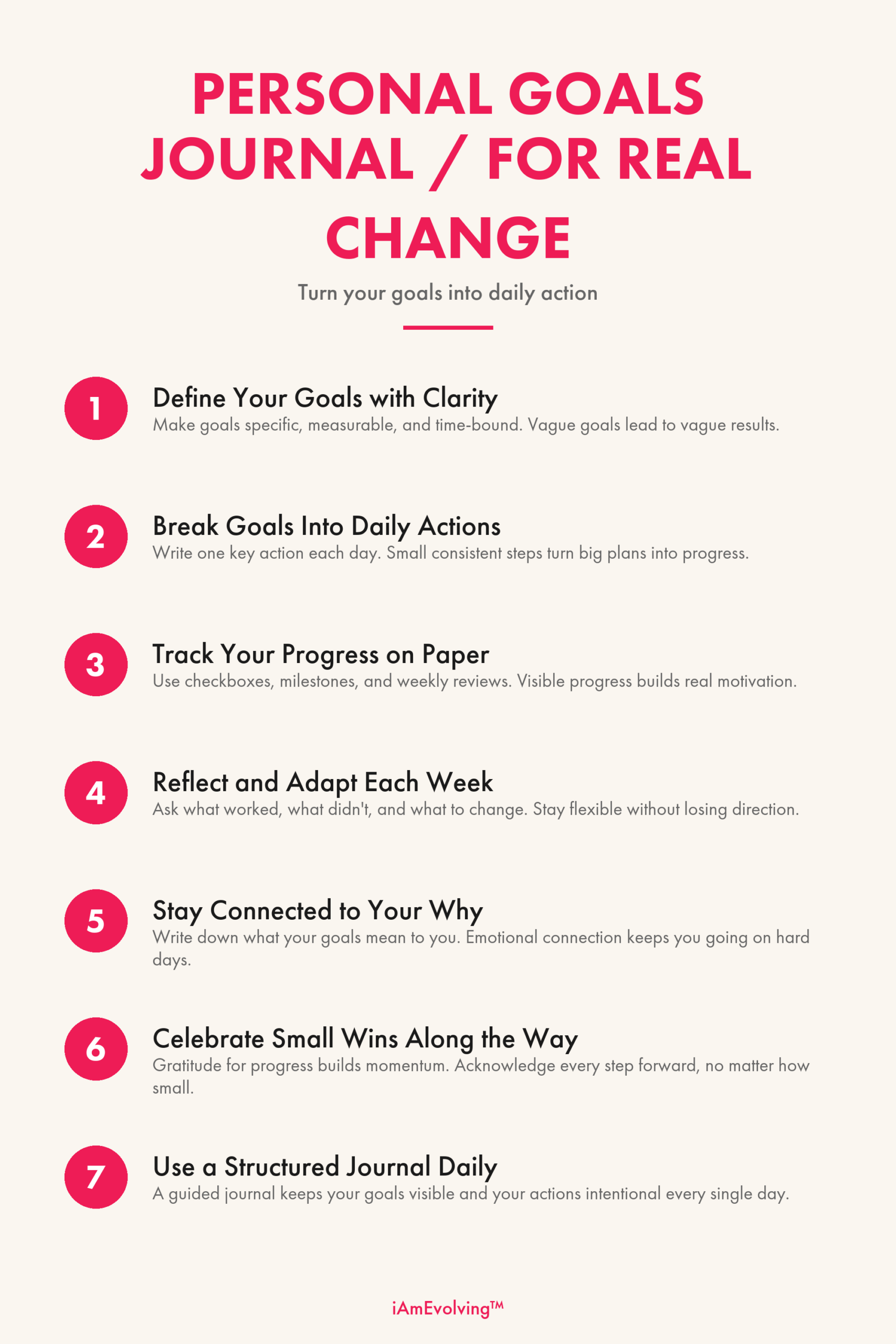
Step 1: Define Your Personal Goals Clearly
Before you can build momentum, you need clarity. Vague goals lead to vague results. Take time to define goals that are:
- Specific – What exactly do you want to achieve?
- Measurable – How will you track progress?
- Actionable – What steps will lead you there?
- Relevant – Does this truly matter to you?
- Time-bound – When do you want to achieve it?
Here’s how that looks in practice. Say you open your journal and write:
Before: “I want to be healthier.”
After: “I will exercise for 30 minutes, 4 times a week, for the next 3 months — starting with Monday, Wednesday, Friday, and Saturday mornings before work.”
The difference is everything. The second version tells you exactly what to do, when to do it, and how long to commit. It removes the guesswork. Try this exercise right now: take one goal you’ve been carrying in your head and rewrite it with a specific action, a frequency, and a deadline. Write it clearly in your journal. This becomes your north star.
Step 2: Break Big Goals Into Daily Actions
Large goals can feel intimidating. A personal goals journal helps you translate them into small, consistent steps.
Each day, write down:
- One key action you’ll take today
- Two supporting tasks that make it easier to follow through
- One potential obstacle and how you’ll handle it
Here’s a sample daily journal entry using this format:
Goal: Run a 5K in 3 months
Key action: Complete a 20-minute training run after work
Supporting tasks: Lay out running clothes before leaving for work; eat a light lunch so I feel good by 5 PM
Obstacle: If it rains, I’ll do a 20-minute indoor bodyweight workout instead
This process turns overwhelming plans into clear, achievable next steps. When you break your goal into what you can do today, you stop worrying about the finish line and start building real momentum. If you want a deeper framework for breaking goals into daily habits, read Turn Big Goals Into Daily Actions.
Get more like this, every week
Step 3: Track Your Progress Consistently
Progress tracking is one of the most powerful — and underrated — parts of journaling. It transforms invisible effort into visible momentum.
You can use:
- Checkboxes for daily habits
- Weekly reflection summaries
- Progress bars or milestone lists
- End-of-month reviews
A simple weekly check-in can make a big difference. Try this format every Sunday evening:
Weekly Check-In
Goal: [Your main goal]
Actions completed this week: [List what you did]
Wins: [What went well — even small things]
Missed: [What didn’t happen — no judgment]
Focus for next week: [One priority to carry forward]
Seeing progress on paper builds motivation and accountability, especially on days when you don’t feel inspired. Over time, these weekly snapshots become a powerful record of how far you’ve come — and that evidence of growth is one of the best motivators there is.
Step 4: Reflect and Adapt Regularly
Goals evolve, life shifts, and unexpected things happen. A personal goals journal helps you stay flexible without losing direction.
Use your journal to reflect each week:
- What moved me closer to my goal?
- What got in the way?
- What can I do differently moving forward?
Here are three reflection prompts you can use right away:
- What did I learn about myself this week? — This helps you spot patterns in your behavior, energy, and motivation.
- Is this goal still aligned with what I truly want? — Sometimes we outgrow a goal or realize it was never really ours. That’s not failure — it’s clarity.
- What’s one adjustment I can make next week? — Small course corrections prevent big burnouts. Maybe you need to change your schedule, simplify a step, or ask for support.
This habit of reflection keeps you aligned and resilient, instead of giving up when challenges arise. The journal becomes your thinking partner — a place to process what’s working and what isn’t, without judgment.
Step 5: Stay Connected to Your “Why”
Without emotional connection, goals quickly become chores. Use your journal to write down:
- Short motivational reminders
- Visualizations of what success will feel like
- Gratitude for small wins along the way
Try this visualization exercise: close your eyes and picture yourself six months from now, having followed through on your goal. What does your day look like? How do you feel when you wake up? What’s different about your confidence, your energy, your relationships? Now open your journal and write a “why” statement that captures that feeling. Something like:
“I’m committed to this goal because I want to feel strong and capable in my own body — not for anyone else, but because I deserve to feel good in my life every day.”
Write your “why” statement on the first page of your journal so you see it every time you open it. On tough days, reading those words reconnects you to the reason you started. This emotional anchor keeps your goals meaningful, especially during tough weeks. Strengthen your mindset with gratitude — explore Gratitude Journal Benefits to stay grounded and motivated through your journey.
How to Stay Consistent With Your Personal Goals Journal
Knowing what to write is one thing. Showing up to write it every day is another. Consistency is where most people struggle — and it’s also where the real transformation happens. Here’s how to make your personal goals journal a lasting habit, not just a short-lived experiment.
Journal at the same time every day. Attach your journaling to an existing routine — right after your morning coffee, during your lunch break, or before bed. When journaling becomes part of a sequence you already follow, it stops feeling like an extra task and starts feeling automatic. This is called an anchor habit, and it’s one of the most reliable ways to build consistency. For more on building routines that last, explore Habits for Consistency.
Start with just five minutes. You don’t need to write pages. Lower the bar so far that skipping feels harder than doing it. Five minutes of honest reflection is more powerful than thirty minutes of forced writing. Once you sit down, you’ll often write more than you planned — but the commitment is only five minutes.
Messy pages count. Your journal doesn’t need to be neat, organized, or Instagram-worthy. Crossed-out words, half-finished thoughts, scribbled frustrations — all of it counts. The goal is to show up and think on paper, not to produce something perfect.
Use prompts on low-motivation days. When you open your journal and feel blank, a good prompt can break the silence. Keep a short list of go-to questions in the front of your journal — things like “What’s one thing I can control today?” or “What would make today feel meaningful?” Prompts turn resistance into momentum.
Review past entries to see your progress. Once a month, flip back through your journal and read what you wrote four weeks ago. You’ll notice shifts in your thinking, small wins you forgot about, and patterns you couldn’t see in the moment. This backward glance is one of the most motivating things you can do for yourself — it proves that the work is working.
Personal Goals Journal Prompts to Get You Started
If you’re staring at a blank page and don’t know where to begin, these prompts will help you cut through the noise and focus on what matters. Use one prompt per journal session, or pick whichever feels most relevant to where you are right now.
- What is the one goal that would change my life the most this year?
- What small action can I take today to move closer to my biggest goal?
- What got in the way of my goals this week — and what can I do differently?
- What does success look like for me in 6 months?
- What habit would make my goal almost inevitable?
- What am I afraid of when it comes to this goal?
- What progress have I made that I haven’t given myself credit for?
- Who do I need to become to reach this goal?
- What would I tell a friend who had this same goal?
- What am I grateful for about my journey so far?
These prompts work because they move you past surface-level thinking and into honest self-reflection. For more guided writing ideas, explore Journaling Prompts for Self-Discovery.
Best Personal Goals Journal to Support Your Growth
If you’re searching for a personal goals journal to get started, choosing the right one matters. You want something that gives you structure without feeling overwhelming — a daily framework that keeps your vision alive.
iAmEvolving Journal (Recommended)
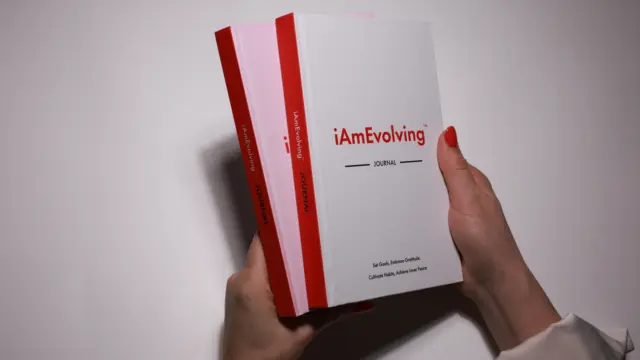
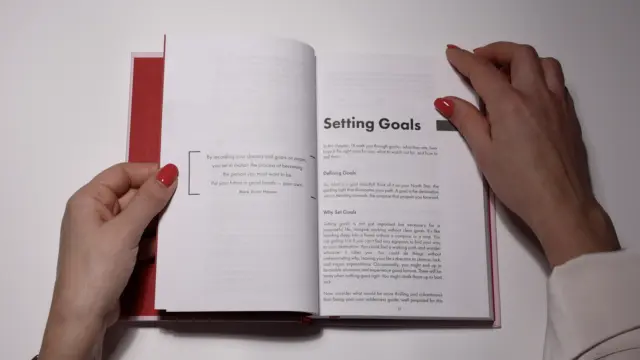
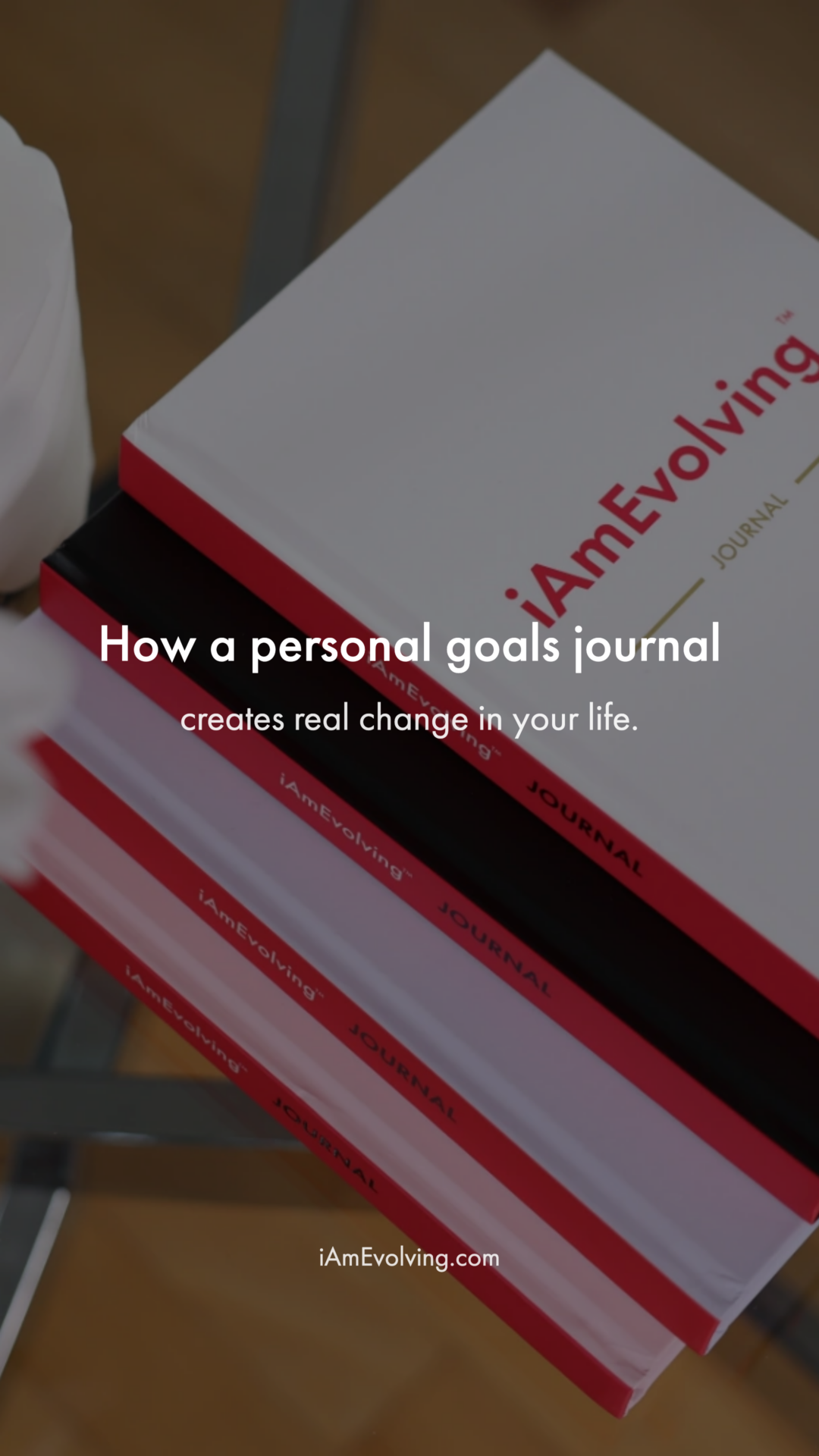
The iAmEvolving Journal is designed specifically to help you set, track, and reflect on personal goals with ease. It combines goal setting, gratitude, habit tracking, and reflection in one beautifully structured tool.
Key features:
- Daily goal section to keep your focus clear
- Gratitude prompts to cultivate a positive mindset
- Habit tracker to build consistency over time
- Reflection space to learn and adapt every day
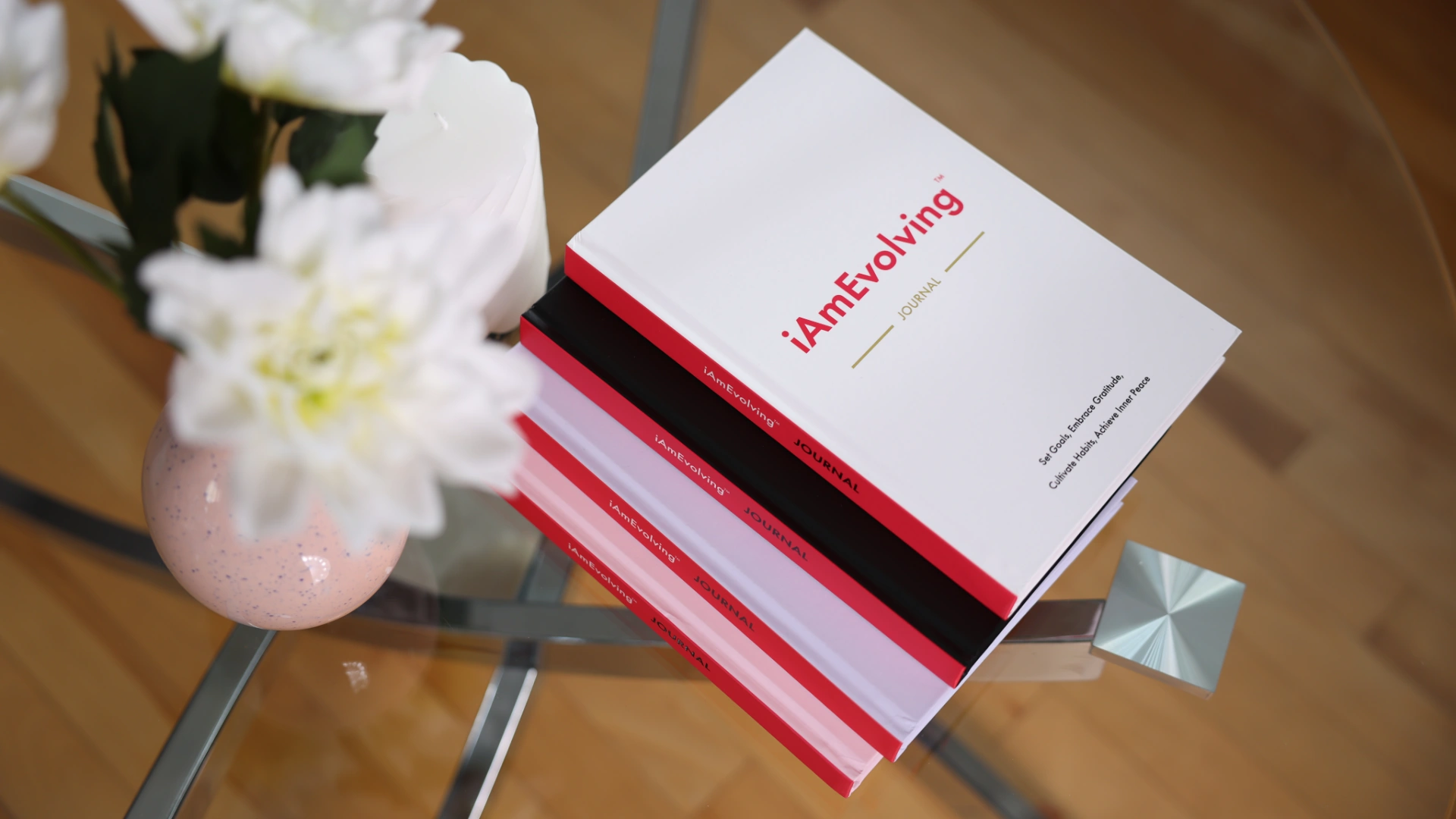
- Elegant hardcover design in 5 colors
This isn’t just a notebook — it’s a system to help you stay consistent with your personal growth.
Available here:
Start your daily practice of gratitude, goals, and growth.
Get the Journal →A gentle 7-day reset to help you slow down, feel steadier, and reconnect — in just 5–10 minutes a day.
Start the ResetA simple introduction to daily journaling — gratitude, goals, and habits made easy.
Learn the MethodLooking for more options? Browse Best Personal Development Journals to find tools that align with your growth style.
To stay grounded as you grow, explore Goal Setting Fundamentals. It’s a simple guide to setting meaningful, aligned goals — the kind that support lasting change through your journaling journey.
FAQ
How long should I spend journaling my goals each day?
Can I use one journal for personal and professional goals?
What if I miss a day?
How is a personal goals journal different from a planner?