The Power of I AM Affirmations

The Power of I AM
Every thought you repeat subtly shapes the way you see yourself. And every time you say the words “I am,” you tell your mind who you believe you are. These two simple words carry weight. Over time, they sculpt your identity, influence your emotions, and determine how you show up in the world.
Most people repeat “I am” statements without realizing it. “I am tired.” “I am not good at this.” “I am always overwhelmed.” These become quiet declarations that settle into the subconscious. The mind doesn’t argue with them — it accepts them as guidance. Identity begins to form around these small, unnoticed phrases.
But when spoken with intention, “I AM” becomes something entirely different. It becomes a declaration of direction. A quiet rewiring of the inner dialogue that aligns who you are with who you’re becoming. You begin to speak from possibility rather than limitation. From clarity instead of doubt. From identity — not obligation.
For a complete overview of how affirmations work—and how to build a grounded daily practice—you can also read the Affirmations Guide. It introduces the foundations behind this work and supports everything explored in this identity-level guide.
1. Why “I AM” Shapes Your Identity
Your “I AM” statements are not just words. They are the foundation of your self-concept. Each time you say “I am confident,” “I am learning,” or “I am rebuilding,” you send a message to your subconscious. And the subconscious is literal — it doesn’t debate or question. It absorbs the identity you claim and begins reinforcing it through thoughts, actions, and emotional responses.
Identity determines how you interpret the world. If you say, “I am someone who follows through,” your brain begins noticing evidence that aligns with that identity. You might feel more motivated to complete tasks. You might notice your progress more than your mistakes. Your mind naturally gravitates toward alignment.
On the other hand, if your inner dialogue is shaped by limiting “I am” statements — “I am not smart enough,” “I am not worthy,” “I am always anxious” — the mind complies. It filters experiences through those beliefs. Over time, they become self-fulfilling patterns.
Think of “I AM” as planting seeds in your inner landscape. Each repetition is a drop of water. Eventually, the identity you nurture becomes the identity you embody. This is why awareness matters. Once you notice the statements you’ve been using, you gain the power to rewrite them.
2. The Psychology Behind I AM Statements
Identity-level affirmations work because of a psychological principle known as self-concept. The mind wants coherence. It seeks to behave in a way that matches how you see yourself. If you believe “I am resilient,” you are more likely to approach challenges from a grounded place. Your behavior aligns with your belief.
Another psychological mechanism at play is confirmation bias — your brain looks for evidence that supports what it already believes. If you affirm “I am becoming more confident,” your mind begins noticing moments that reinforce that identity: a calmer conversation, a clearer boundary, a small risk taken.
Identity precedes behavior. You don’t change by forcing action. You evolve by becoming someone who naturally acts in alignment with the change you want. When your identity shifts, your behavior follows with less resistance.
This is why identity statements are more powerful than behavior statements. “I am learning to trust myself” creates inner openness. “I will trust myself” creates pressure. One welcomes growth. The other demands performance.
Get more like this, every week
3. I AM vs. Regular Affirmations
Most affirmations focus on behavior or outcome: “I will stay calm,” “I will succeed,” “I will do better tomorrow.” These can be helpful, but they often sit on the surface. They address what you want to do — not who you are becoming.
I AM affirmations go deeper. They reach the level where enduring change happens: identity. Instead of pushing for effort, they shift the place you act from. When you change your self-concept, your behavior becomes consistent, natural, and sustainable.
For example:
Regular affirmation: “I will stay focused today.”
I AM affirmation: “I am someone who follows through with what matters.”
The first requires continuous self-management. The second creates alignment. When identity shifts, you no longer need to motivate yourself at every step — your actions reflect who you believe yourself to be.
For more examples of how identity-level affirmations reshape confidence and perspective, explore I AM Affirmations for Confidence, Gratitude, and Growth.
4. How to Craft I AM Statements That Feel Real
Not all affirmations feel believable. Saying “I am confident” when you feel self-doubt can create inner resistance. The key is to soften the statement until it lands in your nervous system without tension. The statement should feel like a gentle truth — or a direction you’re willing to grow into.
Here are grounded ways to craft affirmations that feel true:
- Bridge statements: “I am learning to trust myself more each day.”
- Becoming statements: “I am becoming someone who speaks with confidence.”
- Direction statements: “I am moving toward peace and clarity.”
- Gentle truths: “I am practicing patience with myself.”
These variations honor your current emotional reality while opening the door to growth. They allow your mind to relax into the statement rather than resist it.
The nervous system responds best to language that feels safe. When your affirmation acknowledges your humanity, change becomes easier. You aren’t pretending to be someone else. You’re simply choosing to expand who you already are.
If you want grounded examples of gentle, emotionally honest identity statements, visit I AM Affirmations for Self-Love and Inner Strength.
5. I AM for Confidence, Healing, and Growth
I AM statements can support many areas of personal growth. But three categories make the most profound impact: confidence, healing, and identity expansion.
I AM for Confidence
Confidence isn’t about eliminating fear. It’s about remembering you are capable in the presence of fear. These affirmations build grounded confidence:
- “I am grounded in who I am.”
- “I am learning to speak my truth with clarity.”
- “I am enough as I am today.”
I AM for Healing
Healing requires self-compassion. These statements help soften self-judgment and open space for emotional repair:
- “I am gentle with the parts of me still learning.”
- “I am forgiving myself for what I didn’t know then.”
- “I am open to peace and restoration.”
I AM for Growth
Growth asks for curiosity and courage. These affirmations support expansion:
- “I am evolving daily.”
- “I am expanding into new possibilities.”
- “I am becoming more resilient with each challenge.”
For more depth and examples, explore I AM Affirmations for Self-Love and Inner Strength and I AM Affirmations for Confidence, Gratitude, and Growth.
6. How to Use I AM Statements in Hard Seasons
There are seasons when affirmations feel natural — and seasons when they feel impossible. Hard moments often bring old narratives back to the surface: “I am failing,” “I am not doing enough,” “I am going backward.” These thoughts tend to return when you are exhausted, overwhelmed, or moving through change. This is normal. It doesn’t mean you are losing progress. It means your mind is revisiting familiar pathways.
I AM statements, when used during tender times, are not meant to force positivity. They’re meant to give you something steadier than the moment you’re in. They offer a way to return to truth with gentleness instead of pressure.
For identity statements designed specifically for emotional healing and nervous system regulation, see I AM Affirmations for Healing and Inner Peace.
When you feel doubt rising, soften the moment with a grounding affirmation:
- “I am safe to slow down.”
- “I am allowed to grow at my own pace.”
- “I am learning how to support myself better.”
- “I am giving myself permission to rest.”
These statements do not deny your struggle. They create space within it. They remind the nervous system that you do not need to rush. They help loosen the duality of “I am doing well” vs. “I am failing,” and instead move you toward “I am becoming, even here.”
One powerful truth about identity work is this: growth that includes self-compassion lasts. When you meet yourself with softness, you reduce internal resistance, which allows change to settle more deeply. This is why using I AM affirmations during hard seasons matters — not to escape your feelings, but to carry yourself through them.
Whenever you’re moving through discomfort, begin with the simplest identity you can believe: “I am here.” It may seem small, but presence is often the first step toward healing. From here, you can build upward as your emotional capacity increases.
7. The Neuroscience Behind Identity Repetition
The brain is a pattern-making organ. It learns through repetition, familiarity, and emotional intensity. Every thought repeated becomes easier to access the next time. This is known as Hebbian learning: “neurons that fire together, wire together.” When you repeat an I AM statement, you activate a particular neural pathway. Each repetition reinforces that pathway, making it stronger and more automatic.
This is why negative identities become powerful — not because they are true, but because they are practiced. You may have repeated “I am not enough” for years without realizing you were reinforcing an identity. The mind is loyal to what it knows, even when what it knows is painful.
The good news is that identity works in both directions. You can create new neural pathways by practicing different internal language. Even if the first repetition feels awkward, unfamiliar, or distant, the brain responds simply to consistency. Over time, the new identity becomes more familiar than the old one.
This is the essence of neuroplasticity — the ability of your brain to rewire itself based on what you repeatedly think, feel, and do. When you say, “I am becoming more grounded,” and repeat it often, you create an internal familiarity with groundedness. The body responds by relaxing. The mind shifts its interpretation of stress. Behavior begins to reflect the identity you’re nurturing.
There is also a neurological principle called selective attention, driven by your Reticular Activating System (RAS). Once you define an identity, your RAS begins filtering the world for evidence that supports it. If you affirm “I am building confidence,” your attention shifts toward moments that reinforce confidence — a boundary you set, a conversation you handled well, a task completed with focus.
This shift doesn’t require dramatic effort; it simply requires practice. You aren’t forcing a new identity — you are teaching your mind to see what has always been possible.
8. I AM + Journaling: A Method for Rewiring Belief
While speaking affirmations aloud is powerful, writing them down deepens their impact. Journaling activates different cognitive processes — logic, emotional processing, and memory integration. It allows you to slow your thoughts, observe them, and shape them intentionally.
One of the simplest methods for identity-based journaling is a four-step practice that brings clarity, emotional grounding, and direction:
- Write the I AM: “I am learning to trust myself.”
- Add the why: “Because I’ve overcome challenges before.”
- Add evidence: “I spoke up in that meeting; I asked for what I needed; I stayed committed.”
- Add intention: “Today, I will continue to act from self-trust.”
This small practice turns identity from a sentence into a lived experience. It moves the affirmation from thought into embodiment. The moment you put an identity into writing, you make it visible. You let it become something you can return to, reflect on, and expand over time.
Journaling also reveals the resistance you may carry. If writing “I am confident” brings discomfort, the journal becomes a place to explore why. You might discover old beliefs, unhealed experiences, or a past environment that shaped your sense of self. Awareness is not a setback — it is the beginning of a truer identity.
Identity journaling does not demand perfection. It invites honesty. It invites reflection. It invites compassion for the parts of you still learning. Through writing, you practice becoming the person you no longer need to chase — the person you already are beneath the noise.
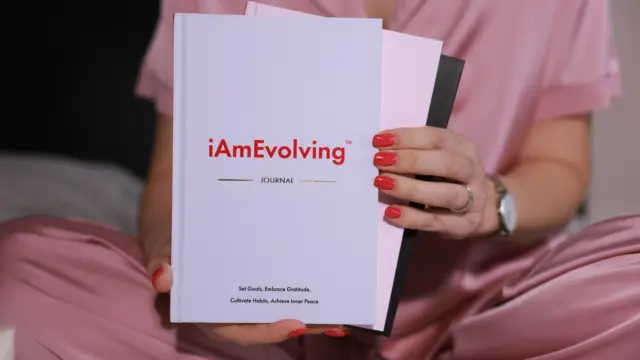
If you want structure for this kind of reflection, the iAmEvolving Journal offers dedicated space for affirmations, gratitude, and daily self-tracking. Many people find that combining I AM statements with daily journaling creates a stronger sense of continuity — a thread that weaves intention through ordinary days.
9. A Curated Collection of I AM Statements
The most helpful affirmations are grounded in truth, possibility, and emotional honesty. Use these as a starting point for your own identity work. Let them evolve with you.
Self-Worth
- I am worthy of love and respect.
- I am enough, even on quiet days.
- I am open to receiving the care I deserve.
Confidence
- I am learning to stand tall in who I am.
- I am growing more confident with every step I take.
- I am capable, even when I feel uncertain.
Healing
- I am allowing myself to rest and recover.
- I am letting go of what no longer supports my peace.
- I am gentle with my becoming.
Abundance
- I am open to receiving life’s blessings.
- I am becoming someone who trusts the path ahead.
- I am aligned with opportunities that support my growth.
Clarity & Presence
- I am calm and focused in my direction.
- I am grounded in the present moment.
- I am listening to what life is asking of me.
Growth & Expansion
- I am becoming who I am meant to be.
- I am evolving with intention and awareness.
- I am willing to take small steps forward.
For more practices that pair identity with presence, explore Understanding Inner Harmony and Finding Stillness in a Busy World.
10. Becoming Who You Already Are
The deeper work of I AM is not becoming someone new — it is remembering who you were before fear, doubt, or comparison shaped your voice. The words “I am” act as a return. A homecoming. A quiet reminder that beneath every learned belief, there is a truer version of you waiting to be reclaimed.
When you practice identity-based affirmations, you are not putting on something artificial. You are stripping away what never belonged. You are softening the layers of self-judgment and reintroducing yourself to your own strength, clarity, and inner wisdom.
Identity work is not loud. It is not dramatic. Often, it begins in the smallest of ways — the first moment you say “I am capable” instead of “I hope I can do this.” Or when you whisper “I am worthy of rest” on a day when old beliefs tell you to keep going. These moments add up. They create internal pathways that gently shift how you carry yourself through the world.
Becoming is not about perfection. It is about awareness practiced over time. Each intentional repetition of “I AM” reinforces a truth you may have forgotten. And each time you speak it with honesty, you rebuild trust with yourself. Change becomes less about effort and more about alignment. Less about pushing and more about returning.
Identity is shaped through repetition, reflection, and emotional presence. When these three elements meet, the shift becomes lasting. You begin to act from a deeper sense of self — not because you’re trying, but because that identity now feels true.
This is the quiet power of I AM. It moves slowly but transforms deeply. It works from the inside outward, reshaping not only how you think but how you choose, respond, and relate to life. It is a lens you grow into, one that becomes clearer with practice.
11. How to Integrate I AM Into Your Daily Life
Identity-based affirmations work best when they’re woven into small, ordinary moments. You don’t need an elaborate routine. You don’t need hours of reflection. Integration happens through gentle repetition and intentional presence.
Here are some ways to anchor your I AM practice:
Morning Presence
Choose one I AM statement each morning — something you want to hold as you move through the day. Let it guide your posture, your tone, your choices. This small ritual sets an emotional center before the world pulls at your attention.
Examples:
- “I am grounded in who I am.”
- “I am present with myself today.”
- “I am capable of handling what comes.”
In Moments of Stress
Stress often triggers old identities — the versions of yourself shaped by fear or survival. When you feel tension rising, pause and return to a gentle truth:
- “I am safe to take a breath.”
- “I am allowed to step back.”
- “I am choosing clarity over urgency.”
This shift doesn’t erase stress; it grounds you within it.
Evening Reflection
Before bed, reflect on the identity you practiced throughout the day. Not with judgment, but with awareness. Ask yourself:
- Where did I act from alignment?
- Where did old narratives return?
- What identity felt most supportive today?
Reflection strengthens new identity pathways and softens old ones. This is where long-term change begins.
During Transitions
Doors close. Chapters shift. Relationships evolve. Identity work is especially meaningful in transition because you are rewriting who you are becoming. Let I AM statements offer direction rather than pressure.
For example:
- “I am open to new beginnings.”
- “I am learning how to trust timing.”
- “I am becoming someone who leads with intention.”
In times of uncertainty, identity becomes your anchor.
12. The Difference Between Forcing Identity and Allowing Identity
A common misunderstanding about affirmations is the belief that you must “force” yourself to believe something new. But forced identity creates resistance. The nervous system pulls away from anything that feels like pressure or self-denial.
Allowing identity is different. It sounds like:
- “I am becoming…”
- “I am learning…”
- “I am opening to…”
- “I am practicing…”
This approach meets you where you are. It honors your humanity. It respects your current emotional truth while gently stretching toward possibility.
When identity is allowed instead of forced, it becomes something your body can relax into. And relaxed belief is more powerful than rigid belief. It sinks deeper. It stays longer. It becomes lived.
13. Why Identity Work Changes Everything
Identity is the root system of your behavior. When you nurture the root, the branches change naturally. You don’t have to manage yourself constantly. You don’t have to motivate yourself every hour. You don’t have to chase consistency.
Identity creates consistency.
A person who believes “I am someone who honors my needs” doesn’t struggle to set boundaries. A person who believes “I am becoming someone who follows through” doesn’t need endless motivation. A person who believes “I am worthy of peace” makes choices that reflect that worth.
When identity shifts, your life shifts with it.
I AM statements are small in form but transformative in effect. They redirect your self-concept — and self-concept is the foundation upon which every decision, habit, and relationship rests.
14. A Gentle Closing Invitation
You are not required to change everything at once. You are not required to become a different person by tomorrow. Your only task is to meet yourself with honesty — and to choose the next identity that feels like a step toward who you want to be.
Let your I AM statements be simple. Let them be steady. Let them be something you return to when the world becomes loud. Over time, you will notice that your inner voice begins to sound different — softer, clearer, more grounded. This is how identity reshapes itself: not through pressure, but through presence.
Related Guide
For a complete overview of how affirmations work—plus how to build a daily practice—read the main companion guide: Affirmations Guide: How to Rewire Your Mind Daily. It covers the psychology, structure, and daily application of affirmations for consistent inner growth.
Related I AM Guides
- I AM Affirmations for Confidence, Gratitude, and Growth
- I AM Affirmations for Morning Motivation
- I AM Affirmations for Self-Love and Inner Strength
- I AM Affirmations for Abundance and Success
- I AM Affirmations for Healing and Inner Peace
- I AM Affirmations for Business Success and Growth
If you want to integrate identity-level affirmations into a daily writing rhythm, explore the Affirmation Journal for Women, which pairs beautifully with I AM practice.
For the complete guide to identity-based affirmations, explore our I AM affirmations guide.
FAQ
Do I have to believe my I AM affirmations right away?
How often should I repeat identity affirmations?
What if old thoughts contradict my new identity statements?