Feeling Stuck in Your Career: Stay, Adjust, or Leave?
Feeling stuck in your career is the quiet sense that you are working hard but no longer moving anywhere that matters to you. It is not the same as a bad week or a difficult boss. It is a pattern: the work fills your days, yet when you picture yourself doing it for five more years, something in you goes flat. Most people who feel this way are not lazy or ungrateful. They have usually outgrown something, and they have not yet named what it is.
The good news is that stuck is information, not a verdict. It tells you that what you value, what you are capable of, or what you need has shifted, and your work has not caught up. This guide helps you understand what feeling stuck really means, why careers stall, and how to choose between staying, adjusting, or leaving, based on clarity rather than panic. It is part of a bigger question about living in alignment with your purpose, and you do not have to answer it all at once.
What Feeling Stuck in Your Career Really Means
Several different experiences get called “stuck,” and they need different responses. Naming yours precisely is the first step out.
| What it feels like | What it usually is | What tends to help |
|---|---|---|
| Exhausted, dreading Monday, nothing left at night | Burnout | Rest, boundaries, and reducing load before any big decision |
| Bored, restless, the work is easy and empty | Outgrowing the role | New challenge, scope, or skills, inside or outside your company |
| Uneasy, the work conflicts with what you care about | Values mismatch | Clarifying your values, then changing direction |
| Unsure, you want something else but cannot name it | Unclear direction | Small experiments and honest reflection over time |
If what you feel is mostly exhaustion, start there. Decisions made while depleted tend to be escape plans rather than choices. This guide on staying steady when you are burned out but cannot quit covers that situation directly. If you are not exhausted but still flat, keep reading.
Signs You Are Stuck, Not Just Having a Hard Month
Every job has difficult seasons. Being stuck is different because it does not lift when the busy period ends. Look for patterns like these over several months, not days:
- You stopped learning anything new, and you no longer expect to.
- You feel relief, not disappointment, when a project is cancelled.
- You describe your work with phrases like “it pays the bills” or “it is fine, I guess.”
- You envy people with less security but more meaning, and then talk yourself out of it.
- You keep planning to update your resume, and you keep not doing it.
- Sunday evening carries a low, steady heaviness that has nothing to do with workload.
Two or three of these, consistently, are worth taking seriously. They are not a sign that something is wrong with you. They are a sign that something needs to change, even if it is smaller than you fear.
Why Careers Stall
Understanding the cause matters, because each one points to a different next step.
You have outgrown the role
What once stretched you now runs on autopilot. Your skills grew, but the role did not. This is often the easiest kind of stuck to solve, because the fix may be a new responsibility, a different team, or a conversation with your manager rather than a new career.
Your values have shifted
The things you cared about at 25 may not be the things you care about now. Status, salary, or a title may have mattered more then. Today you may want time, autonomy, or a sense that your work helps someone. When values move and work stays still, the gap feels like being stuck. Revisiting your core values often makes the problem suddenly visible.
Security has become a trap
A good salary, benefits, and a predictable routine are real gifts. They can also make any change feel reckless. When the cost of leaving looks larger every year, people stay long after the work stopped fitting, and the stuck feeling deepens.
You never fully chose it
Many people drift into a career through a first job, a family expectation, or a degree chosen at eighteen. Years later, they realize they have been building on someone else’s plan. If you are in your twenties and this sounds familiar, it often overlaps with a quarter life crisis, and it is more common than it feels.
Get more like this, every week
Stay, Adjust, or Leave: Three Honest Paths
Feeling stuck does not automatically mean you should quit. Most people have three real options, and the right one depends on the cause you identified above.
| Path | When it fits | First move |
|---|---|---|
| Stay and reframe | The work is sound, but you lost sight of why it matters | Reconnect to the parts you value and set one growth goal |
| Adjust | You have outgrown the role but still respect the field | Ask for new scope, a new team, or training |
| Leave | Your values and the work point in different directions | Plan a gradual transition, not an overnight exit |
There is no shame in any of these. Staying with renewed intention can be as brave as leaving. What matters is that you choose, instead of letting another year choose for you.
Small Steps When You Feel Stuck in Your Career
Big decisions get easier after small, low-risk moves. Start with these:
- Name it in one sentence. Write exactly what feels wrong, as specifically as you can. “I am bored” is a start. “I have not learned anything new in two years” is a direction.
- Track your energy for a week. Note which tasks leave you lighter and which drain you. Patterns appear quickly.
- Talk to three people. Choose people doing work you are curious about, and ask what their days actually look like.
- Run one small experiment. Take a short course, volunteer for a different project, or try a weekend side project. Experiments give you evidence that thinking alone cannot.
- Set a review date. Pick a date a few weeks out to decide your next step, so the question does not drift for another year.
If the feeling reaches beyond work into the rest of your life, a broader life audit can show whether your career is the real problem or one symptom of a bigger imbalance.
How to Find Clarity When You Feel Stuck: A 10-Day Check-In
Write the honest sentence
Rate your work energy each day
Set one small experiment as your daily goal
Track one forward-moving habit
Decide on day ten
Stuck Is Information, Not a Verdict
Feeling stuck in your career can make you doubt yourself, but it usually means the opposite of failure. You have grown, and part of your life is asking to grow with you. You do not need to have the answer today. You need an honest name for what you feel, a few small experiments, and a date to decide.
If you decide a change is coming, this guide to journaling through a career change will help you stay grounded through the transition. And if you want one place to hold the daily practice, the iAmEvolving Journal gives you a page each day for a goal, gratitude, six habits, and an inner harmony check-in, with a reflection page every ten days to see what is really changing.
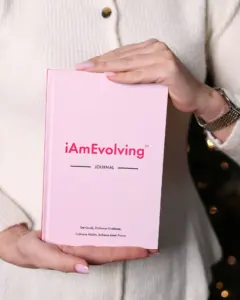
Start your daily practice of gratitude, goals, and growth.
Get the Journal →
A free 30-day goal setting journal PDF with daily prompts, action steps, and reflection space. Printable, minimal, and designed to keep you focused on…
ExploreFrequently Asked Questions
How do I know if I’m stuck in my career or just bored?
Is it normal to feel stuck in your career in your 30s or 40s?
Should I quit my job if I feel stuck?
How long does it take to get unstuck in your career?