Goal Setting Mistakes to Avoid: 7 Traps That Keep You Stuck

Goal setting mistakes are the recurring errors in how people define, structure, and maintain their goals — errors that quietly undermine progress before real effort even begins. Research from Dominican University found that people who write down their goals are 42 percent more likely to achieve them, yet most still fail because of how they set those goals, not because they lack effort. You have probably experienced this yourself: the resolution that fades by February, the vision board that collects dust, the plan that felt electric on Sunday but invisible by Thursday.
The problem is rarely the goal itself. It is usually the way you set it, the relationship you built with it, and the silent mistakes that creep in before you even start. These are the mistakes that trip up even people who understand goal setting fundamentals — the ones that feel productive in the moment but quietly sabotage your progress over time. Here are seven of the most common traps, and what to do instead.
Mistake One: Setting Goals From Your Head, Not Your Heart
This is the most common goal setting mistake, and it is the hardest to recognize because it looks responsible. You sit down, think logically about what you “should” want, and write down sensible objectives. Earn more money. Get promoted. Lose weight. Run a marathon. These goals make sense on paper. They sound impressive when you tell people about them. But when the alarm goes off at 5:30 a.m. and the only thing pulling you forward is logic, logic is not enough.
Goals that come from your head are built on obligation and comparison. They are shaped by what your parents valued, what your peers are doing, or what social media tells you success looks like. Goals that come from your heart are different. They carry emotional weight. When you think about them, you feel something — excitement, longing, even a little fear. That feeling is the fuel that keeps you going when discipline wears thin.
The difference between SMART goals and heartfelt goals is not that one is better than the other — it is that heartfelt goals create a pull that logic-based goals never can. The practice of mindful planning helps you slow down enough to hear the difference. Before you set your next goal, ask yourself: do I actually want this, or do I just think I should?
Mistake Two: Too Many Goals at Once
Ambition is beautiful. But spreading your energy across eight different goals is not ambition — it is dilution. When you try to change everything at once, you end up changing nothing. Each goal requires mental bandwidth, emotional energy, and daily attention. Your capacity for all three is limited, no matter how motivated you feel on January 1st.
What happens with too many goals is predictable: you make tiny, invisible progress on all of them, which feels like no progress at all. After a few weeks, the lack of visible momentum kills your motivation. You start skipping days. Then weeks. Then the goals quietly disappear from your awareness, replaced by the next batch of “this time will be different” intentions.
The fix is simple but uncomfortable: choose fewer goals. Two or three at most. Give them the space and attention they deserve. Let the other goals wait. They will still be there when you are ready. But the ones you commit to fully will actually have room to grow.
Try this: Write down every goal you are currently holding. Now circle the two that matter most. Not the two that sound most impressive — the two that would genuinely change how you feel about your life. Let the rest go for now.
Mistake Three: Writing Goals as Wishes
There is a difference between writing “I want to be healthier” and writing “I walk for thirty minutes every morning before work.” The first is a wish. The second is a commitment phrased in present tense, anchored to a specific behavior. Wishes float. Commitments land.
Most people write goals as wishes because that is how they were taught. “I want to save money.” “I hope to be more confident.” “I would like to start meditating.” These statements have no edges. They give your brain nothing to grab onto, no clear picture of what “done” looks like, no sense of when or how to start.
When you write a goal in present tense — as if it is already happening — something shifts in your subconscious. Your brain starts looking for evidence that the statement is true. It begins noticing opportunities, adjusting behaviors, and aligning your daily choices with the identity you declared. This is the quiet power of writing down your intentions — it moves your goals from the someday shelf into the present moment.
| Wish (Vague Goal) | Commitment (Clear Goal) |
|---|---|
| “I want to be healthier” | “I walk for 30 minutes every morning before work” |
| “I want to save money” | “I transfer $200 to savings every payday” |
| “I hope to feel less anxious” | “I journal for 10 minutes every morning” |
| “I want to be more confident” | “I read my affirmations out loud every day” |
The words you use shape the relationship you have with the goal. A wish leaves room for excuses. A commitment gives your brain a clear picture of what showing up looks like.
Get more like this, every week
Goal Setting Mistakes That Kill Daily Practice
The next two mistakes are related, and they are responsible for more abandoned goals than any others on this list. They both stem from the same root problem: treating goal setting as a one-time event instead of a living practice.
Mistake Four: Set Once and Forgotten. You write your goals on a Sunday evening in a burst of clarity. You feel focused, intentional, aligned. Then Monday happens. And Tuesday. And by Thursday, those goals are buried under emails, errands, and the relentless noise of daily life. They are not dead — they are just invisible. And invisible goals cannot guide your choices.
Goals need daily contact. Not necessarily daily action on every single one, but daily awareness. When you read your goals every morning, you remind your brain what matters. You create a filter for the hundreds of micro-decisions you make each day. Without that filter, your default programming — habits, comfort zones, old patterns — makes the decisions for you.
Mistake Five: No Emotional Connection to the Goal. Even if you revisit your goals daily, reading them like a grocery list will not move you. If your goal does not create a feeling when you read it — a spark of excitement, a pang of urgency, a deep sense of “yes, this matters” — then it is just words on paper. The emotional energy of goals is what separates intentions that move you from ones that collect dust. The goal needs to mean something personal. It needs to be connected to a version of yourself you are genuinely reaching for.
These are the goal setting steps for beginners that most people skip: the daily review, the emotional anchoring, the habit of keeping your goals alive in your awareness instead of filing them away and hoping for the best.
Mistake Six: Quitting When the Target Date Passes
You set a goal to save a certain amount by June. June arrives. You are not there yet. So you quietly abandon the goal, telling yourself it did not work. But the goal was never the problem. The timeline was arbitrary. The progress you made — even if it fell short of the target — was real. Throwing it away because a calendar date passed is like tearing down a half-built house because construction took longer than the estimate.
Deadlines can be useful for creating urgency, but they should not be used as pass-or-fail gates. If you did not hit your target by the deadline, the healthy response is to assess what happened, adjust the timeline, and keep going. The worst response is to interpret the miss as proof that the goal was wrong or that you are incapable.
Learning to stay consistent with your goals even when timelines shift is one of the most important skills you can build. Real goals are not sprints with a fixed finish line. They are directions you commit to walking in, regardless of pace.
Try this: If you have an expired goal sitting in the back of your mind, pull it out. Ask yourself: do I still want this? If yes, set a new timeline. If no, release it consciously. Either way, stop carrying the weight of unfinished business.
Mistake Seven: Chasing Frameworks Instead of Clarity
SMART goals. OKRs. 90-day sprints. The 12-week year. There is no shortage of goal setting frameworks, and many of them are genuinely useful. But here is the trap: spending more time choosing and learning frameworks than actually sitting with what you want. The framework becomes the goal. The planning becomes the progress. And the real work — the uncomfortable work of getting honest about what you want and showing up for it daily — gets postponed indefinitely.
Frameworks are tools. They work best when they serve a clear intention. But if you do not have clarity about what you genuinely want, no framework will give it to you. That clarity often comes through the power of visualization — seeing the goal so vividly that it becomes something you feel, not just something you plan. It is like buying a better map when you do not know your destination. The map is not the problem.
The goal setting guide is a useful starting point, but only after you have done the inner work of asking yourself what truly matters. Start with clarity. Let the framework follow.
Conclusion
Every mistake on this list shares a common root: disconnection. Disconnection from what you actually want. Disconnection from the emotional energy that makes goals meaningful. Disconnection from the daily practice that keeps goals alive. The fix is not a better system or a more detailed plan. The fix is reconnection — getting honest with yourself about what matters, and then showing up for it in small, daily, imperfect ways.
If your goals have not been working, it is not because you are broken. It is because the way you have been setting them was missing something essential. Now you know what to look for. Pick one mistake from this list — the one that stung the most as you read it — and address it first. That alone can shift everything.
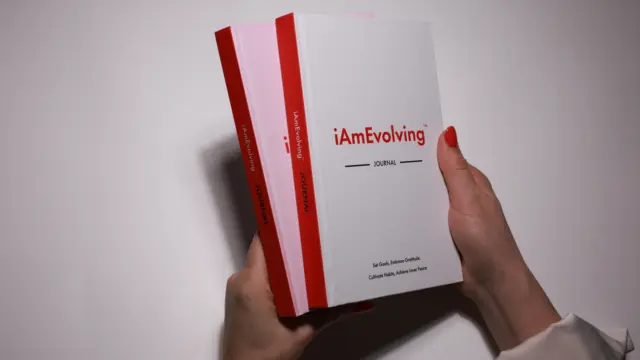
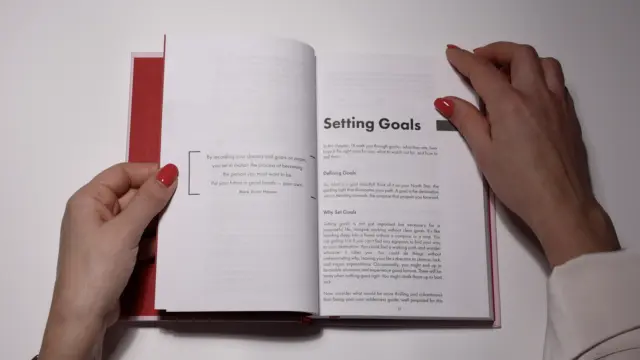
I spent years making every mistake on this list. I set goals from obligation, spread myself across too many at once, and treated planning as a one-time event. The shift came when I started journaling my goals daily — reading them, feeling them, staying in contact with the version of myself I was reaching for. That practice is what eventually became the iAmEvolving Journal.
The iAmEvolving Journal is built around this philosophy. It gives you a daily structure for writing your goals in present tense, connecting with them emotionally, and reviewing them consistently — so they stop being wishes on a page and start becoming the direction of your life. And if your biggest struggle is that you have been doing all the “right” things and your goal is not manifesting, that is worth exploring too.
Start your daily practice of gratitude, goals, and growth.
Get the Journal →A gentle 7-day reset to help you slow down, feel steadier, and reconnect — in just 5–10 minutes a day.
Start the ResetA simple introduction to daily journaling — gratitude, goals, and habits made easy.
Learn the MethodFAQ: Goal Setting Mistakes to Avoid
What is the biggest goal setting mistake people make?
How many goals should I set at one time?
Should I quit a goal if I miss the deadline?
Why do I keep setting goals but never following through?