Shadow Work Journal Prompts: 30 Questions to Meet Your Hidden Self
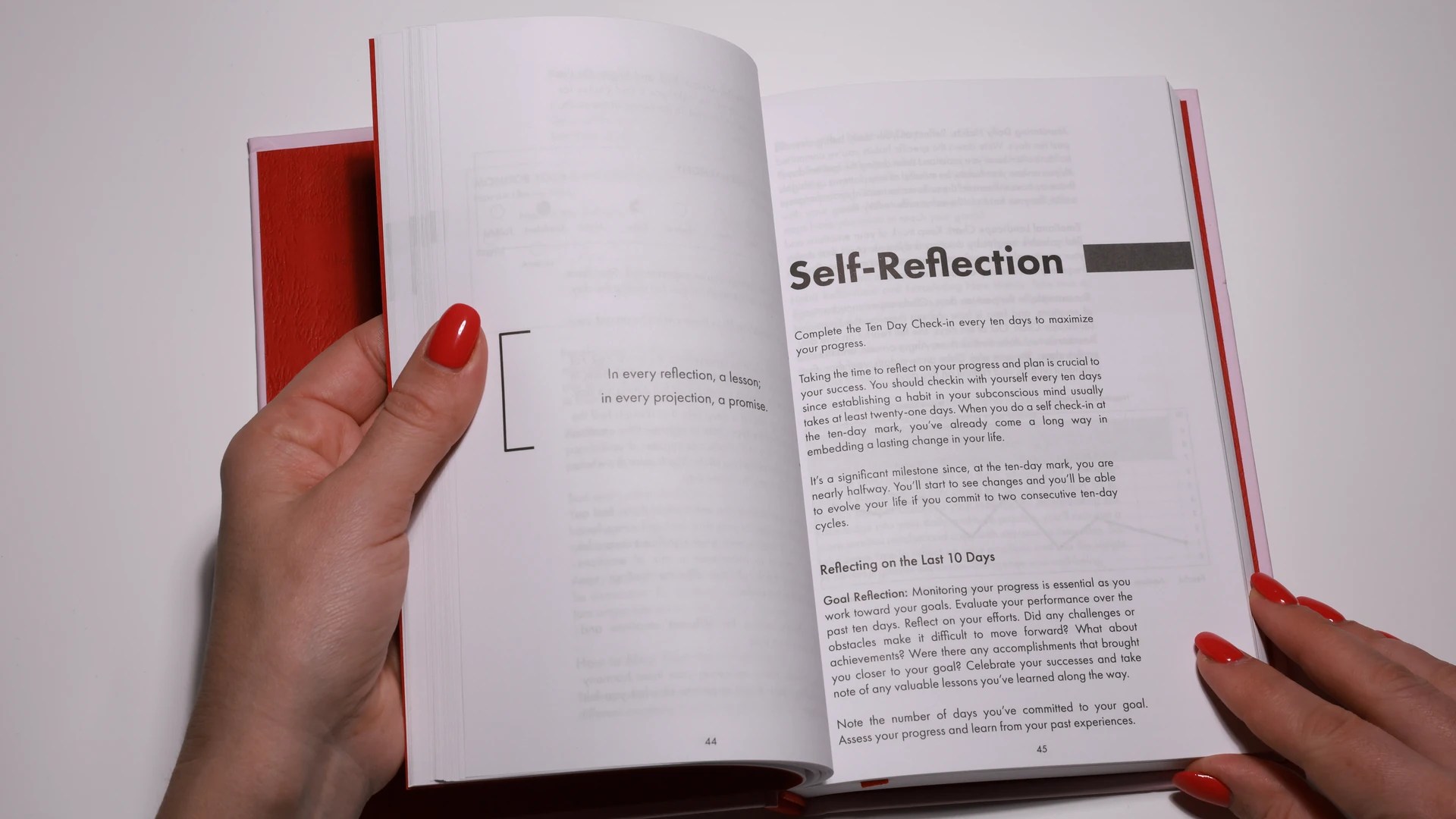
Shadow work journal prompts are reflection questions that help you examine the parts of yourself you usually hide, deny, or judge: the traits, fears, and knee-jerk reactions the psychologist Carl Jung called your “shadow.” Instead of recording what happened today, they ask why you reacted the way you did, and what that reaction is really protecting.
You do not need candles, crystals, or a full moon for this. Shadow work is quieter and more practical than the internet makes it look. It is the honest, sometimes uncomfortable act of getting to know the parts of you that run in the background, so they stop running the show. Done gently, on paper, it is one of the most direct routes to inner harmony there is, because you stop fighting yourself in the dark.
What Shadow Work Really Is (Without the Mysticism)
Carl Jung used the word “shadow” for everything about ourselves we push out of conscious awareness, usually because it was not welcome when we were young. The child who was praised for being calm learns to bury anger. The one who was teased for being ambitious learns to hide their wanting. None of it disappears. It just goes underground and leaks out sideways as overreactions, self-sabotage, and the traits we cannot stand in other people.
Shadow work is the practice of turning toward that buried material on purpose. The goal is not to fix or exorcise anything. It is integration: bringing a disowned part back into the light long enough to understand it, so an unconscious compulsion becomes a conscious choice. This is the same territory as self-discovery through journaling, just aimed squarely at the material you would rather skip.
Here is the simplest way to see the difference between everyday reflection and shadow work.
| Everyday journaling | Shadow work journaling |
|---|---|
| Records what happened and how you felt | Asks why you reacted the way you did |
| Stays with what you already know | Goes toward what you have been avoiding |
| Comfortable, steady, daily | Intense, occasional, done in small doses |
| Builds awareness of your day | Builds ownership of your patterns |
Why Shadow Work Belongs on the Page
The mind is a poor place to hold hard truths. Thoughts loop, defend, and rewrite themselves in real time, which is exactly how a shadow stays hidden. Writing slows all of that down. When a belief is sitting in ink in front of you, you can no longer pretend you did not think it, and you can finally ask whether it is even true.
Research on expressive writing by the psychologist James Pennebaker found that writing about difficult experiences for fifteen to twenty minutes over a few days can measurably improve emotional, and even physical, health. Shadow work uses that same mechanism, aimed at the beliefs and reactions underneath the events. If you want a gentler on-ramp first, plain reflective journaling builds the same muscle with lower stakes.
Based on the iAmEvolving framework, the first time I sat down with a real shadow prompt, I wrote one sentence about a coworker who irritated me and realized within a paragraph that I was describing the exact trait I judged hardest in myself. Nothing mystical happened. I just could not un-see it once it was on the page, and that small piece of honesty changed how I treated both of us. That is the whole practice, repeated.
How to Do Shadow Work Safely
Because shadow work reaches for tender material, how you hold it matters as much as the questions you ask. A simple, repeatable method keeps it useful instead of overwhelming:
- Choose one or two prompts, never the whole list. With shadow work, depth beats volume every time.
- Set a container. Give yourself fifteen minutes, a door you can close, and no audience.
- Write the first honest answer before the polite one. Do not soften or edit as you go.
- Ground yourself before and after with a few slow breaths, a glass of water, or a short walk.
- If a prompt opens something too big to hold alone, stop, and treat that as information, not failure.
One honest boundary: shadow work is a practice for self-understanding, not a replacement for therapy. If these questions surface trauma, panic, or old wounds that feel unsafe to sit with, that is a sign to slow down and bring in support. Starting with something steadier, like journaling after trauma, or working alongside a licensed professional, is the strong move, not the weak one.
30 Shadow Work Journal Prompts to Try
These are grouped into five themes so you can pick the doorway that matches what you are working with. Read them slowly. The one you most want to skip is usually the one worth writing about.
Triggers and Projection
What annoys you in others often reveals what you have disowned in yourself.
- Think of someone who genuinely irritates you. Which specific trait sets you off, and where might a version of that trait live, quietly, in you?
- When did you last overreact to something small? What was that reaction really about?
- What quality do you envy in others, and what unmet need in you is it pointing to?
- Whose success is hardest for you to celebrate, and what does that discomfort reveal?
- Finish this: “I can’t stand people who…” Now ask, when have I done my own version of that?
- What do you judge most quickly in others, and what are you afraid they would see in you?
Fear and Avoidance
The shadow often hides inside the things you keep not doing.
- What conversation have you been avoiding, and what feeling are you protecting yourself from?
- What would you attempt this year if you knew no one would judge the outcome?
- Where are you playing small on purpose, and who first taught you that was safer?
- Which emotion were you not allowed to express as a child, and how do you handle it now?
- What are you currently pretending not to know about your own life?
- When you imagine being fully seen by someone, what part do you hope stays hidden?
The Inner Critic and Shame
Meeting your harshest voice with curiosity is where a lot of the change happens.
- Write the cruelest thing your inner critic says. Whose voice does it actually sound like?
- What mistake do you still punish yourself for, and what would you say to a friend who did the same?
- What do you believe you must earn before you are allowed to rest or feel proud?
- Which of your “flaws” were once survival skills that kept you safe?
- What are you most ashamed of, and what shifts if you meet that memory with curiosity instead of judgment?
- Complete: “If people really knew me, they would…” Then ask, is that true, or is it fear talking?
Patterns and Relationships
Your shadow shows up most reliably in how you relate to other people.
- What pattern keeps repeating in your relationships, and what role do you tend to play in it?
- Where do you abandon your own needs to keep the peace, and what do you fear would happen if you stopped?
- Who do you become around the person whose approval you want most?
- What boundary do you keep meaning to set but never do, and what story stops you?
- Think of a relationship that ended badly. What part of it have you never fully admitted was yours?
- What do you quietly resent giving, even though you keep giving it?
Integration and Ownership
These close the loop, turning what you found into something you can actually live with.
- What part of yourself have you been trying to get rid of, and what might it need instead of exile?
- If your shadow could speak plainly, what has it been trying to tell you?
- What would self-acceptance look like on an ordinary Tuesday, not in theory?
- Name one hidden trait that could become a strength if you stopped being ashamed of it.
- What is one small, honest action that would bring your outer life closer to what you just wrote?
- What do you want to forgive yourself for today, so you can set it down?
Get more like this, every week
Turning What You Learn Into Change: The Integration Step
Insight on its own fades by Thursday. What makes shadow work worthwhile is the step most people skip: deciding what to do with what you found. After a session, reread what you wrote and underline the single line that felt most true, the one that made your stomach drop a little. That sentence is your work.
Then ask one practical question of it: what would honoring this look like in the next week? Maybe it is one boundary spoken out loud, one apology, one thing you stop pretending to enjoy. Integration happens through a series of small, aligned actions that slowly close the gap between who you are in private and who you are out loud. When a session leaves you raw, follow it with softer journaling prompts for healing to help your nervous system settle before you go digging again.
Over time, the parts you once exiled stop needing to shout. The anger becomes clear boundaries. The envy becomes a map of what you actually want. The inner critic, met enough times, quiets into something closer to an honest coach. That is integration, and it is the whole point.
Meeting Yourself, One Honest Page at a Time
You do not have to face all thirty of these questions, and you certainly do not have to face them today. Shadow work is not a race to the bottom of yourself. It is a slow, steady willingness to stop looking away, one prompt at a time, until the parts you were taught to hide become parts you understand.
If you want a calm, structured place to do this kind of work without spiraling, that is exactly what the iAmEvolving Journal is built for: guided space to reflect, room to be honest, and enough structure to keep you grounded while you go deep. Start with one question tonight. Meet one hidden part with curiosity instead of judgment. That is how the lasting kind of change begins.
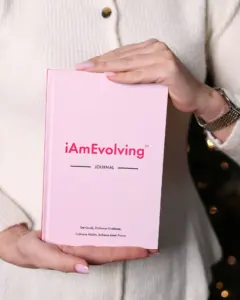
Start your daily practice of gratitude, goals, and growth.
Get the Journal →
A free 30-day gratitude journal designed for a simple daily practice. Calm, minimal, and printable to help you slow down and reflect.
ExploreFrequently Asked Questions
What are shadow work journal prompts?
Is shadow work journaling safe to do on your own?
How often should you do shadow work?
What is the difference between shadow work and regular journaling?