Empty Nest Syndrome: When the House Goes Quiet

Empty nest syndrome is the grief, loneliness, and identity shift some parents feel when a child leaves home or becomes independent. The house is quieter, but the real change is internal. Routines, responsibilities, and the role that organized much of your life have all shifted at once. If you feel proud and heartbroken at the same time, that doesn’t make you ungrateful. It makes you human.
This transition deserves more than a brisk instruction to stay busy. You may need to mourn the ordinary moments that disappeared, renegotiate your relationship with your adult child, and work out what you want your own days to hold now. Writing gives all of that somewhere to become specific, instead of sitting in your chest as a general ache.
What Empty Nest Syndrome Actually Feels Like
Empty nest syndrome isn’t a formal diagnosis. It’s the common name for the emotional response to a major family transition, and it looks different on everyone. Some parents feel a sharp, specific loss. Others feel relief after years of intense responsibility. Most move between the two, sometimes inside the same afternoon.
- Grief: You miss the sounds, the habits, and the small requests that used to fill the house.
- Loneliness: More unstructured time, fewer spontaneous moments of contact.
- Worry: Are they safe, are they eating, are they making good choices, can they afford it.
- Identity uncertainty: You’re not sure what to prioritize now that caregiving isn’t the centre of your schedule.
- Relief: You enjoy the privacy and the flexibility, and then feel guilty for enjoying it.
None of these has to be the whole truth. Naming the actual mix is more useful than forcing yourself into a single story about what this is.
Why the House Feels Different After a Child Leaves
A home runs on repeated cues. You know which door opens at a certain hour, which foods disappear from the refrigerator, which conversations happen in the car, and which chores are attached to somebody else’s schedule. When those cues stop, your body notices before your mind has language for it.
The change also exposes how much of your identity was organized around being needed. Parenting doesn’t end when a child moves out, but the daily form of it changes completely. You go from managing details to offering support without taking over, and that takes a kind of trust you haven’t had to practice before. Trust in them, and trust in yourself.
If your thoughts feel scattered or heavy, a short practice for reconnecting with yourself can help you sort what belongs to this transition from what might be an older pattern of putting yourself last. The inner harmony guide goes deeper into the steadier ground underneath all of it.
The Grief of an Empty Nest Is Also the Grief of a Season Ending
People focus on the physical departure, but the grief usually includes a lot of smaller endings. The last school morning. The last family meal before the move. The last time you were the first person called about every problem. The last ordinary evening before the relationship changed shape.
You don’t have to minimize any of that because it’s a normal part of the life cycle. Grief isn’t proof that you wanted your child to stay dependent. It’s evidence that the season mattered.
A small ritual helps more than people expect. Write a letter you’re never going to send and say the things that don’t fit into a phone call. Pull ten photos into one album, not to be sentimental about it, but to mark that the years were real. Make a list of what you want to carry forward from daily family life, and be specific: the Sunday breakfasts, the way you handled a bad report card, the jokes only your family understands. Grief you name tends to move. Grief you skip tends to settle.
A quiet house can hold loss and possibility at the same time.
Get more like this, every week
How to Cope With Empty Nest Syndrome Without Rushing Yourself
Coping isn’t about filling every empty hour. It’s about building enough structure, contact, and meaning that the new space becomes livable. Get the basics steady before you make any dramatic plans.
- Let the feelings be specific. Instead of “I feel awful,” name the exact loss: the morning conversation, the shared meal, being the one who gets called, the uncertainty about what comes next.
- Keep a light daily rhythm. Wake, eat, move, connect, and sleep at roughly supportive times. Predictable anchors carry you through the stretches when motivation is unreliable.
- Protect one commitment that’s yours alone. A class, a walk, a creative project, a friendship, or a goal you shelved years ago.
- Review the week gently. Notice what gave you energy and what made things harder, then adjust one thing. One. Not the whole process.
A weekly reset makes the adjustment feel less vague. Use the practice of finding stillness to create a few minutes where you’re not solving, checking, or anticipating. Quiet is uncomfortable at first, because it shows you what the busyness was covering. With repetition it becomes somewhere to recover.
Staying Connected Without Hovering
This is the part nobody prepares you for. The relationship has to change, and for a while you’ll be the only one actively managing that change.
The instinct is to check in more. It feels like love, and often it is. But frequent checking can quietly do something else: it uses your child’s reassurance to manage your anxiety. That’s a heavy job to hand someone who is busy learning to run their own life, and it tends to produce exactly what you’re afraid of, which is shorter answers and longer gaps.
- Agree on a rhythm out loud. A Sunday call, a text thread, dinner the first weekend of the month. A known rhythm removes the question of whether you’re calling too much.
- Ask before you advise. “Do you want help thinking about this, or do you just want to tell me about it?” is one sentence, and it prevents most of the friction at this stage.
- Let some problems stay theirs. A late bill or a difficult roommate is information they need. Solving it removes the lesson and keeps you in a role that’s ending.
- Bring your own news. If every conversation is an audit of their life, calls start to feel like check-ups. Tell them what you did this week.
- Notice the urge before you act on it. When you reach for your phone, write down the sentence you were about to send. Sometimes you’ll send it anyway. Sometimes you’ll see it was about you.
None of this means caring less. It means moving from supervision to relationship, which is what you were preparing them for the whole time.
Rebuild Purpose One Small Choice at a Time
Purpose after an empty nest rarely arrives as one grand calling. It gets rebuilt through repeated choices that put your days back in contact with your values. Start with three categories: people, practices, and projects.
- People: Which relationships deserve more presence, and where could you build something new?
- Practices: Which daily or weekly habits would actually support your body and your mood?
- Projects: What would give your attention somewhere to grow?
Pick one small action from each for the next seven days. Call the friend. Walk three times. Spend thirty minutes on the course, the garden, the room, or the idea. You’re not trying to become a new person by Friday. You’re collecting evidence that your life still contains movement.
When the reflection starts turning into a plan, meaningful goals helps you choose a direction that’s genuinely yours instead of a distraction from the grief.
How Journaling Can Help You Move Through the Transition
Journaling doesn’t solve empty nest syndrome on its own. What it does is turn an unnamed ache into something you can work with. Four lines is enough:
- What I feel: Name the emotion without arguing with it.
- What I need: Comfort, rest, contact, movement, reassurance, or space.
- What I can control: Separate your choices from your adult child’s choices.
- One next step: Small enough to finish today.
This structure earns its keep when worry starts expanding. It gives the concern a boundary and puts your attention back where you still have agency. If it helps, sit with one bigger question at the end: who am I becoming in this quieter season? You don’t need an answer. You need the question in writing, where you can watch it change over a few months.
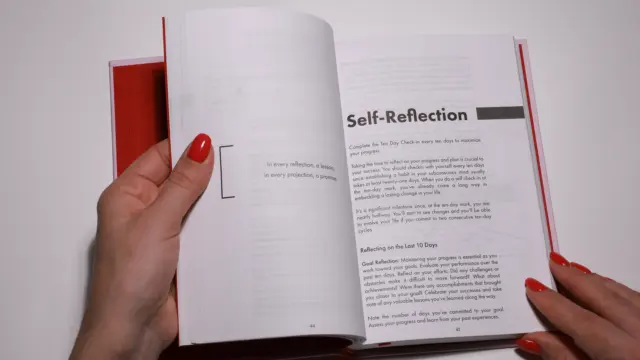
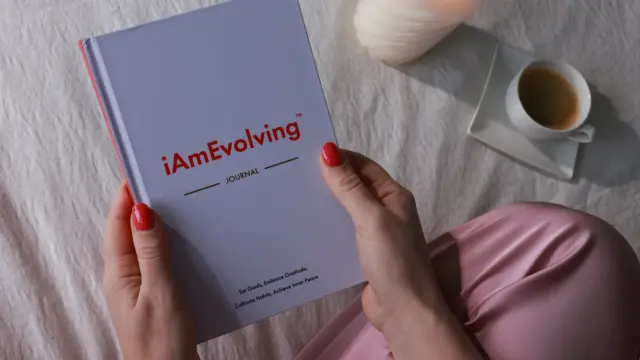
For the full practice, with prompts built around identity, connection, and the shape of your next chapter, go to journaling for empty nesters. And if you’d rather not build the structure yourself, the iAmEvolving Journal keeps goals, gratitude, habits, and a nightly reflection in one daily rhythm, which matters more than usual in a season where your own routine is the thing that just fell apart.
When to Ask for More Support
A hard transition doesn’t mean something is wrong with you, but persistent distress still deserves care. Reach out to a qualified mental-health professional if sadness, anxiety, anger, isolation, disrupted sleep, or loss of interest keeps interfering with daily life. Support also helps when the transition surfaces relationship problems, unresolved grief, or a long pattern of putting yourself last.
Friends and family usually want to help and often don’t know how. Be specific about what would actually work: a weekly walk, a call on Sunday, company at dinner, or someone who will listen without trying to cheer you up. If the loneliness underneath this feels familiar from other transitions, the loneliness that follows a move runs on the same mechanics. You don’t have to wait for a crisis to ask for connection.
The House Is Quieter, But Your Life Is Not Over
Empty nest syndrome makes the future feel blank, because the old structure was so familiar you could navigate it half-asleep. But blank isn’t the same as finished. The next chapter may open with grief, and it may be a while before anything new feels natural. That’s allowed.
You can honour the family life you built and still make room for a life that’s more fully your own. Those two things were never in competition. The quiet in the house isn’t a verdict on what’s left for you. It’s the sound of a season changing, and you get to decide what fills it.
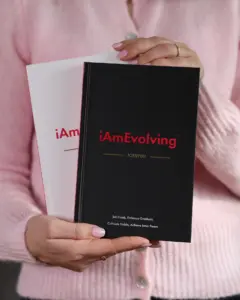
Start your daily practice of gratitude, goals, and growth.
Get the Journal →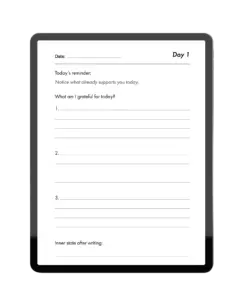
A free 30-day gratitude journal designed for a simple daily practice. Calm, minimal, and printable to help you slow down and reflect.
ExploreFrequently Asked Questions
What is empty nest syndrome?
How long does empty nest syndrome last?
Is it normal to feel relieved when a child leaves home?
How do I cope when my house feels empty?
Can journaling help with empty nest syndrome?