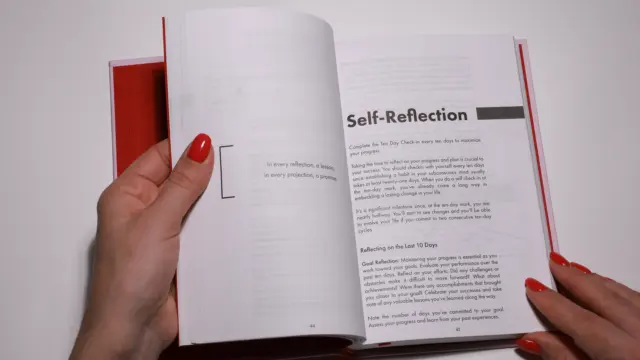
The Inner Harmony Guide: Finding Stillness in a Busy World
Inner harmony isn’t something you chase. It’s something you return to. Beneath every wave of thought and emotion, there is a quiet steadiness that never leaves. This guide helps you rediscover that steadiness. It’s a journey back to the calm center of yourself, where awareness becomes your anchor and balance becomes your way of living.
In a world that moves faster than our hearts can process, emotional balance often feels distant. But it’s not about eliminating emotions or controlling them. Inner harmony means learning to understand, map, and regulate your inner state so you can respond to life with clarity and compassion: even when things feel uncertain.
What Inner Harmony Really Means
Inner harmony is the art of being at peace with your own emotions. It’s the ability to meet what you feel with awareness rather than resistance. When you live from this place, you stop being pulled by emotional extremes and start experiencing a sense of inner steadiness: a calm that doesn’t depend on circumstances.
It’s not about perfection or constant serenity. It’s about relationship: the one you have with yourself. When you practice awareness, emotional mapping, and gentle regulation, you begin to trust that you can return to balance no matter what arises.
Harmony is not a fixed state; it’s a rhythm: a steady return to center.
Inner Harmony vs. Inner Peace and Happiness
People often use inner harmony, inner peace, and happiness as if they mean the same thing. They don’t. Happiness is a mood that rises and fades with circumstances: a good morning, kind words, a goal reached. Inner peace is the quiet that settles when the noise around you stops. Inner harmony is something steadier than both. It’s the working relationship between every part of you: your thoughts, your feelings, your body, and your values, all moving in the same direction even when life is loud.
That distinction matters because it changes what you aim for. If you chase happiness, you’ll spend your life trying to control conditions you can’t always control. If you cultivate inner harmony, you build the capacity to stay whole inside any condition. You can feel sadness and still feel centered. You can face uncertainty and still trust yourself. Harmony doesn’t ask you to feel good all the time. It asks you to stay connected to yourself while you feel whatever is true.
This is why inner harmony is the foundation the rest of your growth rests on. When your inner world is aligned, peace becomes more available and happiness lasts longer, because neither depends on everything going right. If you’re still forming a clear picture of what this looks like in practice, start with Understanding Inner Harmony, then explore finding peace in the present moment as a daily anchor.
Why Inner Harmony Feels Out of Reach in a Busy World
If balance feels harder to hold than it used to, you’re not imagining it. Most of us live inside a pace our nervous systems were never designed for. Notifications interrupt our thoughts before they finish. Work follows us home. We move from one demand to the next without the pauses that used to let us reset. Inner harmony doesn’t disappear in this environment, but the space we need to feel it gets crowded out.
The problem isn’t that you lack discipline or that you’re doing life wrong. The problem is that calm has become something you have to choose on purpose, rather than something the day hands you. When every moment is filled, your emotions don’t get processed: they pile up. Small frustrations accumulate into a low hum of tension you stop noticing because it never fully goes away. That hum is the cost of a life with no margin.
Reclaiming inner harmony in a busy world starts with protecting small pockets of stillness, not overhauling your whole schedule. A few minutes of reflection in the morning. One honest emotional check-in at night. A single breath taken on purpose before you answer. These moments restore the margin that busyness erodes. If your evenings tend to disappear in a blur, an intentional evening routine for emotional reset can give your inner world the pause it’s been missing.
The Purpose of the Inner Harmony Journey
The Inner Harmony series within the iAmEvolving Journal exists to help you understand and navigate your emotional world with presence. It builds emotional literacy: the ability to name, interpret, and transform your inner states with kindness and clarity. Through consistent reflection, breath, and awareness, you train yourself to find calm even in motion.
This journey is one of the four foundational paths of the iAmEvolving Journal: along with Gratitude, Habits, and Goal Setting. Together, they form a holistic system of awareness, direction, consistency, and growth. But Inner Harmony is the one that brings you back to yourself: the emotional compass of them all.
The Four Stages of Inner Harmony
Every part of the Inner Harmony journey mirrors a natural process of emotional evolution. You don’t force these steps. You flow through them. Each stage brings you deeper into balance.
1. Understanding Inner Harmony
This is where it begins: learning that balance doesn’t mean absence of emotion. You explore what inner harmony truly is and how emotional awareness starts from within.
Start here: Inner Harmony Foundations.
2. Monitoring and Mapping Emotions
Once you understand what harmony feels like, you begin to observe and track your emotions in real time. Mapping teaches you to see emotions as data: signals that reveal your needs and patterns.
Explore: Monitoring and Mapping Emotions
3. Regulating Emotions and State
This is where practice meets awareness. You learn to bring yourself back to calm through breath, reflection, and mindful movement. You stop reacting and start responding from a grounded center.
Read: Regulating Emotions and State
4. Stillness and Presence
Stillness is the space that awareness creates. Here, you learn to live from that quiet center: cultivating presence, patience, and peace in daily life.
Coming soon: Finding Stillness in a Busy World
5. Returning to Alignment
Inner harmony isn’t a destination. It’s a practice of returning. This stage helps you restore balance after life’s disruptions and reconnect with your core through mindful reflection.
Coming soon: Mindfulness Retreat Journals: How Reflection Deepens the Retreat Experience
Signs You’ve Drifted From Inner Harmony
Most people don’t lose their balance in a single dramatic moment. They drift. The signs are quiet at first, easy to explain away as a busy week or a rough patch. Learning to recognize them early is one of the most useful skills you can build, because it lets you return to center before the drift becomes a habit.
- Small things feel bigger than they are. A minor inconvenience triggers a reaction that surprises you. That’s usually a sign your emotional reserves are low.
- You feel busy but disconnected. You’re moving through the day on autopilot, present in your tasks but absent from yourself.
- Rest doesn’t restore you. You sleep, you take a break, and you still feel depleted, because the tension is emotional, not just physical.
- You can’t name what you’re feeling. The emotions are there, but they blur together into a vague heaviness you can’t quite explain.
None of these mean something is wrong with you. They’re signals, the same way hunger is a signal. The moment you notice one, you’ve already begun the return. The next step is simply to look closer at what the feeling is telling you. Tracking your emotions over a few days through monitoring and mapping emotions turns that vague heaviness into clear information you can actually work with, and journaling for emotional clarity gives those signals a place to land.
Get more like this, every week
How to Practice Inner Harmony
Inner harmony grows through consistent awareness and reflection. Use your iAmEvolving Journal each day to record not just what you do, but how you feel. Track your emotional tone, energy, and alignment. Over time, this practice builds emotional resilience: the ability to feel fully and stay centered.
- Notice daily emotional shifts. Write down the moments that moved you and how you responded.
- Use breath to regulate. A few slow, mindful breaths can change the entire course of your day.
- Reflect weekly. Look for recurring emotions. They often point to deeper needs or values seeking expression.
- Return gently. Inner harmony isn’t about staying centered all the time. It’s about returning to center with kindness.
A Morning and Evening Rhythm for Staying Centered
Inner harmony is easier to maintain when it has a rhythm to live inside. You don’t need a long practice or a perfect routine. You need two reliable anchors: one to set your tone in the morning, and one to release the day at night. Bookending your day this way keeps small tensions from accumulating into the kind of overwhelm that’s hard to undo.
In the morning, before the day pulls at you, take three minutes to notice how you arrived. Name the first emotion you feel without judging it. Set one intention for how you want to meet the day, not what you want to achieve, but who you want to be while you do it. This small act of awareness gives your nervous system a center to return to whenever the day gets loud.
In the evening, close the loop. Look back at the emotional high and low points of your day and ask what each was trying to tell you. Let the unfinished feelings be witnessed instead of carried into sleep. A few mindful breaths here signal to your body that the day is complete. Over time, this morning-and-evening rhythm becomes the quiet structure that holds your inner harmony in place, no matter how full the hours in between.
Building Emotional Resilience Through Inner Harmony
Inner harmony and emotional resilience grow from the same root. Resilience isn’t about being unaffected by hard things. It’s about how quickly and how kindly you return to balance after they happen. Every time you notice an emotion, name it, and respond instead of react, you’re strengthening that capacity. Over months, those small returns compound into a steadiness that holds under real pressure.
What makes this work is repetition, not intensity. You don’t build resilience by surviving one overwhelming day. You build it through hundreds of ordinary moments where you choose awareness over avoidance. A pause before you snap. A breath before you decide. An honest sentence in your journal instead of a feeling you push down. Each one teaches your nervous system that difficult emotions are safe to feel, and that calm is always reachable from where you stand.
This is also where inner harmony stops being a private practice and starts shaping your whole life. People who can regulate their inner state listen better, recover from conflict faster, and make clearer decisions under stress. Their calm becomes something others feel around them. If you want to deepen this skill, explore regulating emotions and state for practical tools, and emotional growth and resilience to see how steadiness builds over time.
How the iAmEvolving Journal Supports This Practice
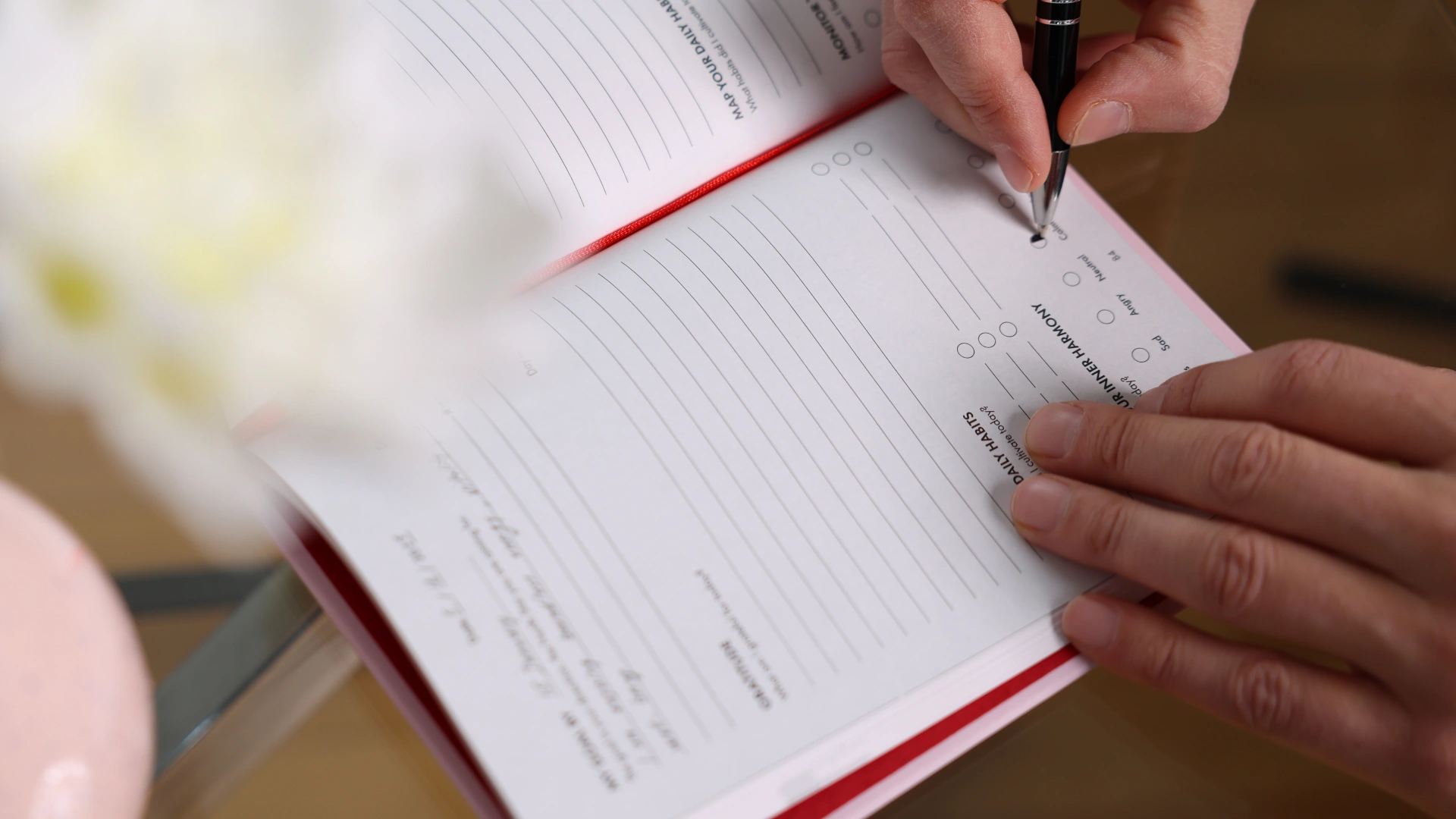
The iAmEvolving Journal is built around awareness, gratitude, habits, and goals: but at its heart is reflection. In the Inner Harmony section of the journal, you’ll track emotional states daily, building a map of your inner world. This creates a visual and emotional record of your growth over time.
As you map and regulate your emotions, you’ll begin to see patterns: what nourishes you, what drains you, and what consistently restores your peace. Over time, this insight becomes your natural compass for living with balance and authenticity.
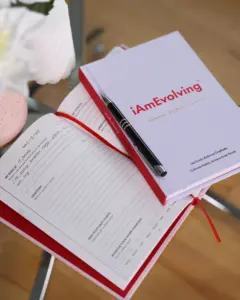
Start your daily practice of gratitude, goals, and growth.
Get the Journal →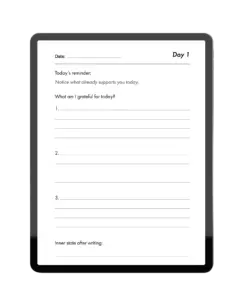
A free 30-day gratitude journal designed for a simple daily practice. Calm, minimal, and printable to help you slow down and reflect.
ExploreContinue the Journey
Start with awareness. Move into mapping. Learn to regulate. And finally, rest in presence. Each part of this journey builds upon the next, teaching you how to stay grounded, emotionally aware, and fully alive.
Explore more in this path:
- Monitoring and Mapping Emotions
- Regulating Emotions and State
- Embracing Calm: The Power of Mindful Breathing
- From Fear to Faith: Transforming Negative Emotions
What is Inner Harmony?
How can I practice Inner Harmony daily?
Is Inner Harmony the same as happiness?
How long does it take to feel balanced?
Where should I start?