Regulating Emotions and State

Life doesn’t always feel calm, but calm is something you can cultivate from within. Emotional regulation isn’t about silencing feelings. It’s about learning to move with them consciously, rather than being moved by them. This guide continues your Inner Harmony journey by helping you understand how to transform emotional awareness into emotional stability through mindful presence, breath, and gentle practices that restore balance.
In Monitoring and Mapping Emotions, you learned how to notice and record your emotional states with curiosity. Now, you’ll explore how to regulate them: to bring yourself back to center even when life feels uncertain or overwhelming.
What Emotional Regulation Really Means
Regulating emotions isn’t about control or suppression. It’s the art of responding instead of reacting: of staying grounded while emotions pass through. True regulation begins with acceptance: allowing yourself to feel without judgment, while choosing how to express that feeling with awareness.
Emotions are energy in motion. When you resist them, they stagnate. When you acknowledge and channel them consciously, they become signals guiding you toward inner balance. That’s the essence of emotional regulation: turning raw energy into aligned awareness.
If you want to deepen your understanding of one of these emotional states: anxiety: explore What Is Anxiety? which explains why anxiety arises and how it shows up in your inner experience.
Why Emotional Regulation Matters
Your emotional state influences every part of your life. Your relationships, focus, health, and decisions. When you learn to regulate emotions, you strengthen your nervous system, improve communication, and reconnect with clarity. You also build emotional trust with yourself, knowing you can meet any moment without losing center.
Peace isn’t the absence of emotion. It’s the ability to return to yourself in the middle of it.
Three Layers of Emotional Regulation
1. Awareness
Notice when your state changes. The shift is often subtle: tension in the shoulders, a shorter breath, an urge to withdraw. Label the emotion and breathe into it. Awareness is the first step toward regulation because you can’t calm what you can’t feel.
2. Breathing and Grounding
Breath is your anchor. It connects body and mind, and signals safety to your nervous system. Slow, intentional breathing lowers cortisol, restores clarity, and resets your emotional baseline. Try placing one hand on your chest and one on your abdomen. Breathe slowly until your exhale lasts longer than your inhale. This simple act tells your body: “I am safe.”
For more guidance on breathing practices, read Embracing Calm: The Power of Mindful Breathing.
3. Expression and Integration
Regulation also means expression: finding a safe outlet for emotion. This could be journaling, mindful movement, or simply allowing tears or laughter to release energy. Integration happens when you understand what your emotions were trying to teach you, and carry that awareness forward without attachment.
Get more like this, every week
Practices to Regulate Your Emotional State
1. The Grounding Pause
Whenever you feel overwhelmed, stop for a moment. Notice five things you can see, four you can touch, three you can hear, two you can smell, and one you can taste. This sensory scan grounds you in the present moment and helps reset your nervous system.
2. Breath Reset
Try the 4-7-8 breathing method: inhale for 4 counts, hold for 7, exhale for 8. Repeat four times. This simple rhythm calms anxiety and slows your heart rate. Over time, this becomes a natural way to steady yourself in any situation.
3. Emotional Labeling
When emotion arises, name it: “This is sadness.” “This is fear.” “This is frustration.” Naming separates you from the storm. You’re no longer inside it. You’re observing it. This mindful distance turns chaos into clarity.
4. Body Release
Emotions live in the body. Shake out your hands, stretch, walk, or take a few mindful movements to release held energy. Regulation isn’t only mental; it’s physical. Movement restores flow where emotion once created tension.
5. Journaling for Integration
Write down what triggered your emotion and how you responded. Did you suppress, react, or stay present? What helped you return to balance? Over time, these reflections build self-trust and emotional intelligence.
Staying Present with Difficult Emotions
Some emotions: like fear, sadness, or anger: can feel intense. Presence means meeting them gently, without pushing them away. You don’t have to fix them; just feel them fully. When you bring awareness and breath into difficult moments, they begin to lose their grip.
Read From Fear to Faith: Transforming Negative Emotions to understand how fear can become a path to trust and strength.
Feeling Sad During the Holidays? Here’s How to Find Calm and Meaning Again: A reflective guide to easing emotional heaviness during the holiday season through awareness, gratitude, and gentle self-connection.
How Regulation Strengthens Inner Harmony
Emotional regulation connects all parts of your Inner Harmony practice. Awareness shows you what’s happening inside; mapping gives it structure; regulation brings it into balance. Together, these steps help you build a consistent state of clarity: one that doesn’t depend on external circumstances.
The Return to Neutral
Neutrality isn’t indifference. It’s presence without attachment. When you regulate emotions, you learn to stay open and centered, even when life feels uncertain. This neutrality is where wisdom grows: the quiet strength beneath reaction.
Integration in Daily Life
To integrate these practices, start with one technique each day. Use breath during stress, journaling at night, or mindful movement when energy feels stuck. Regulation becomes easier when it’s part of your rhythm, not a special event.
Remember: you’re not trying to eliminate emotion. You’re learning to let it flow through you. With time, regulation becomes second nature, and you find yourself returning to calm more quickly each time.
Why Emotional Regulation Can Feel So Hard
If regulating emotions feels harder than it sounds, you are not failing. Emotional dysregulation usually has less to do with willpower and more to do with a nervous system that learned, early on, to treat strong feelings as threats. When you grow up without models for moving through emotion calmly, your body defaults to the fastest exit it knows: suppress, react, or numb.
Stress compounds this. A tired, overstimulated nervous system has fewer resources for pausing between stimulus and response. That is why the same comment can roll off your shoulders one day and unravel you the next. The capacity to regulate is real, but it is also state-dependent: it shrinks when you are depleted and grows when you are rested, nourished, and present.
Understanding this changes the whole practice. You stop asking, “Why can’t I control myself?” and start asking, “What does my system need to feel safe enough to settle?” That gentler question is where regulation actually begins. Writing through these patterns helps make them visible, which is why journaling for emotional clarity pairs so naturally with regulation work.
It also helps to expect uneven progress. Some days you will return to calm in a single breath. Other days it takes an hour, a walk, and a good cry. Both are regulation. The skill is not never being knocked off center. It is shortening the distance back, and trusting that the distance keeps getting shorter the more you practice.
Regulating Emotions in the Moment vs Over Time
There are two timescales to emotional regulation, and confusing them is a common source of frustration. In-the-moment regulation calms an emotion that is happening right now. Long-term regulation reshapes how easily you are triggered in the first place. You need both, and they strengthen each other.
| Approach | In the Moment | Over Time |
|---|---|---|
| Goal | Settle the surge quickly | Raise your baseline calm |
| Tools | Breath reset, grounding pause, labeling | Journaling, sleep, movement, reflection |
| Timeframe | Seconds to minutes | Weeks to months |
| Best for | Acute stress, conflict, panic | Lasting emotional resilience |
In-the-moment tools are your emergency brake. The 4-7-8 breath, the five-senses scan, and naming the feeling all interrupt the stress response fast. They matter most when emotion is peaking and you need to avoid saying or doing something you will regret.
Long-term regulation is the engine. Consistent sleep, daily movement, and regular reflection slowly widen the gap between trigger and reaction, so fewer things ever reach the emergency stage. This is how emotional growth and resilience compound: each small act of regulation today makes tomorrow’s calm a little more automatic. If you only practice in crisis, regulation stays exhausting. Build the baseline, and the crises grow rarer.
A Simple Daily Routine to Regulate Your Emotional State
You don’t need an elaborate system to regulate emotions well. A short, repeatable rhythm does more than an ambitious plan you abandon by Thursday. Here is a simple sequence you can return to each day.
- Morning check-in. Before reaching for your phone, name how you feel in one word. This sets a conscious tone for the day instead of a reactive one.
- Midday reset. At one predictable moment, take three slow breaths with a longer exhale than inhale. A single minute interrupts accumulated tension before it builds.
- Evening release. Move your body or write for five minutes to discharge the day’s emotional residue before it follows you into sleep.
- Weekly reflection. Once a week, review what triggered you and what helped you return to center. Patterns become visible, and visibility is power.
Anchor each step to something you already do, and consistency takes care of itself. Over a few weeks, returning to peace in the present moment stops feeling like effort and starts feeling like home. Emotional regulation is not a single skill you master once. It is a relationship with yourself that deepens every time you choose presence over panic.
Meeting Yourself with Self-Compassion
Regulation works best when it rests on kindness rather than criticism. Speaking harshly to yourself in a hard moment only adds a second wave of stress on top of the first. Self-compassion does the opposite. It tells your nervous system that you are on your own side, which makes settling far easier.
The next time a difficult emotion rises, try placing a hand on your heart and offering yourself one honest sentence: “This is hard, and I am allowed to feel it.” That small act of acknowledgment often loosens the grip of the emotion more quickly than any technique. You are not weak for needing comfort. You are human, and meeting your own humanity gently is the quiet foundation that every regulation practice is built upon.
Continue Your Inner Harmony Journey
After you’ve explored how to regulate emotions, your next step is learning to sustain this balance through Stillness and Presence: where calm evolves into ongoing awareness and grounded living.
Life doesn’t always feel calm, but calm is something you can cultivate from within. Emotional regulation isn’t about silencing feelings. It’s about learning to move with them consciously, rather than being moved by them. This guide continues your Inner Harmony journey by helping you understand how to transform emotional awareness into emotional stability through mindful presence, breath, and gentle practices that restore balance.
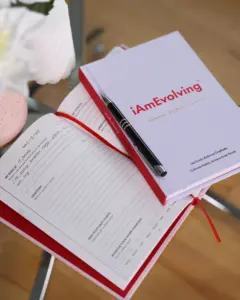
Start your daily practice of gratitude, goals, and growth.
Get the Journal →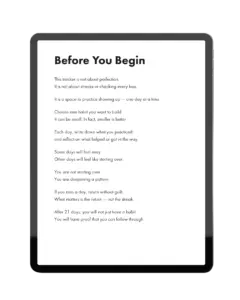
A free 21-day habit tracker PDF with daily check-ins, guided reflection prompts, and mindset reminders. Clean, minimal, and printable.
ExploreWhat is emotional regulation?
How can I practice regulating emotions daily?
What if I can’t calm down right away?
Does regulating emotions mean I shouldn’t feel deeply?
How does this connect with journaling?
When you combine awareness, mapping, and regulation, you embody the essence of inner harmony: presence, balance, and the courage to evolve.