The Loneliness After Moving No One Warns You About

The loneliness after moving to a new place is one of the most common and least discussed parts of relocation. You can be genuinely excited about a fresh start and still feel a quiet ache that surprises you once the boxes are unpacked and the help has driven home. It is not a sign that you made the wrong choice. It is the natural result of leaving behind a hundred small familiarities you never realized you were leaning on until they were suddenly gone.
This is for anyone sitting in an unfamiliar room wondering why a good decision feels so heavy. You will learn why post-move loneliness hits harder than people expect, how long it usually lasts, and the small, realistic steps that rebuild a sense of belonging. None of it asks you to force friendships or pretend you are fine. It simply gives the feeling a name and a way forward, one ordinary day at a time.
Why the Loneliness After Moving Hits So Hard
Much of our sense of belonging comes from weak ties: the neighbor who nodded on the stairs, the regular at your gym, the colleague you traded small talk with by the kettle. Researchers Gillian Sandstrom and Elizabeth Dunn found that everyday interactions with acquaintances and strangers, our weak ties, contribute meaningfully to daily well-being alongside our closest relationships. A move erases dozens of them in a single weekend, and your nervous system feels the absence long before your mind has words for it.
Then there is the sheer effort of starting from zero. Your brain spent years learning where things were and who felt safe, and a relocation deletes most of that overnight. Even people who treasure their own company feel it, because the problem is not too little solitude. It is the missing witnesses, the people who knew the version of you that existed a month ago. Feeling unanchored in that gap is not fragility. It is your mind registering a real and recent loss.
The Grief Hiding Inside a Fresh Start
A surprising amount of post-move heaviness is grief that never got named. It is bigger than a change of address. What you actually left was the effortless form of your friendships, the muscle memory of your old routines, and the steady confidence of a place where you already understood how everything worked. Because the move was your decision, it can feel as if you have forfeited the right to mourn it, so the grief slips underground, where it tends to linger far longer than if you had let it surface.
You are allowed to grieve and feel grateful in the same breath. Both can be true at once. Letting the loss be acknowledged does not mean you regret the choice or that you are clinging to the past. It means you refuse to drag an unspoken weight into the life you are trying to build. If the upheaval has left you feeling cut off from your own center, the practice of reconnecting with yourself is a gentle place to begin finding steady ground again.
How Long the Loneliness After Moving Usually Lasts
For most people the first month is the steepest, when the novelty has faded but no new rhythms have formed. A basic daily routine tends to return within a few weeks. Feeling genuinely at home in a new city usually takes three to six months, and the kind of friendships you can call on short notice often need around half a year of repeated, low-key contact to take hold. Knowing this curve helps, because it reframes the ache as a phase you are passing through rather than a permanent fact about your new life.
What stretches the lonely season out is isolation and waiting for connection to arrive on its own. What shortens it is small, repeated exposure to the same faces and places, plus a steadying inner routine while the outer world is still unsettled. The aim in the early weeks is modest. It is not a full social calendar but simply keeping the loneliness from hardening into a story that says you do not belong here.
Get more like this, every week
Small Steps That Rebuild Connection
Belonging is rarely rebuilt in one bold move. It returns through repetition, the same quiet way you built it in your old life without ever trying. The steps below are kept deliberately small, because something you can manage on an exhausted week will always beat an ambitious plan you abandon by Thursday.
- Anchor your week to one recurring place, like a specific cafe, class, or park, so the staff and regulars slowly turn into familiar faces.
- Rebuild one ritual from your old life in your new setting, whether that is a Sunday walk or a Friday takeout, to give the calendar something dependable.
- Say yes early and often in the first two months, even to plans that feel inconvenient, since nearness and repetition are how adult friendships actually form.
- Reach out to one person each week, however briefly, instead of waiting until you feel settled enough to be good company.
- Give every new connection three or four meetings before you judge it, because most friendships feel stiff before they feel easy.
If the overwhelm keeps hijacking your attention, it helps to defend a little calm on purpose. Practicing the art of finding stillness in a busy world makes the disorder of a fresh start feel survivable, and a settled mind has far more room to turn outward toward other people.
Letting the Page Hold What You Can’t Say Yet
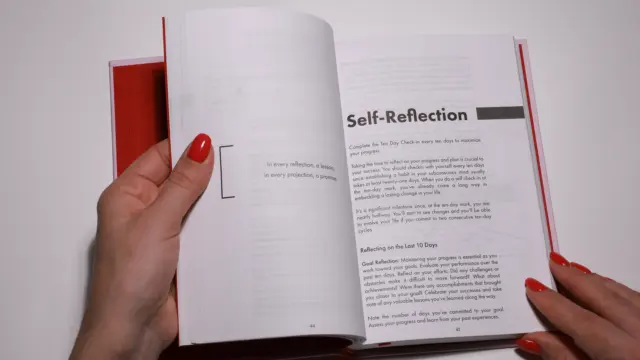
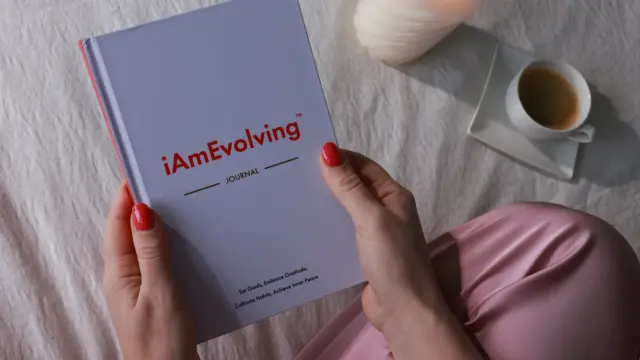
In the years I’ve spent building iAmEvolving and hearing from people journaling through big transitions, relocation comes up more than almost any other. The message is usually some version of the same thing: I got everything I wanted, and I’ve never felt so alone. What I’ve watched help, again and again, isn’t a dramatic fix. It’s the small nightly habit of writing the loneliness down instead of carrying it in silence, until the new place slowly starts to feel like yours.
Early on there is a painful in-between. The friends who knew you are too far to drop by, and the people who will one day know you here are still strangers. A notebook is unusually good at filling that gap, because it gives the feeling somewhere to land after dark, when calling someone is not an option. It does not replace people, but it stops the ache from going underground, where it tends to curdle into a quiet conviction that you will always be an outsider in this place.
This is the one place where putting pen to paper earns its own section, and it is also where you hand the work off. A short habit of journaling after moving to a new city gives your scattered days a fixed point to return to, and each time you name the loneliness and attach one small action to it, the heavy feeling becomes a next step. If the blank page itself feels like a chore, the gentle starting points in journaling when you feel lost can carry you on the days you have no words of your own.
Conclusion
The loneliness after moving is not a defect in your decision or proof that you cannot cope. It is the ordinary toll of closing one life and opening another, and it lifts as you slowly turn strangers into regulars and blank streets into your own. If you are still feeling disoriented this early, that is not a sign you are failing at it. Every person who now feels at home somewhere once stood in exactly this fog. Be patient with the part of you that is still finding its footing, take one small step toward connection this week, and let your inner world stay anchored while the outer one catches up. For a calmer path back to that footing, the inner harmony hub is a steady place to keep going.
Start your daily practice of gratitude, goals, and growth.
Get the Journal →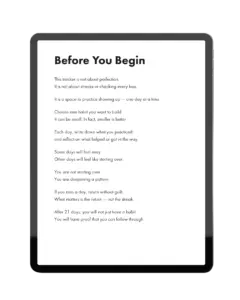
A free 21-day habit tracker PDF with daily check-ins, guided reflection prompts, and mindset reminders. Clean, minimal, and printable.
ExploreFrequently Asked Questions
Is it normal to feel lonely after moving to a new city?
Why do I feel so lonely after moving when I wanted this?
How long does loneliness after moving last?
How do I make friends after relocating as an adult?
What helps most with loneliness after relocating?