Emotional Resilience: How to Grow Through Hard Seasons

Emotional resilience is the ability to bend under a hard season and come back to yourself, not the ability to avoid falling apart. Resilient people still feel grief, stress, and disappointment. What changes is how long those feelings take to pass and what they leave behind. That second part, what a hard season teaches you, is emotional growth.
This page is your map for the difficult stretches. It helps you name where you are right now, points you to the practice that fits that moment, and shows you a simple way to track your recovery in a journal so you can see resilience building over time. It is one part of the wider personal growth guide, focused on the seasons that test you most.
What Emotional Resilience Really Means
Many people picture resilience as toughness: staying strong, pushing through, not letting anything get to you. That version tends to break. When you refuse to feel something, it usually waits for you, and it often returns as tension, exhaustion, or a short temper on an ordinary Tuesday.
A more useful definition is this: resilience is your recovery time. Everyone dips. A resilient week is not a week without low days. It is a week where a low day stays a low day, instead of turning into a low month. That shift is measurable, gentle, and within reach for anyone willing to pay attention.
| Toughness | Emotional resilience | |
|---|---|---|
| Goal | Never show the dip | Return from the dip sooner |
| Relationship to feelings | Push them down | Feel them, then let them move |
| After a hard day | Pretend it did not happen | Notice what helped you recover |
| Over time | Wears you down | Builds trust in yourself |
Emotional growth is what happens when you look back at a hard season and name what it taught you. Resilience gets you through. Growth makes sure you do not come out the other side unchanged.
Find Where You Are in a Hard Season
Hard seasons rarely feel the same from one week to the next. Sometimes you are overwhelmed in the moment. Sometimes you are carrying something you cannot put down. Sometimes you are simply empty. Each of these calls for a different kind of care, so start by finding the one that sounds most like you today.
| If you feel… | What you need first | Start here |
|---|---|---|
| Flooded, anxious, or stuck in your head | Steadiness in the moment | Coming back to now |
| Weighed down by something that has ended | Release | Letting go |
| Drained, numb, or running on empty | Restoration | Rebuilding energy |
| Distant from yourself, on autopilot | Reconnection | Coming home to yourself |
When You Feel Flooded: Coming Back to Now
When emotions are loud, the first job is not to understand them. It is to come back into your body and the room you are in. Finding peace in the present moment offers simple ways to slow your breath and use your senses to return to now. Once you are steadier, learning to reframe negative thoughts helps you question the story your mind is telling, so a hard moment does not become a hard identity. If you want to go deeper into calming your emotional state, the Inner Harmony guide to regulating emotions and state picks up from there.
When You Are Carrying Something: Letting Go
Some hard seasons are about an ending: a relationship, a role, a plan that did not work out, or a version of yourself you have outgrown. The weight comes from holding on to what has already changed. Letting go of what no longer serves you walks through how to honor what something gave you while loosening its grip, one small ritual of release at a time.
When You Are Running on Empty: Rebuilding Energy
Exhaustion changes everything. Problems feel bigger, patience runs thin, and even rest stops feeling restful. If that sounds familiar, resilience starts with refilling, not with trying harder. The guide on how to rebuild your energy after emotional burnout covers pausing without guilt, gentle routines, and boundaries that protect your recovery.
When You Feel Far From Yourself: Coming Home
After a long stretch of coping, many people notice they have been living on autopilot. The difficult part is over, yet something still feels missing. That missing piece is often you. How to reconnect with yourself offers small, practical ways to notice what you need again and return to what matters most.
What Slows Emotional Recovery Down
Recovery time shrinks when you stop fighting the dip itself. A few common patterns quietly stretch a hard day into a hard month:
- Judging the low day. Feeling bad about feeling bad adds a second layer of weight. A dip is information, not a verdict on who you are.
- Pulling away from everyone. Quiet time helps. Disappearing for weeks usually does not. One honest conversation can shorten a hard season more than any routine.
- Waiting to feel ready. Energy often returns after small actions, not before them. A short walk or a single page of writing counts.
- All-or-nothing routines. A practice built for your best days collapses on your worst ones. Build for the tired version of you.
- Skipping the look back. Without reviewing what helped last time, every hard season feels like the first one.
That last pattern is the one a journal solves best. When you can see your own history of dips and recoveries, you start trusting that this one will pass too, because you have watched the others pass.
Get more like this, every week
Signs Your Emotional Resilience Is Growing
Resilience rarely announces itself. It shows up in small differences you only notice when you compare this season with the last one:
- A hard day stays one hard day instead of spilling into the week.
- You can name what you feel sooner, sometimes while it is still happening.
- You reach for what helps you (a walk, a friend, a page in your journal) before you reach your limit.
- You speak to yourself about setbacks with more patience than you used to.
- You can look back at a difficult time and say what it taught you.
None of these require you to feel good all the time. They describe someone who still feels everything, and recovers with more trust in themselves each time.
How to Track Emotional Resilience in Your Journal: A 10-Day Review
Score how you feel each day
Name the dip in one line
Write down what steadied you
Keep one recovery habit
Review your recovery time on day ten
You Are Allowed to Bend
Emotional resilience is not about becoming someone who never breaks down. It is about becoming someone who knows the way back. Start with the part of the map that matches where you are today, give it a few honest minutes, and let your journal show you what your mind tends to forget: you have come back before, and you will again.
If a heavy season lasts for weeks or starts to affect your sleep, work, or relationships, talking with a doctor or mental health professional is a strong and caring next step. A journal works best alongside that support, not instead of it.
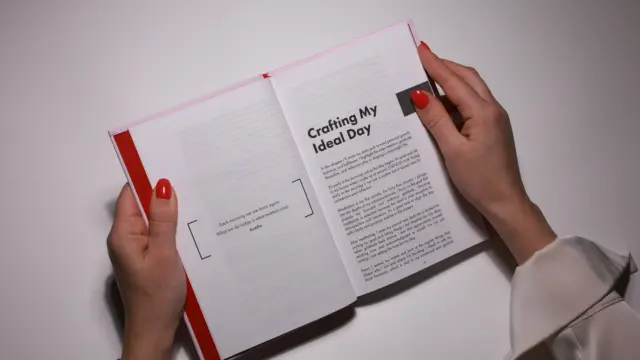
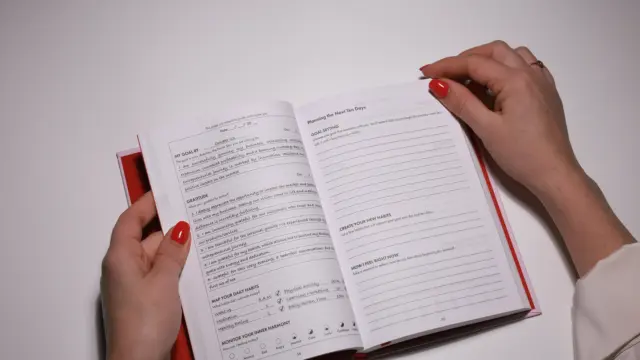
If you want a steady place to hold this practice, the iAmEvolving Journal gives you a daily page for your goal, gratitude, habits, and an inner harmony check-in, with a reflection page every ten days to see how your recovery is changing over time.
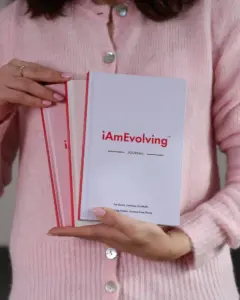
Start your daily practice of gratitude, goals, and growth.
Get the Journal →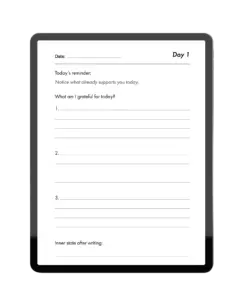
A free 30-day gratitude journal designed for a simple daily practice. Calm, minimal, and printable to help you slow down and reflect.
ExploreFrequently Asked Questions
What is emotional resilience?
How can you build emotional resilience?
What is the difference between emotional growth and emotional resilience?
How do you know if your emotional resilience is improving?