Mindset Shift: How to Change a Stuck Way of Thinking for Good

A mindset shift is a deliberate change in the default story you tell yourself about a situation, and it rarely happens in one dramatic moment. It happens when you catch an old thought, question it, choose a more honest one, and practice that new thought until it becomes the one your mind reaches for first. Most people manage the first step and stop there, which is why a mindset shift that feels clear on Monday has faded by Friday.
This guide focuses on that missing part: how to make a mindset shift stick. You will learn the difference between a passing insight and a real shift, a simple five-step method you can run in your journal, the mistakes that pull you back into old patterns, and how to tell when the new way of thinking has taken hold.
What a Mindset Shift Is (and Why Most Fade)
Your mindset is the set of assumptions you bring into each day: what you expect from yourself, from other people, and from effort. Those assumptions run quietly, which is why they feel like facts. A mindset shift happens when one of them changes, for example from “I always mess this up” to “I am still learning how to do this.”
Insight alone rarely holds. You read something, a sentence lands, and for a day everything looks different. Then a stressful morning arrives, and the old thought returns because it has years of practice behind it and the new one has a single afternoon. The brain favors well-worn paths. A new way of thinking needs repetition and evidence before it can compete.
| A passing insight | A real mindset shift |
|---|---|
| Feels powerful in the moment | Feels ordinary after a few weeks |
| Lives in your head | Shows up in what you do |
| Disappears under stress | Holds, or returns quickly, under stress |
| Depends on remembering it | Becomes your first reaction |
If you want to explore how changes in perspective reshape your sense of identity over time, perspective shifts and personal evolution goes deeper into that bigger picture. This page stays practical: how to change one stuck way of thinking and keep it changed.
Today’s mind is not yesterday’s mind.
— Victor Tihai, iAmEvolving Journal
Signs You Need a Mindset Shift
You do not need a crisis to benefit from a mindset shift. Often the signs are small and repetitive:
- You keep having the same argument with yourself about the same goal.
- You hear yourself saying “I always” or “I never” about something that is not actually always or never.
- You feel tired before you start, because part of you has already decided it will not work.
- You avoid trying something new to protect yourself from looking foolish.
- Good news feels temporary, and bad news feels permanent.
If several of these sound familiar, it can help to first find out which default you lean toward. The seven questions in growth mindset vs fixed mindset give you a quick, honest test before you start changing anything.
Why Writing It Down Makes a Mindset Shift Stick
Thoughts move fast and blur together. On paper, they slow down. When you write an old belief in your own handwriting, you can look at it from the outside, notice how absolute it sounds, and ask whether it is really true. That small distance is often enough to loosen its grip.
Writing also leaves a record. A mindset shift is hard to feel while it is happening, because each day looks like the one before. Two weeks of entries tell a different story. You can see the morning you caught the old thought sooner, the day you chose differently, the week the new thought arrived first. That evidence is what convinces the part of you that is still doubtful.
If a single negative thought is what keeps tripping you up, the step-by-step approach to help you reframe negative thoughts pairs well with this practice. Reframing works on one thought at a time. A mindset shift is what happens when you repeat that work on the same belief until it changes.
Get more like this, every week
Common Mistakes That Pull You Back
- Trying to shift everything at once. Pick one belief that affects your days the most. Changing one well beats trying to change five a little.
- Choosing a new thought you do not believe. Jumping from “I am terrible at this” to “I am brilliant at this” creates resistance. “I am getting better at this” is easier to accept.
- Waiting to feel different first. Feelings usually follow repeated action and evidence. Act from the new thought before it feels natural.
- Treating a bad day as proof. The old thought will return under stress. That is normal. What matters is how quickly you notice it and come back.
- Skipping the review. Without looking back, progress stays invisible, and invisible progress is easy to quit.
How to Know Your Mindset Shift Is Working
The first sign is rarely a new feeling. It is timing. You catch the old thought a few seconds earlier than before, sometimes before it fully forms. Later, you notice that a situation which used to spiral now passes with a shrug. Eventually, the new thought arrives first, and the old one feels slightly unfamiliar.
You may also notice small changes in behavior: starting a task you used to postpone, asking for help, or trying something without needing a guarantee. Those actions matter more than any single good day, because they show the shift has moved from thinking into living. A calm start to the day helps protect that progress, and a simple morning journaling routine is an easy place to begin each day from the new thought instead of the old one.
How to Make a Mindset Shift Stick: A 10-Day Journal Practice
Catch the old thought
Question it honestly
Choose a believable new thought
Collect one piece of evidence
Review on day ten
Every Day Is a Chance to Practice
A mindset shift is not a single decision you make once. It is a choice you repeat on ordinary mornings, often without anyone noticing. Some days you will catch the old thought quickly. Other days it will win for a while. Both are part of the process, and both are worth writing down.
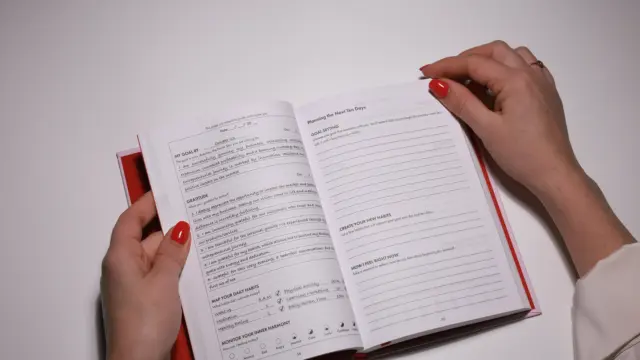
Start with one belief, one new thought, and ten days of honest notes. If you want a structure that keeps that practice simple, the iAmEvolving Journal gives you a daily page for your goal, gratitude, habits, and a 1 to 9 inner harmony check, with a reflection page every ten days to see how your thinking is changing.
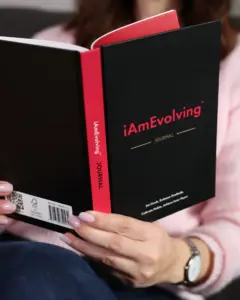
Start your daily practice of gratitude, goals, and growth.
Get the Journal →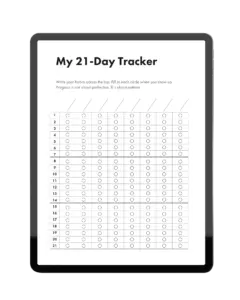
A free 21-day habit tracker PDF with daily check-ins, guided reflection prompts, and mindset reminders. Clean, minimal, and printable.
ExploreFrequently Asked Questions
What is a mindset shift?
How long does a mindset shift take?
How do I shift my mindset when I feel stuck?
Can journaling really change your mindset?