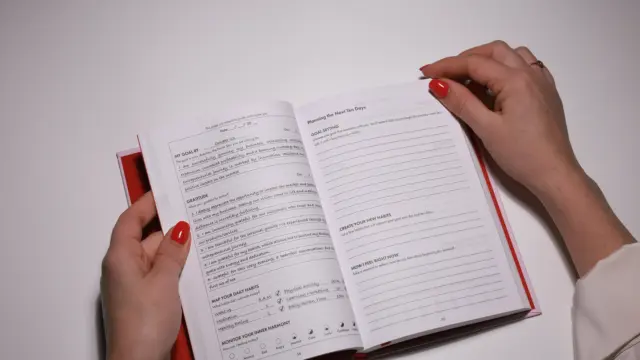
Weekly Reset Routine to Clear Mental Clutter

A weekly reset routine is a 30-45 minute practice of reviewing your week, releasing what didn’t serve you, and setting intentions for the days ahead. Think of it as a gentle pit stop — you step back, refuel, and get pointed in the right direction again.
Behavioral research consistently shows that people who close out the week with a structured review and plan ahead report lower stress and stronger follow-through on their priorities. The reason is simple. A weekly reset routine externalizes the open loops you’ve been carrying in your head, narrows your focus to a small number of outcomes, and gives you a stable baseline to start the next week from. You aren’t adding more to your plate. You’re clearing space so the important things have room to land.
Why a weekly reset works
A reset gives your brain closure on the last seven days and a clear starting line for the next ones. You reduce “open loops” (unfinished tasks running in the background), lower decision fatigue, and create a short feedback loop: try → notice → adjust. That’s how growth happens—consistently and without drama.
Signs you need a weekly reset
Most weeks tell you when they want a reset. The trouble is, we mistake the signals for normal busyness and push through anyway. Pay attention to the small frictions. They’re a quieter language pointing to mental clutter that needs sorting.
You probably need a weekly reset routine if any of these feel familiar:
- You start Monday already behind, even though nothing major has happened yet.
- Your to-do list keeps growing, but the same five tasks roll over week after week.
- You feel constantly “on” but can’t point to what you actually moved forward.
- Sleep is restless because tomorrow’s plan still lives in your head, not on a page.
- Small decisions like what to eat, what to wear, what to tackle first drain you more than they should.
- Sundays feel heavy, with anticipatory dread instead of a sense of preparation.
None of these mean something is wrong with you. They mean your week is asking for a closing ritual. A reset turns those signals into information you can act on, the same way journaling techniques for clarity turn loose thoughts into something workable.
When to do it
Pick one repeating slot you can actually keep. Sunday afternoon, Friday after work, or early Monday morning all work. Protect it like an appointment with yourself. If 45 minutes feels heavy, start with 15. Repetition beats intensity.
The 7-step Weekly Reset (45 minutes)
- Brain dump (5–10 min)Write everything circling your mind: tasks, worries, ideas, errands. Don’t sort; just empty.
- Calendar sweep (5–7 min)Open next week’s calendar. Add commitments, travel time, and prep windows. If it isn’t scheduled, it’s a wish.
- Top 3 priorities (5 min)Choose the three results that would make the week a win. Phrase them as outcomes, not tasks: “Submit proposal,” “Run 3 workouts,” “Family dinner twice.”
- Task triage (10 min)From your brain dump, assign only the tasks that support your Top 3. Everything else gets deferred, delegated, or deleted. Keep a “Later” list so you don’t lose good ideas.
- Habit check-in (5 min)Review the 3–5 habits you’re building (sleep, water, movement, journaling, reading). Note one tiny adjustment for each: earlier lights-out, a water bottle at your desk, a 10-minute walk after lunch.
- Environment reset (5–7 min)Quick tidy of your desk, bag, and phone home screen. Delete distracting apps from your first page. Lay out what “future you” needs for Monday.
- Gratitude + intention (3 min)Write three things you’re grateful for from last week and one intention for how you want to feel this week (e.g., steady, open, decisive). Close your reset with that feeling in mind.
Get more like this, every week
The 10-minute “busy week” version
- 3 min brain dump
- 2 min calendar sweep
- 2 min choose Top 3
- 2 min schedule the first action for each
- 1 min gratitude + intentionDone. Imperfect resets still work.
What to release during your weekly reset
Resets aren’t only about adding structure for the week ahead. The bigger lift is letting go of what last week left behind. If you skip the release step, you carry old weight into a new beginning, and the routine starts to feel like extra work instead of relief.
Try naming each of the following on the page, then drawing a line through it once you’ve acknowledged it:
- Unfinished tasks you’re not going to do. Some things weren’t urgent, real, or yours to handle. Cross them off and free the bandwidth.
- Conversations that didn’t go well. Note what you’d handle differently, then move on. Replaying them indefinitely doesn’t change the outcome.
- The version of yourself you wanted to be last week. If you fell short of your standards, acknowledge it without making it a story. Next week is a clean page.
- Inputs that drained you. A group chat, an account on social media, a podcast that left you anxious. Mute, unfollow, or step back for a season.
- Plans that no longer fit. If a goal you set months ago no longer matches your life, give yourself permission to rewrite it instead of dragging it forward.
Releasing isn’t avoidance. It’s the act of choosing what gets to take up space in your mind for the next seven days. Pair this step with a short evening routine for emotional reset on your reset day, and the difference compounds quickly.
How to keep it consistent
- Tie it to a cue. Right after your final coffee on Sunday, or as soon as you close your laptop on Friday.
- Make it pleasant. Music, tea, sunlight—stack the habit with something you enjoy.
- Use the same checklist. Repetition removes friction and builds rhythm.
- Track streaks. Mark a small box in your journal each week you complete the reset.
A quick template you can copy
Weekly Reset
- Wins I’m proud of:
- What I’m letting go of:
- Top 3 outcomes:
- First action for each:
- Habits I’m focusing on:
- Must-do appointments (with prep time):
- One thing I’ll set up for “future me”:
- Gratitude x3:
- Intention for the week:
Journaling prompts (optional)
- Where did my time go last week, and was it aligned with my values?
- What drained me? What energized me?
- If next week could feel 10% lighter, what would I change?
- What would make me proud by Friday?
Want to go deeper? Explore our Journaling promts for self Discovery.
Adapt the reset to the week ahead
Not every week deserves the same treatment. A standard week with predictable rhythms benefits from the full 7-step reset. A travel week, a deadline week, or a recovery week needs a slightly different shape. Build the flexibility in from the start so you’re not rebuilding the routine from scratch each Sunday.
Three flavors that cover most of life:
- Standard reset (45 min). All seven steps, in order, with full journaling prompts. Use this when the week ahead has normal stakes and few wildcards.
- Light reset (15 min). Brain dump, Top 3, and one intention. Use this when you’re tired, traveling, or coming off a hard week. Lower the bar so you keep the streak.
- Reflection reset (60 min). Add a longer review of the past month at the end of the week, with deeper journaling. Use this every fourth or fifth week to spot patterns the weekly view misses.
The point isn’t to follow one rigid format. It’s to keep the practice alive across seasons, so the routine bends without breaking when life shifts.
Common mistakes to avoid
- Overloading the week. If everything is important, nothing is. Stick to three core outcomes.
- Skipping the review. You can’t realign what you don’t observe.
- Rebuilding from scratch each time. Use the same flow and the same template; tweak, don’t reinvent.
- Perfectionism. A short reset done weekly beats a long one you never start.
Make it yours
Your reset is a living routine. Add a money check-in, meal planning, or a 20-minute deep clean if those help. Remove anything that adds friction. Keep what moves you forward and drop what doesn’t.
A weekly reset isn’t about starting over — it’s about realigning. When you take time to reflect, organize, and reconnect with your intentions, the week ahead feels lighter and more focused. These small rituals help you create space for what truly matters and build steady momentum over time. Continue exploring mindful routines and personal growth rituals that support your evolution in Daily Growth Practices.
FAQ
How long should a weekly reset take?
What day is best?
What if I miss a week?
Can I do this without a paper journal?