Money Anxiety: Why It Keeps You Up and How to Feel Calmer
Money anxiety is the persistent worry, dread, or tension you feel about money, even when nothing is going wrong right now. It shows up as a knot in your stomach when you open your banking app, a racing mind at 2 a.m. about bills, or a habit of avoiding your statements altogether. If that sounds familiar, you are far from alone. The American Psychological Association’s Stress in America surveys have repeatedly found money among the most common sources of stress for adults.
Money anxiety is not a character flaw, and it is not always a sign that your finances are in trouble. Often it is a nervous system stuck on alert, reacting to uncertainty, old memories, or shame more than to the numbers themselves. This guide helps you understand your anxiety as it shows up around money, tell the difference between worry and real danger, and take small steps that make the feeling quieter.
What Money Anxiety Feels Like
Money anxiety does not always look like panic. Often it hides inside ordinary habits. You might notice:
- You avoid checking your balance, then feel worse because you do not know where you stand.
- You check it over and over, but the relief never lasts.
- Small purchases trigger guilt, even when you can afford them.
- You lie awake running worst-case scenarios about rent, bills, or losing your job.
- Conversations about money with a partner turn tense or get postponed.
- You feel behind compared to people your age, and ashamed of it.
These reactions make sense. Money touches safety, independence, and how you see yourself. When that feels threatened, your body responds the way it responds to any threat: with tension, vigilance, and a mind that will not switch off.
Why Money Worries Feel So Heavy
Uncertainty is harder than bad news
People often cope better with a clear, difficult number than with a vague sense that something might be wrong. Not knowing leaves your mind free to imagine the worst. That is why avoiding your finances usually makes money anxiety louder, not quieter.
Shame keeps it secret
Many people feel embarrassed about debt, low savings, or past mistakes. Shame makes you hide the problem, even from yourself, and hidden problems feel bigger than they are. Saying the situation out loud, or writing it down, often shrinks it.
Old money stories shape new fears
If you grew up hearing arguments about bills or watched a parent struggle, your nervous system may treat any money question as a crisis. You can be financially stable today and still carry the alarm you learned years ago.
Get more like this, every week
Money Anxiety vs. Real Financial Danger
Not every money worry needs the same response. Some situations need urgent action. Others need calming more than spreadsheets. Telling them apart is one of the most useful things you can do.
| Money anxiety | A real financial problem |
|---|---|
| The worry stays the same whether your balance goes up or down | There is a specific shortfall, like a bill you cannot cover this month |
| You avoid looking at the numbers | You have looked, and the numbers do not add up |
| The fear is about what might happen someday | The problem has a date attached to it |
| Calming your body helps you think more clearly | Calm helps, but you also need a plan or professional help |
Often it is both. You may have a real problem and an anxious reaction that makes it harder to face. Calming the anxiety first is not avoidance. It is what gives you enough steadiness to deal with the numbers.
Small Steps That Calm Money Anxiety
1. Name the number
Write down one real figure: your current balance, the total you owe, or this month’s bills. Seeing the actual number replaces a fog of fear with something concrete you can work with. It may be uncomfortable for a moment, but it is almost always less frightening than the version in your head.
2. Set a weekly money date
Pick one short, regular time each week to look at your money, perhaps twenty minutes on a Sunday morning with a coffee. Knowing that money has a set time helps your mind stop circling it the rest of the week.
3. Separate facts from fears
Draw two columns. On one side, write what you know for certain. On the other, write what you are afraid might happen. Most of the weight usually sits in the second column, and seeing it laid out helps you respond to the facts instead of the fears.
4. Focus on what you can control
You cannot control the economy or a surprise expense. You can control one small action this week, like calling a provider, cancelling one subscription, or setting up an automatic transfer. If money is one part of a wider feeling that life is out of balance, a life audit can help you see where to start.
5. Calm your body before you decide
Money decisions made in a panic are rarely good ones. Slow your breathing, step outside, or wait until morning. If money worries hit hardest at night, a few minutes of writing before sleep can help you set them down until tomorrow.
When to Get Help
This article is about the emotional side of money and is not financial advice. If you are behind on essential bills, facing collection calls, or unsure how to handle debt, a qualified financial counselor or a nonprofit credit counseling service can help you build a realistic plan.
If money anxiety is affecting your sleep, appetite, relationships, or ability to work for weeks at a time, talk to a doctor or mental health professional. Anxiety is treatable, and support helps long before things feel unbearable. Learning to regulate your emotional state can also make the hard moments easier to move through.
How to Ease Money Anxiety With a 10-Day Journal Practice
Write your money worry in one sentence
Make one small money action your daily goal
Note one thing that feels secure
Rate your money worry from 1 to 9
Review on day ten
You Are More Than Your Bank Balance
Money anxiety can make every number feel like a judgment of who you are. It is not. It is a stress response doing its best to protect you, and it can learn to quiet down with clarity, small actions, and support. You do not need to fix everything this week. You need to look at one real number, take one small step, and give your worries a place to land.
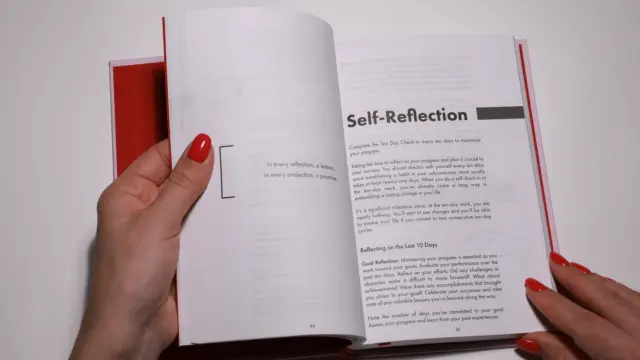
If you want to work on the beliefs underneath, these I AM affirmations for money offer steadier language to return to. For a steady home for this practice, the iAmEvolving Journal keeps it all together: each daily page has room for a goal, a gratitude line, six habits, and a 1 to 9 inner harmony score, and every tenth day brings a reflection page to look back on.
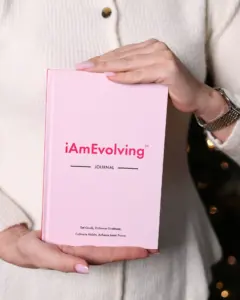
Start your daily practice of gratitude, goals, and growth.
Get the Journal →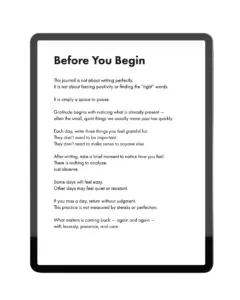
A free 30-day gratitude journal designed for a simple daily practice. Calm, minimal, and printable to help you slow down and reflect.
ExploreFrequently Asked Questions
What is money anxiety?
Is it normal to have anxiety about money?
How do I stop worrying about money all the time?
When should I get professional help for money anxiety?