Overwhelmed Single Parent? How to Carry Less and Keep Going

Being an overwhelmed single parent means carrying every decision, every bedtime, every bill, and every worry without anyone to hand them to. It is not a sign that you are failing. It is what happens when one person does a job designed for two, day after day, with no one to tag out to. If you are reading this at the end of a long day, already thinking about tomorrow’s list, this is for you.
This guide will not tell you to wake up earlier or try harder. You are already doing more than enough. Instead, it helps you name what makes parenting alone so heavy, decide what you can safely put down, and build a five-minute daily practice that gives you a little of yourself back. Small changes, kept consistently, are what make the load feel lighter over time.
What Being an Overwhelmed Single Parent Feels Like
Overwhelm as a single parent rarely arrives as one big crisis. It builds from small things that never stop. The permission slip, the dentist appointment, the dinner that needs to be on the table, the work email at 9 p.m., the sick child on the morning of an important meeting. Each one is manageable. Together, with no one to share them, they become a weight you carry everywhere.
Many single parents describe it the same way: you are always on duty. Even rest has one ear open. You make hundreds of small decisions a day, and there is nobody to say, “I’ve got this one.” That constant vigilance is exhausting in a way that a good night’s sleep does not fully fix.
And underneath the tiredness, there is often guilt. Guilt that you snapped. Guilt that dinner came from a box again. Guilt that you wanted ten minutes alone. That guilt is a sign of how much you care, not a measure of how well you are doing.
Signs You Are Running on Empty
Every parent has hard days. These signs suggest the overwhelm has become a pattern that needs attention, not just a rough week:
- You feel irritable or tearful over small things that would not usually bother you.
- You cannot remember the last time you did something only for yourself.
- Simple decisions, like what to cook, feel strangely hard.
- You lie awake running through tomorrow’s list instead of sleeping.
- You feel lonely even though you are rarely alone.
- You keep telling yourself it will get easier “after this week,” and it has not.
If several of these sound familiar, and especially if you feel drained most days, your body and mind may be closer to depletion than you realize. This guide on rebuilding your energy after emotional exhaustion can help you recover your reserves step by step.
Why Parenting Alone Is Uniquely Heavy
Parenting is demanding for everyone. Doing it alone adds layers that are easy to underestimate, including by the people around you.
There is no tag-out partner
In a two-parent home, one person can take over when the other hits a wall. When you parent alone, there is no handover. The bad night, the meltdown, the early alarm are all yours, even when you have nothing left.
Every decision lands on you
From big choices about school and health to small ones about screen time and snacks, you decide alone. Decision fatigue is real: the more choices you make in a day, the harder each one becomes. By evening, even choosing what to eat can feel like too much.
Time and money are both stretched
Many single parents are the only income and the only caregiver at the same time. That squeeze leaves very little margin for rest, help, or mistakes, and it can make asking for anything feel like a luxury you cannot afford.
The loneliness is quiet
You can spend all day surrounded by your children and still feel deeply alone, because there is no other adult to talk to about your day. If your single parenting followed a separation, you may also be carrying grief for the life you expected. Writing through that loss, as described in this guide on journaling through divorce, can make the rest of the load easier to hold.
Get more like this, every week
What You Can Let Go Of
When you parent alone, the most powerful question is not “how do I do more?” It is “what can wait?” Sorting your load into what truly matters and what can be lowered gives you breathing room without guilt.
| Keep (it truly matters) | Lower or let go (it can wait) |
|---|---|
| Your children feeling safe and loved | A spotless house |
| Basic meals and enough sleep | Homemade dinners every night |
| Showing up for the moments that matter most | Saying yes to every school event or request |
| A few minutes each day for yourself | Matching what other families seem to do |
| Asking for help when you need it | Proving you can handle everything alone |
Lowering a standard is not giving up. It is choosing where your limited energy goes, so it goes to the things your children will actually remember.
Small Steps That Make the Load Lighter
You do not need a new life to feel less overwhelmed. Start with one of these this week:
- Ask for specific help. “Let me know if you need anything” rarely turns into help. “Could you pick up the kids on Thursday?” often does. Make a short list of small, specific asks and offer them to people who have offered before.
- Lower one standard on purpose. Pick one thing from the “can wait” column and let it go for a month. Notice how much time and energy it frees.
- Take a ten-minute reset. Once a day, after the kids are asleep or before they wake, take ten minutes with no tasks: tea, a short walk, or quiet breathing.
- Set one boundary. Choose one recurring demand, like late work messages or a weekly obligation that drains you, and say no to it.
- Batch the decisions. Plan a simple weekly meal rotation or lay out clothes the night before, so fewer choices land on your tired evening brain.
If slowing down feels impossible, start smaller than you think. The ideas in the art of slowing down show how even short pauses can change the rhythm of a full day.
How to Steady Yourself in Five Minutes a Day
Write one goal for the day
Name one thing you are grateful for
Tick the habits that hold you together
Rate how you feel from 1 to 9
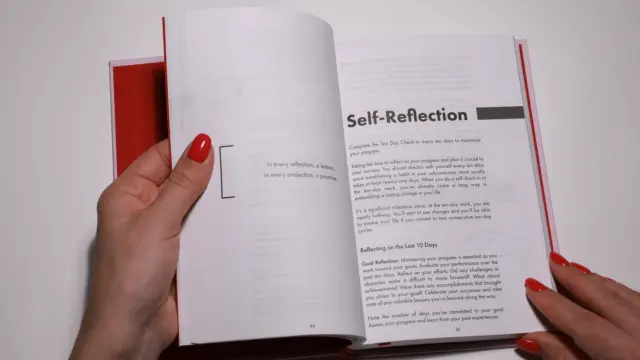
Look back every ten days
When to Reach Out for More Support
Overwhelm is common, but you do not have to carry it alone. Talk to a doctor or mental health professional if you feel hopeless, cannot sleep for weeks, lose interest in things you used to enjoy, or find it hard to get through the day. Reaching out is a strong thing to do for yourself and for your children.
If you ever feel unsafe or have thoughts of harming yourself, contact your local emergency number or a crisis line in your country right away. For everyday emotional steadiness, these tools for regulating your emotions can help between appointments.
You Are Doing More Than You Know
Being an overwhelmed single parent does not mean you are doing it wrong. It means you are doing a lot, often alone, with love that rarely gets thanked. The goal is not to become a perfect parent. It is to carry a little less, rest a little more, and keep a small part of each day that belongs to you.
If you want a simple place for those five daily minutes, the iAmEvolving Journal gives you a page each day for one goal, one moment of gratitude, six habits, and an inner harmony check-in, with a reflection page every ten days to see how far you have come.
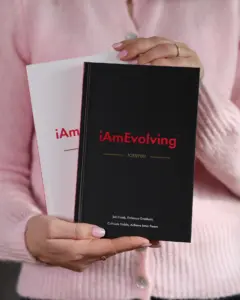
Start your daily practice of gratitude, goals, and growth.
Get the Journal →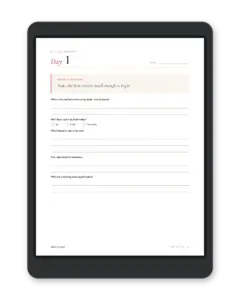
A free 21-day habit tracker PDF with daily check-ins, guided reflection prompts, and mindset reminders. Clean, minimal, and printable.
ExploreFrequently Asked Questions
Is it normal to feel overwhelmed as a single parent?
How do single parents cope with stress?
How can I take care of myself as a single parent with no help?
When should a single parent seek professional help?