The Art of Slowing Down: Finding Peace in a Fast-Paced World
Why Slowing Down Matters More Than You Think
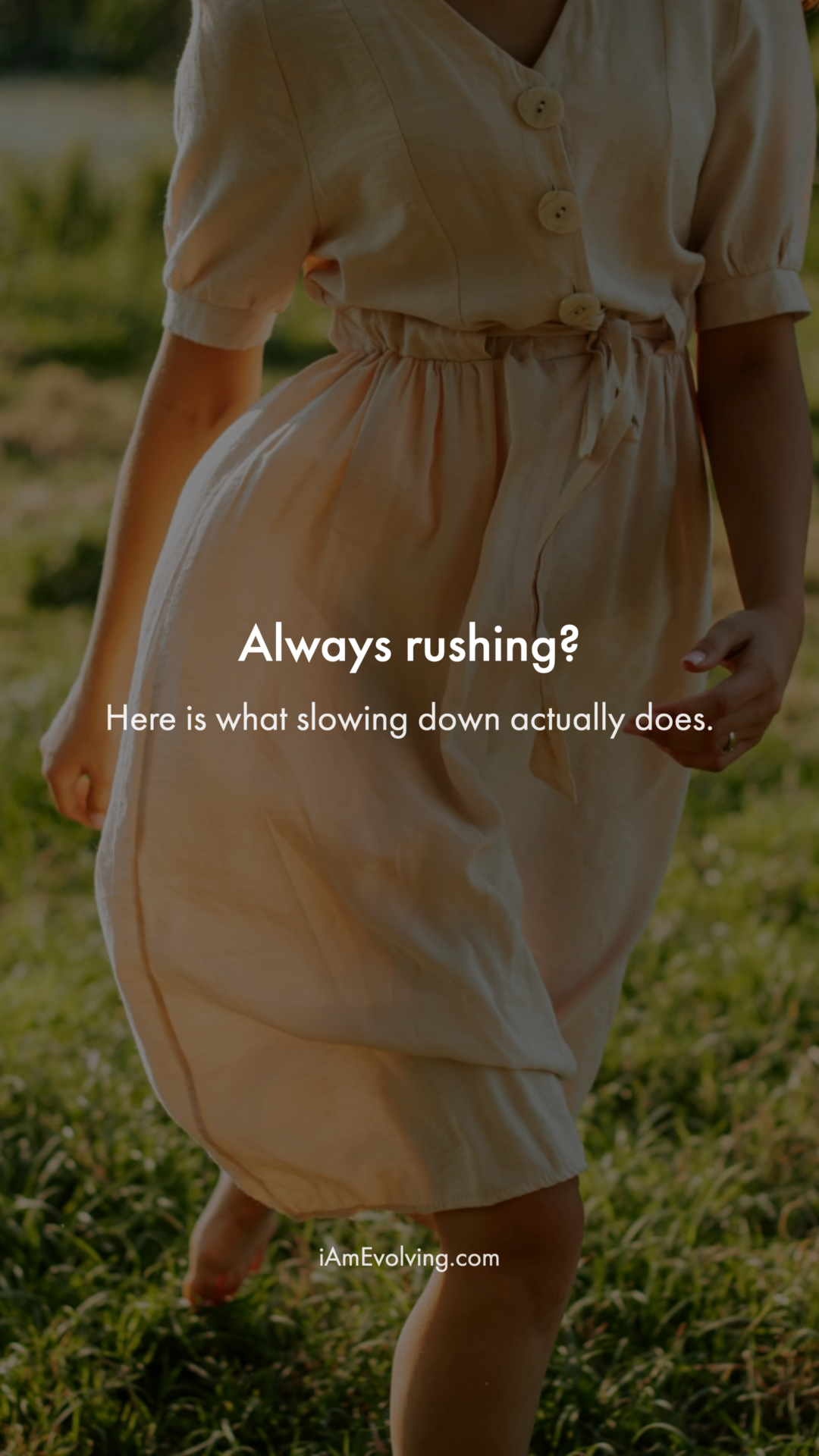
We live in a world that glorifies speed. Quick results, instant messages, fast food, fast thinking. Every day, you’re encouraged to do more, move faster, and chase the next goal before you even celebrate the last one. But slowing down is not a luxury — it is a proven strategy for reducing stress, improving decision-making, and reconnecting with what actually matters in your life.
The art of slowing down isn’t about doing nothing. It’s about doing things with intention. It’s about creating space — in your mind, your schedule, and your heart — for clarity, creativity, and presence. When you learn to slow down, you don’t fall behind. You fall into alignment with a pace that sustains you instead of draining you.
The Cost of Always Being “On”
When every moment feels filled, your mind rarely gets a chance to rest. The constant stimulation — emails, notifications, social feeds — keeps your nervous system on alert. You may feel productive, but in reality, your focus scatters, your creativity fades, and your energy drains faster than you realize.
Over time, this constant busyness creates a cycle that is hard to break. You feel exhausted, so you push harder. You fall behind on rest, so you cut corners on sleep. The result is a mind that never fully recharges and a body that carries tension it was never designed to hold. Research consistently shows that chronic stress from overwork increases the risk of burnout, anxiety, and even physical illness.
True productivity doesn’t come from always doing — it comes from knowing when to pause. The mind, like the body, needs rest to perform at its best. Practicing mindful breathing for even a few minutes each day can help your nervous system shift from survival mode back into balance.
The Power of a Gentle Rhythm
When you begin to slow down, you notice more. The warmth of your morning coffee. The sound of rain. The feeling of your breath moving through you. These small moments help you reconnect with life itself — and with yourself.
A gentle rhythm doesn’t mean laziness — it means flow. It allows you to act with clarity instead of rushing from impulse to impulse. You make better decisions, speak more thoughtfully, and live more peacefully. You stop reacting to life and start responding to it.
This is what many people discover when they start finding peace in the present moment — that presence is not something you achieve once and keep forever. It’s a rhythm you return to, again and again, through small intentional choices throughout your day.
Get more like this, every week
How to Practice the Art of Slowing Down
Slowing down doesn’t happen by accident — it’s a deliberate choice you make every day. The good news is that you don’t need to overhaul your entire life. You can start with small, meaningful shifts:
- Take five minutes each morning to breathe deeply before checking your phone.
- Walk without headphones and let your mind wander freely.
- Eat one meal each day without screens or distractions.
- Write a few thoughts in your journal at the end of the day.
- Set a weekly reset routine where you review your week without rushing into the next one.
Each pause you create gives your mind time to reset. Over time, these pauses stop feeling like interruptions and start feeling like the most grounded part of your day. You begin to realize that slowing down is not the opposite of progress — it is the foundation for sustainable progress.
Letting Go of the Guilt
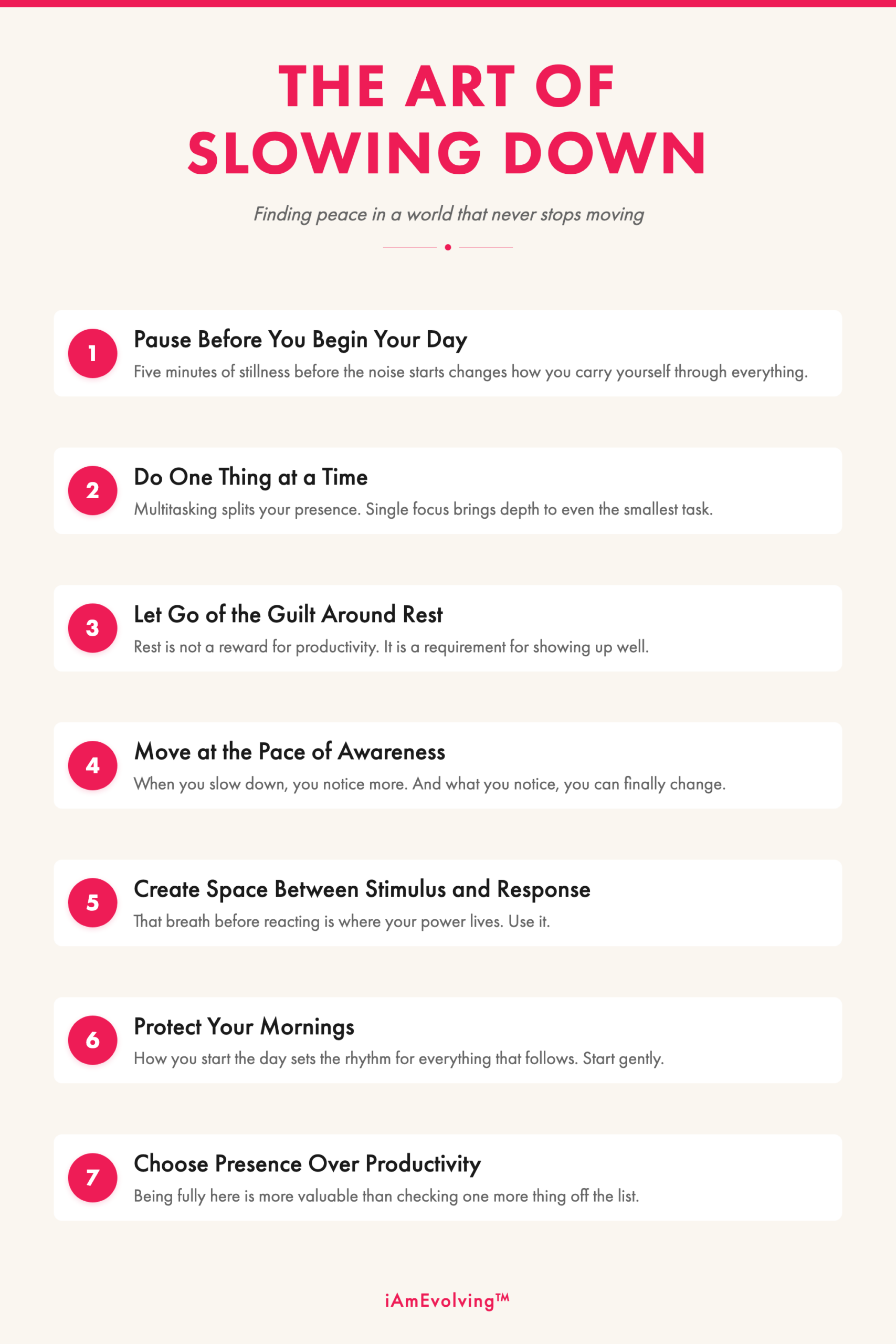
For many people, slowing down feels uncomfortable — even wrong. You might feel guilty for not “doing enough.” Our culture rewards hustle and treats rest as something you earn rather than something you need. But rest is not a reward — it’s a requirement.
When you allow yourself to slow down, you build the energy to show up better — not only for yourself, but for the people you care about. The calm you cultivate becomes the foundation for everything else you do. You stop operating from depletion and start operating from fullness.
If guilt creeps in, ask yourself this: would I rather keep running on empty, or take a moment to refuel so I can give my best? The answer is usually clear — the challenge is giving yourself permission to act on it.
The Joy in the Present Moment
The fastest way to miss your life is to rush through it. Slowing down reminds you that joy doesn’t wait at the finish line — it’s hidden in the process. It lives in the quiet mornings, the unhurried conversations, and the moments when you’re fully here instead of already thinking about what’s next.
You don’t need to reach the next milestone to feel fulfilled. You simply need to be present where you are. The more you practice slowing down, the more beauty you find in ordinary moments — and the more you realize that an ordinary moment, fully experienced, is anything but ordinary.
This is closely tied to the practice of finding stillness in a busy world — learning to be at ease even when everything around you moves fast.
What Changes When You Slow Down
People who commit to slowing down often report changes they didn’t expect. Their sleep improves because their mind isn’t racing at bedtime. Their relationships deepen because they’re actually listening instead of half-present. Their creativity returns because the brain finally has room to think without pressure.
Slowing down also changes how you relate to your goals. Instead of grinding toward outcomes from a place of anxiety, you begin to pursue them from a place of clarity. You still move forward — but the quality of your effort shifts. You stop chasing and start building. This is the kind of intentional approach to growth that shapes lasting change, and it’s at the heart of every meaningful personal growth guide.
In the iAmEvolving Journal, there’s a space each day to reflect on how you showed up — not how much you accomplished, but how present you were. That simple distinction changes everything over time.
The Art of Slowing Down Is the Art of Living Fully
The art of slowing down is really the art of living fully. It’s not about stopping progress — it’s about bringing peace into it.
When you move slower, you start to feel more. You listen better. You breathe deeper. And suddenly, life feels less like a race and more like an experience — one worth savoring.
Slowing down is not about losing momentum — it’s about regaining presence. When you allow yourself to move at the pace of awareness, you begin to see the beauty in ordinary moments and feel the calm that clarity brings. Continue exploring how daily rituals and mindful routines can support your growth in Daily Growth Practices.
Journaling Prompt
Where in your life are you moving too fast? Write about one area where slowing down might bring you more clarity, peace, or connection. What would it look like to give yourself permission to pause?
Start your daily practice of gratitude, goals, and growth.
Get the Journal →A gentle 7-day reset to help you slow down, feel steadier, and reconnect — in just 5–10 minutes a day.
Start the ResetA simple introduction to daily journaling — gratitude, goals, and habits made easy.
Learn the MethodFAQ
What does slowing down really mean?
Why is it so hard to slow down?
How can I slow down without neglecting my goals?
What are some daily habits to help me slow down?
Is slowing down a sign of weakness?