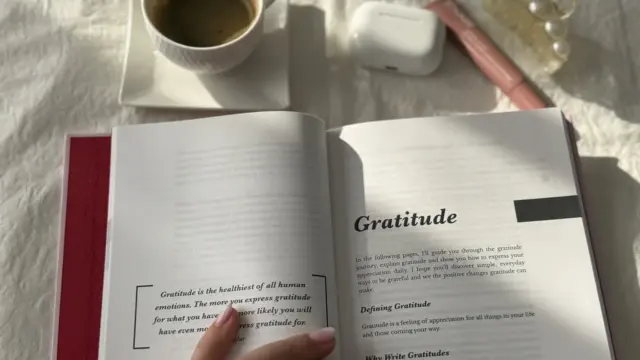
Gratitude Journaling Guide for Mindful Growth

Gratitude journaling is more than writing down blessings — it’s a daily practice that rewires your mindset and helps you live with awareness, calm, and clarity.
In this guide, we’ll explore what gratitude really means, the science behind it, how to build a meaningful practice, and how to integrate gratitude with your goals, habits, and emotional growth.
Each morning we are born again.
What we do today is what matters most.— Buddha
Gratitude is one of the most transformative forces available to you. When practiced with intention, it reshapes how you think, feel, and respond to life. Gratitude journaling isn’t about listing random things you’re thankful for — it’s about cultivating awareness, emotional regulation, and peace. It’s a return to what’s stable within you, even when the world feels uncertain.
This guide is your complete companion for building a gratitude practice that lasts. It’s structured around four core paths within the iAmEvolving framework — each one helping you connect gratitude with mindful growth:
- Gratitude Foundations — The Science and Soul of Thankfulness
- Gratitude Journaling Practice — Build a Daily Habit of Reflection and Presence
- Gratitude Prompts — Daily Questions to Deepen Your Journaling Practice
- Gratitude in Seasons and Holidays — Reflect, Reset, and Renew
Each of these guides explores a unique dimension of gratitude — from the psychology and science that ground it, to the rituals, journaling techniques, and seasonal reflections that keep it alive. Together, they form a complete practice for cultivating clarity, presence, and mindful awareness through every stage of your evolution.
1. What Gratitude Truly Is — Beyond “Being Thankful”
Gratitude is not simply saying “thank you.” It’s a perspective — a chosen lens through which you experience the world. It’s the active practice of recognizing support, meaning, and lessons in your daily life.
When practiced deliberately, gratitude becomes a stabilizing force for your nervous system. It trains your brain to focus on what nurtures your growth, not what drains it. The more you acknowledge what’s working, the more calm and focus you generate.
Gratitude turns what we have into enough,
and what we experience into growth.
Gratitude is both science and soul — a balance of awareness and emotion that reshapes how you interpret the world. To explore its foundations and the research behind how gratitude transforms the mind, visit Gratitude Foundations — The Science and Soul of Thankfulness.
2. The Science of Gratitude: How It Rewires Your Brain
Modern neuroscience confirms that gratitude journaling reshapes your brain over time. By focusing on appreciation rather than fear or lack, you activate key regions responsible for emotional regulation and mental clarity.
- Prefrontal Cortex: Gratitude strengthens this part of the brain, improving emotional control and long-term focus.
- Amygdala: The stress and fear center becomes less reactive with consistent gratitude practice.
- Dopamine & Serotonin: These “feel-good” neurotransmitters increase, improving mood and motivation.
- Reticular Activating System (RAS): Gratitude trains your attention to notice what’s good and meaningful, rather than what’s wrong.
In short, gratitude journaling rewires your perception. Your brain begins to expect and seek out more reasons to be thankful — creating a positive feedback loop of awareness and contentment.
To explore how gratitude shapes both emotion and biology — and how science meets mindfulness in this practice — visit Gratitude Foundations — The Science and Soul of Thankfulness.
3. Why Writing Works Better Than Thinking
It’s easy to “think grateful” and move on. But when you write down what you appreciate, you slow down your mind, externalize your emotions, and make the abstract tangible. This simple act creates presence and depth.
Thinking is fleeting. Writing is grounding. When you write, you form neural and emotional connections that thinking alone can’t sustain.
- You slow down and notice.
- You translate emotion into clarity.
- You create a record of your evolution.
Written gratitude is your mirror — it reflects your growth over time. When you revisit older entries, you’ll see how much stronger, wiser, and more self-aware you’ve become.
Writing things down makes them real.
It’s how thought becomes form.
To learn how to turn writing into a steady ritual that anchors presence and calm, explore Gratitude Journaling Practice — Build a Daily Habit of Reflection and Presence.
Get more like this, every week
4. How to Start a Gratitude Journaling Routine
Consistency is what turns journaling from an idea into transformation. Here’s a simple structure that works for anyone:
To explore how daily rituals help you anchor gratitude into your mornings and evenings, visit Gratitude Habits & Rituals — a mindful guide to making thankfulness a steady part of your daily life.
Step 1 — Choose Your Time of Day
Morning journaling sets your tone and focus. Evening journaling helps you unwind and integrate the lessons of the day. Choose what fits your rhythm — the best time is the one you’ll return to consistently.
Step 2 — Track Your Streak
Inside the iAmEvolving™ Journal, each gratitude section includes a day counter. This isn’t about perfection — it’s about building the identity of someone who shows up. If you miss a day, simply start again.
Step 3 — Write 3–5 Gratitudes Daily
Write in the present tense to engage your subconscious mind: “I am grateful for the calm and clarity guiding my day,” rather than “I hope to feel calm tomorrow.”
Step 4 — Feel Each Gratitude
After each entry, close your eyes for 30 seconds. Feel the emotion behind the words. The feeling — not the sentence — is what rewires your mind.
Step 5 — Use Prompts When You Feel Stuck
Some days you’ll feel inspired, others not. Use structured guidance to keep momentum. When your mind feels blank, visit Gratitude Prompts — Daily Questions to Deepen Your Journaling Practice for ideas that spark awareness and reflection.
For a complete walkthrough on building your journaling rhythm with presence and flow, explore Gratitude Journaling Practice — Build a Daily Habit of Reflection and Presence.
5. Superficial vs. Transformational Gratitude
Not all gratitude is equal. Writing “I’m grateful for my family” repeatedly can eventually lose meaning. Transformational gratitude is specific, emotional, and present.
Superficial: “I’m grateful for my job.”
Transformational: “I’m grateful that my work allows me to express my creativity and support others.”
Superficial: “I’m grateful for my health.”
Transformational: “I’m grateful for the energy and resilience my body gives me to grow and serve.”
Transformation happens in the emotional connection — not in the sentence itself. Gratitude becomes powerful when it touches truth.
True gratitude is not an escape from pain, but a return to awareness.
To deepen your understanding of how real gratitude reshapes emotion and perspective, explore Gratitude Foundations — The Science and Soul of Thankfulness.
6. The Seven Forms of Gratitude
Gratitude has many expressions. To keep your journaling meaningful, rotate between these seven forms. Each activates a different layer of awareness and connection.
1. Gratitude for the Present Moment
Pause. Look around. What is working right now? This is the simplest yet most grounding form of gratitude.
- I am grateful for the quiet of this morning and the stillness it brings.
- I am grateful for the breath that keeps me connected to life.
Presence is the birthplace of gratitude.
2. Gratitude for Personal Growth
This is where gratitude meets self-awareness. Instead of only celebrating external wins, recognize the strength, patience, and understanding you’re developing.
- I am grateful for the courage to keep showing up even when it’s uncomfortable.
- I am grateful that I am learning to lead my life with intention.
Writing about growth-based gratitude helps you observe change without judgment. To make this reflection a consistent part of your journaling rhythm, explore Gratitude Journaling Practice — Build a Daily Habit of Reflection and Presence.
3. Gratitude for Challenges
This is advanced practice. It’s not about loving the difficulty — it’s about seeing what it reveals about you. Gratitude in hardship transforms pain into purpose.
- I am grateful for the patience this challenge is teaching me.
- I am grateful for the resilience I discover in moments of struggle.
4. Gratitude for the Future
Gratitude can also be anticipatory — thanking life for blessings on the way. This rewires your mind for optimism and possibility.
- I am grateful for the calm and stability that are expanding in my life.
- I am grateful for opportunities aligned with my growth.
5. Gratitude for Health
Your body is your first home. Gratitude for health isn’t just about being illness-free — it’s about awareness of your body’s intelligence and presence.
- I am grateful for my lungs and every breath they take.
- I am grateful for my body’s ability to rest and recover.
6. Gratitude for Relationships
Relationships are mirrors — they show us both love and growth edges. Gratitude here strengthens connection and compassion.
- I am grateful for the people who remind me to stay kind.
- I am grateful for the friends who challenge me to grow.
7. Gratitude for Inner Peace
This is gratitude in its purest form — peace for the sake of peace. It’s the awareness that being here, now, is enough.
- I am grateful for the calm moments that anchor me.
- I am grateful that I am learning to respond rather than react.
Gratitude is not what you have — it’s who you become when you notice.
Each of these forms builds emotional depth, self-awareness, and resilience. To explore the research, mindfulness, and emotional balance behind these practices, visit Gratitude Foundations — The Science and Soul of Thankfulness.
7. Gratitude as an Emotional Reset
Gratitude is one of the most effective emotional regulation tools. When stress, fear, or frustration rise, a single shift in attention can reset your entire state.
- Pause. Breathe in slowly through your nose.
- Notice what emotion is present — name it without judgment.
- Write one gratitude that gently shifts your perspective.
Examples:
- When anxious: “I am grateful that I have tools to calm my body and mind.”
- When sad: “I am grateful for the depth that allows me to feel and heal.”
- When angry: “I am grateful for the awareness that shows me where I need boundaries.”
Gratitude doesn’t deny difficulty — it transforms your relationship with it. Journaling through gratitude is a powerful emotional reset, helping your nervous system return to balance while training your mind to respond rather than react.
You can’t always control what happens,
but you can choose how you meet it — with awareness or resistance.
To explore how daily writing helps regulate emotion and restore calm through mindful awareness, visit Gratitude Journaling Practice — Build a Daily Habit of Reflection and Presence.
8. Choosing the Right Gratitude Journal
Any notebook can hold gratitude, but a well-structured journal shapes consistency. A good journal guides your focus, builds rhythm, and helps you track progress over time.
- It should align with your goals — gratitude, growth, or mindfulness.
- It should feel inspiring — something you enjoy opening each day.
- It should create accountability — gently reminding you to return.
To learn how to choose and use your gratitude journal with purpose and flow, explore Gratitude Journaling Practice — Build a Daily Habit of Reflection and Presence.
Pause and Reflect: The iAmEvolving™ Journal
If you want a guided framework that integrates gratitude, goal-setting, and self-reflection, the iAmEvolving™ Journal was created for this purpose. Every page helps you align gratitude with action — so your reflections become real-world growth.
For first-time journalers, the iAmEvolving™ Guidebook offers a simple introduction to building daily clarity and emotional presence.
9. Gratitude for Women: Stability, Confidence, and Calm
For many women, gratitude journaling becomes a grounding ritual — a way to soften anxiety, reconnect to self-worth, and create emotional safety from within. It transforms overthinking into awareness, and self-criticism into compassion.
Examples of journaling prompts for women:
- What inner strength carried me through today?
- What beauty did I witness that reminded me of grace?
- What small moment made me feel grounded?
To explore how daily reflection strengthens self-awareness and confidence, visit Gratitude Journaling Practice — Build a Daily Habit of Reflection and Presence. For additional tools to nurture calm and self-belief, see the Affirmation Journal for Women.
When a woman gives thanks, she reclaims her power.
10. Seasonal Gratitude and Reflection
As the year cycles through its seasons, gratitude changes tone. In spring, it’s about new beginnings. In summer, appreciation. In autumn, reflection. In winter, rest and release. Gratitude evolves with you — each stage has its wisdom.
- Spring: “I am grateful for the chance to start again.”
- Summer: “I am grateful for warmth, abundance, and connection.”
- Autumn: “I am grateful for lessons learned and cycles completed.”
- Winter: “I am grateful for stillness and introspection.”
Gratitude doesn’t belong to one moment — it’s a rhythm that moves through the entire year. Each season invites you to pause, reflect, and realign your awareness. To explore how gratitude deepens through the cycles of growth and rest, visit Gratitude in Seasons and Holidays — Reflect, Reset, and Renew.
The end of each season is not closure — it’s renewal in disguise.
11. Gratitude, Mindset, and Identity
Gratitude is not just an exercise — it’s identity in motion. Each time you choose to write, even when you don’t feel like it, you reinforce the mindset of someone who leads life intentionally rather than reactively.
Every gratitude entry says something powerful about who you are becoming:
- Someone who sees good even in the ordinary.
- Someone who can self-regulate emotions with awareness.
- Someone who finds stability in reflection rather than chaos.
- Someone who chooses presence over distraction.
Gratitude is the seed of every evolved identity.
This shift in identity doesn’t happen overnight — it’s the result of hundreds of quiet pages. Every entry in your journal builds an invisible foundation of peace and focus.
To understand how gratitude shapes the way you think, feel, and lead your inner world, visit Gratitude Foundations — The Science and Soul of Thankfulness.
12. The Science of Gratitude Journaling: How It Shapes Your Brain and Body
Gratitude is not just an emotion — it’s a biological state that affects how your brain works, how your body feels, and how your mind processes the world. When you write in your gratitude journal, you are not only capturing thoughts; you are training your entire nervous system to return to calm, clarity, and awareness.
Modern neuroscience and psychology have shown that gratitude activates measurable, positive changes in brain chemistry. When you shift your focus from what is missing to what is meaningful, your brain’s wiring begins to change. You start to feel safer, more balanced, and more capable of handling challenges. Over time, this becomes your new default — calm instead of chaos, presence instead of pressure.
How Gratitude Rewires the Brain
Every thought creates a small electrical and chemical pattern in the brain. Repeated thoughts strengthen those pathways, forming habits of attention and emotion. This is called neuroplasticity — the brain’s ability to reorganize itself based on experience. Gratitude journaling uses this process to build new mental patterns of focus and appreciation.
- Prefrontal Cortex — Emotional Regulation and Focus: Gratitude activates and strengthens this region, improving calm thinking and clarity.
- Amygdala — Calming the Fear Response: Writing about gratitude makes this area less reactive, helping your body relax and lowering stress hormones.
- Hippocampus — Memory and Emotional Balance: Gratitude supports emotional memory, allowing positive experiences to become easier to recall.
- Dopamine and Serotonin — The “Happiness Chemicals”: Gratitude triggers the release of these neurotransmitters, boosting mood and motivation naturally.
Each time you write something positive or meaningful in your gratitude journal, you reinforce these neural patterns. With repetition, your brain learns to search for what’s working rather than what’s missing. This becomes your mental training — rewiring perception through awareness.
The Body–Mind Connection: Gratitude and the Nervous System
Gratitude doesn’t only live in your thoughts — it’s deeply connected to how your body feels. Your nervous system responds instantly to your focus. When you pause to write down something you appreciate, your body begins to shift from a state of tension to one of safety. You breathe slower. Your shoulders relax. Your heartbeat steadies. This is the body’s way of saying, “I’m okay right now.”
When practiced regularly, gratitude journaling strengthens the parasympathetic nervous system — the body’s “rest and restore” state. Instead of living in constant alertness or anxiety, you begin to live in a steady rhythm of calm and clarity. This is why consistent journaling supports better sleep, emotional stability, and even immune function.
You cannot be grateful and fearful at the same time.
Gratitude softens the nervous system and opens the heart.
The Psychology of Gratitude
In positive psychology, gratitude is considered one of the most powerful tools for long-term happiness and resilience. Research by experts such as Dr. Robert Emmons and Dr. Martin Seligman shows that people who keep gratitude journals experience higher life satisfaction, better relationships, and lower stress levels.
Gratitude changes how you interpret life events. It doesn’t erase challenges, but it gives you distance and clarity. Instead of spiraling into worry, you begin to see lessons, strength, and small gifts in every situation. This shift builds what psychologists call emotional flexibility — the ability to stay grounded through change.
Writing just three to five meaningful gratitudes each day can begin to reorient your focus. Over time, this practice becomes second nature — gratitude turns from something you do into something you are.
Why Writing Is So Powerful
The physical act of writing by hand amplifies gratitude’s effects. When you put words on paper, you engage multiple parts of the brain at once — visual, motor, and emotional centers. Writing slows you down enough to feel what you’re expressing, creating deeper neural and emotional imprints. That’s why many people feel a tangible sense of calm or release after journaling.
For more on the neuroscience and practical structure behind this habit, explore Gratitude Foundations — The Science and Soul of Thankfulness and Gratitude Journaling Practice — Build a Daily Habit of Reflection and Presence.
13. The 7-Day Gratitude Reset Challenge
Even the most mindful people lose touch with gratitude sometimes. Life gets busy, emotions run high, and the small moments of appreciation can fade into the background. The 7-Day Gratitude Reset Challenge is designed to bring you back — to help you reconnect with what’s meaningful, stabilize your emotions, and rebuild your focus one day at a time.
This challenge isn’t about writing perfect sentences or pretending to be positive. It’s about slowing down and noticing what’s already supporting you. Over the next seven days, you’ll spend less than 10 minutes each day journaling with intention. By the end, you’ll not only feel different — you’ll think differently, too.
A week of gratitude can reset a lifetime of autopilot.
All you need is your journal, a pen, and an open mind. For guidance on building consistency and flow, visit Gratitude Journaling Practice — Build a Daily Habit of Reflection and Presence.
Day 1 — Awareness
Start simple. Write down three things that feel okay, safe, or stable in your life right now. They don’t need to be huge — a good cup of coffee, sunlight through the window, or a text from a friend. This first day is about grounding in the present and reconnecting with what already supports you.
Example: “I am grateful for the quiet of this morning, the breath that reminds me I am alive, and the space I have to begin again.”
Day 2 — Body Gratitude
Today, bring your attention inward. Your body is your home — the vessel that allows you to experience life. Write one paragraph of gratitude to your body. Focus on what it does for you rather than how it looks. Thank your body for its strength, its breath, its resilience.
Example: “I am grateful for my legs that carry me, my hands that create, and my heart that beats without me asking.”
Day 3 — Relationship Reflection
Think of someone who has helped you grow — not necessarily by being perfect, but by showing up in ways that shaped your path. Write about that person and what you’ve learned from them. This could be a family member, a friend, a mentor, or even someone who challenged you.
Example: “I’m grateful for my friend who listens without judgment, reminding me that honesty can coexist with love.”
Day 4 — Gratitude in Challenge
Gratitude doesn’t mean ignoring difficulty — it means finding meaning within it. Write about one challenge you’re facing today and explore what it’s teaching you. What strength, patience, or awareness is it developing in you? Even discomfort can reveal clarity.
Example: “I’m grateful for this moment of uncertainty, because it’s teaching me to trust myself more deeply.”
Day 5 — Future Gratitude
Gratitude isn’t only about what has already happened. It’s also about faith — appreciating what is on its way. Write three statements of gratitude for things you’re calling into your life, phrased as if they are already true. This activates your subconscious focus and helps align your emotions with your goals.
Example: “I am grateful for the opportunities that are unfolding for me and for the peace that surrounds me as I grow.”
Day 6 — Gratitude in Action
Today, express your gratitude outwardly. Send a message to someone you appreciate. Leave a kind comment. Write a short note to someone who made your day easier. Gratitude grows when it’s shared — it strengthens relationships, softens communication, and reminds others that they matter.
Example: “I reached out to thank a colleague for their support last week. It reminded me that kindness creates connection.”
Day 7 — Integration
On your final day, revisit your entries from the week. Notice what patterns or insights stand out. How has your energy shifted? Which gratitudes felt most natural, and which were harder to find? Awareness is the reward — not perfection.
Close your journaling session with one simple statement that summarizes what this week taught you.
Example: “I am grateful that I always have something to return to — my breath, my awareness, and this present moment.”
Gratitude doesn’t erase the chaos — it brings you back to calm within it.
How to Continue After the 7 Days
This challenge is a reset — but it’s also a beginning. To continue, simply repeat the same structure each week or choose one theme to focus on for a full month. You might dedicate a week to body gratitude, another to relationships, another to growth. This keeps your practice fresh and intentional.
For ongoing inspiration and new reflective prompts, visit Gratitude Prompts — Daily Questions to Deepen Your Journaling Practice. Each set of questions helps you reconnect with awareness whenever your practice feels routine.
By completing this 7-Day Gratitude Reset, you’ve reminded your mind and body how to find balance through awareness. Gratitude is no longer just a concept — it’s a state you can return to anytime you need peace, clarity, or strength.
One week is enough to shift your inner rhythm. One page is enough to begin again.
14. Gratitude in Relationships, Leadership, and Growth
Gratitude is not meant to live only on paper — it’s meant to breathe in the way you think, speak, and connect with others. Once you begin writing daily, the next step is to live your gratitude. It becomes visible in how you treat people, lead teams, and navigate challenges. This is where gratitude evolves from a habit into a way of being.
When you choose gratitude, you lead with presence — not reaction.
Let’s explore how gratitude shapes connection, communication, and leadership, and how it fuels long-term personal growth.
Gratitude in Relationships
Every relationship, whether personal or professional, thrives on acknowledgment. Gratitude strengthens the emotional safety and trust that allow authentic connection to grow. When you express appreciation — not just for what someone does, but for who they are — you help them feel seen and valued.
Too often, we focus on what others lack or how they fall short. Gratitude shifts that focus toward what they offer — their effort, presence, kindness, or honesty. This subtle shift transforms the emotional tone of a relationship. It encourages empathy and softens defensiveness, even in moments of disagreement.
Example: “I’m grateful for how you listened yesterday when I felt overwhelmed. It reminded me how supported I am.”
Small acknowledgments like this rewire both minds involved. The person you thank feels appreciated, and you strengthen your own ability to see goodness, even in imperfection. This is how gratitude builds connection — not through grand gestures, but through presence in small moments.
To go deeper into emotional awareness and authentic presence, explore Gratitude Foundations — The Science and Soul of Thankfulness.
Gratitude in Leadership
In leadership, gratitude is not a motivational tactic — it’s a mindset. Whether you lead a team, a business, or your family, your energy shapes the emotional climate of the people around you. When gratitude guides your leadership, you create psychological safety — a space where people feel valued, calm, and inspired to contribute.
True leaders use gratitude to replace pressure with perspective. Instead of demanding constant output, they recognize effort, growth, and intention. This builds trust and encourages intrinsic motivation. People want to do their best when they feel seen.
Example: “I’m grateful for the creativity and focus you brought to this project. It made a real difference.”
Gratitude in leadership also prevents burnout. By celebrating progress instead of chasing perfection, you remind yourself and others that growth is a process — not a race. The result is clarity, steadiness, and alignment.
Gratitude turns leadership from control into connection.
In the iAmEvolving™ approach, gratitude-based leadership begins with self-leadership — managing your thoughts and emotions before influencing others. A grateful mind leads through stability and awareness, not reaction. This is the essence of conscious leadership.
Gratitude for Growth
Gratitude and growth are two sides of the same process. Without gratitude, growth feels like pressure — an endless pursuit of what’s next. With gratitude, growth feels like evolution — a steady unfolding of awareness and capability.
Every step forward becomes an opportunity to appreciate what you’ve learned, how you’ve adapted, and who you’ve become. Gratitude keeps ambition grounded in meaning. It helps you stay patient when progress feels slow and focused when the path feels uncertain.
Example: “I’m grateful for the lessons that came with my mistakes. They helped me become clearer about who I am and what I value.”
This is the heart of mindful growth — celebrating the small victories that mark real transformation. Each page of your gratitude journal is a record of progress that might otherwise go unnoticed. Over time, these reflections become a map of your evolution — evidence that you’ve grown through awareness, not just achievement.
Bringing Gratitude into Daily Life
To bring gratitude into your relationships and leadership, start by practicing it in conversation. Each day, name one thing you appreciate about someone close to you — a partner, a colleague, a friend. Be specific and sincere. You’ll be amazed how this small shift can restore energy and harmony in your interactions.
Pair this with self-gratitude: acknowledge your own efforts, even the small ones. Thank yourself for showing up, learning, and trying again. Gratitude directed inward builds resilience and quiet confidence — the kind that doesn’t need external validation.
Gratitude is the bridge between who you are and who you are becoming.
To continue deepening this practice, explore Gratitude Journaling Practice — Build a Daily Habit of Reflection and Presence. It will guide you in turning awareness into consistent, conscious action through writing and reflection.
15. Integrating Gratitude, Goals, and Growth
Gratitude and growth are not separate paths — they are two sides of the same inner movement. One grounds you in the present; the other calls you forward. When you learn to hold both at once, you evolve with peace instead of pressure. This is what the iAmEvolving™ philosophy calls aligned ambition — the balance between striving and appreciating.
It’s easy to focus on goals and forget to appreciate how far you’ve come. But gratitude gives meaning to every step of progress. It softens the edges of striving and keeps you connected to the reason behind your actions. When you integrate gratitude with goal-setting, growth becomes sustainable and fulfilling — not exhausting.
Gratitude turns achievement into evolution.
Gratitude and Goals: Finding Balance Between Doing and Being
Goals are essential — they give direction and clarity. But without gratitude, even success can feel empty. Gratitude anchors you in presence while you pursue what matters most. It reminds you that you are already enough, even as you grow into more.
When you set a goal, begin by writing one gratitude that connects you to why that goal matters. For example, if your goal is to improve your health, write: “I am grateful for the strength and energy I already have.” This simple act reframes your pursuit from lack to abundance. You start from appreciation, not from absence.
For a simple daily framework that connects gratitude to focus and goals, explore Gratitude Journaling Practice — Build a Daily Habit of Reflection and Presence. It helps you align gratitude with progress in a mindful, structured way.
Turning Routine Into Ritual
Habits become transformative when they are anchored in gratitude. Instead of treating your daily routines as tasks to complete, see them as opportunities for mindfulness. Gratitude turns repetition into reflection.
Before you begin a task, take one breath and silently say: “I’m grateful I get to do this.” Whether it’s writing, exercising, or preparing a meal, gratitude shifts your energy from obligation to choice. It reconnects you with purpose — the quiet “why” behind the action.
Example: “I’m grateful that I have the ability to move my body today.”
Example: “I’m grateful for the focus this work is helping me develop.”
To keep your practice intentional and fresh, visit Gratitude Prompts — Daily Questions to Deepen Your Journaling Practice for reflective prompts that align gratitude with everyday action.
If you’d like to turn daily journaling into a calm rhythm of appreciation, explore Gratitude Habits & Rituals. It’s a companion guide designed to help you build small gratitude moments into your morning and evening flow.
Gratitude as a Compass for Growth
Growth without gratitude often leads to burnout. You achieve more, but feel less fulfilled. Gratitude keeps you aligned with what’s meaningful along the way. It turns your attention toward progress, not perfection. You begin to measure growth not just by outcomes, but by awareness — by how present, kind, and grounded you become in the process.
Example: “I’m grateful for my discipline, even when the results are not yet visible.”
When you practice gratitude daily, you train your mind to see progress everywhere. You stop waiting for big milestones to feel successful. Instead, each day becomes a quiet victory — another small step toward becoming who you’re meant to be.
This is how gratitude becomes your compass for growth — steady, reflective, and resilient. It keeps you moving with awareness instead of urgency, and that’s where evolution truly begins.
Integrating Gratitude Into Goal Reflection
At the end of each week, review your goals and journaling entries. Ask yourself:
- What progress am I grateful for this week?
- What challenges helped me grow in awareness or patience?
- What can I appreciate about where I am right now?
Use these questions as gentle prompts during your journaling routine. They connect gratitude to self-awareness — helping you stay aligned with both your goals and your peace of mind.
For seasonal goal reviews and renewal rituals, explore Gratitude in Seasons and Holidays — Reflect, Reset, and Renew. It’s a mindful way to reset your focus and direction as each season changes.
Gratitude doesn’t slow your progress; it gives it purpose.
Gratitude is not just a reflection — it’s your foundation for clarity, consistency, and calm growth. Through journaling, it connects your goals to meaning and your action to awareness. This is how you evolve — one page, one reflection, one conscious step at a time.
16. Explore More Gratitude and Mindset Guides
Gratitude journaling is the beginning of a much deeper practice — one that connects reflection, awareness, and emotional presence. Each guide below explores a different dimension of gratitude, helping you evolve your mindset and daily practice with intention.
- Gratitude Foundations — The Science and Soul of Thankfulness
Discover the emotional and scientific roots of gratitude, and how awareness transforms the mind and heart. - Gratitude Journaling Practice — Build a Daily Habit of Reflection and Presence
Learn how to turn gratitude into a grounded daily rhythm through mindful writing and reflection. - Gratitude Prompts — Daily Questions to Deepen Your Journaling Practice
Find daily reflection questions to help you reconnect with purpose, gratitude, and calm awareness. - Gratitude in Seasons and Holidays — Reflect, Reset, and Renew
Explore how gratitude changes with the seasons and how reflection helps you begin each cycle with presence.
Each of these guides expands on the foundations you’ve explored here — offering practical steps, reflective exercises, and inspiration for living with awareness. Let gratitude lead you deeper into growth, one mindful page at a time.
17. Final Word — Gratitude as a Way of Life
Gratitude journaling isn’t about pretending life is perfect — it’s about noticing the stability that still exists within change. Each time you pause to write, you create a small moment of peace in your mind and body. Over time, those moments become your foundation — calm beneath the noise, awareness beneath the motion.
Gratitude doesn’t erase pain or difficulty; it gives them context. It reminds you that even amidst uncertainty, you can choose presence. Each page you fill becomes a quiet declaration: “I am here. I am aware. I am evolving.”
To bring this philosophy into your daily rhythm, continue your journey through Gratitude Habits & Rituals — where morning calm and evening stillness become part of your gratitude practice.
Gratitude doesn’t change what you see — it changes how you see.
Take a breath. Open your journal. Write one line of appreciation — no matter how simple. That single act is how transformation begins: through awareness, through consistency, through gratitude.
One page at a time.
One day at a time.
One gratitude at a time.
You are evolving.
When you’re ready to go deeper, explore these next steps in your gratitude journey:
- Gratitude Foundations — The Science and Soul of Thankfulness
- Gratitude Journaling Practice — Build a Daily Habit of Reflection and Presence
- Gratitude Prompts — Daily Questions to Deepen Your Journaling Practice
- Gratitude in Seasons and Holidays — Reflect, Reset, and Renew
Each of these guides expands on a part of this philosophy — helping you live not just with awareness, but with quiet appreciation for every season of your growth. Gratitude begins on the page, but its real power is how it transforms how you live.
Keep noticing. Keep evolving. The more you write, the more you’ll see that gratitude isn’t something you practice — it’s something you become.
What is gratitude journaling?
How long should I journal every day?
What if I don’t feel grateful today?
Can I use digital journaling apps?
Does gratitude really change the brain?
What’s the best way to stay consistent?
Can gratitude journaling help with anxiety?