Your cart is currently empty.
Continue shopping
and explore our products below:
Continue shopping
and explore our products below:
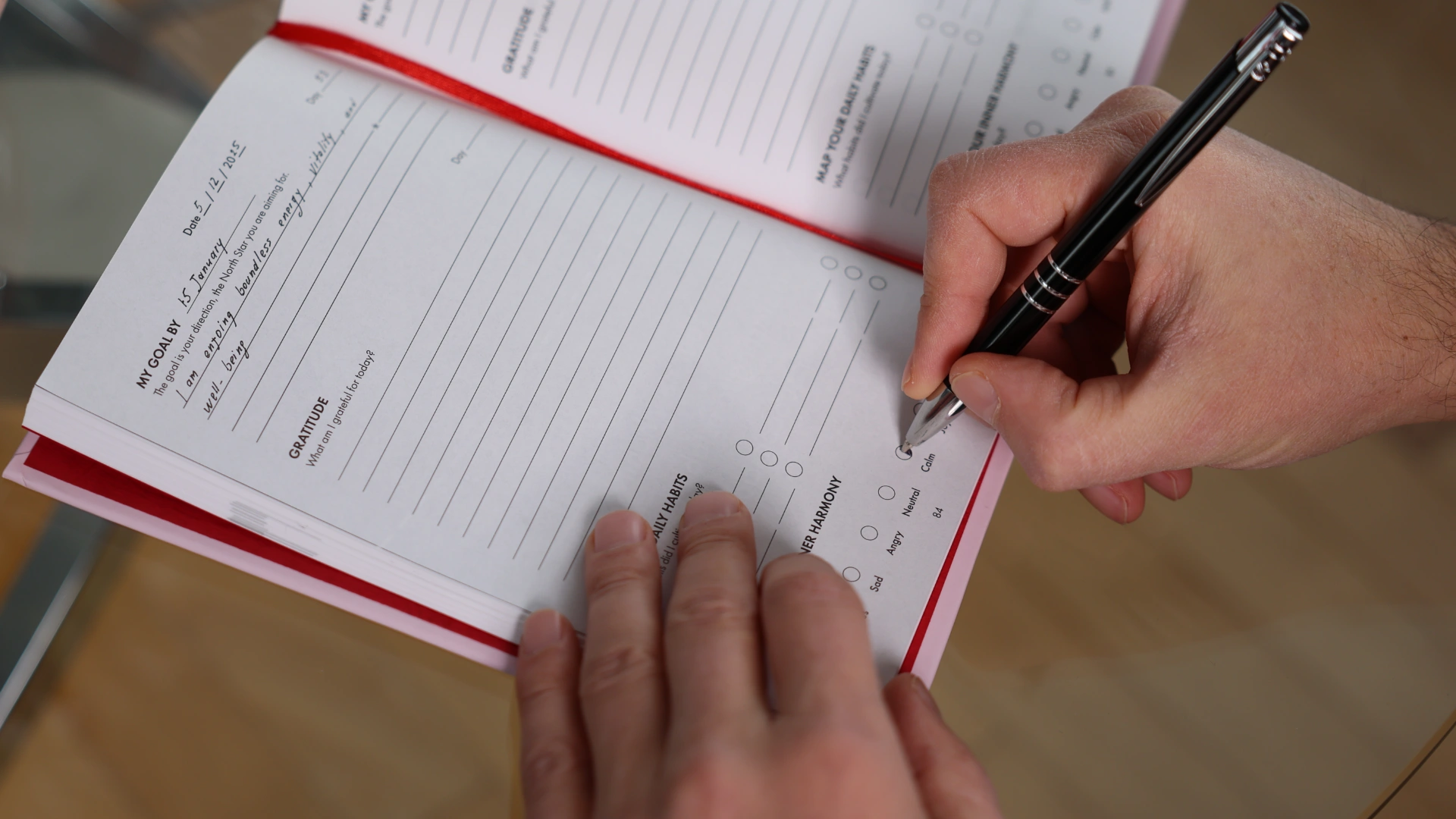
True peace doesn’t begin when life becomes quiet. It begins when you learn to stay centered, even when the world isn’t. Inner harmony is not the absence of emotion — it’s the awareness that allows you to experience every feeling without losing your balance. It’s the art of noticing, naming, and returning to calm, again and again.
This is the foundation of inner harmony. It’s where emotional awareness meets self-regulation. It’s not about suppressing feelings or chasing positivity. It’s about understanding that every emotional state carries wisdom — and that awareness is the bridge back to balance.
Inner harmony is a state of alignment between your thoughts, emotions, and actions. It’s not a constant state of calm — it’s your ability to navigate emotional waves with awareness and grace. In the iAmEvolving philosophy, harmony doesn’t mean perfection; it means presence. It’s learning to stay connected to your center, even when emotions shift.
In practice, inner harmony looks like this: you feel an emotion, you pause to notice it, you understand what it’s showing you, and you respond consciously. This is the foundation of emotional intelligence — and it’s something you can cultivate through mindful awareness and reflection.
Inner harmony doesn’t mean controlling your emotions. It means forming a relationship with them. When you listen to what your emotions are trying to say, you create space between reaction and response. That space is where awareness lives — and where growth begins.
Emotions are not static; they move in cycles. When you understand this rhythm, you begin to work with your emotions rather than against them. In the Inner Harmony framework, every emotion can be understood through four natural phases:
This cycle — awareness → mapping → regulation → return — forms the foundation of your emotional self-awareness. It’s not a linear process; it’s a rhythm you practice daily until it becomes natural. Each time you move through it with presence, you strengthen your ability to self-regulate and evolve.
Without awareness, emotions can control your actions. With awareness, they become your teachers. Awareness turns reaction into understanding. It gives you insight into why you feel what you feel, so you can choose responses that support your peace rather than sabotage it.
In neuroscience, this awareness is linked to the prefrontal cortex — the part of your brain responsible for reflection and self-regulation. When you pause to observe your feelings instead of reacting impulsively, you strengthen this part of your mind. Over time, your emotional system learns safety and balance.
When you practice awareness daily, you begin to notice patterns — how certain situations trigger familiar emotions, how your energy rises and falls. This understanding becomes your internal compass. It’s how you begin to navigate your inner world with the same clarity you bring to your outer one.
One of the most powerful lessons in the Inner Harmony philosophy is this: emotions are states, not identities. Feeling anxious doesn’t mean you are anxiety. Feeling sad doesn’t mean you are sadness. These are passing signals from your emotional system, asking for your attention, not your attachment.
When you remember that emotions move, you stop defining yourself by them. Instead of saying, “I am angry,” you learn to say, “I am noticing anger.” That small shift in language changes everything — it creates distance, perspective, and compassion. It gives you back your power to observe rather than be overwhelmed.
Every emotion, even the heavy ones, carries intelligence. Anxiety teaches you to slow down. Sadness teaches you to release. Anger teaches you to set boundaries. Joy reminds you that you are alive. When you view emotions as guides, you begin to see that balance isn’t about staying calm — it’s about staying connected.
Neutrality is the ground state of emotional awareness — not numbness, but presence. It’s where your emotions pass through without distortion. When you cultivate neutrality, you develop emotional resilience. You can feel deeply without getting lost in the story of what you feel.
Think of neutrality as the breath between waves. It’s the pause before reaction — the space where choice lives. When you train your nervous system to find this center, you stop being controlled by external conditions. You become your own point of calm.
This is why journaling is such an essential part of the iAmEvolving practice. Writing creates awareness. Awareness creates neutrality. Through reflection, you learn to meet your emotions with curiosity instead of resistance. And from that space, balance naturally arises.
Building emotional balance is not a one-time event — it’s a daily relationship with yourself. Here are small, consistent practices to integrate awareness into your routine:
Your emotional landscape shifts every day. In the iAmEvolving framework, you can visualize this as a spectrum — from anxious and fearful to calm, joyful, and faithful. Each state holds value. The goal isn’t to stay in one place, but to move through the spectrum consciously.
If you’re new to the idea of emotional balance, begin with Understanding Inner Harmony — a clear introduction to what inner harmony means and why it matters before you start practicing it.
This is where the Mapping Your Inner Harmony practice comes in. When you track your emotions over time, you start to see patterns — how stress builds, how rest restores, how awareness shortens recovery time. You begin to trust your emotional rhythm instead of fearing it.
Emotional balance is not an inherent trait — it’s a practice. Like any skill, it grows with awareness and repetition. The more often you pause to observe yourself, the stronger your self-regulation becomes.
Every time you return to awareness after being triggered, you’re rewiring your emotional system. You’re teaching your brain that peace is safe. Over time, this becomes your new baseline — not because life gets easier, but because your relationship with yourself becomes steadier.
That’s what it means to live in harmony: not to avoid storms, but to learn to breathe through them.
To understand the deeper meaning behind emotional balance, start with Understanding Inner Harmony — a foundational guide to what inner harmony really is and why it matters.
To go deeper into the practice of emotional awareness, explore the Mapping Your Inner Harmony guide — a step-by-step approach to tracking and understanding your emotional patterns. You can also visit the cornerstone Inner Harmony Guide to explore how awareness and presence can transform your emotional wellbeing.