Journaling Prompts to Stop Overthinking

Journaling prompts for overthinking are guided questions that help you break repetitive thought loops by moving worries from your head onto paper. Overthinking settles in quietly — but writing creates the space to examine, soften, and release those spinning thoughts.
Journaling is one of the simplest and most grounding ways to interrupt this cycle. Writing slows the mind, creates space between thoughts, and helps you return to the present. These journaling prompts for overthinking are designed to calm mental noise, restore emotional balance, and guide you back to inner clarity.
Why Overthinking Feels So Draining
Overthinking often begins as an attempt to feel safe. The mind believes that if it can analyze every detail, it can prevent mistakes, pain, or uncertainty. But instead of protection, this habit creates tension and emotional fatigue.
When thoughts stay unexpressed, they repeat. Journaling offers an outlet. By putting thoughts on paper, you move them out of your head and into awareness, where they can be examined, softened, or released.
This practice aligns closely with emotional awareness and regulation. If you want to understand how awareness brings balance, explore understanding inner harmony, which explains how noticing inner states helps you return to calm.
How Journaling Helps Stop Overthinking
Writing slows the nervous system. It turns abstract worries into concrete words. This shift alone can reduce emotional intensity.
Journaling for overthinking works because it:
- Creates distance between you and your thoughts
- Reveals patterns instead of endless loops
- Encourages emotional honesty without judgment
- Redirects attention from fear to awareness
Unlike mental rumination, journaling is intentional. You choose when to begin and when to stop. This restores a sense of control and grounding.
How to Use These Journaling Prompts
There is no right pace or perfect answer. Choose one or two prompts per session. Write freely without correcting yourself. Let the words come out as they are.
If your mind feels especially restless, start with just five minutes. Consistency matters more than depth. Over time, this gentle practice becomes a habit that supports emotional balance.
If you are new to reflective writing, you may also find guidance in how to start a self-care journal, which explains how to create a calm, sustainable journaling routine.
Get more like this, every week
Journaling Prompts for Overthinking the Past
Overthinking often pulls us backward. These prompts help you process the past without reliving it.
- What moment from the past keeps replaying in my mind right now?
- What am I afraid this memory says about me?
- What did this experience teach me that I may have overlooked?
- If I could speak to my past self with compassion, what would I say?
- What part of this situation is no longer relevant to who I am today?
Journaling Prompts for Overthinking the Future
Future-focused overthinking is rooted in uncertainty. These prompts guide your attention back to what is real and manageable.
- What am I worried might happen, and how likely is it truly?
- What is within my control in this situation?
- What evidence do I have that I can handle challenges as they arise?
- If this situation unfolds differently than expected, how could I adapt?
- What would trusting the process look like right now?
When fear pulls your thoughts forward, grounding yourself in the present can restore balance. The article Trust the Process: Why Your Goals Take Time to Grow offers insight into releasing the need for constant mental control.
Journaling Prompts for Decision Overthinking
Indecision often fuels mental exhaustion. These prompts help you reconnect with inner clarity.
- What decision am I currently overthinking?
- What am I afraid will happen if I choose wrong?
- What choice aligns most with how I want to feel?
- If I trusted myself fully, what would I decide?
- What is the smallest next step instead of the perfect outcome?
Journaling Prompts for Emotional Overload
Sometimes overthinking is a sign of unprocessed emotion. These prompts allow feelings to surface safely.
- What emotion feels strongest in me right now?
- Where do I feel this emotion in my body?
- What does this feeling need from me?
- What am I avoiding by staying busy in my thoughts?
- What would happen if I allowed this emotion to exist without fixing it?
This kind of writing supports emotional regulation and self-compassion. You may also benefit from From Fear to Faith: Transforming Negative Emotions, which explores how awareness softens emotional intensity.
Journaling Prompts to Quiet the Mind at Night
Overthinking often intensifies before sleep. These prompts help release the day and prepare the mind for rest.
- What thoughts are keeping me awake right now?
- What can wait until tomorrow?
- What did I handle well today, even if it felt imperfect?
- What am I grateful for in this moment?
- What intention do I want to carry into rest?
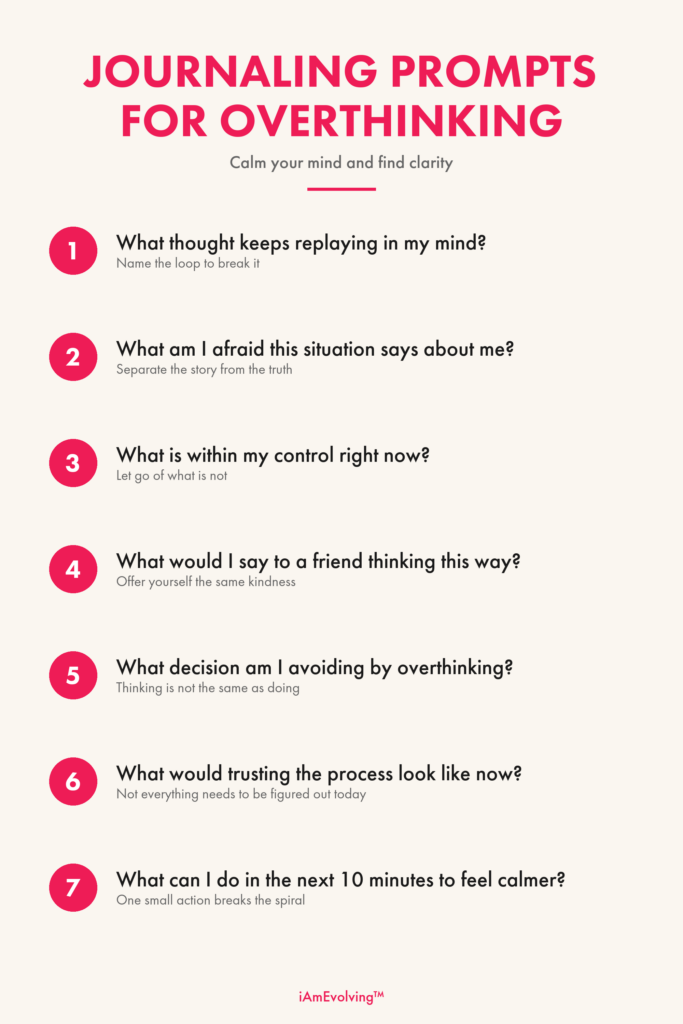
Turning Journaling Into a Daily Anchor
Journaling works best when it becomes a consistent ritual rather than a one-time release. Even a few lines each day can prevent thoughts from accumulating.
Pair journaling with an existing habit, such as morning reflection or evening wind-down. Over time, your mind learns that there is a safe place to unload thoughts.
If you want to deepen this practice, How Journaling Reduces Stress and Calms the Mind explains the science behind why writing restores calm.
Conclusion: Let the Page Hold the Thoughts
You don’t need to silence your mind. You only need to give it somewhere to rest. Journaling transforms overthinking from an endless loop into a meaningful conversation with yourself.
Each prompt is an invitation to slow down, listen inward, and respond with awareness instead of judgment. Over time, this practice builds trust in your inner voice and creates space for calm.
If you’re ready to turn reflection into a daily grounding ritual, explore the iAmEvolving Journal and begin shaping a calmer relationship with your thoughts.
If you feel called to explore more guided reflection questions and structured writing practices, continue with the journaling prompts and guided writing collection, where thoughtful prompts support clarity, emotional balance, and mindful growth.
Start your daily practice of gratitude, goals, and growth.
Get the Journal →A gentle 7-day reset to help you slow down, feel steadier, and reconnect — in just 5–10 minutes a day.
Start the ResetA simple introduction to daily journaling — gratitude, goals, and habits made easy.
Learn the MethodFrequently Asked Questions About Journaling for Overthinking
How does journaling help with overthinking?
How often should I journal if I overthink a lot?
What if journaling makes me feel more emotional at first?
Can journaling stop overthinking completely?