How Habits Are Formed (and Why They Matter)

“Until you make the unconscious conscious, it will direct your life and you will call it fate.” — Carl Jung
Every day, your mind repeats quiet routines that shape how you live. Some support your growth. Others hold you still. These patterns—your habits—work behind the scenes, guiding your choices, focus, and energy. When you learn how habits are formed, you gain the power to change them. You stop reacting and begin choosing with awareness.
Understanding how habits are formed is the first step toward real transformation. Habits are not random. They are learned responses your brain stores to make life easier. Once you see how this process works, you can start shaping it intentionally.
The Simple Psychology Behind Every Habit
Your brain loves efficiency. Each time you repeat an action, it builds a pathway so the task becomes faster next time. This is how brushing your teeth, driving, or checking your phone turn into automatic behaviors. Habits free mental space for new ideas—but they also repeat outdated patterns if you don’t stay aware.
Most habits follow a clear loop: cue → routine → reward. A cue is a trigger. The routine is what you do next. The reward is how it feels. When that feeling is pleasant or relieving, your brain marks it as “safe” and repeats it. Over time, this loop runs without effort, quietly shaping your day.
Imagine this: you feel stressed (cue), open social media (routine), and feel a short burst of distraction or comfort (reward). The brain connects relief with the action, even if it doesn’t truly help. That is why unhelpful habits are so persistent—the mind values familiarity more than progress.
Emotion Builds the Habit, Not Logic
Repetition creates the structure, but emotion makes it stick. Each time a habit gives you comfort, pride, or calm, the subconscious records that feeling. It learns, “this feels good—do it again.” The stronger the emotion, the deeper the imprint.
Think of habits that feel natural: morning journaling, a walk outside, or taking three deep breaths before work. The calm or clarity you feel afterward keeps you returning. The same emotional rule applies to habits that drain you. Even procrastination can bring quick relief from pressure, so the mind memorizes it as safety.
Breaking an old habit is not about forcing yourself to stop. It begins with curiosity: What am I really seeking through this pattern? Often the need underneath is simple—peace, control, or reassurance. Once you understand the emotion behind a behavior, you can replace it with a healthier one that meets the same need.
The Subconscious Mind at Work
Your conscious mind plans; your subconscious mind acts. Studies show that most daily actions—up to 95 percent—are guided by subconscious programming. This inner system learns through repetition and emotion. It doesn’t question what is true or helpful; it simply repeats what feels familiar.
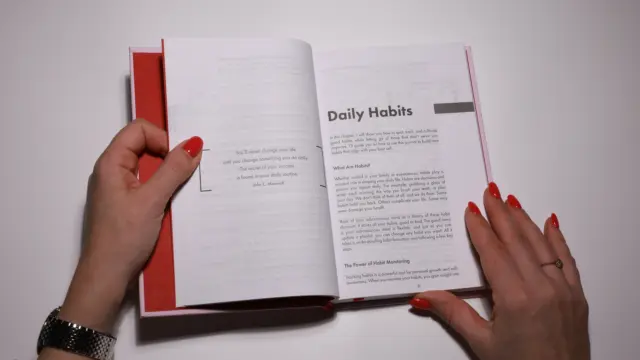
In the Daily Habits section of the iAmEvolving Journal, each written intention is a gentle message to your subconscious. Every line says, “This is who I am now.” Over time, these words reshape automatic patterns. They build new associations of focus, calm, and growth.
Change feels slow because the mind is unlearning old instructions. The subconscious resists uncertainty—it protects what it already knows. That is why new habits require patience. Small, steady repetition teaches your inner system that the new pattern is safe.
Get more like this, every week
Paradigms: The Hidden Rules You Live By
A paradigm is a set of beliefs and habitual thoughts that create your personal reality. It is the invisible rulebook that tells your mind what to expect from life. If your paradigm says, “I always lose focus,” your brain looks for proof of it. If you shift it to, “I am learning to stay consistent,” your mind begins to support that story.
Every lasting habit grows from identity. You don’t become disciplined by trying harder—you act differently because you already see yourself as someone who follows through. This is why the I AM affirmations practice works so well. It aligns belief with behavior.
To change a paradigm, awareness must come first. You can’t rewrite what you haven’t noticed. Journaling makes this possible. When you write down your repeated thoughts, emotions, and actions, you bring the unconscious into light. That simple act begins the shift from autopilot to awareness.
Why Habits Matter
Habits shape your days, and your days shape your life. They are not just actions—they are reflections of who you believe yourself to be. When your habits match your values, you feel balanced and confident. When they don’t, life feels like resistance.
Building aligned habits means choosing consistency over intensity. The iAmEvolving philosophy reminds us that progress doesn’t come from big leaps but from daily awareness—one page, one action, one choice at a time. That is how true change becomes part of who you are.
In the next section, we’ll explore how awareness and journaling can help you reprogram the subconscious mind and create new, supportive paradigms that last.
Reprogramming Habits — Awareness, Journaling, and Paradigms
Once you understand how habits are formed, the next step is learning how to change them. Real transformation happens when awareness meets repetition. You don’t need to fight your old patterns—you need to teach your mind a new rhythm that feels safer and more aligned.
Step 1 – Awareness Before Change
Awareness is the beginning of every shift. Before you can replace a habit, you must see it clearly. Notice when the pattern appears, what triggers it, and how it makes you feel. The goal is not judgment but observation. When you bring light to an unconscious behavior, you interrupt its automatic loop.
Start small. Choose one routine that feels misaligned—a late-night scroll, skipped reflection, or constant self-criticism. Write it down in your journal. Describe the cue, the action, and the emotion that follows. Naming it creates space between you and the behavior. In that space, choice returns.
Step 2 – Rewrite the Pattern
Your subconscious mind loves consistency. To create a new habit, give it a clear, gentle alternative. Replace the old loop with a new one that meets the same emotional need but in a healthier way.
For example, if you check your phone to escape stress, replace that moment with slow breathing or a one-line journal note: “I choose calm now.” Over time, the new behavior becomes the default response. The brain learns, “This action brings relief.” Repetition turns intention into identity.
Step 3 – Use Journaling as Reprogramming
Writing is more than reflection—it is rewiring. Each time you record a new thought, you signal to your subconscious that something different matters. The physical act of writing anchors that decision in the body. It transforms ideas into instruction.
In the iAmEvolving Journal, daily prompts guide you to notice, reframe, and reinforce what you want to grow. The structure—goals, gratitude, habits, and harmony—mirrors how the brain learns best: repetition with emotion. When you write from a calm, intentional state, your nervous system connects safety with growth. That is how lasting habits form.
Step 4 – Shift the Paradigm
Every change eventually meets resistance. That resistance is not failure; it is an old paradigm protecting itself. Remember, a paradigm is a cluster of beliefs and habits that define “who you are.” When you start living differently, the mind questions the new identity. Stay steady. Keep writing, reflecting, and repeating. Soon the new story feels true.
You can support this shift with simple affirmations such as:
- I am consistent, even in small steps.
- I am safe to change and grow.
- I trust the process of becoming.
Affirmations work because they speak the language of the subconscious—present-tense emotion. Combine them with evidence through action, and the paradigm rewrites itself naturally.
Step 5 – Integrate Emotion and Environment
Habits thrive in supportive environments. Adjusting small cues around you helps the subconscious stay aligned. Keep your journal on the nightstand, prepare water beside your desk, or set a reminder that says “pause and breathe.” These gentle signals guide the mind toward your new default state.
Emotion is equally important. Celebrate small wins. Each acknowledgment releases dopamine—the brain’s reward signal—which reinforces the new pathway. Appreciation transforms effort into encouragement. Growth built on kindness endures longer than growth built on pressure.
Creating Balance Through Conscious Practice
Reprogramming habits is not about control; it’s about cooperation. You’re teaching your mind to work with you instead of against you. The iAmEvolving philosophy invites you to evolve through awareness, not struggle. As you align your thoughts, feelings, and actions, life begins to flow with less resistance.
Every page you write, every small action you repeat, becomes a vote for the person you’re becoming. Over time, these quiet votes build a new identity—steady, intentional, and grounded in purpose. That is why habits matter: they are how inner change becomes visible in daily life.
Journaling Prompt:
“What automatic pattern in my day no longer feels aligned—and what new action can I choose instead?”
Final Reflection
Transformation is not about doing more; it’s about becoming aware of what you already do. When you see your patterns clearly, you can choose new ones consciously. With each small, consistent choice, the subconscious begins to trust change. And that is where evolution begins.
Start your journey with the iAmEvolving Journal—a daily space to observe, reprogram, and grow with clarity.
Continue your journey inside Habits Foundations — a guide to understanding how real change happens through awareness and consistency.
Start your daily practice of gratitude, goals, and growth.
Get the Journal →A gentle 7-day reset to help you slow down, feel steadier, and reconnect — in just 5–10 minutes a day.
Start the ResetA simple introduction to daily journaling — gratitude, goals, and habits made easy.
Learn the MethodHow long does it take to form a new habit?
Can journaling really change subconscious patterns?
What’s the difference between motivation and paradigm?
Why do old habits return even after I’ve changed?