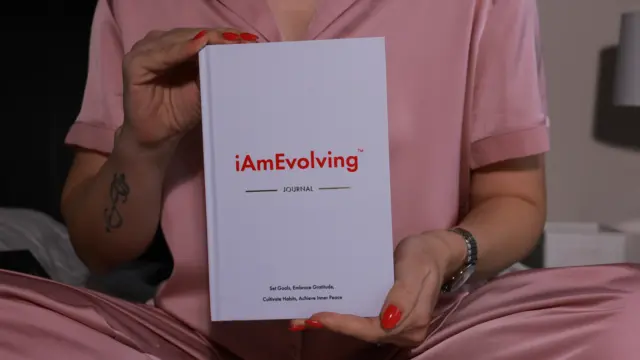
Journaling Techniques for Clarity: 5 Methods That Actually Work

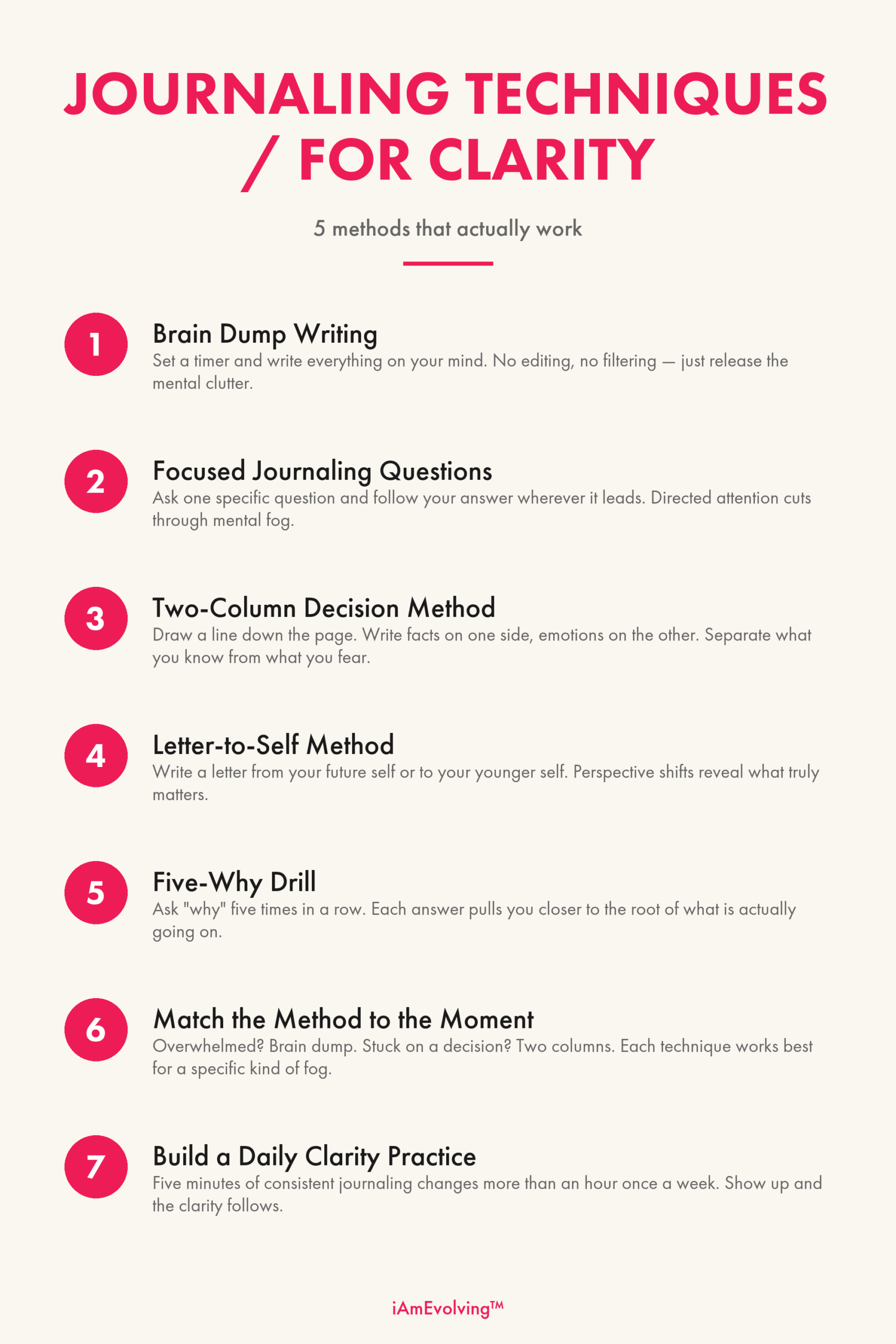
When your mind feels cluttered and your thoughts keep circling without landing, you need more than motivation. You need a method. Journaling techniques for clarity give you specific ways to move through mental noise and arrive at honest understanding. Not all journaling looks the same. A blank page and a vague instruction to “write your feelings” can leave you staring at the ceiling. But when you have a technique, something structured to follow, the words start coming and the clarity follows.
These five techniques are not theoretical. They come from psychology, cognitive science, and the daily practice of people who use journaling as a real tool for decision-making, emotional processing, and personal growth. Each one approaches clarity from a different angle, so you can choose the one that fits how your mind works today. You do not need all five. You need the right one for the moment you are in. If you have already explored the foundations of journaling, these techniques will take your practice deeper.
Technique 1: Brain Dump Writing for Mental Clarity
A brain dump is exactly what it sounds like. You open your journal, set a timer for ten to fifteen minutes, and write everything that is in your head without stopping, editing, or organizing. Spelling does not matter. Grammar does not matter. Making sense does not matter. The only rule is that your pen keeps moving.
The purpose of a brain dump is to externalize your mental load. When thoughts stay inside your head, they feel overwhelming because your working memory can only hold a limited number of items at once. Everything competes for attention. Writing those thoughts down transfers them from your limited working memory to the page, where they can be seen, sorted, and addressed one at a time.
After the brain dump, read what you wrote. Circle the items that feel urgent or emotionally charged. Cross out what no longer matters. Group related thoughts together. What you will often find is that the overwhelming tangle of thoughts is actually three or four things masquerading as thirty. Once they are on paper, they lose their power to overwhelm.
Brain dumps work best when you feel scattered, anxious, or unable to focus. They are especially effective first thing in the morning when your mind is full of overnight accumulation, or before bed when the day’s unfinished thoughts are keeping you awake.
Technique 2: Journaling Techniques for Clarity Through Focused Questions
If brain dumps are too open-ended for you, focused question journaling provides structure. Instead of writing freely, you answer one specific question per session. The question acts as a lens, narrowing your attention and guiding your thinking toward a clear outcome.
The power of a good question is that it directs your subconscious. When you ask yourself “What am I avoiding right now?” your brain immediately starts searching for an honest answer. When you ask “What would I do if I were not afraid?” your mind begins imagining possibilities it normally filters out. The question opens a door that free writing might take twenty minutes to find.
Here are ten questions designed to produce clarity:
- What is taking up the most space in my mind right now?
- What decision have I been putting off, and what is stopping me?
- If I could only focus on one thing today, what would matter most?
- What am I tolerating that I no longer need to accept?
- What would my life look like in six months if I made this choice?
- What emotion am I trying not to feel, and what is it trying to tell me?
- What do I need to hear right now that nobody is saying?
- Where am I spending energy on things I cannot control?
- What pattern keeps repeating in my life, and what does it want me to learn?
- What would I tell a close friend who was in my exact situation?
Pick one question. Write for five to ten minutes. Do not try to give the perfect answer. Write honestly and let the clarity emerge as you write. The act of writing itself is the thinking process.
Technique 3: The Two-Column Decision Method
When you need clarity about a specific decision, the two-column method cuts through emotional fog. Draw a line down the center of your page. On the left, write everything that supports one option. On the right, write everything that supports the other. Do not censor. Include rational arguments, emotional reactions, gut feelings, and fears. Everything belongs on the page.
What makes this technique powerful is that it externalizes the internal debate. When a decision lives only in your head, both sides feel equally loud and you go back and forth endlessly. On paper, you can see the actual weight of each argument. Often, one column is clearly stronger than the other, but you could not see it while the thoughts were spinning internally.
After filling both columns, add a third step. Write a paragraph starting with “The truth is…” This paragraph bypasses your rational mind and lets your deeper knowing speak. More often than not, you already know what the right choice is. The two-column method helps you see it clearly and gives you the confidence to act on it.
This technique works well for career decisions, relationship questions, financial choices, and any situation where you feel stuck between two paths. It does not tell you what to decide. It shows you what you already know.
Get more like this, every week
Technique 4: The Letter-to-Self Method
Sometimes clarity comes not from analyzing a problem but from stepping outside it. The letter-to-self method asks you to write a letter to yourself from the perspective of your future self, a version of you who has already resolved the situation you are struggling with.
Start the letter with “Dear [your name],” and write as if you are looking back on this moment from six months or a year in the future. What advice would you give? What would you want your present self to know? What reassurance would you offer? What truth would you speak that is hard to hear right now?
This technique works because it activates your prefrontal cortex, the part of your brain responsible for planning and perspective-taking. When you write from a future perspective, you naturally adopt a wider view. The problems that feel all-consuming today shrink to their actual size when seen from a distance. The choices that feel paralyzing become clearer when viewed with the benefit of imagined hindsight.
You can also write the reverse: a letter from your present self to your past self. This version helps you recognize how far you have already come. It builds confidence by reminding you that previous challenges, which once felt impossible, were resolved. If you navigated those, you can navigate this.
The iAmEvolving Journal incorporates reflective elements that support this kind of perspective-taking. By writing daily reflections and self-discovery prompts, you naturally develop the habit of stepping back from your immediate experience and seeing the bigger picture. The letter-to-self method takes that habit one step further.
Technique 5: The Five-Why Drill for Root Cause Clarity
Borrowed from quality engineering but deeply effective in personal reflection, the five-why technique helps you move past surface-level explanations and reach the real source of what is bothering you. You start with a problem statement, then ask “why” five times, each time going deeper.
Here is an example:
Problem: I feel overwhelmed at work.
- Why? Because I have too many tasks and not enough time.
- Why? Because I keep saying yes to things I should decline.
- Why? Because I am afraid people will think I am not capable.
- Why? Because my self-worth is tied to being productive and useful.
- Why? Because I learned early on that my value depended on what I could do for others.
Notice how the first answer, “too many tasks,” is a surface symptom. By the fifth why, you have reached a core belief about identity and worth. That deeper awareness is where real change begins. You cannot solve the overwork problem by buying a better planner. You solve it by examining the belief that drives the behavior.
The five-why drill works for any recurring frustration, pattern, or stuck point. It is especially useful when you keep encountering the same problem in different forms. The surface details change, but the root cause remains the same. This technique exposes that root cause so you can address it directly.
Choosing the Right Technique for Your Situation
Each of these five journaling techniques for clarity serves a different purpose. Choosing the right one depends on what kind of clarity you need:
- Feeling scattered or overwhelmed? Start with a brain dump to externalize and sort your mental load.
- Need direction on a specific issue? Use focused question journaling to narrow your attention.
- Stuck between two options? The two-column decision method will help you see what you already know.
- Need perspective on a current struggle? Write a letter to yourself from your future self.
- Dealing with a recurring pattern? Use the five-why drill to find the root cause beneath the surface.
You do not have to commit to one method. Some days you need a brain dump. Other days you need a focused question. The flexibility of having multiple techniques means your journaling practice stays fresh and responsive to what you actually need, rather than becoming a repetitive routine that loses its impact.
Making These Techniques Part of Your Daily Practice
The best journaling technique is the one you actually use. Start by trying one this week. Give it three to five days before switching to another. Notice which techniques produce the most insight for you personally. Some people thrive with free-form brain dumps. Others need the structure of questions. There is no wrong answer.
The iAmEvolving Journal gives you a structured daily framework that naturally incorporates several of these techniques. The guided sections for reflection, gratitude, and goal-setting combine focused question journaling with the perspective-taking approach of writing to your future self. If you are looking for a single tool that brings these methods together, the journal does that work for you.
Clarity is not something you find once. It is something you practice daily. These five techniques give you reliable ways to cut through the noise whenever your mind feels cluttered. Keep them close. Use them often. The answers you are looking for are already inside you. You just need the right question and a blank page to draw them out.
Start your daily practice of gratitude, goals, and growth.
Get the Journal →A gentle 7-day reset to help you slow down, feel steadier, and reconnect — in just 5–10 minutes a day.
Start the ResetA simple introduction to daily journaling — gratitude, goals, and habits made easy.
Learn the MethodFAQ: Journaling Techniques for Clarity
What is the best journaling technique for mental clarity?
How long should a clarity journaling session be?
Can journaling really help with decision-making?
What if I do not know what to write about?